

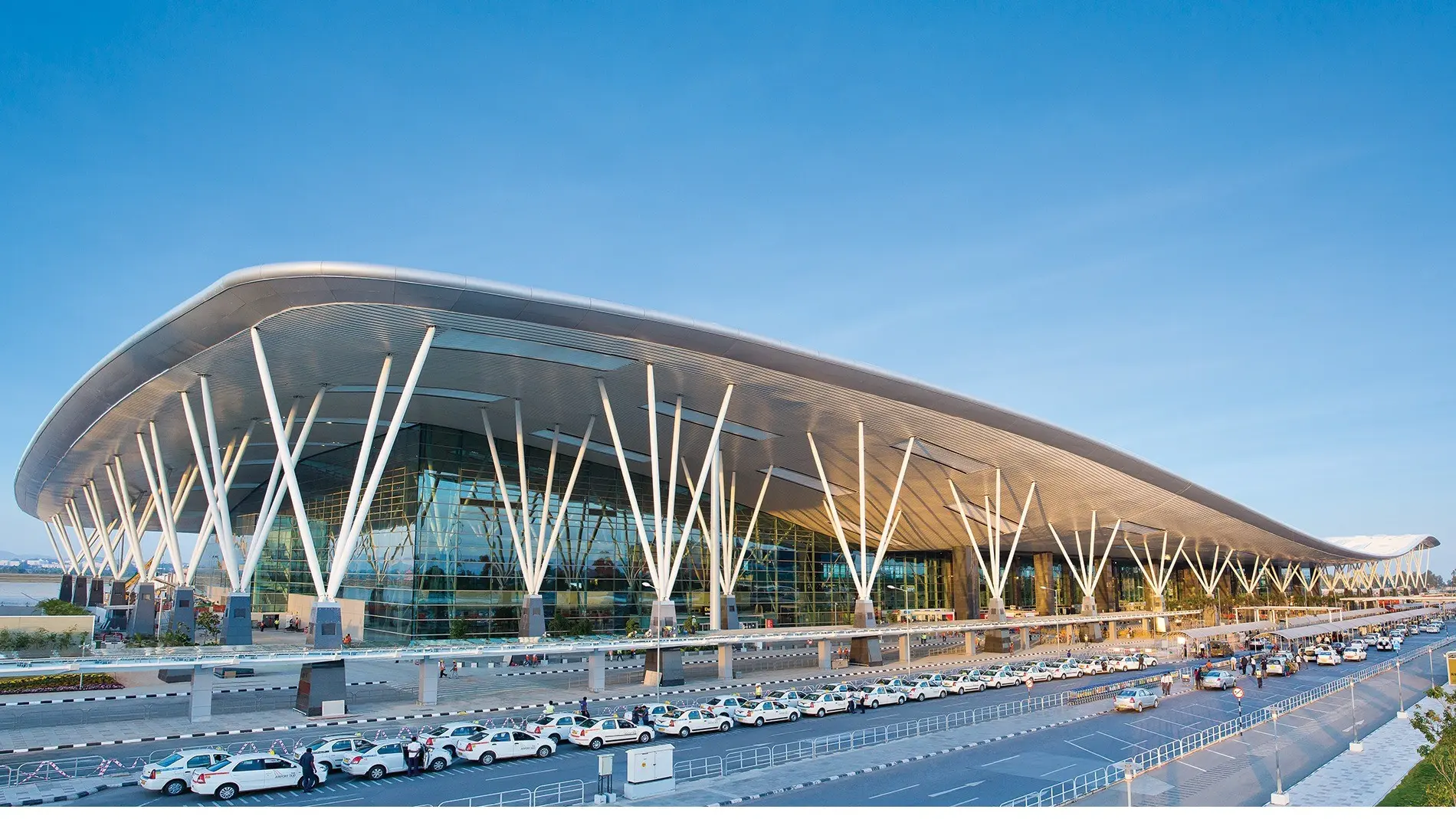
BENGALURU- Kempegowda International Airport (BLR) has achieved a historic milestone by overtaking Mumbai’s Chhatrapati Shivaji Maharaj International Airport (BOM) in monthly domestic passenger traffic for the first time ever.
According to the latest data for April 2026, Bengaluru Airport handled 3.17 million domestic passengers. On the other hand, Mumbai Airport had 2.89 million passengers during the same period.
The development marks a major shift in India’s aviation landscape, with Bengaluru steadily strengthening its position as one of the country’s largest and fastest-growing aviation hubs.

Bengaluru Airport Surpasses Mumbai in Domestic Traffic
The AAI passenger statistics reveal that Bengaluru Airport handled 3,178,826 domestic passengers in April 2026, compared to Mumbai Airport’s 2,893,286 passengers. Delhi Airport continued to remain India’s busiest airport with nearly 4.93 million domestic passengers during the month.
What makes this milestone particularly significant is that Mumbai has traditionally held the second position in India for passenger traffic for years. Bengaluru’s rise reflects the city’s expanding economic influence, growing corporate travel demand, and increasing airline capacity deployment.
Despite Bengaluru recording a marginal year-on-year decline of 0.2% in domestic traffic, Mumbai experienced a much sharper fall of 12.1% compared to April 2025. This decline ultimately allowed Bengaluru to move ahead for the first time every month.

Rapid Growth of Bengaluru Airport
Kempegowda International Airport has witnessed remarkable growth over the past decade. The airport has benefited heavily from Bengaluru’s status as India’s technology and startup capital, generating consistent demand for both business and leisure travel.
The growth momentum was clearly visible during FY 2025-26, when Bengaluru Airport handled a record 44.47 million passengers, marking a 6.2% year-on-year increase.
Domestic passenger traffic grew 3.3% to 37.24 million passengers, while international traffic surged by 23.9% to 7.23 million passengers.
The airport is also a major operational base for airlines such as IndiGo, Air India Express, Akasa Air, and Air India. Carriers continue expanding domestic connectivity from Bengaluru to metro cities as well as tier-2 and tier-3 destinations.
The opening and expansion of Terminal 2 have further strengthened Bengaluru Airport’s operational capabilities. The new terminal has significantly improved passenger handling efficiency while enabling airlines to scale up operations more effectively.
Bengaluru Airport currently offers direct connectivity to more than 78 domestic and 34 international destinations, further reinforcing its growing importance in India’s aviation network.

Why Mumbai Airport Saw a Decline?
Mumbai Airport’s decline in domestic passenger traffic is largely linked to infrastructure and operational constraints. Unlike Bengaluru, Mumbai Airport faces severe space limitations due to its location within the city.
The decline in traffic is not solely due to infrastructure constraints and congestion. A major factor behind the drop has been the shift of airline operations to the newly opened Navi Mumbai International Airport (NMIA), particularly IndiGo.

India’s largest airline, IndiGo, has significantly expanded its presence at Navi Mumbai Airport since operations began in December 2025.
The carrier initially launched flights to over 15 cities with 18 daily departures from NMIA and later expanded aggressively by adding more than 30 additional domestic routes during the Summer 2026 schedule.
Navi Mumbai Airport’s average daily departures increased from 22 during the Winter 2025 schedule to 73 daily departures in Summer 2026, handling nearly 50,000 passengers per day. The expansion has effectively shifted a considerable portion of traffic away from Mumbai’s Chhatrapati Shivaji Maharaj International Airport (CSMIA).
Mumbai remains one of India’s most important international gateways, with its domestic growth potential now mostly coming from Navi Mumbai Airport.
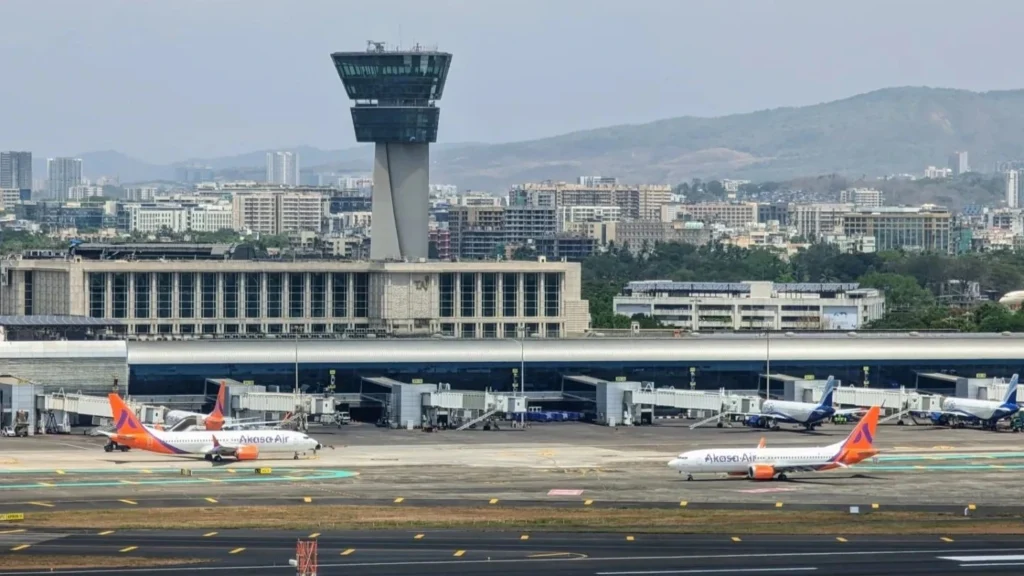
Mumbai Still Ahead in Overall Passenger Numbers
While Bengaluru overtook Mumbai in domestic passenger traffic, Mumbai Airport still handled higher total passenger traffic when international passengers are included.
According to AAI data, Mumbai Airport recorded 4.04 million total passengers in April 2026, while Bengaluru handled 3.68 million passengers during the same period.
Mumbai continues to maintain a strong advantage in international operations, supported by extensive long-haul connectivity to Europe, North America, the Middle East, and Southeast Asia.
However, the gap between the two airports is narrowing steadily as Bengaluru continues expanding both domestic and international operations.
Bottom Line
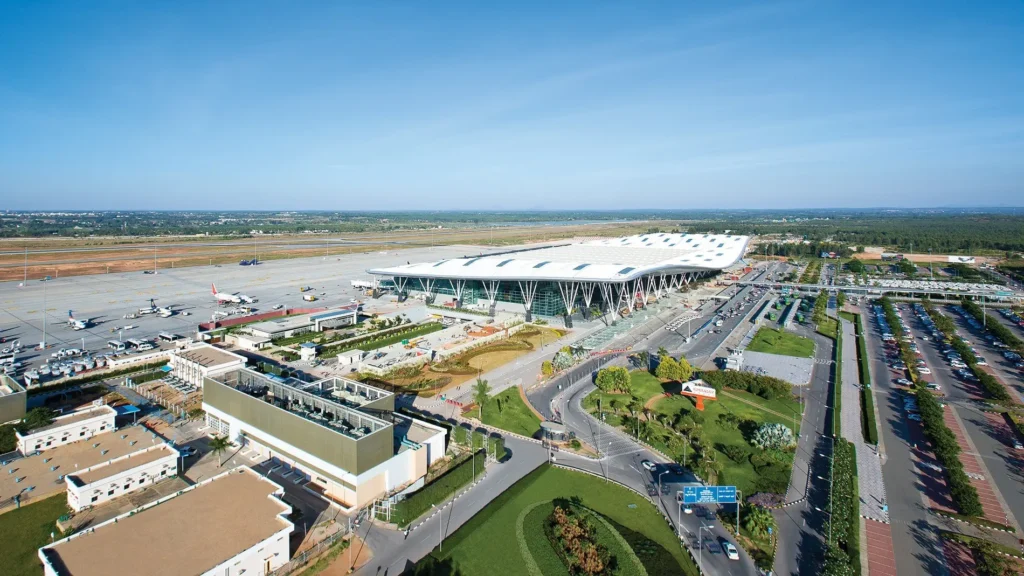
With airlines continuing to add routes and frequencies, Bengaluru Airport is expected to strengthen its position further in the coming years. The focus of the airport also seems heavily on international expansion, cargo growth, and infrastructure upgrades.
The airport operator has already outlined long-term plans for additional terminal capacity. The airport plans to start the construction of Terminal 2’s phase 2 to accommodate rising passenger demand. Terminal 3 in the future, and also an Automated people mover is planned as per the latest master plan.
As India’s aviation sector continues growing rapidly, Bengaluru’s emergence as the country’s second busiest domestic airport highlights how travel demand patterns are evolving beyond traditional metro hubs like Mumbai. This milestone may signal the start of a major shift in India’s airport rankings.
The emergence of new aviation hubs like Navi Mumbai and Jewar, both of which have already begun commercial operations, will surely reshape traffic patterns further in the coming years.
Stay tuned with us. Further, follow us on social media for the latest updates.
Join us on Telegram Group for the Latest Aviation Updates. Subsequently, follow us on Google News
