

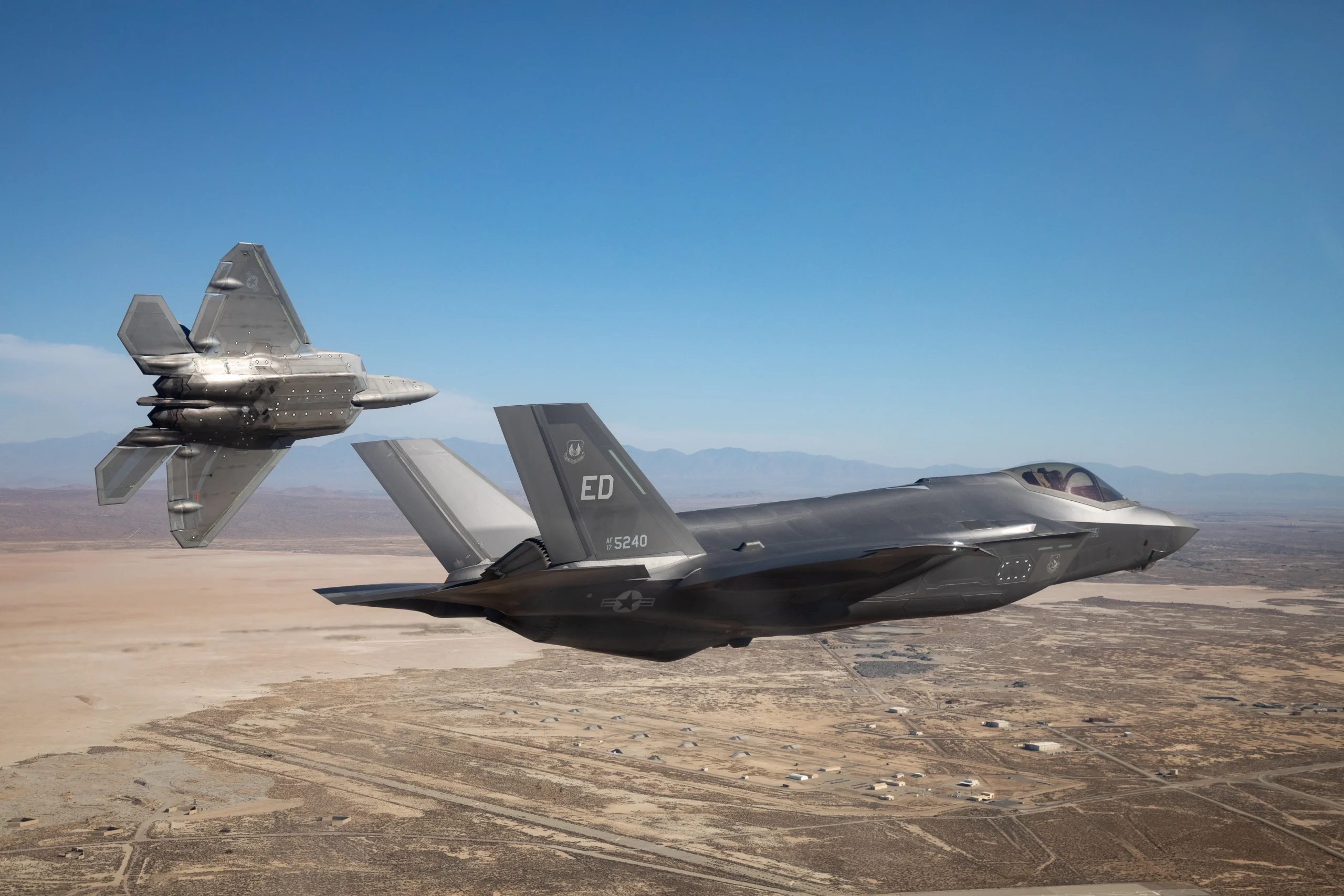
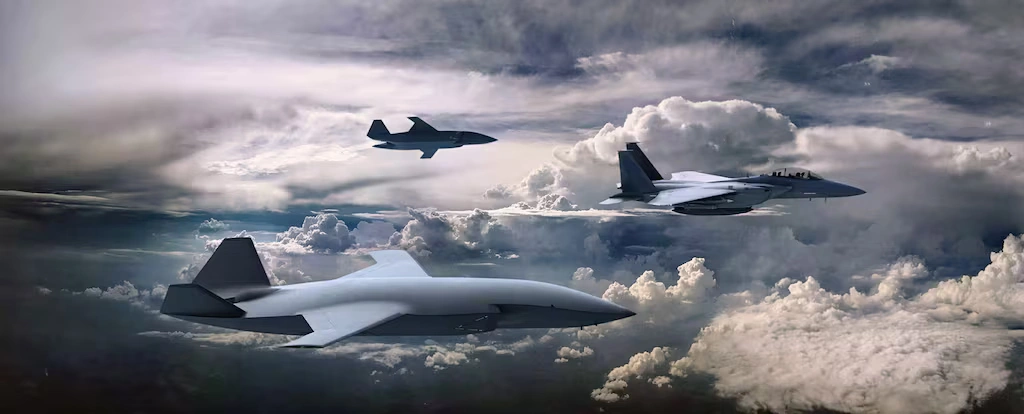
WASHINGTON— The United States Air Force (USAF) is leading a global push to deploy autonomous combat drones alongside crewed fighter jets, with the Collaborative Combat Aircraft (CCA) program targeting a fleet of 1,000 Loyal Wingman drones.
These uncrewed aircraft will operate in coordination with fifth-generation Lockheed Martin F-35 Lightning II jets flown by the US military and 19 partner nations.
On April 23, the Netherlands became the first international partner to join the CCA program, marking a significant step in expanding crewed-uncrewed teaming across allied air forces.
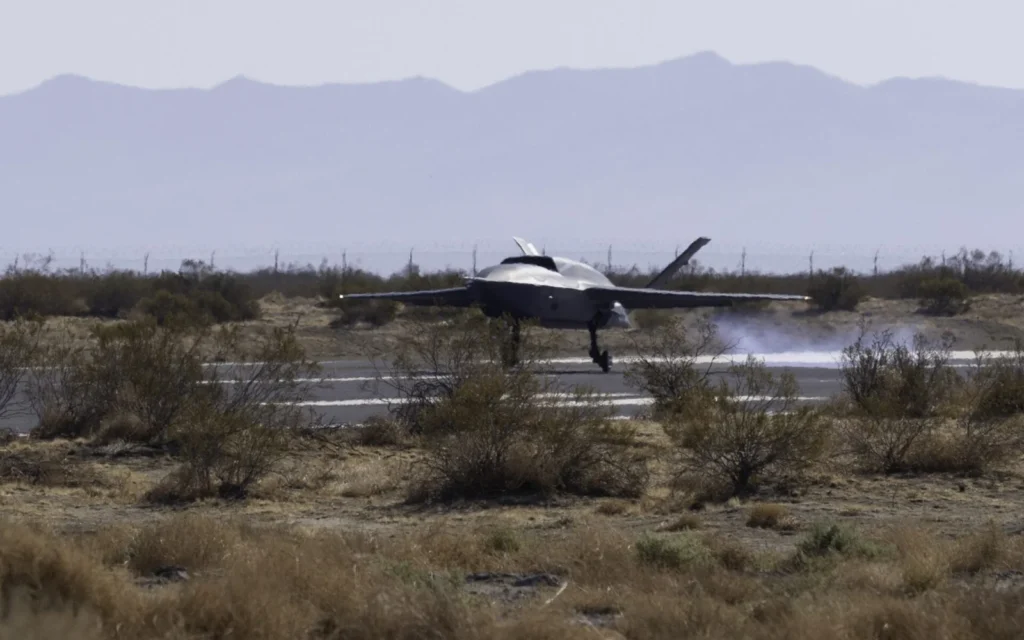
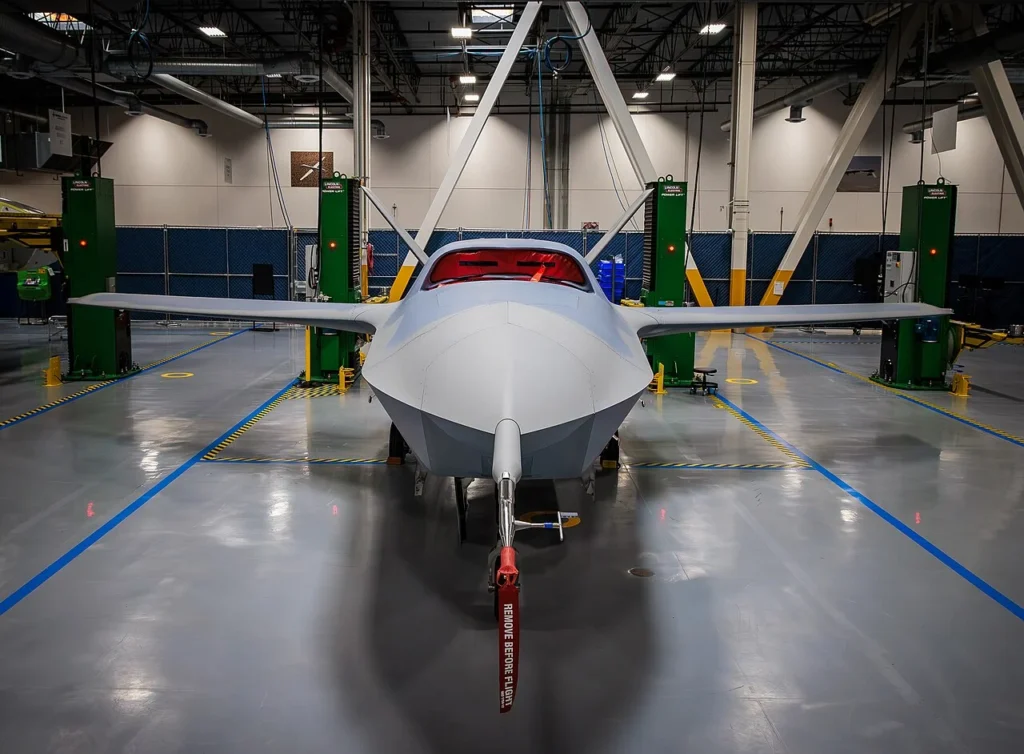
The Anduril YFQ-44A Fury and General Atomics YFQ-42A Dark Merlin remain the two finalists competing to enter production as the next generation of Loyal Wingman drones.
US Air Force Eyes 1,000 Drones with F-35s
The CCA drones are built as attritable assets, meaning they remain combat-capable while staying inexpensive enough to be lost in operations if required.
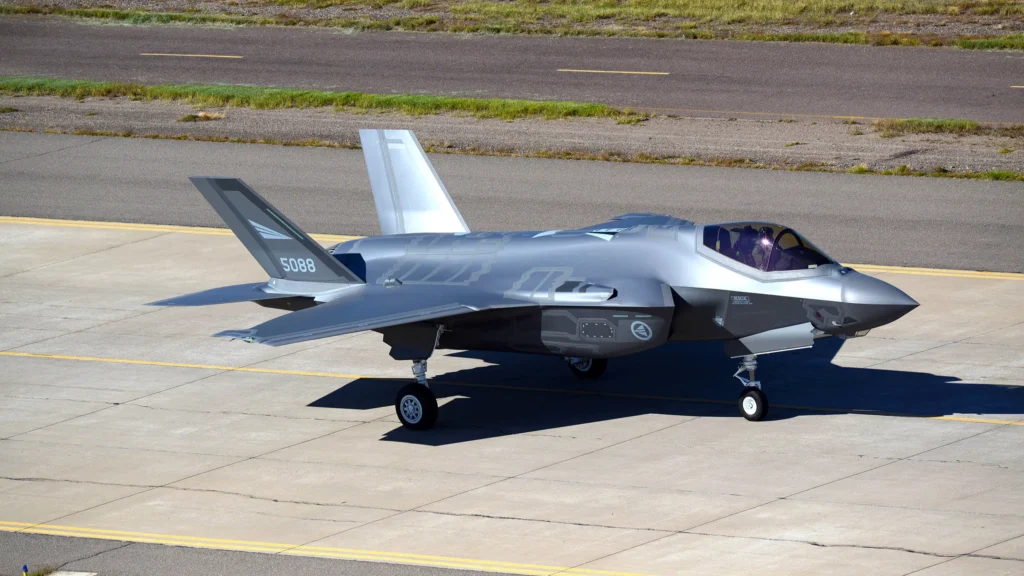
Each unit is targeted at a maximum cost of $30 million, which is roughly one-third to one-quarter the price of a modern fighter jet.
By comparison, the F-35 Joint Strike Fighter costs between $82 million and $120 million, while the Boeing F-15EX strike fighter is priced near $90 million per airframe.
The drones rely on common AI architectures that enable them to autonomously transition among reconnaissance, strike, electronic warfare, and decoy missions based on commander directives. They can also function as missile sponges, drawing enemy fire away from manned F-35 jets. As forward sensor nodes, they extend the F-35’s reach into contested airspace without exposing the pilot.
Pilots are expected to manage between four and eight CCAs per crewed jet through a touchscreen or tablet-based interface. This setup allows pilots to focus on high-level decisions while the drones execute scouting, strike, and support tasks.
The CCA fleet also acts as a missile truck, multiplying the firepower available to each pilot and giving the Air Force a numerical advantage that crewed fighters alone cannot deliver.
Dutch Partnership Strengthens Allied Air Defense
The Netherlands is directly funding two prototypes, helping accelerate the testing phase without placing the full financial load on US taxpayers.
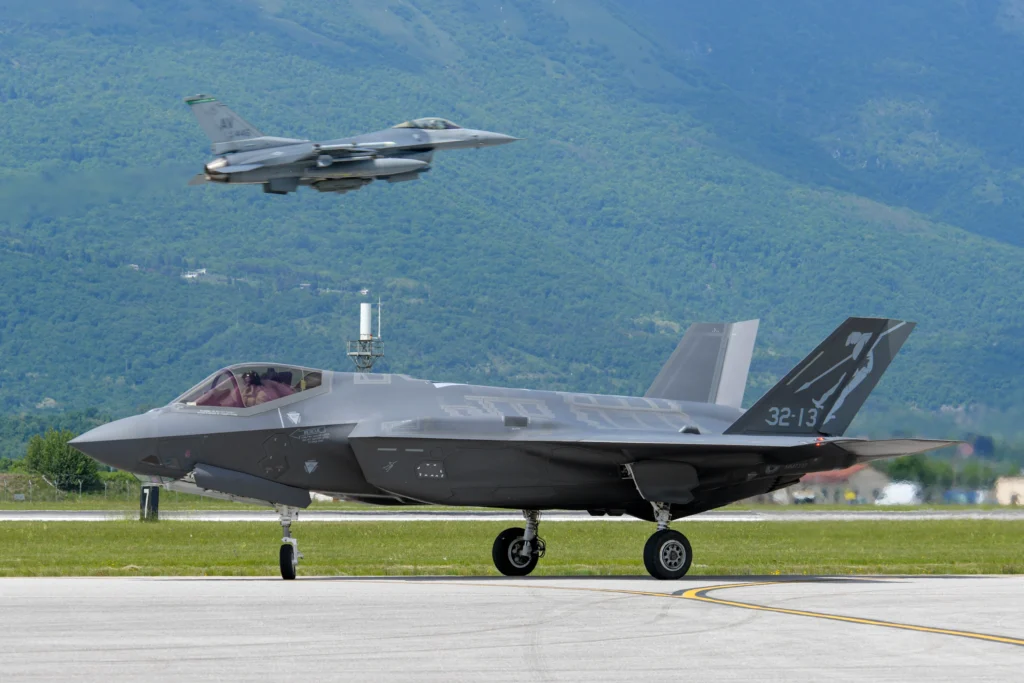
The partnership ensures that allied F-35 fleets can communicate with and control the same drones operated by the US Air Force, creating interoperability across coalition operations.
By integrating Joint Strike Fighter operators into the Loyal Wingman program, the US is building a larger uncrewed support force available to every allied nation. International partnerships also distribute the industrial burden of producing the ambitious 1,000-unit fleet.
Joint procurement through Foreign Military Sales or co-production agreements allows for larger production runs, lowering the per-unit cost for participating nations, Simple Flying reported.
Program Evolution And Engine Development
The Air Force Research Laboratory’s CCA program traces its origins to the 2014 Low Cost Attritable Aircraft Technologies (LCAAT) initiative, which evolved into the Off-Board Sensing Station program in 2021.
LCAAT laid the foundation for the Low Cost Attritable Strike Demonstrator, which has since split the original group of three contractors into two paths. Anduril and General Atomics continue to focus on US Air Force requirements, while the Kratos design has gained traction with the US Marine Corps.
In early 2026, contracts were awarded to Beehive Industries, Honeywell, and Pratt & Whitney to develop specialized low-thrust engines for Increment Two drones. The Air Force plans to procure between 100 and 150 aircraft in phase one, with a final target exceeding 1,000 units.

Navy Pursues Carrier-Based Loyal Wingman
The US Navy is aiming for a lower price point of approximately $15 million per Loyal Wingman drone.
The service is working toward interchangeability with Air Force drones through shared software and architecture, while developing airframes specifically suited for carrier-based operations.
In late 2025, the Navy issued development contracts to Anduril, Boeing, General Atomics, and Northrop Grumman. While the Navy has not finalized a total procurement volume, the figure is expected to be lower than the Air Force target but still measured in the hundreds.
Marine Corps Advances The Valkyrie
The Kratos XQ-58A Valkyrie is a low-observable, runway-independent combat drone that the US Marine Corps is advancing into the next stage of development.
The aircraft can be launched from a truck using rocket assistance and carries a maximum takeoff weight of three tons. It reaches altitudes of 45,000 feet and has a range of 3,000 miles.
The Valkyrie can operate solo through remote piloting or pair with a manned platform as a Loyal Wingman.
The XQ-58A was developed under the AFRL’s LCAAT program to address attrition tolerance, maintenance, and cost challenges. The USAFRL assessed that the Valkyries can perform the same critical missions as current manned and unmanned high-end aircraft.
Although the Air Force chose the YFQ-42A and YFQ-44A for the CCA Increment One prototype phase, Kratos continued working with the Marines on the Penetrating Affordable Autonomous Collaborative Killer Program.
The company is currently developing at least five variants for the USMC, with a strong focus on electronic warfare.
The Drone Dominance Plan
The US Department of Defense announced on February 6 that it is moving forward with plans to build a drone force of 300,000 units by 2027.
The US Armed Forces currently operate just over 16,000 unmanned aerial vehicles of varying sizes, so the Drone Dominance Program (DDP) seeks to multiply the current inventory by nearly 19.
Defense Secretary Pete Hegseth stated that tens of thousands of small drones will be delivered this year, with hundreds of thousands to follow in 2027. Most of the new inventory will consist of small, man-portable, expendable units, though the services also plan to field thousands of large, jet-powered UAVs.
The first round of contractor competition is underway, with 25 companies entered into a selection process focused on devices for the US Army and Marines.
Under Hegseth’s procurement plan, the second round of competition is expected to deliver 30,000 drones by July at an average price of $5,000 each. Two rounds of competition are intended to drive unit costs down by half, with total production targeted at 340,000 drones over two years.
Squad-Level Drone Integration
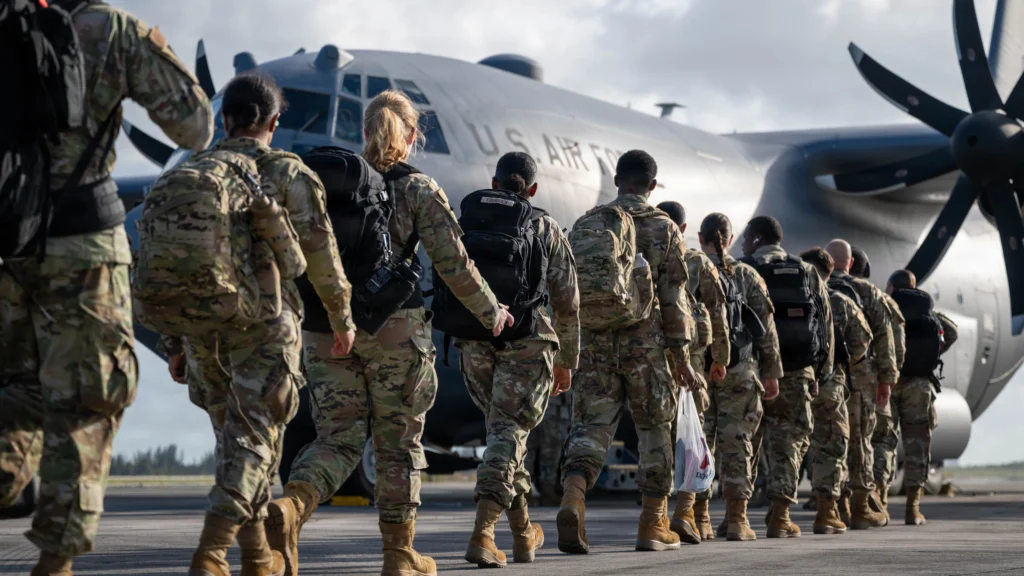
Secretary Hegseth ordered every US Army squad to be equipped with unmanned systems by the end of 2026.
In response to threats observed from low-cost drone swarms used in Iran and Ukraine, the US recently introduced the Low-Cost Uncrewed Combat Attack System (LUCAS), a one-way attack drone modeled on Iran’s Shahed-136.
The US is also drawing on Ukraine’s experience countering similar systems to refine its own programs.
The DDP uses an open architecture approach designed to support America’s drone rearmament effort. The framework improves supply chain resilience and lowers UAV costs by sourcing similar or identical designs from multiple vendors.
The LUCAS drone costs between $30,000 and $60,000 per unit while matching the strike capability of a $2.5 million Tomahawk missile. It has been confirmed in combat since the start of Operation Epic Fury.
Stay tuned with us. Further, follow us on social media for the latest updates.
Join us on Telegram Group for the Latest Aviation Updates. Subsequently, follow us on Google News
