

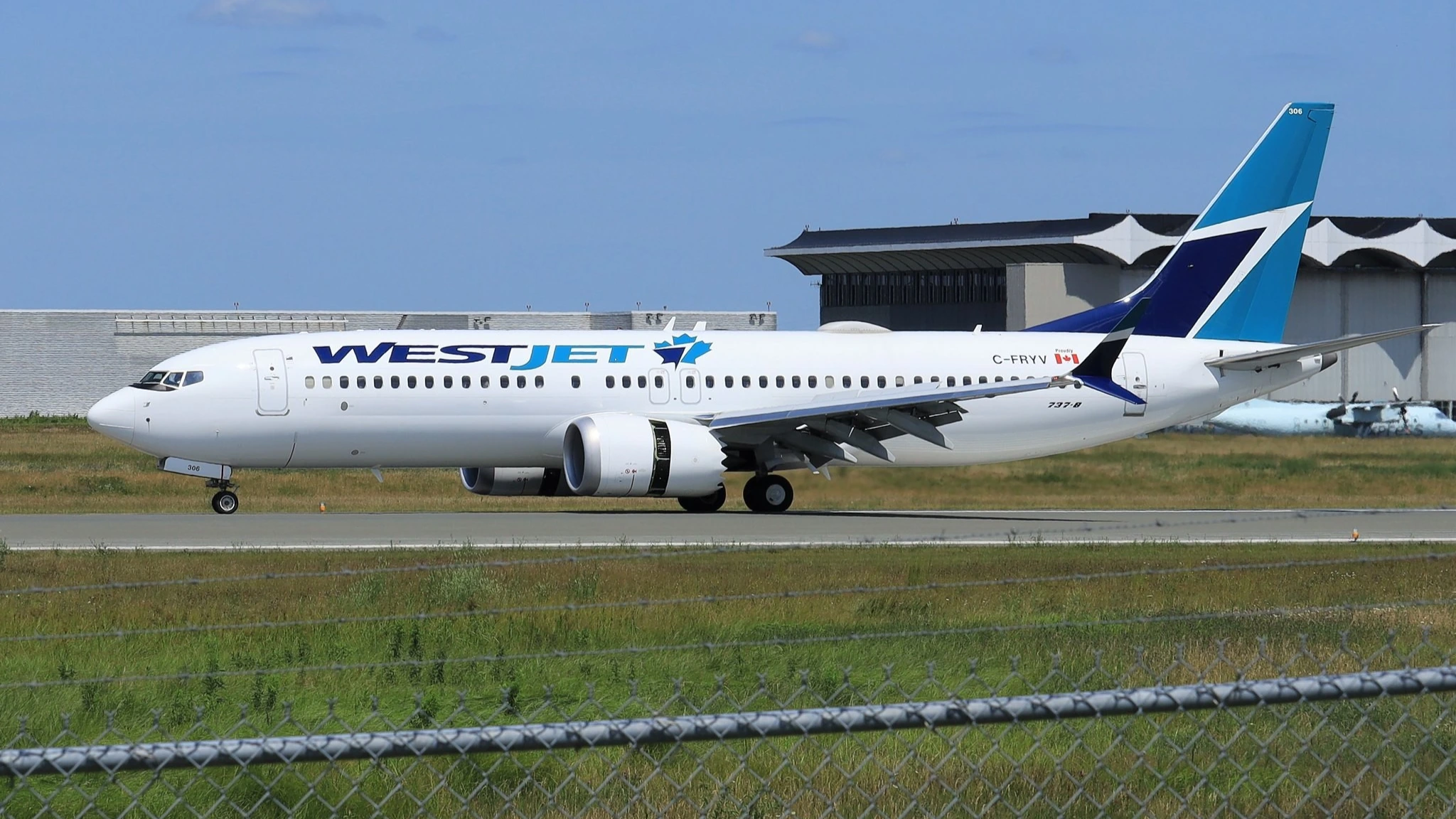
CALGARY- WestJet (WS), Canada’s second largest carrier, is facing serious allegations of using last-minute aircraft swaps to avoid paying compensation owed to passengers under federal regulations.
Flight data tied to dozens of cancelled routes points to a recurring pattern that experts and advocates describe as deliberate and potentially fraudulent.
The allegations involve flights, including a cancelled service from Los Cabos (SJD) to Edmonton (YEG), as well as routes from Toronto (YYZ) to Montego Bay (MBJ), Montreal (YUL) to Puerto Plata (POP), and Calgary (YYC) to Puerto Vallarta (PVR).
Affected travellers say WestJet cited safety-related maintenance to reject their claims, despite records showing replacement aircraft had already been grounded for days.

WestJet Aircraft Swap Fraud Allegations
The case drawing the most attention involves Brad Vanderwilk and his girlfriend, who were midway through dinner on the final night of their March Mexican vacation when an email from WestJet (WS) arrived.
Their next-day flight from Los Cabos (SJD) to Edmonton (YEG) had been cancelled.
“We stopped eating because we’re like, ‘How are we gonna get home?'” Vanderwilk recalled.
With children waiting at home and work commitments looming, the couple was rerouted through Victoria (YYJ), forced into an overnight stay, and reached home 16 hours behind schedule.
Under Canada’s Air Passenger Protection Regulations (APPR), delays exceeding 9 hours qualify for compensation of $1,000 per passenger, provided the disruption falls within airline control and is not safety-related.
WestJet denied Vanderwilk’s claim on the grounds of “unscheduled maintenance required for safety.”
Flight records reviewed by CBC’s Go Public tell a different story. The data shows WestJet (WS) replaced the originally scheduled aircraft with a plane that had already been grounded for 2 days. In the same minute, the flight was cancelled.
The original aircraft was then reassigned to operate another route the same day.
“I feel lied to and cheated,” Vanderwilk said. “They’re just trying to do what they can to not pay anybody anything.”

Dozens of Passengers Report Identical Experiences
Following an earlier Go Public report on similar complaints, dozens of additional passengers came forward with matching accounts.
A subsequent analysis of flight data identified 34 cases in which compensation was denied after last-minute aircraft swaps, with some swaps occurring within minutes of cancellation.
In every one of those cases, the airline pointed to safety-related maintenance.
Viren Harjani, whose Toronto (YYZ) to Montego Bay (MBJ) flight was cancelled in December, said he felt “completely blindsided.”
Simon Turcotte-Langevin, who lost two days of vacation after his Montreal (YUL) to Puerto Plata (POP) service was scrapped, said the airline was “lying to our face.” Lucy Pascal, whose Calgary (YYC) to Puerto Vallarta (PVR) flight was cancelled, called the conduct “unethical.”
Legal Expert Questions Cause and Effect
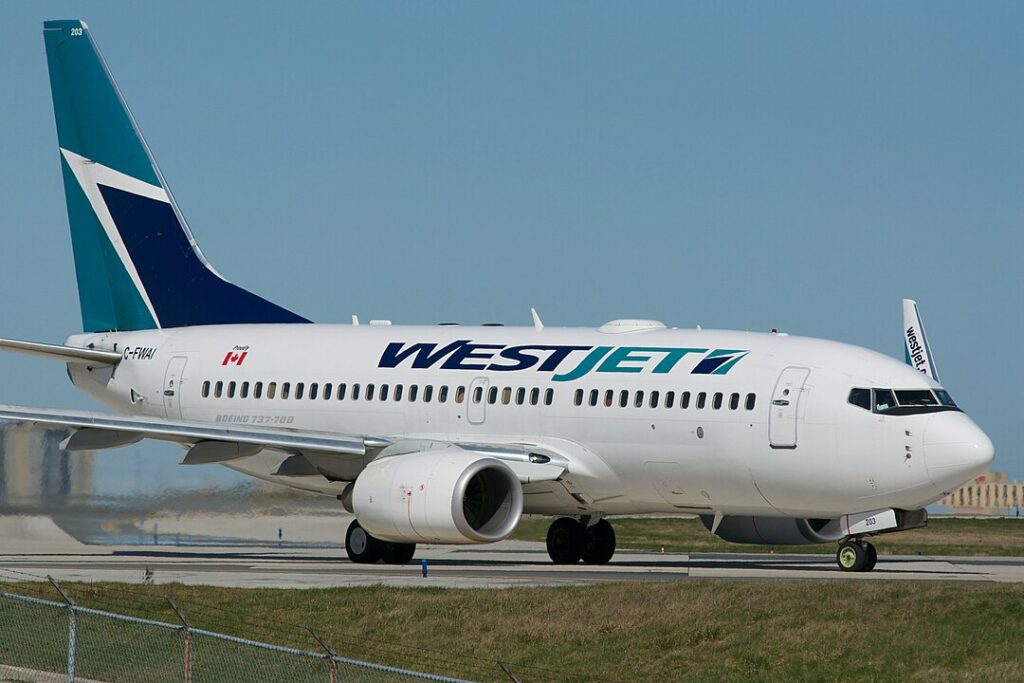
Vancouver-based air passenger rights lawyer Simon Lin says the timeline of the swaps undermines the airline’s safety defence.
In several reviewed cases, the replacement aircraft had not operated any flight for at least 24 hours before being assigned to the route that was then cancelled.
“There must be a cause and effect,” Lin said. He argues that a plane already under maintenance, with no possibility of taking off, cannot reasonably be used to justify a last-minute cancellation as unavoidable.
Lin also notes that simply labelling a disruption as “unplanned maintenance” likely falls short of regulatory standards.
He points to a Canadian Transportation Agency decision that requires airlines to give passengers enough information to understand the cause of a disruption, evaluate whether to challenge it, and reconcile any discrepancies between initial explanations and later claims.
Advocate Calls Practice Fraudulent
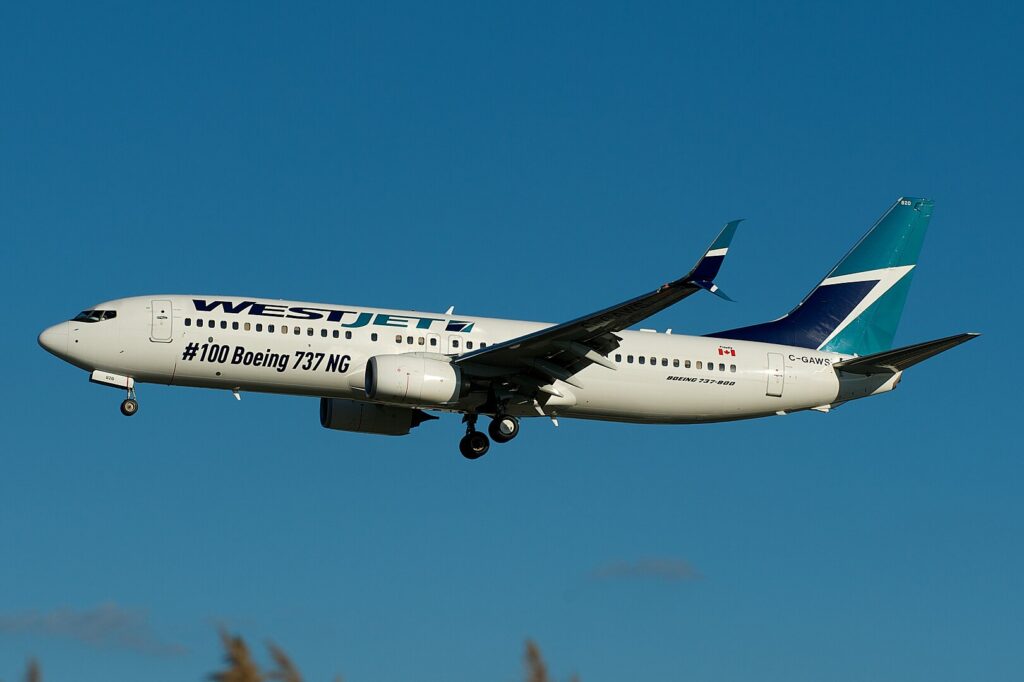
Gábor Lukács, founder of Air Passenger Rights, says the data points to a deliberate strategy. He describes a pattern in which a serviceable aircraft is swapped with a grounded one, after which passengers are told the aircraft broke down.
“It is called fraud. There’s no other way to describe it,” Lukács said.
Lukács acknowledges that airlines routinely make legitimate operational decisions about aircraft, but stresses that transparency is the dividing line.
Swapping aircraft and then presenting the result as a maintenance and safety-related cancellation, he argues, crosses into fraudulent conduct.
He also points out that the Canadian Transportation Agency (CTA) ruled against WestJet (WS) in a comparable 2022 aircraft swap case, yet the practice has continued. “It keeps happening again and again. There are no consequences,” he said.
The financial stakes are substantial. Lukács estimates the airline can avoid roughly $75,000 in compensation per cancelled flight at the lower end, and up to $200,000 when delays surpass 9 hours.
He has urged the CTA to fine the airline $25,000 per passenger for each false explanation issued.
Regulator Opens Enforcement Investigation
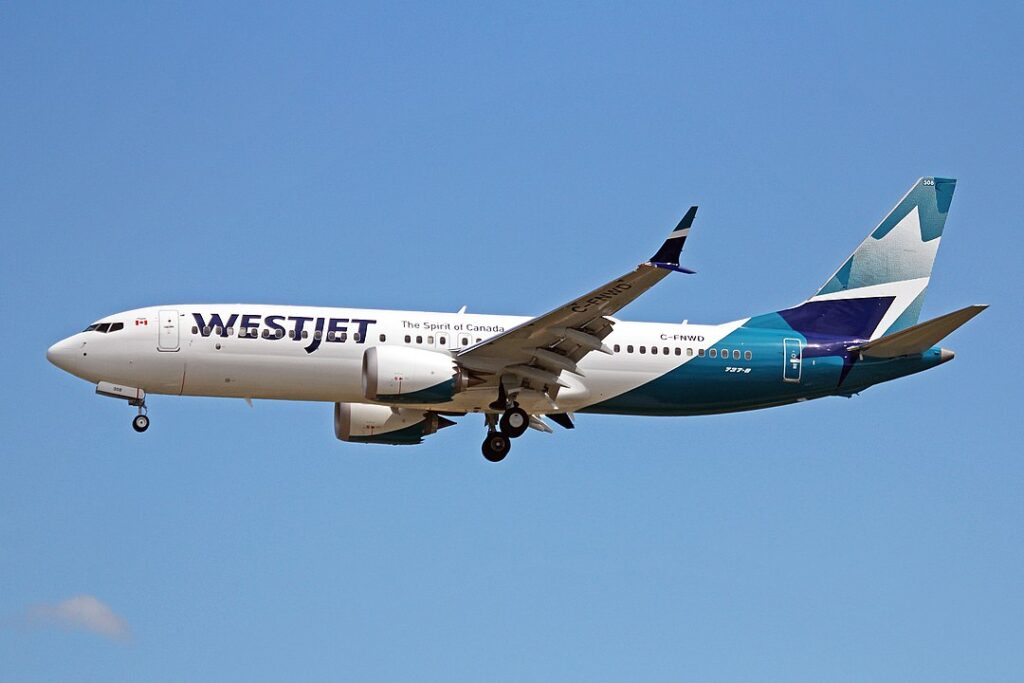
The CTA confirmed it has launched an active enforcement investigation following the earlier reporting on aircraft swaps.
A spokesperson stated that allegations of tariff breaches are taken seriously, though the regulator declined to comment on whether the newly identified 34 cases will form part of that probe.
WestJet (WS) declined an interview request. In a written statement, the airline said aircraft are sometimes swapped to reduce disruption for the greatest number of guests overall.
The carrier did not address why grounded aircraft were assigned to routes shortly before those routes were cancelled.
Passenger Heads to Small Claims Court
Several passengers say WestJet (WS) refused to identify the specific maintenance issue or when it was first detected.
Vanderwilk presented flight data directly to the airline and asked how an aircraft could be swapped in and the flight cancelled within the same minute. He says the question went unanswered.
“It’s all very frustrating,” he said, noting the airline’s final response was simply that the case was closed and would no longer be reviewed.
Vanderwilk is now preparing to file a claim in small claims court. “They’re not acting in good faith,” he said, adding that a national carrier should meet the standards expected of it.
Stay tuned with us. Further, follow us on social media for the latest updates.
Join us on Telegram Group for the Latest Aviation Updates. Subsequently, follow us on Google News
