

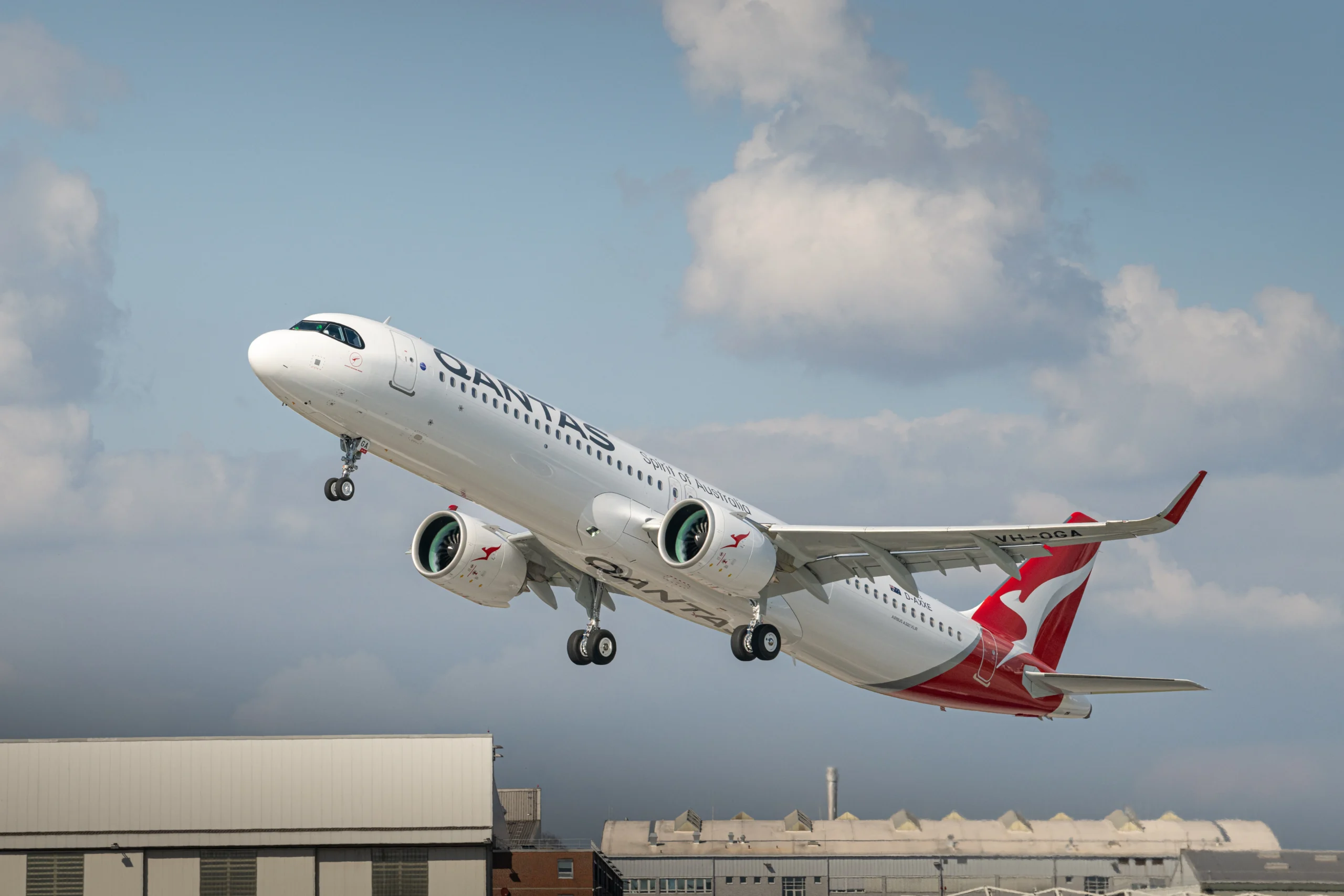
SYDNEY- Qantas (QF) is accelerating its New Zealand expansion with what the airline describes as its biggest-ever investment in the country.
The expansion includes Auckland Airport (AKL), Wellington Airport (WLG), Brisbane Airport (BNE), Perth Airport (PER), and New York John F. Kennedy International Airport (JFK), while rival Air New Zealand (NZ) faces financial losses and operational cutbacks.
Qantas CEO Vanessa Hudson is expected to attend a Wellington aviation event co-hosted by New Zealand Prime Minister Christopher Luxon.
According to The New Zealand Herald, the Australian airline group is using the investment push to strengthen long-term market positioning, expand loyalty engagement, and establish Auckland (AKL) as a key eastern hub for international connectivity.
Qantas Deepens New Zealand Expansion Strategy
Qantas confirmed that its largest-ever investment in New Zealand is currently underway. The announcement comes as airlines globally continue to face elevated operating costs linked to fuel volatility and geopolitical disruptions.
Hudson acknowledged the difficult environment facing airlines worldwide.
She said elevated jet fuel prices and the ongoing Middle East situation continue to affect airline routing and operational costs globally. Hudson also stated that uncertainty remains a constant challenge for airlines operating international networks.
Last month, Qantas linked rising fuel price volatility to fare increases and capacity adjustments across parts of its network. While international demand remains strong, the airline has reduced some domestic Australian services.
Hudson said Qantas had learned over more than a century of operations that strong relationships become even more important during difficult market conditions.
Hudson is expected to attend a cocktail event in Wellington alongside aviation industry leaders, government officials, and Members of Parliament.
The event is being co-hosted by Prime Minister Christopher Luxon and reflects the airline group’s growing engagement with the New Zealand Government and aviation sector stakeholders.
The original report described the event as part of Qantas’ broader “charm offensive” in New Zealand while competitor Air New Zealand continues facing financial pressure.

Auckland Emerges as a Major Qantas Hub
Qantas is investing heavily in Auckland Airport (AKL) as part of its long-term international network strategy.
The airline opened its new Auckland lounge in December and used the occasion to announce year-round Auckland to Samoa and Gold Coast services beginning in June.
Hudson said Auckland is becoming an increasingly important eastern hub within the Qantas international network.
The airline recently launched direct Auckland to Perth services, improving access to Western Australia while strengthening onward international connectivity through the broader Qantas network.
Qantas is also increasingly using Auckland as a springboard to North America.
Hudson said the Auckland to New York (JFK) route has become one of the airline’s strongest-performing international services. The route is scheduled to increase to daily operations next month.

Fleet and Cabin Product Enhancements
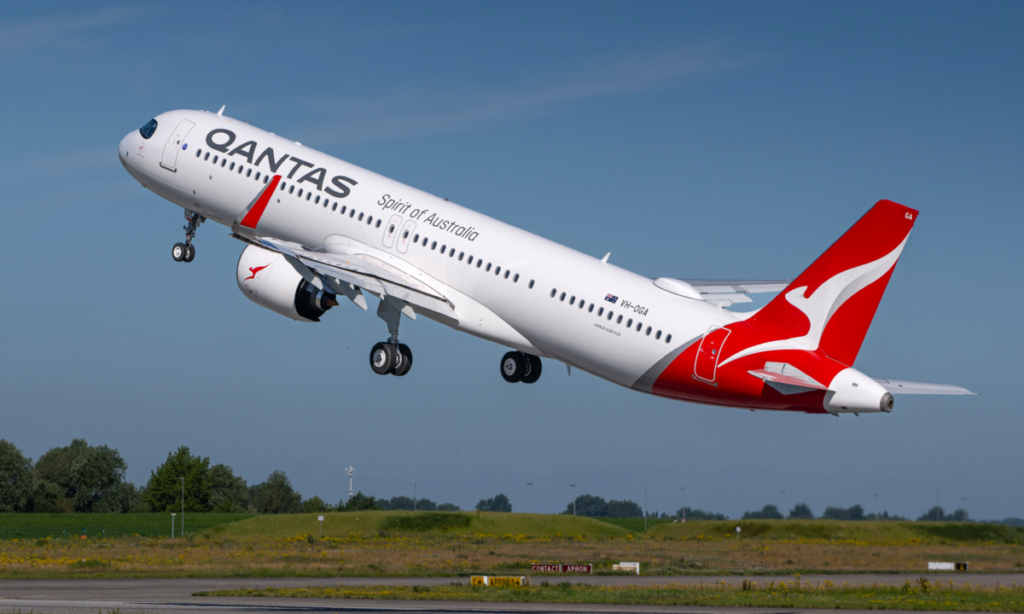
Qantas introduced the Airbus A220 on Wellington (WLG) to Brisbane (BNE) services in February. The aircraft supports the airline’s regional international growth strategy with improved fuel efficiency and passenger comfort.
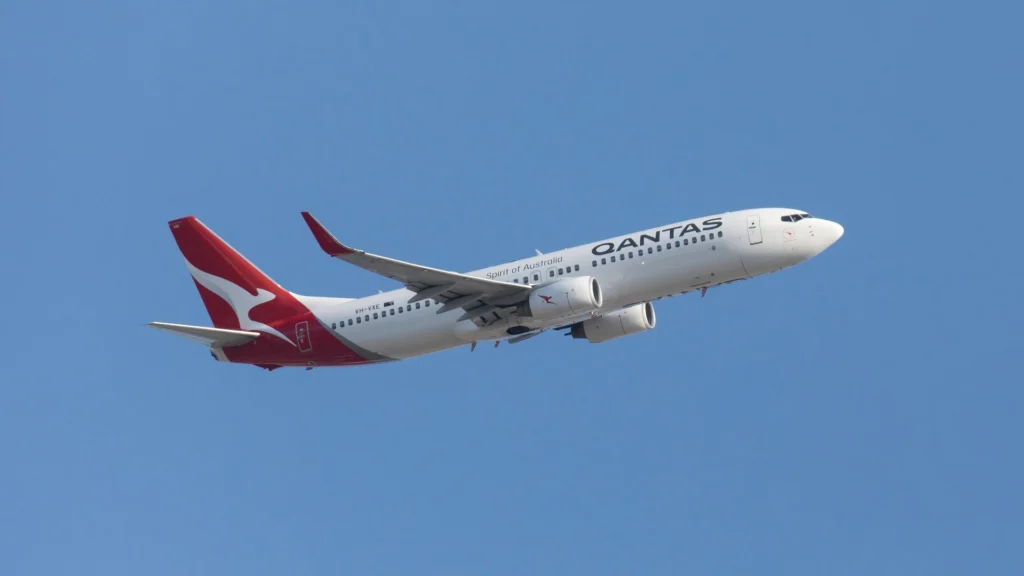
The carrier is also introducing Economy Plus seating on Boeing 737 services operating to New Zealand.
The upgraded product includes up to 40% more legroom, priority boarding access, and dedicated overhead baggage space.
Hudson said the combined upgrades represent a meaningful shift in the customer experience across the region rather than isolated service improvements.

Jetstar Expands Low-Cost Operations
Jetstar (JQ) is currently undergoing its biggest-ever expansion in New Zealand.
Qantas and Jetstar added more than 800,000 trans-Tasman seats during the past 12 months as the airline group expanded network capacity between Australia and New Zealand.
Jetstar launched seven new domestic and trans-Tasman routes over the past two years.
Hudson said nearly 400,000 Jetstar passengers travelled on trans-Tasman flights priced below NZD 200 last year.
She also stated that Jetstar domestic fares remain consistently 40% to 50% lower than competing airlines on comparable routes.
Qantas said its dual-brand strategy allows the group to serve different segments of the market efficiently.
The full-service Qantas brand focuses on premium travelers, international connectivity, and loyalty growth, while Jetstar supports budget-conscious travelers through lower fares and expanded route access.
Hudson said the airline group wants to ensure travelers have options whether they are flying for work or traveling on a budget.
Qantas Outperforms Air New Zealand Financially
Qantas reported an after-tax profit of AUD 1.098 billion for the six months ending December 31.
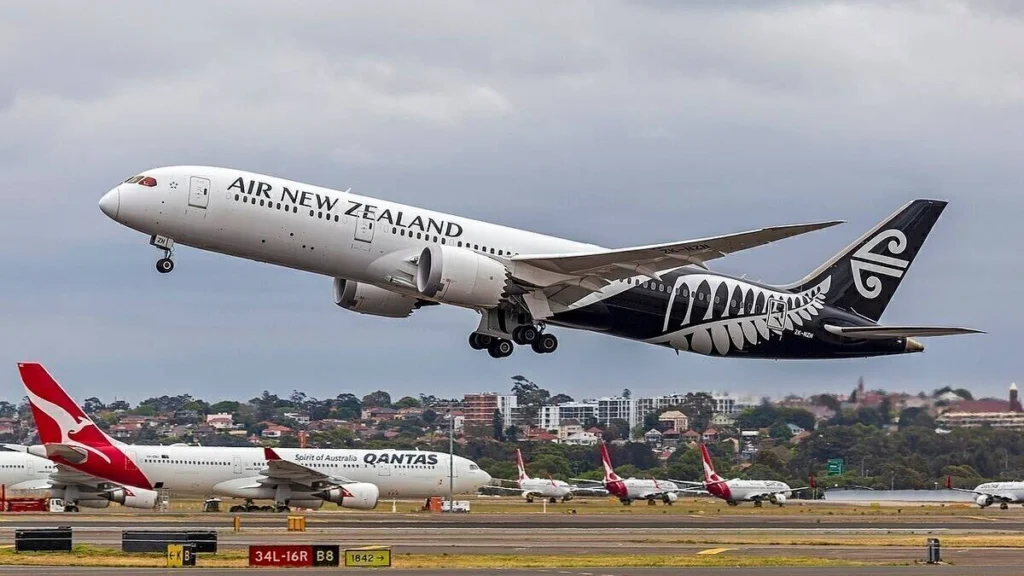
During the same reporting period, Air New Zealand reported a loss of NZD 40 million as the carrier began implementing operational cutbacks.
The original report described Air New Zealand as “bleeding money” while Qantas continued expanding operations in the region.
Aviation analytics provider OAG ranked Qantas second globally in its major airline punctuality category for April. The airline achieved an on-time performance score of 87.77% and ranked 16th overall worldwide.
Air New Zealand ranked 56th globally with an on-time performance score of 82.34%. Jetstar ranked 101st globally with 75.84% punctuality.
Loyalty Growth Strengthens Qantas Position
Qantas now has more than one million Frequent Flyer members in New Zealand, making it the airline’s largest loyalty market outside Australia.
Andrew Glance previously said the airline had introduced clearer pathways for members to advance through frequent flyer status tiers.
Glance said Qantas was seeing strong engagement and activation levels among New Zealand-based members.
Hudson stated that New Zealand is not simply a destination market for Qantas but a country where the airline group has established a significant operational presence.
Qantas currently employs approximately 1,800 people across New Zealand and continues expanding local operations.
Hudson said the airline group intends to work more closely with the New Zealand Government while focusing on increased connectivity, stronger accessibility, and improved affordability for travelers.
She said the airline’s long-term priorities remain centered on delivering more routes, more access, and more affordable travel options across the region.
Stay tuned with us. Further, follow us on social media for the latest updates.
Join us on Telegram Group for the Latest Aviation Updates. Subsequently, follow us on Google News
