

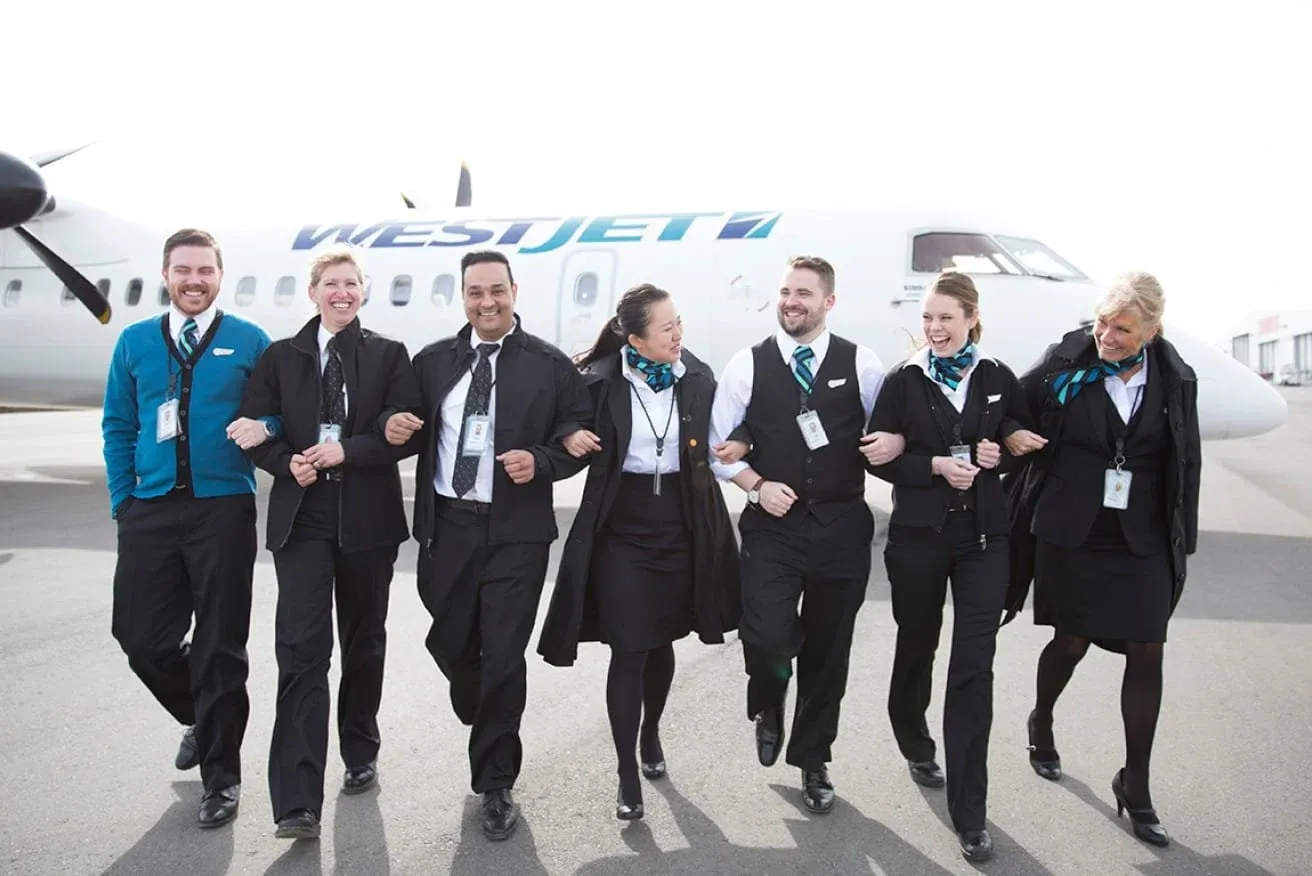
CALGARY– Flight attendants at WestJet (WS) have begun voting on a strike mandate as contract negotiations enter a critical stage, increasing pressure on both the airline and the union to reach a new labour agreement.
The vote, which opened on Wednesday, comes after more than 10 months of bargaining over wages, scheduling, and compensation for work performed before and after flights.
The vote involves more than 4,000 cabin crew members represented by the Canadian Union of Public Employees (CUPE) Local 8125.
Negotiations are continuing at Calgary International Airport (YYC) until Friday, while union members have until July 15 to decide whether to authorize strike action if talks fail to produce an agreement.

WestJet Strike Vote Begins
The strike mandate vote is intended to strengthen the union’s negotiating position rather than immediately trigger industrial action. Union officials have emphasized that a majority “yes” vote would provide leverage during bargaining but would not automatically lead to a strike.
According to CUPE Local 8125, the central dispute involves how flight attendants are compensated for their duties.
The union argues that cabin crew members complete an average of 35 hours of unpaid work every month, including safety checks, passenger boarding, briefings, delays, and post-flight responsibilities that extend beyond airborne flight time.
Union president Alia Hussain said the bargaining committee remains focused on reaching a negotiated settlement.
She added that members are seeking a fair collective agreement that properly recognizes the work performed throughout the entire duty day while avoiding unnecessary disruption to passengers.
The union has also scheduled a day of action on July 14 at Calgary International Airport to raise public awareness of its concerns while negotiations continue, CTV News reported.
Possible Strike Action Timeline
Although the strike vote has begun, any work stoppage remains subject to Canada’s labour process. Hussain said the earliest legal strike or employer lockout could occur is August 2 if several conditions are met.
Those conditions include the failure to reach a negotiated agreement, no extension of the federal conciliation process, and the required 72-hour strike or lockout notice being issued. Until then, both parties remain engaged in mediated negotiations.
The union has repeatedly stated that its preferred outcome is a negotiated contract rather than industrial action. Officials say discussions at the bargaining table remain active despite significant differences over compensation and working conditions.

WestJet Response To Negotiations
WestJet maintains that it remains committed to reaching a mutually acceptable agreement while ensuring the airline stays financially competitive.
The carrier described strike authorization votes as a routine part of collective bargaining and stressed that a successful mandate does not necessarily mean a strike will follow.
The airline also defended its existing compensation model, explaining that cabin crew are paid through a credit-hour system commonly used by North American airlines.
Under this approach, flight time, delays, ground duties, and other required responsibilities are combined into a higher credit rate rather than being paid separately on an hourly basis.
WestJet said its cabin crew members are compensated according to the collective agreement and rejected claims that employees perform unpaid work.
The airline stated that all duty time is calculated and paid under the existing contract while negotiations continue toward a revised collective agreement.
With voting continuing until July 15 and conciliation talks still underway, the coming weeks are expected to determine whether WestJet and its flight attendants can reach an agreement before the parties become legally eligible for labour action in early August.
Stay tuned with us. Further, follow us on social media for the latest updates.
Join us on Telegram Group for the Latest Aviation Updates. Subsequently, follow us on Google News
