


LONDON- British Airways (BA) has expanded its voice and video call policy to cover every aircraft in its fleet fitted with Wi-Fi, removing the earlier restriction that limited the feature to planes equipped with the carrier’s fast and free Starlink service.
The updated rule applies to all routes operated by the airline, including long-haul services to the United States from London Heathrow Airport (LHR).
The decision arrives roughly a month after British Airways first announced calling permissions on its Starlink-enabled aircraft, a move that drew sharp criticism from frequent flyers.
Rather than reversing course, the airline has chosen to standardize the policy across its entire connected fleet, aligning its approach with Gulf carriers such as Emirates (EK) and Qatar Airways (QR).
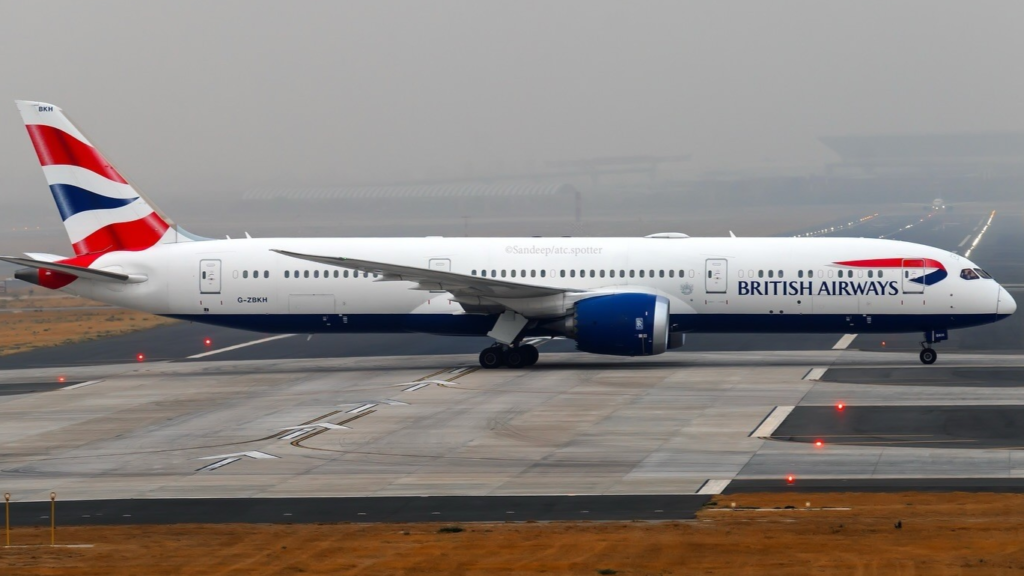
British Airways Allows Voice and Video Calls
British Airways concluded that passengers increasingly view in-flight connectivity as a tool for staying in touch with loved ones through phone calls or FaceTime, as well as joining work meetings on Zoom during long sectors.
The carrier determined that maintaining a partial ban would create confusion, with passengers permitted to call on one flight and admonished or threatened by cabin crew on another.
The airline also acknowledged a practical reality: passengers would flout the rules if the ban remained in place, creating direct conflict with cabin crew tasked with enforcement.
By harmonizing the policy across its network, British Airways aims to reduce friction onboard and avoid placing crew members in the role of disciplinarians.
Until now, voice and video calls were assumed to be viable only on Starlink-equipped aircraft, since older Wi-Fi systems on the rest of the fleet were thought to lack the bandwidth needed to support multiple passengers making video calls simultaneously.
British Airways has now set those concerns aside, opting for a uniform policy across older Wi-Fi systems and the next-generation Starlink network alike.
The airline is rushing to align its rules across its network so passengers no longer face inconsistent treatment from one flight to the next.

Onboard Etiquette Guidelines for Passengers
British Airways has shared the following expectations for travellers using the new freedom: “To make sure every customer has an enjoyable flight, we ask you to follow these guidelines.”
Passengers making calls are asked to keep their voices low and use headphones at all times. Headphones are also required for any audio or video content played on personal devices, including iPads and laptops.
The carrier has additionally reminded customers not to access offensive material or watch and download inappropriate content, noting that some sites are blocked on its onboard network.
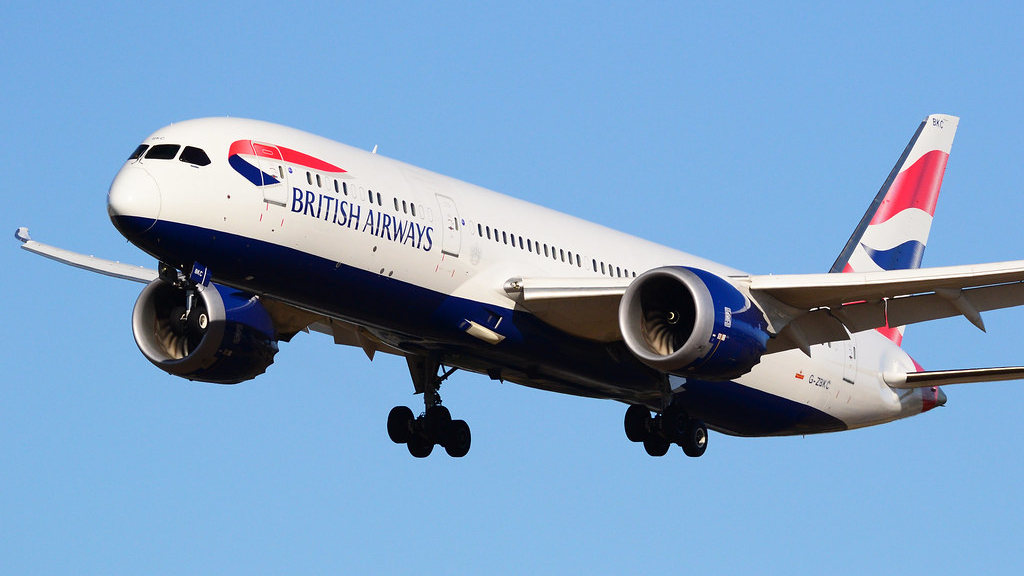
Shifting Passenger Priorities Drive the Change
According to PYOK, the airline is applying a commonsense approach shaped by evolving traveller expectations.
In-flight Wi-Fi was a niche request 7 or 8 years ago, with little real demand from passengers.
Today, it has become a near non-negotiable feature for an increasing number of travellers, which explains why airlines are rushing to install services like Starlink to keep up with that demand.
The new policy places British Airways alongside Emirates (EK) and Qatar Airways (QR), both of which have long allowed in-flight connectivity and onboard calling.
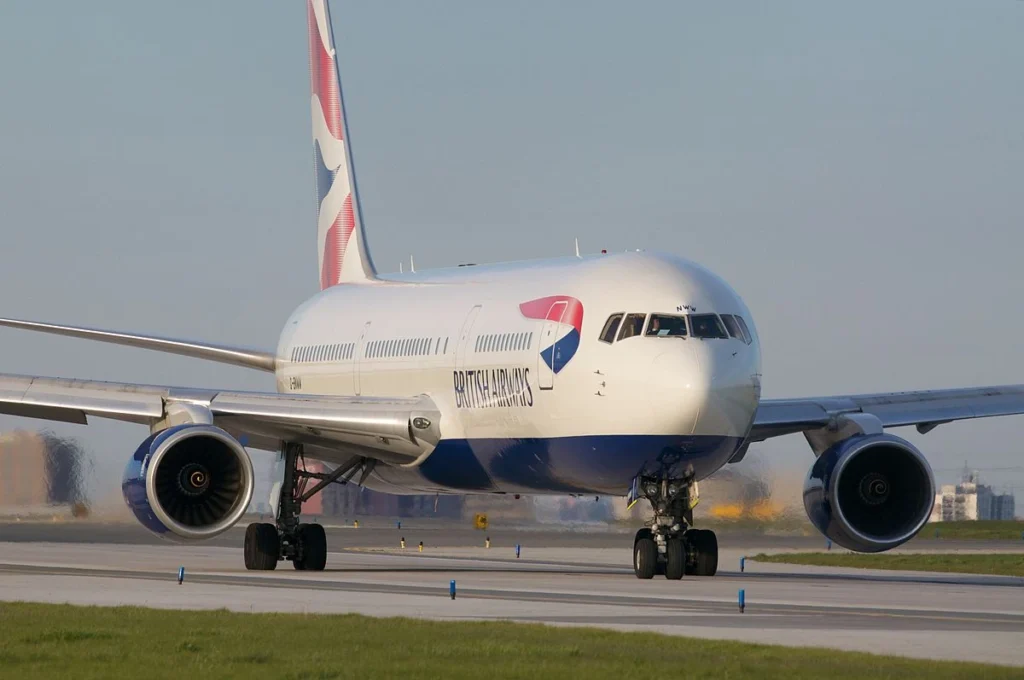
How the Policy Contrasts With US Carriers
British Airways now stands in clear contrast to its American rivals, where voice and video calls remain explicitly prohibited.
The ban was codified through the FAA Reauthorization Act of 2018, and in 2020 the US Federal Communications Commission confirmed it was abandoning a proposal to expand the use of cellphones on airplanes.
The Association of Flight Attendants (AFA-CWA) led fierce campaigning behind the US restriction, warning that “expanded cell phone use would compromise Flight Attendants’ ability to maintain order in an emergency, increase cabin noise and tension among passengers, and add unacceptable risk to aviation security.”
The US ban applies to all American commercial passenger planes. Importantly, it does not extend to foreign carriers flying to and from the United States, which is why British Airways passengers can continue making calls on transatlantic services to cities such as New York (JFK), Los Angeles (LAX), and Chicago (ORD).
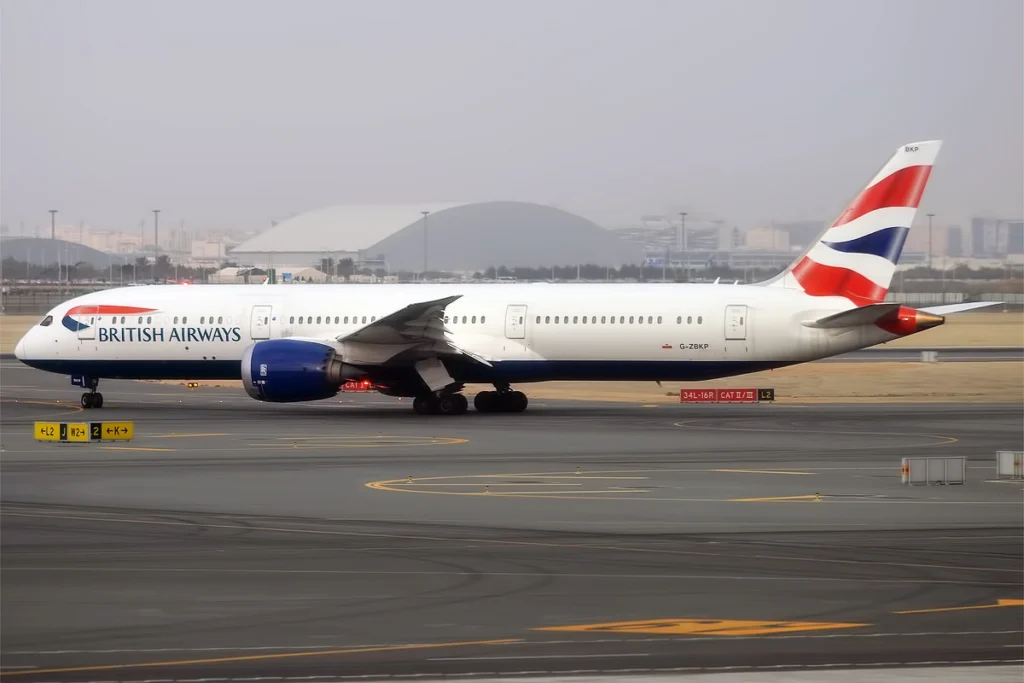
What This Means for Transatlantic Travellers
Passengers flying British Airways between the United Kingdom and the United States can now make voice and video calls throughout the journey, provided the aircraft is fitted with Wi-Fi.
The freedom does not extend to US carriers operating the same routes, meaning travellers booking with American Airlines (AA), Delta Air Lines (DL), or United Airlines (UA) remain bound by the existing federal prohibition.
The policy update also signals a broader divergence in how international and US airlines treat in-flight connectivity, with European and Gulf operators leaning into expanded usage while American carriers maintain the long-standing restriction.
Stay tuned with us. Further, follow us on social media for the latest updates.
Join us on Telegram Group for the Latest Aviation Updates. Subsequently, follow us on Google News
