

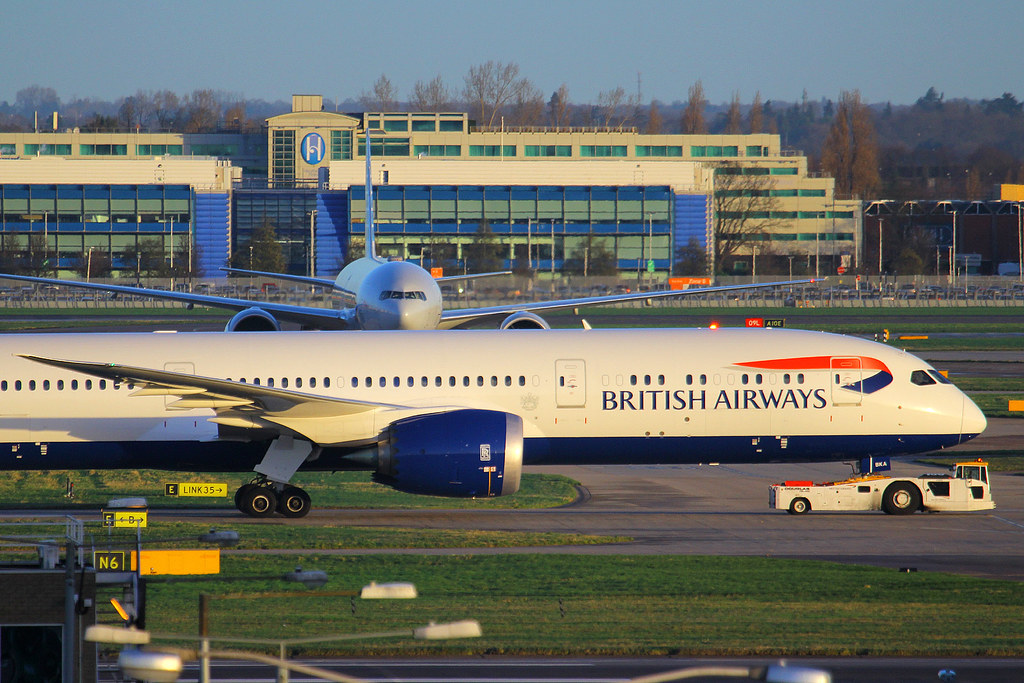
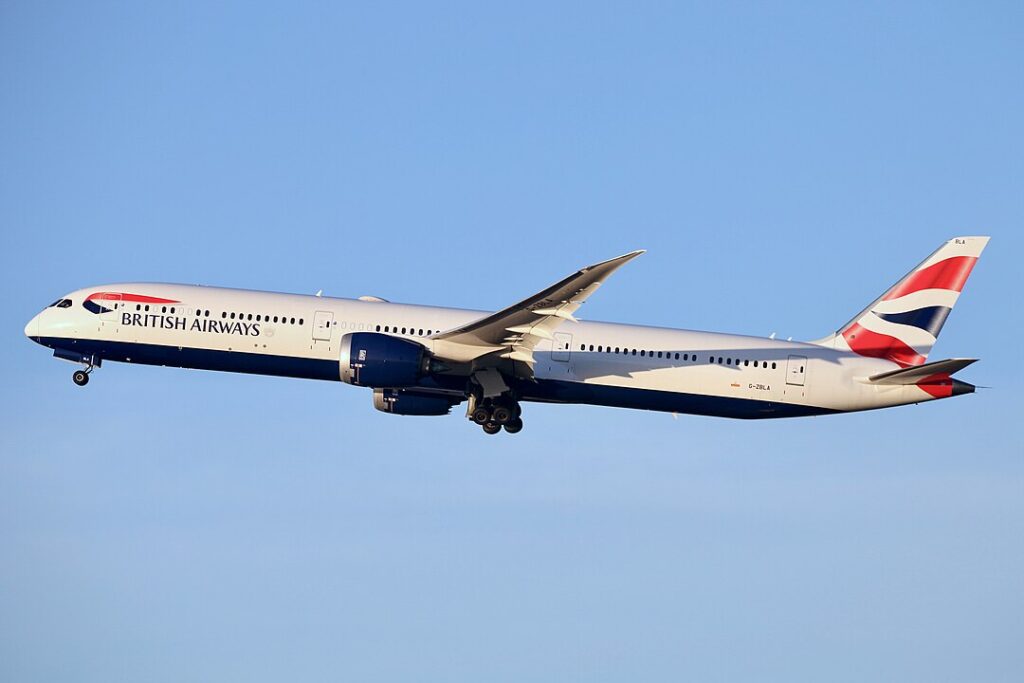
LONDON- British Airways (BA) grounded a Boeing 787-10 Dreamliner at London Heathrow Airport (LHR) on May 3, 2026, after a set of portable engineering steps became lodged inside an open maintenance hatch beneath the aircraft’s fuselage.
The widebody jet, valued at approximately $355 million, had been scheduled to operate flight BA299 from Heathrow (LHR) to Chicago O’Hare International Airport (ORD).
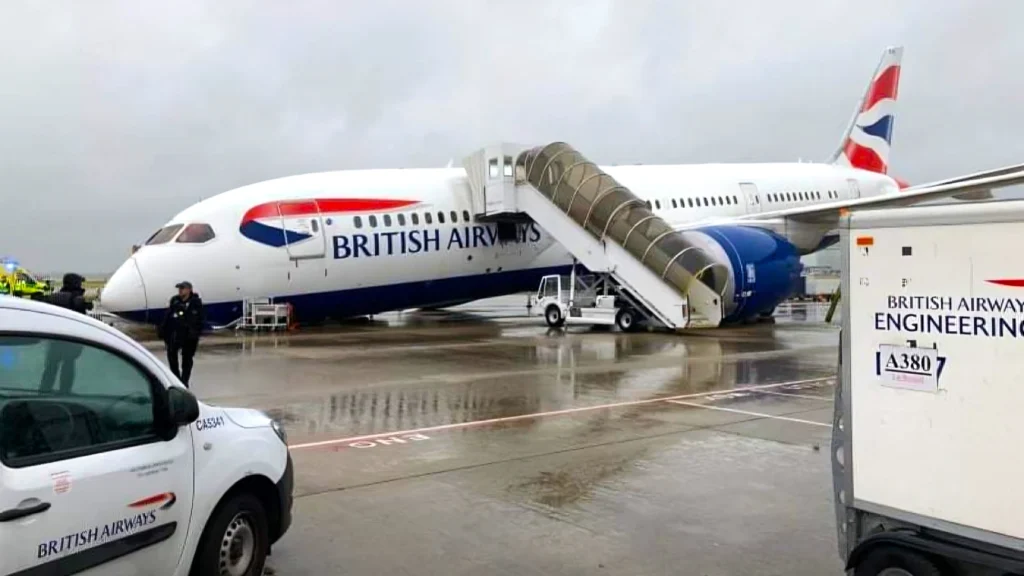
The incident occurred when maintenance crews positioned the steps under the aircraft to replace oxygen cylinders before the jet had been refuelled. As refuelling progressed and the aircraft’s weight increased, the fuselage lowered onto the steps, effectively impaling itself on the equipment.
Passengers bound for Chicago watched from buses on the remote stand as engineers, police officers, and airport staff examined the situation over several hours, according to PYOK.
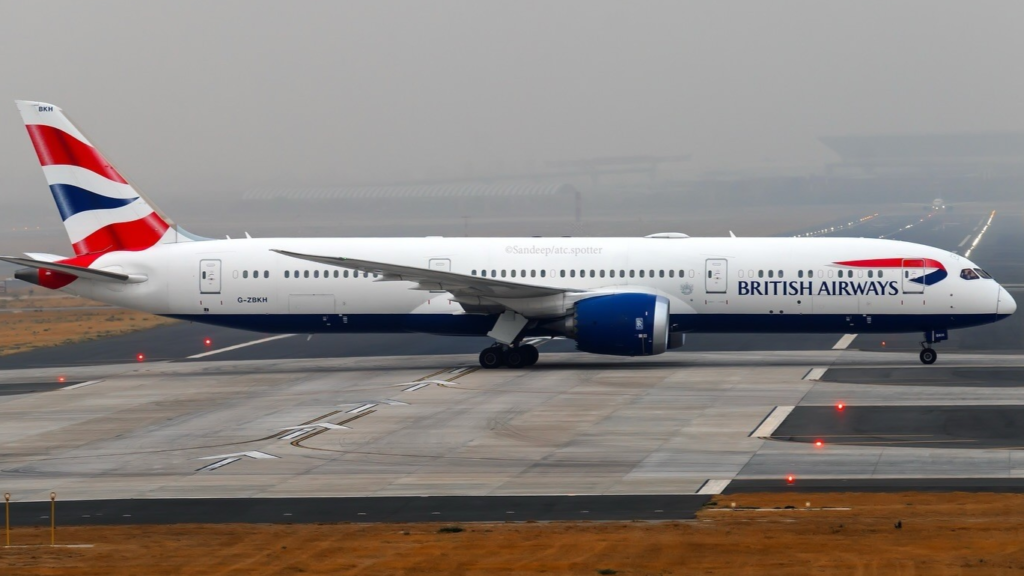
British Airways 787-10 Grounded
The sequence of events began when British Airways engineers needed to access a hatch on the underside of the Boeing 787-10 to replace oxygen cylinders ahead of the transatlantic service. A set of yellow portable steps was placed beneath the fuselage to reach the hatch. At that point, the aircraft had not yet received its fuel load.
A refuelling truck arrived shortly after and began pumping fuel into the aircraft. The Boeing 787-10 can carry up to 126,000 litres of jet fuel for long-haul operations. As thousands of litres of fuel entered the tanks and cargo was loaded into the hold, the aircraft’s overall weight increased significantly.
The added weight caused the fuselage to settle lower on its landing gear, and the open hatch descended directly onto the engineering steps below.
The result was a set of maintenance stairs physically stuck inside the fuselage hatch. The aircraft could not move, and the steps could not be easily removed without risking further structural damage.
Passengers Left Stranded on Buses With Little Communication
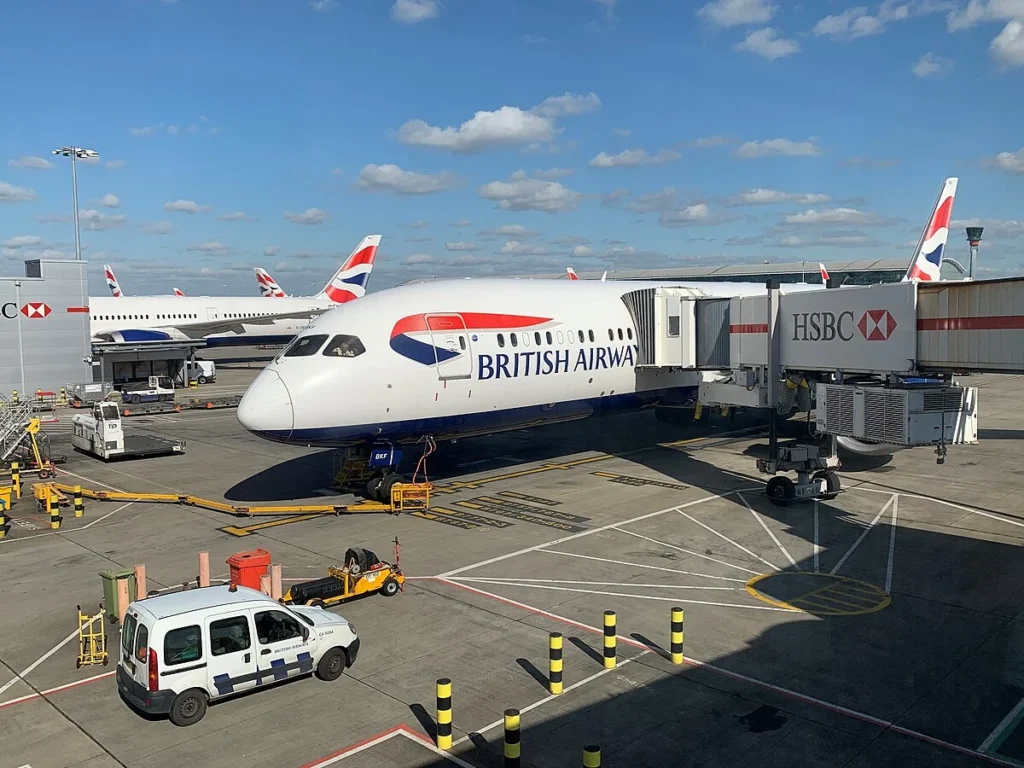
Passengers booked on BA-299 had already been transported by bus to a remote stand where the 787-10 was parked. They arrived to find the aircraft surrounded by a growing crowd of engineers and airport personnel attempting to assess the damage.
One passenger described the scene on Reddit, noting that 15 to 20 people had come to inspect the situation, taken photos, and walked away without offering a solution.
The passenger called the situation a “shambles” and highlighted the frustration caused by poor communication from the airline. Police officers also arrived at the scene, reportedly photographing the unusual predicament.
After approximately 90 minutes of waiting on crowded and uncomfortable buses, British Airways transported the passengers back to the terminal. The airline then confirmed that the aircraft would not be operating the flight. The one-year-old aircraft, registered as G-ZBLJ, remained grounded at Heathrow two days after the incident.
Similar Incidents
This is not the first time a British Airways Boeing 787 has suffered significant ground damage at Heathrow. In June 2021, a Boeing 787-8 Dreamliner sustained serious damage when its nose landing gear collapsed during a turnaround at the airport.
That earlier incident occurred after maintenance engineers working on the nose gear accidentally removed a locking pin that secured the front wheels in place. The engineer involved was reportedly unfamiliar with the aircraft type’s specific configuration.
At the time, the 787-8 was operating as a cargo aircraft, transporting medical supplies between China and the United Kingdom during the COVID-19 pandemic.
The 2021 aircraft was grounded for an extended period for repairs but has since returned to active service. The latest incident raises fresh questions about ground handling procedures and coordination between maintenance and refuelling teams at one of the world’s busiest airports.
Coordination Gaps Between Ground Operations Teams
The core issue in the May 2026 incident appears to be a breakdown in coordination between maintenance and refuelling operations.
The engineer who positioned the steps did not anticipate that refuelling would begin while the hatch remained open and the steps were still in place. Standard ground procedures typically require clear sequencing of maintenance tasks and refuelling to prevent exactly this type of conflict.
The Boeing 787 family sits noticeably higher off the ground when empty compared to when fully loaded. This height differential is a well-known characteristic of the aircraft type, and ground crews are generally trained to account for it. In this case, however, the timing overlap between the two activities created an avoidable and costly situation.
British Airways has not yet issued a public statement on the incident or disclosed the extent of any structural damage to the aircraft.
Stay tuned with us. Further, follow us on social media for the latest updates.
Join us on Telegram Group for the Latest Aviation Updates. Subsequently, follow us on Google News
