

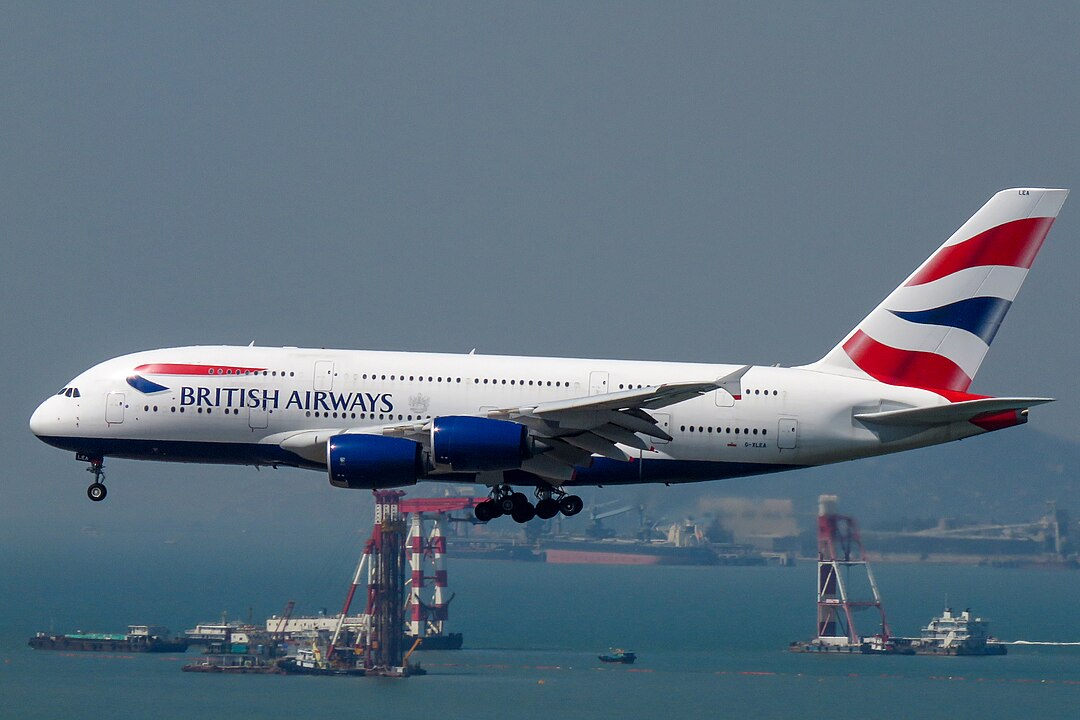
LONDON- British Airways (BA) Flight BA54, operated by an Airbus A380-800, was flying from O.R. Tambo International Airport, Johannesburg (JNB), to London Heathrow (LHR), when a reported weather radar malfunction forced the aircraft to turn back.
The flight had already faced more than 5 hours of ground delays before departing Johannesburg. After spending almost 7 hours in the air, the A380 returned to JNB, burned fuel in a holding pattern to reach a safe landing weight, and later completed the London journey after repairs.
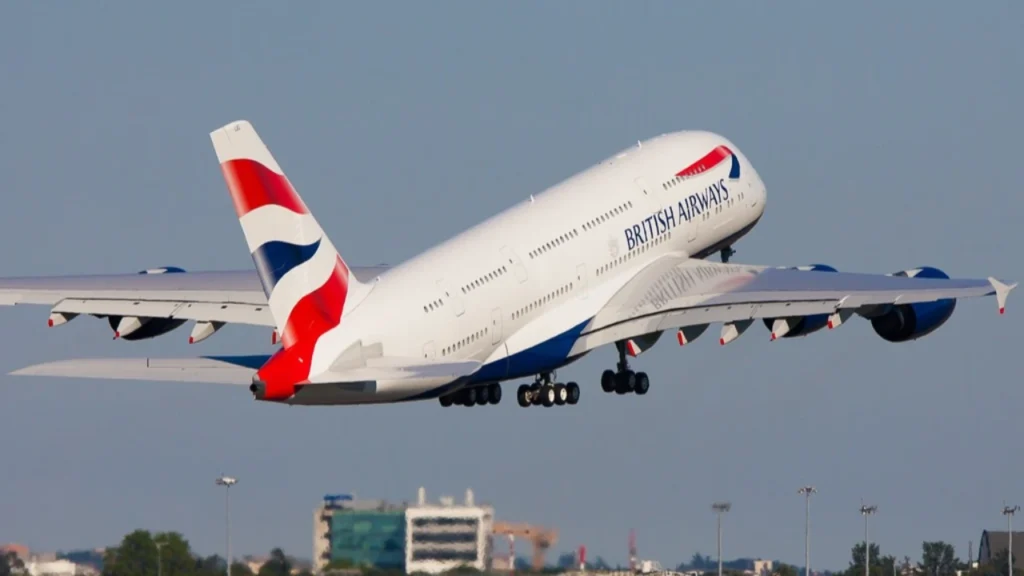
British Airways A380 Turns Back Over Central Africa
Flight BA54 was scheduled to depart Johannesburg at 21:15 SAST on Friday, August 7, for an approximately 11 hour and 15 minute flight to London Heathrow.
The service initially experienced more than 5 hours of ground delays. The Airbus A380-800, registered G-XLEJ, eventually departed Johannesburg at 02:36 SAST on August 8.
After takeoff, the aircraft climbed to approximately 34,000 feet and tracked north toward London. It spent more than 2 hours flying through the airspace of Botswana and Zambia before reaching the Democratic Republic of Congo.
It was over the DRC that the flight crew detected a malfunction involving the aircraft’s weather radar system. The reported failure became a concern because the planned route crossed the equatorial region, where convective weather can make reliable weather detection and avoidance particularly important.
Rather than continue the long-haul flight without an operational weather radar system, the crew discontinued the planned route and turned the A380 back toward Johannesburg.
Airlive reported the incident and the subsequent return of the aircraft to its departure airport.
The A380 had departed with a large fuel load for its planned long-haul journey from Johannesburg to London. After turning back, the aircraft was therefore carrying more fuel than it would normally need for an immediate landing.
The aircraft’s maximum landing weight is lower than its maximum takeoff weight. Returning shortly after departure can therefore require an aircraft to reduce its weight before landing.
As the A380 approached northern South Africa, the crew descended to approximately 25,000 feet and entered a racetrack holding pattern north of Johannesburg.
The aircraft remained in the holding pattern for approximately two hours, burning fuel to reduce its weight toward a suitable maximum landing weight.
The holding procedure allowed the crew to manage the aircraft’s weight before returning to O.R. Tambo International Airport.
British Airways Returns to Johannesburg
The Airbus A380 eventually landed back at O.R. Tambo International Airport almost seven hours after its initial departure.
The passengers and crew returned to the gate without incident. The aircraft was then taken for maintenance checks and repairs related to the reported weather radar problem.
The return meant that a flight scheduled to connect Johannesburg with London had effectively completed a lengthy airborne return to its starting point before the aircraft could be prepared for another departure.
Same A380 Operates BA54 Again
Following maintenance checks and repairs to the weather radar system, engineers cleared G-XLEJ to return to service.
The same Airbus A380 operated BA54 again later on August 8. It departed Johannesburg at 22:48 SAST, compared with the regularly scheduled departure time of 21:15 SAST for that evening.
The second departure was therefore just over an hour behind schedule.
This time, the A380 successfully completed the planned long-haul journey to London Heathrow without further disruption.
Stay tuned with us. Further, follow us on social media for the latest updates.
Join us on Telegram Group for the Latest Aviation Updates. Subsequently, follow us on Google News
