

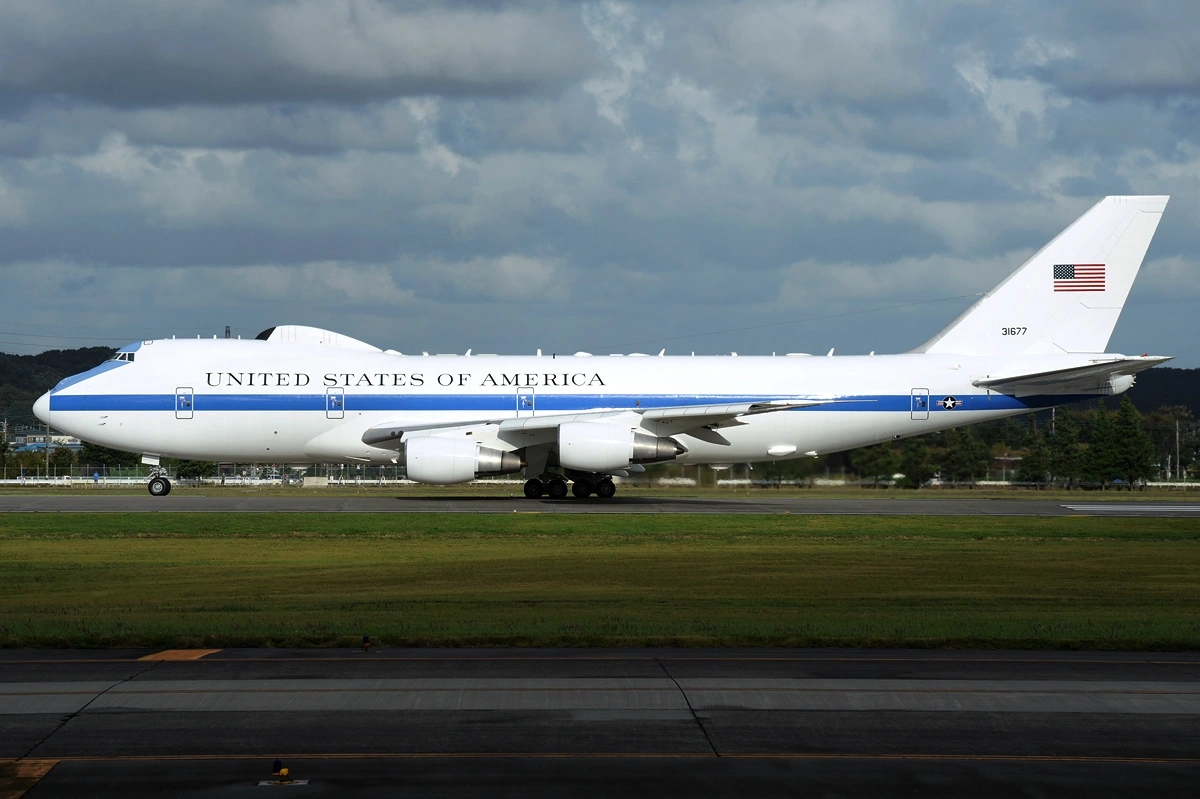
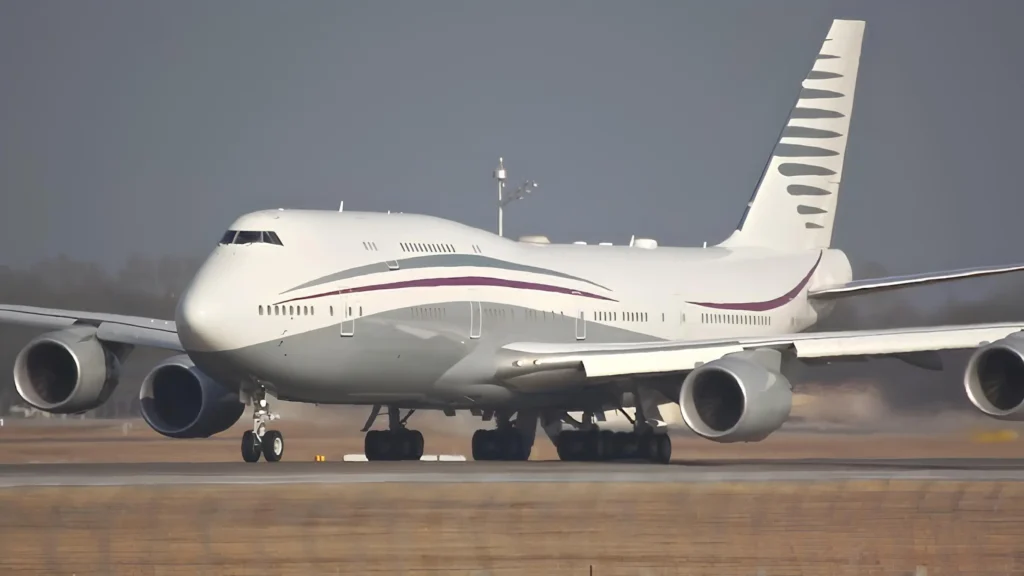
WASHINGTON, D.C.- The United States Air Force has begun flight testing a Boeing 747-8i donated by Qatar to serve as an interim Air Force One amid delays in the VC-25B program.
The aircraft, designated as the VC-25B Bridge Aircraft, is undergoing rapid modification and is expected to be delivered no later than summer 2026. Its limited upgrades, defensive gaps, and high cost raise questions about its operational role.
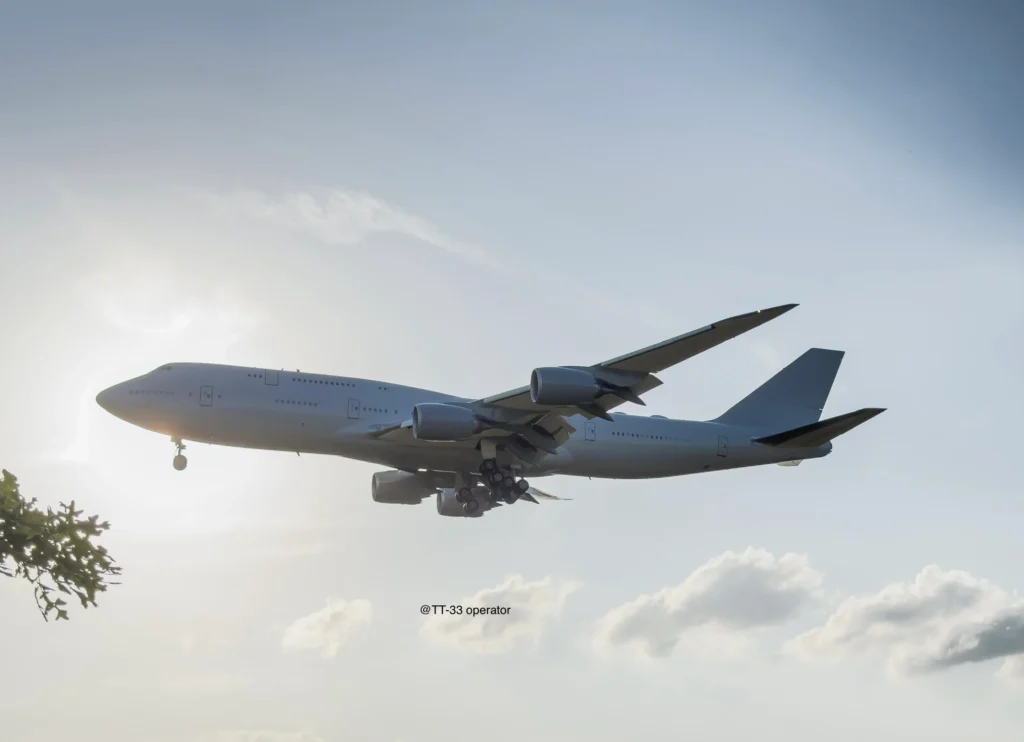
Qatari 747 Interim Air Force One Test Flight
The US Air Force is advancing a temporary solution to sustain presidential airlift capability while Boeing’s VC-25B aircraft remain delayed until at least 2028.
The aircraft, a former Boeing Business Jet operated by Qatar, was formally received by the Pentagon in May last year and quickly entered a fast-track modification program.
The concept of a “bridge aircraft” emerged to fill this capability gap. The platform is intended to support limited presidential transport missions until fully equipped VC-25B aircraft are delivered.
However, uncertainty remains regarding when it will begin actual VIP operations and whether it will receive a permanent designation within the fleet.
Aviation Week first reported the aircraft’s entry into flight testing, confirming the program’s accelerated pace.

Flight Testing Activity and Livery Changes
The aircraft has already conducted test flights using the call sign VADER01. It was tracked flying from Majors Field in Greenville, Texas, a key location for large aircraft modification work.
The recorded flight path included:
- Tulsa, Oklahoma
- Amarillo, Texas
- Abilene, Texas
The aircraft completed a full circuit before returning to Majors Field. Public flight tracking and aviation spotters have monitored these movements, highlighting the aircraft’s increasing test activity.
The Greenville facility, operated by L3Harris, specializes in complex modification programs for large military aircraft, making it central to this rapid conversion effort.
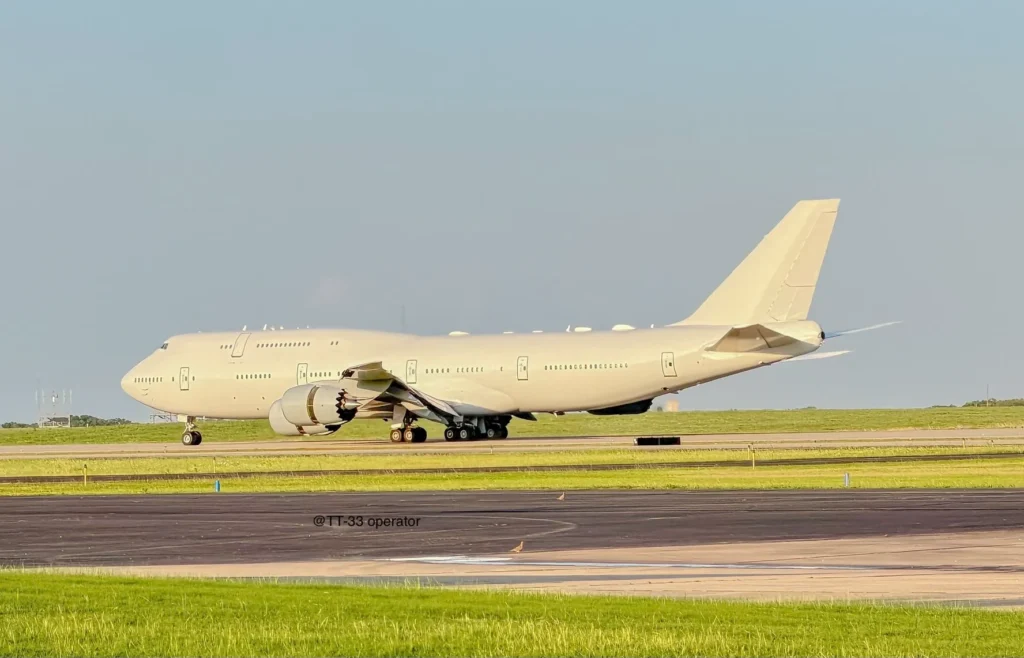
The aircraft is currently flying in a plain white base livery during testing. It was originally delivered in Qatar’s maroon, white, and gray striped scheme.
Plans indicate it will be repainted into a new design featuring red, dark blue, and white colors associated with the Trump-era Air Force One concept. This repaint will likely occur closer to operational deployment.
Modification Scope and Communication Systems
The aircraft already featured a highly advanced broadband satellite communication suite before transfer. Current modifications appear to be limited in scope based on the available imagery.
Observed upgrades include:
- Installation of additional aerials
- Integration of UHF satellite communication “platter” antennas
Despite these additions, the aircraft shows remarkably few external changes compared to what is typically required for a presidential transport platform.
According to TWZ, converting a commercial aircraft into a fully capable Air Force One involves extensive structural and electronic transformation, far beyond what is currently visible on this platform.
Defensive Systems and Survivability Limitations
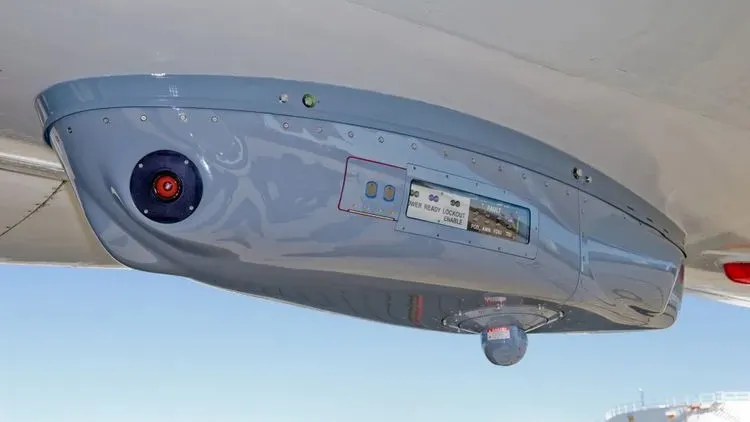
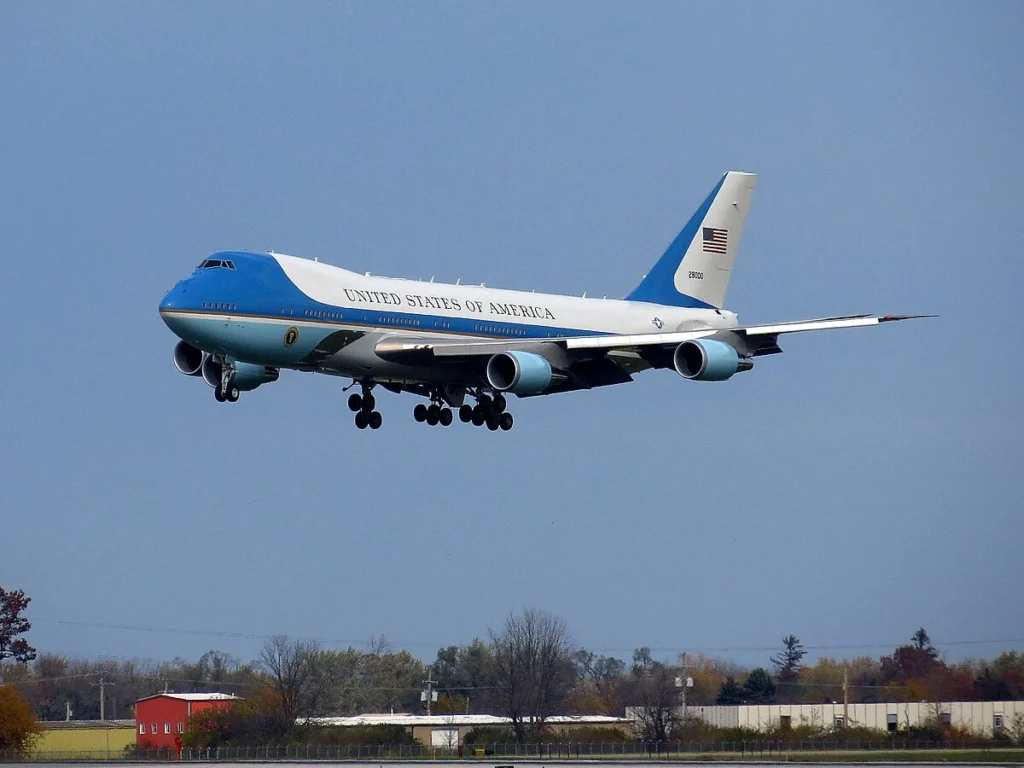
A major limitation of the VC-25B Bridge Aircraft is its uncertain defensive capability. Standard Air Force One aircraft include advanced survivability systems such as:
- Electromagnetic pulse (EMP) hardening
- Missile approach warning sensors
- Directed Infrared Countermeasures (DIRCM)
- Laser countermeasure turrets
- Electronic warfare and signal protection systems
They also feature the legacy Matador infrared countermeasure system and other classified defensive technologies.
In contrast, this aircraft shows no clear evidence of a fully integrated defensive suite. Likely, EMP hardening cannot be implemented due to structural constraints.
At a minimum, modular DIRCM systems could be added. Examples include:
- Elbit C-MUSIC
- Northrop Grumman Guardian
These systems are used on some VVIP aircraft and commercial fleets, including Israel’s El Al airline. However, they provide significantly less protection than the integrated systems on existing VC-25A aircraft.
Security Requirements and Procurement Constraints
Presidential aircraft require strict control over component sourcing to prevent espionage and sabotage. Every part must be vetted and secured under tight protocols.
In this case, it is likely that several of these requirements were relaxed to accelerate the aircraft’s entry into service. This introduces additional complexity and potential risk in the platform’s deployment.
The aircraft must also support critical mission functions, including secure global communications and the ability to transmit high-level military commands, including nuclear directives.
These capabilities demand deep integration across the aircraft’s structure and systems.
Operational Limitations and Strategic Concerns
Due to incomplete defensive and structural upgrades, the aircraft is expected to operate under restrictions. Likely operational environments include:
- Domestic United States airspace
- Low-threat international regions
This limits its flexibility compared to a fully capable Air Force One aircraft.
The conversion cost is estimated to approach $400 million. Given its expected service life of roughly two years, this raises valid concerns about cost-effectiveness and strategic necessity.
There are also broader legal and ethical discussions surrounding the acceptance and use of a foreign-donated aircraft for presidential operations.
Future Outlook
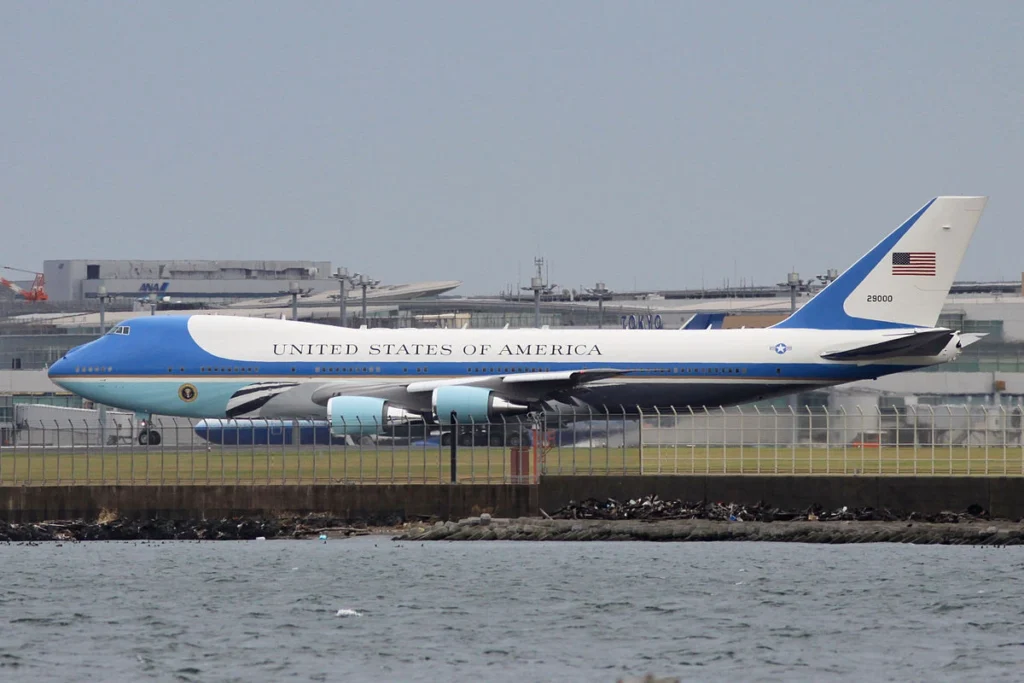
The interim aircraft is expected to enter service by summer 2026 and remain operational until the first VC-25B aircraft is delivered, currently projected for mid-2028.
The Air Force continues to collaborate with Boeing to accelerate the primary program. Until then, the VC-25B Bridge Aircraft will serve as a temporary and limited solution to maintain continuity in presidential airlift capability.
Stay tuned with us. Further, follow us on social media for the latest updates.
Join us on Telegram Group for the Latest Aviation Updates. Subsequently, follow us on Google News
