

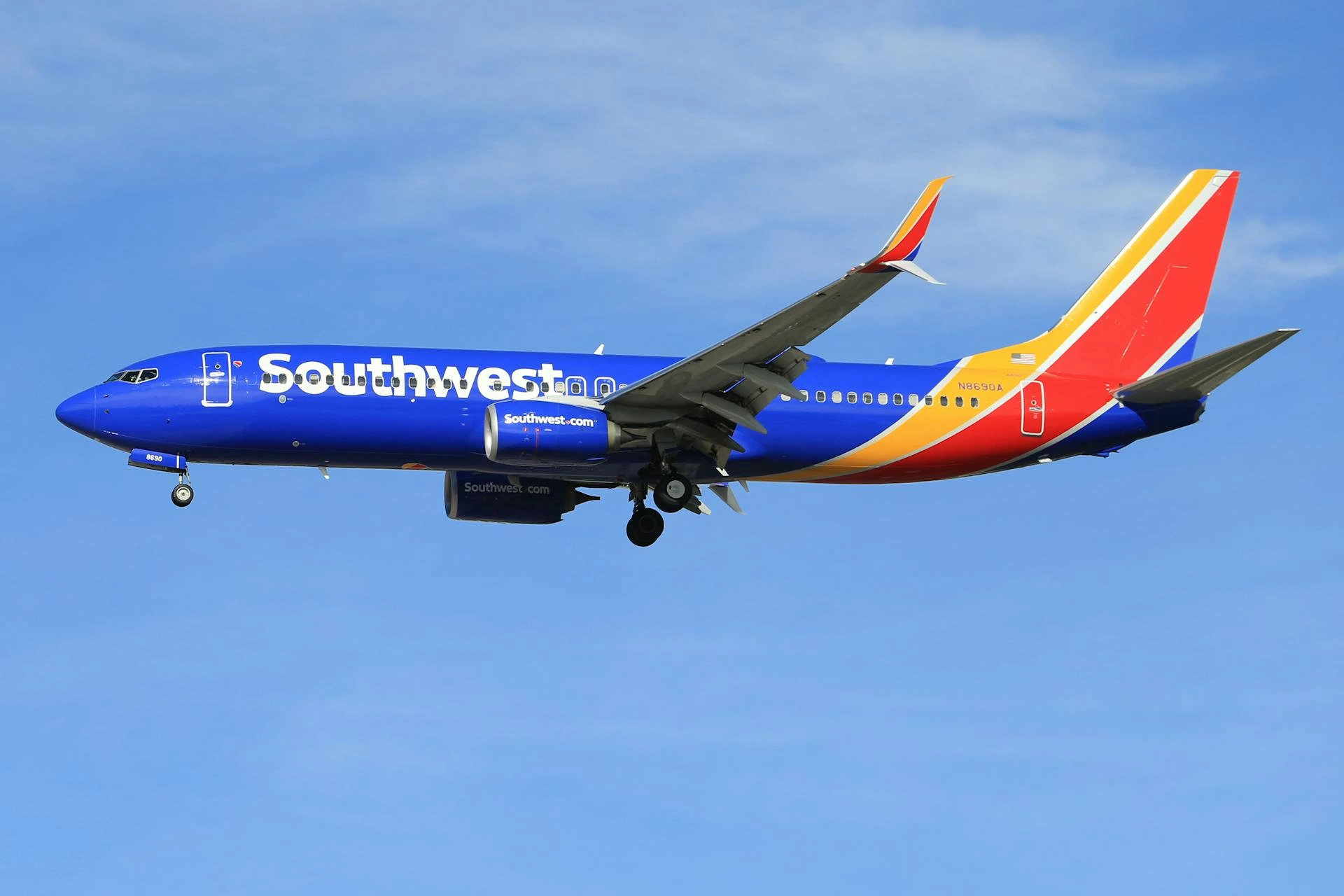
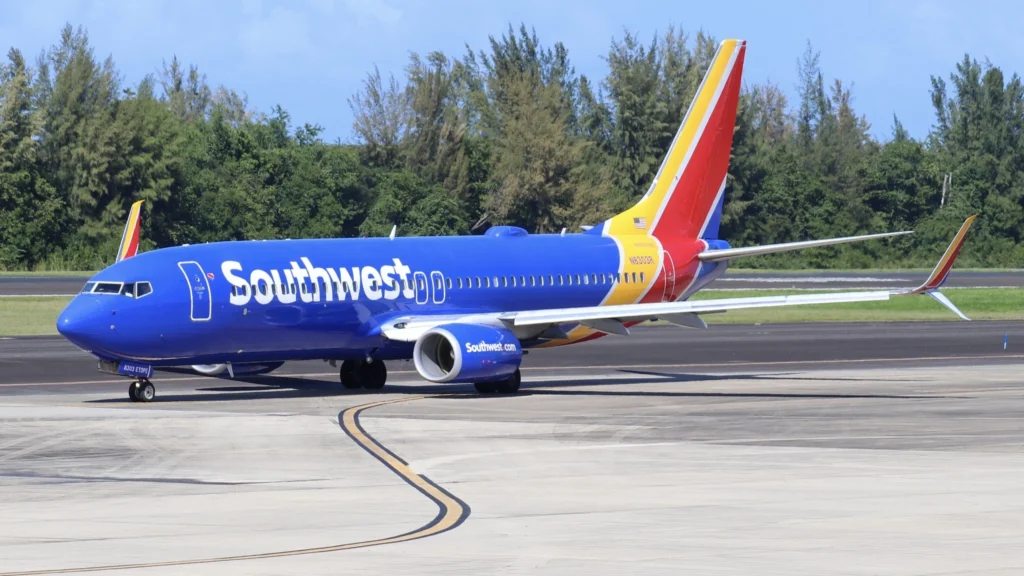
LAS VEGAS- A Southwest Airlines (WN) Boeing 737-700, registration N200WN, operating flight WN568 from Las Vegas Harry Reid International Airport (LAS) to Reno-Tahoe International Airport (RNO), returned to Las Vegas (LAS) shortly after departure following a captain incapacitation event.
The incident occurred when the Head-Up Display (HUD) unit on the captain’s side detached and struck the captain on the head during the takeoff roll. The First Officer assumed control, coordinated with Air Traffic Control (ATC), and landed the aircraft safely back at Las Vegas (LAS) on runway 26L.

Southwest Airlines Flight Returns to Las Vegas
According to ATC communications, the First Officer of Southwest Airlines (WN) flight WN568 contacted Las Vegas Departure shortly after takeoff and reported a “captain incapacitation,” requesting an immediate return to Las Vegas (LAS).
The First Officer explained that the HUD, a large display unit mounted on the captain’s side, came loose and fell during the takeoff roll, striking the captain on the head with significant force.
When asked whether the crew wished to declare an emergency, the First Officer initially declined and requested medical priority instead.
The aircraft was cleared to return to Las Vegas (LAS) via radar vectors with an assigned heading of 170 degrees and instructed to climb and maintain 7,000 feet.
The crew requested extended vectors to allow time for coordination with Southwest Airlines (WN) dispatch and to set up the approach. ATC assigned runway 26L for landing, providing current weather information including winds from 110 degrees at 5 knots with gusts to 14 knots and an altimeter setting of 29.84.
Emergency Declaration and Gate Coordination
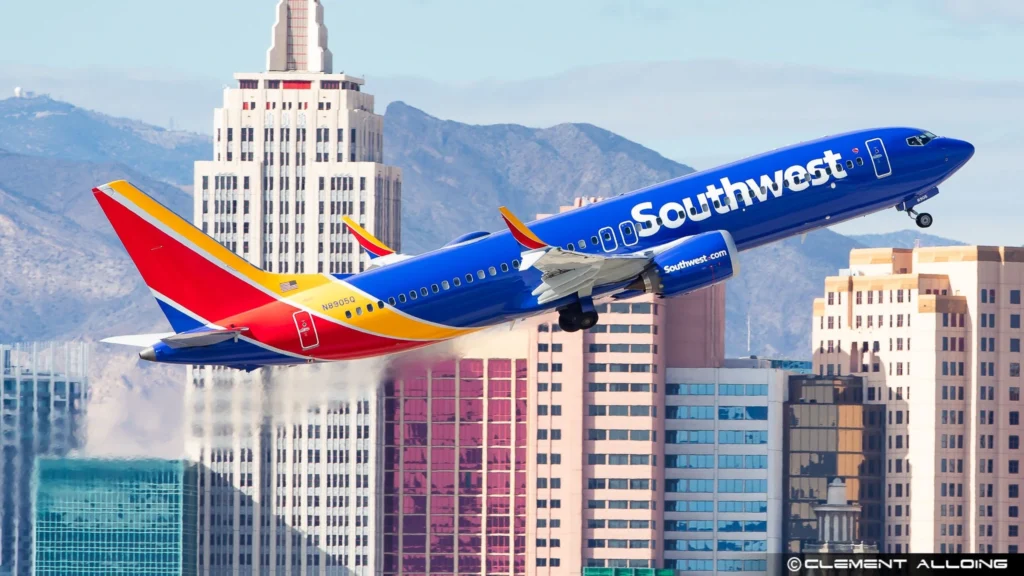
As the flight progressed on its return, the First Officer upgraded the situation and formally declared an emergency.
ATC confirmed the emergency had already been coordinated on their end. The crew then obtained gate assignment Charlie 4 (C4) for arrival and requested EMS to meet the aircraft upon landing.
ATC provided sequenced vectors, turning the aircraft through headings 010, 350, and 290 to intercept the final approach course for runway 26L. The crew was cleared for a visual approach with a speed restriction of 170 knots or greater to five miles from the airport.
Safe Landing and Captain’s Condition Reported
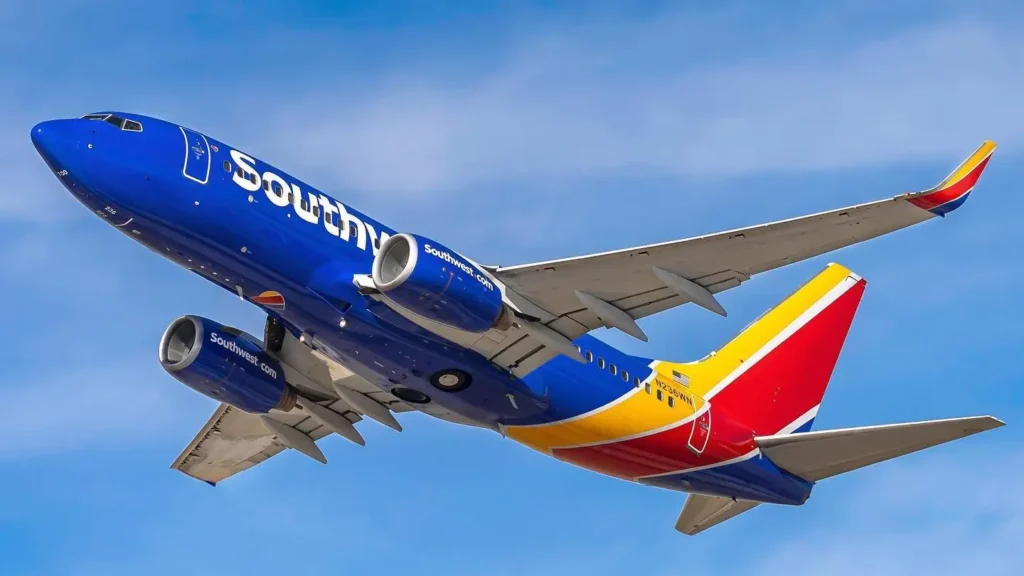
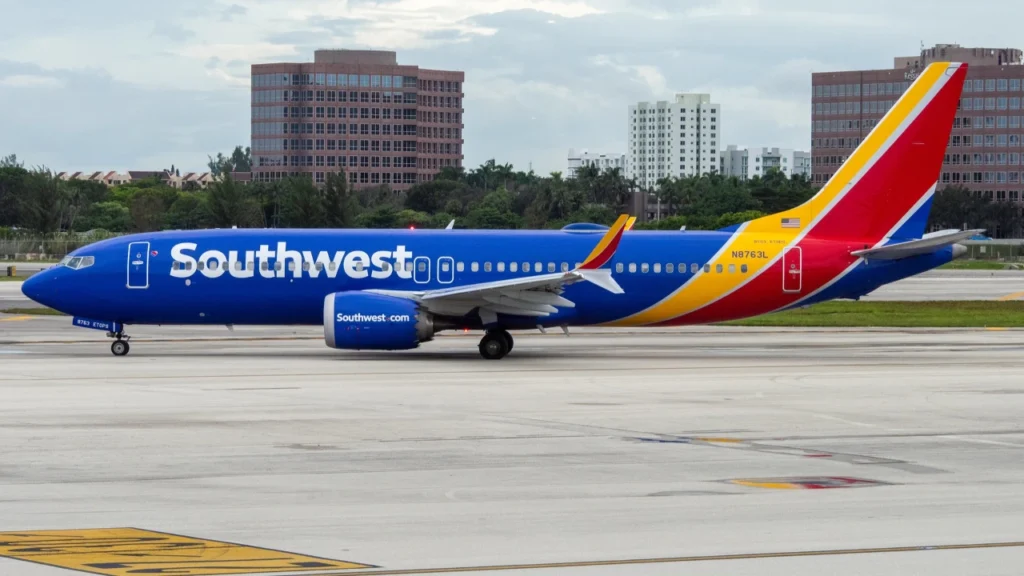
Southwest Airlines (WN) flight WN568 landed safely on runway 26L at Las Vegas (LAS) without further incident. The aircraft crossed runway 26R at taxiway Alpha 7 and taxied to gate Charlie 4 via taxiway Charlie.
After clearing the runway, the Las Vegas ground controller inquired about the nature of the captain’s injury.
The First Officer confirmed that the HUD, described as a large and heavy unit, fell from its mounting on the captain’s side during the takeoff roll and struck the captain hard on the head.
The impact caused the captain to see stars and subsequently begin vomiting, confirming the severity of the head injury.
ATC and Pilot Transcription
Here’s the transcription of a conversation between a Southwest pilot and Las Vegas ATC as flagged by You Can See ATC:
Departure Frequency
0:12 | SWA 568: Departure low, Southwest 568, 3,300, climbing FL190 on the SOCR.
0:18 | ATC: United 568 (correction: Southwest 568), Las Vegas, thank you, radar contact, occasional moderate, float low, 15.
0:27 | SWA 568: Departure, Southwest 568.
0:29 | ATC: Yeah, go ahead.
0:30 | SWA 568: Yeah, just a little bit of a captain incapacitation here, we’d like to return.
0:35 | ATC: Southwest 568, cleared to Las Vegas via radar vectors, fly heading 170, climb and maintain 7,000.
0:41 | SWA 568: 7,000 feet and heading 170, Southwest 568.
0:44 | ATC: Do you need to declare?
0:49 | SWA 568: Nah, we’ll just take medical priority.
0:52 | ATC: Okay, thanks.
0:53 | SWA 568: Yeah, it’s just the HUD came down and hit him on the head on the takeoff roll, he’d like EMS when we return.
1:00 | ATC: Southwest 568, okay, let me know when you get a gate and we’ll coordinate it with the company.
1:05 | SWA 568: Southwest 568, welcome.
Vectors for Return
1:10 | ATC: Southwest 568, turn left, heading 070, vector visual approach.
1:14 | SWA 568: Alright, heading 070, Southwest 568.
1:19 | SWA 568: And for 568, we’d like a little bit of a lock vector, just need to coordinate here with dispatch.
1:23 | ATC: Okay, no problem, we can do that, 070 heading as far as you need.
1:27 | SWA 568: 070 heading, thank you, 568.
1:32 | SWA 568: And can we expect 26L?
1:34 | ATC: Southwest 568, affirmative, expect runway 26L, X-rays current, wind 110 at 5, gusts 14, altimeter 29.84.
1:43 | SWA 568: Okay, we’ve got the weather, set up for X-ray 26L, ILS 26L, thanks, Southwest 568.
1:54 | ATC: Southwest 568, heading 080.
2:01 | ATC: Southwest 568, fly heading 080.
2:03 | SWA 568: 080 heading, Southwest 568.
Frequency Change — Las Vegas Approach (135.0)
2:07 | ATC: Southwest 568, contact Las Vegas 135.0 and let him know when you get to the gate, we’ll pass it on to the tower for the medic to get there for you.
2:15 | ATC: Let him know when you get the gate number, and 35.0.
2:19 | SWA 568: Sorry, say that again, Southwest 568.
2:21 | ATC: Southwest 568, contact Las Vegas 135.0 and let him know when you get a gate.
2:26 | SWA 568: And let him know when you get a gate, Southwest 568.
Las Vegas Approach
2:31 | SWA 568: Departure, Southwest 568, 7,000 feet, heading 080, we’re still standing by for a gate.
2:37 | ATC: Southwest 568, not a problem, just continue that heading, let me know if you need anything.
2:40 | SWA 568: Southwest 568, welcome. I’d like to declare an emergency as well.
2:43 | ATC: It’s already been declared for you, you can expect that.
2:45 | SWA 568: Copy, thank you.
2:50 | SWA 568: Southwest 568, we’ve got our gate, Charlie 4, C4.
2:54 | ATC: Sorry, one more time.
2:55 | SWA 568: Southwest 568, we have our gate, Charlie 4.
2:58 | ATC: Thank you, sir.
2:58 | SWA 568: You’re welcome.
2:59 | ATC: You ready to come in?
3:00 | SWA 568: Give us another two minutes.
3:02 | ATC: No problem.
Approach & Landing Vectors
3:08 | SWA 568: Southwest 568, we’re ready for vectors back to you, sir.
3:10 | ATC: Southwest 568, roger, you can expect turn left heading 010.
3:14 | SWA 568: 010 heading, Southwest 568.
3:20 | ATC: Southwest 568, turn left heading 350.
3:22 | SWA 568: 350, Southwest 568.
3:27 | ATC: Southwest 568, turn left heading 290, intercept the final approach course, let me know when you have the airport in sight. Currently 9 o’clock at about 18 miles.
3:33 | SWA 568: 290, we have it in sight, Southwest 568.
3:36 | ATC: Southwest 568, cleared visual approach runway 26L, maintain 210 knots.
3:40 | SWA 568: Okay, can we — we’re at 180, can we just keep this speed?
3:43 | ATC: Affirmative, 170 knots to 5 miles final.
3:45 | SWA 568: 170, 5 out, cleared for the visual approach 26L, Southwest 568.
3:53 | ATC: Southwest 568, 170 knots or greater to 5 miles final, tower is 119.9, you have a good day.
3:59 | SWA 568: Copy that, over to tower, Southwest 568, we’ll see ya.
Las Vegas Tower (119.9)
4:06 | SWA 568: Tower, hello, Southwest 568, visual 10 miles final, 26L.
4:12 | ATC (Tower): Southwest 568, Las Vegas tower, wind 060 at 4, gust 17, runway 26L, cleared to land.
4:19 | SWA 568: Cleared to land 26L, Southwest 568.
Post-Landing
4:34 | ATC (Tower): Southwest 568, hold short of runway 26R.
4:37 | SWA 568: Hold short of 26R, Southwest 568.
4:44 | ATC (Tower): Southwest 568, now cross runway 26R at Alpha 7, contact Ground Point 1, traffic is holding in position.
4:50 | SWA 568: Copy the traffic, Alpha 7, cross 26R, Ground Point 1, other side, Southwest 568.
Ground Control
4:58 | SWA 568: Ground, hello, Southwest 568, clearing runway 26R, go ahead to gate Charlie 4.
5:05 | ATC (Ground): Southwest 568, Las Vegas ground, taxi via Charlie.
5:07 | SWA 568: Charlie to the gate, Southwest 568.
5:12 | ATC (Ground): Southwest 568, just had a question — somebody wants to know the cause of the head injury.
5:16 | SWA 568: Yeah, it’s the captain’s side HUD — it came down during the takeoff roll and smacked him pretty hard on the head.
5:24 | ATC (Ground): Southwest 568, roger. Something on the captain’s side came down, you said?
5:27 | SWA 568: Yeah, the heads-up display. It’s a big unit, came down, smacked him on the head, made him see a few stars, and started throwing up.
5:35 | ATC (Ground): Southwest 568, roger.
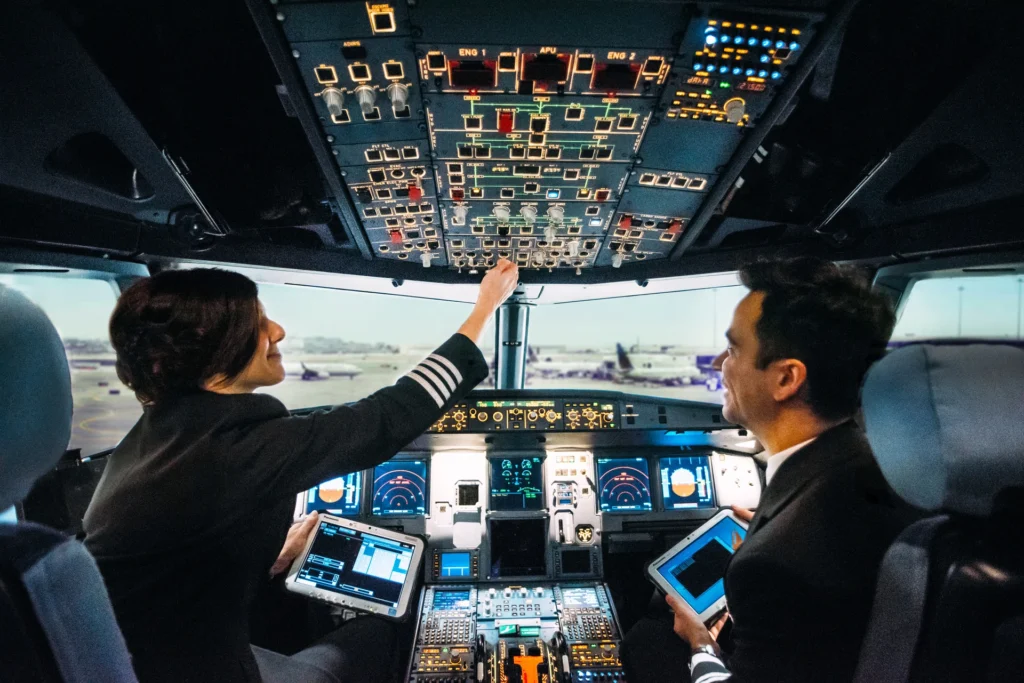
What Is a Head-Up Display?
A Head-Up Display is a transparent display system mounted in the pilot’s forward field of view. It projects critical flight data such as airspeed, altitude, heading, and flight path directly onto a glass combiner, allowing pilots to monitor instruments without looking down at the instrument panel.
Boeing 737 aircraft equipped with HUD systems typically mount the unit above the pilot’s eye level on an articulating arm.
A mechanical failure or latch malfunction could cause the unit to swing down unexpectedly, posing a direct physical hazard to the pilot seated below.
Bottom Line
The First Officer’s ability to assume full command, communicate effectively with ATC, coordinate with dispatch, and execute a safe visual approach under pressure demonstrated strong crew resource management.
ATC also handled the situation efficiently by providing flexible vectors, coordinating EMS, and relaying gate information to ground services.
The Boeing 737-700 (N200WN) sustained no structural or mechanical issues beyond the HUD malfunction, and all passengers and crew arrived safely at the gate.
Stay tuned with us. Further, follow us on social media for the latest updates.
Join us on Telegram Group for the Latest Aviation Updates. Subsequently, follow us on Google News
