

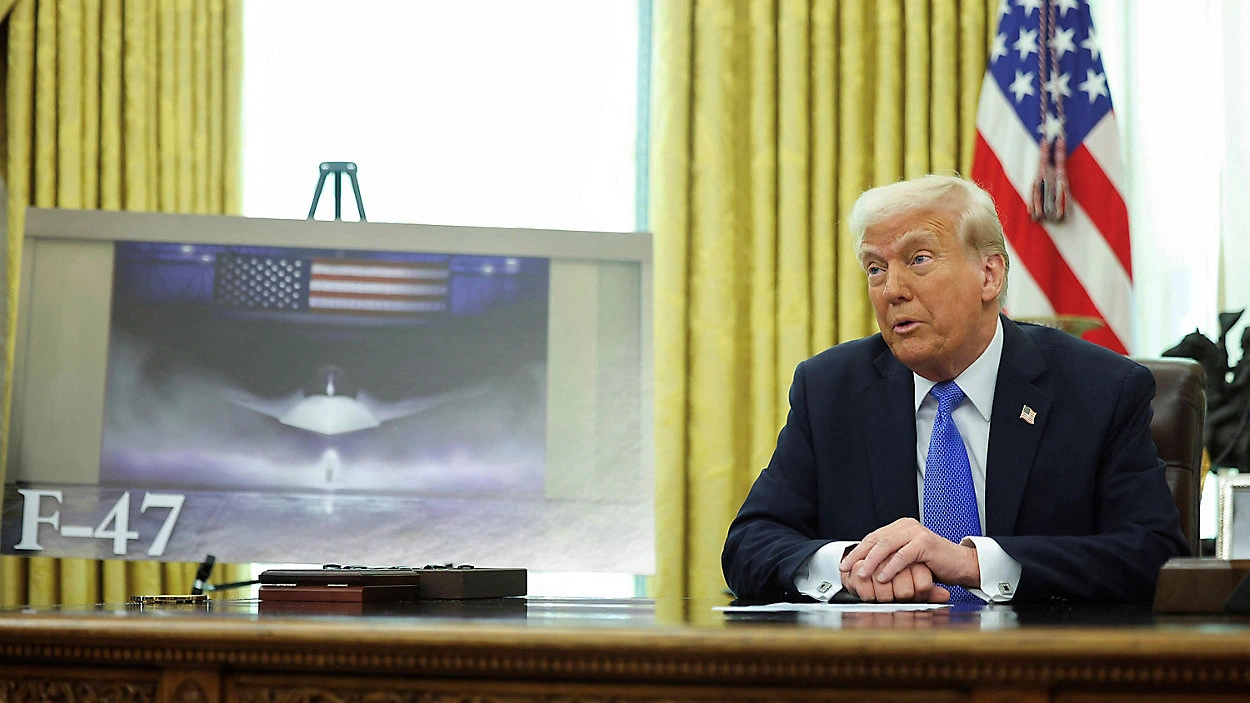
WASHINGTON D.C. — The global race to deploy the world’s first sixth-generation fighter jet is intensifying in 2026, with the United States’ F-47 and the trilateral Global Combat Air Program (GCAP) pulling decisively ahead. Meanwhile, Europe’s Future Combat Air System (FCAS) remains mired in political and industrial disputes.
The Trump administration’s record defense budget request includes approximately $5 billion for the F-47, targeting a first flight in 2028. On the GCAP front, a landmark £686 million contract signals serious momentum for the UK-Italy-Japan partnership aiming for a 2035 service entry.
Sixth-Gen Fighter Programs Diverge
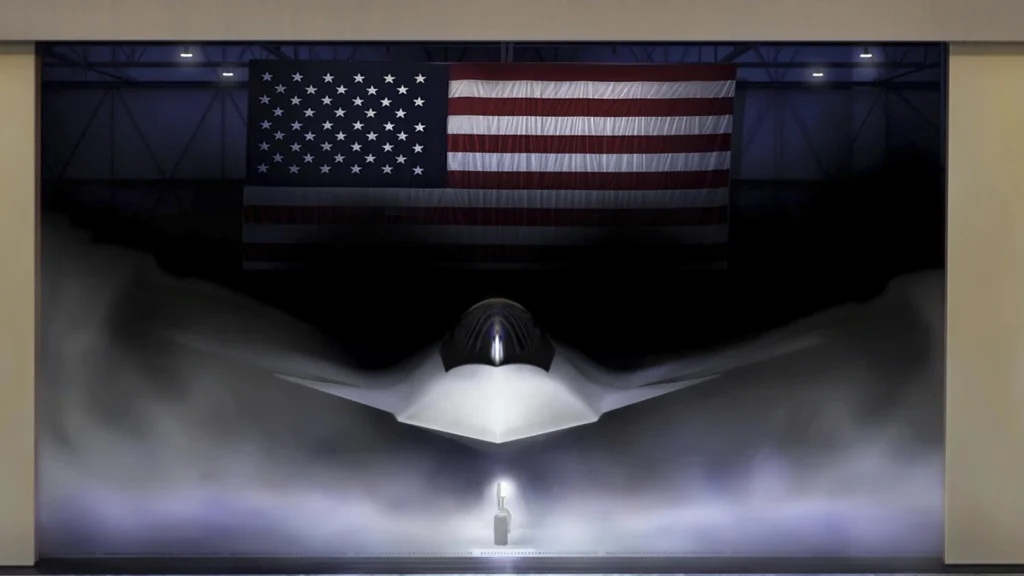
F-47: Funding, Timeline, and Capability
The U.S. Air Force’s F-47, built by Boeing under the Next Generation Air Dominance (NGAD) program, received a significant financial boost in the administration’s April 3 budget request.
The request seeks $5 billion in new baseline discretionary funding, bringing the program’s cumulative total to nearly $8.5 billion by the end of the current financial year, when combined with the $2.5 billion from the 2026 budget and $900 million in reconciliation funding.
The budget documents state the program aims to achieve its first flight in 2028, with development proceeding at an accelerated pace.
The U.S. government’s stated objective is clear: “The Administration is sending a clear message to the nation’s adversaries by aggressively moving forward with the F-47 sixth-generation fighter.”
The F-47 is designed as a crewed aircraft capable of commanding autonomous drone wingmen directly from the cockpit. These drones are built to perform intelligence, surveillance, and reconnaissance (ISR) missions, suppress enemy air defenses, conduct electronic warfare, and execute offensive strike operations. This allows the F-47 to operate as an airborne command-and-control hub from a standoff range, keeping the manned aircraft out of immediate threat zones.
On the performance side, the F-47 is projected to reach Mach 2 speeds and carry a combat radius exceeding 1,200 nautical miles — roughly double the 590–670 nautical mile range of the F-35 variants. This extended range is considered critical for sustained operations across the Pacific theater.
The aircraft will be powered by the next-generation XA-103 adaptive engine, which offers superior thermal management to mask infrared signatures from heat-seeking missiles. This addresses a vulnerability highlighted by ongoing combat in Iran, where an F-35 was struck by an infrared-guided missile.
The F-47 also integrates advanced AI for data collection, sensor-to-shooter pairing, and threat prioritization, alongside stealth++ materials and technology.

GCAP: First Major Contract Awarded
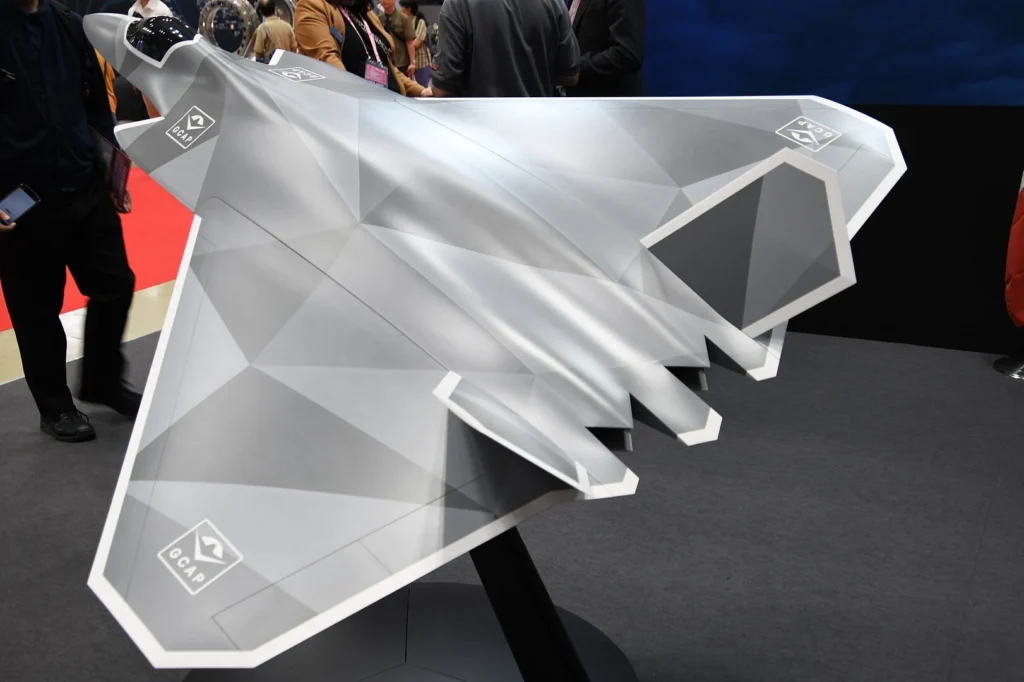
The Global Combat Air Program, a joint sixth-generation fighter effort between the United Kingdom, Italy, and Japan, marked a major milestone with the award of a £686 million (approximately $908 million) contract to Edgewing, a tri-national industrial venture established in June 2025.
Edgewing is composed of BAE Systems (UK), Leonardo (Italy), and Japan Aircraft Industrial Enhancement. The company will lead all design and engineering work for the GCAP aircraft and will retain responsibility for the program’s full product life cycle.
GCAP Agency Chief Executive Masami Oka described the contract as a turning point, noting that activities previously managed under three separate national contracts would now be consolidated under a single international program structure. The program is targeting an in-service date of 2035.
Launched in 2022, GCAP merges three national programs: the UK’s Tempest, Italy’s Leonardo-led initiative, and Japan’s F-X program.
The aircraft will replace both the Eurofighter Typhoon and the Mitsubishi F-2. While the aircraft itself is a shared design, each partner nation will integrate its own radar systems, missiles, and weapons.
GCAP’s international model is generating wider interest. Countries including Canada, Australia, Sweden, Poland, India, and Germany have expressed interest in joining the program. This growing appeal contrasts sharply with the single-nation nature of the U.S. F-47 and the troubled multi-nation FCAS.
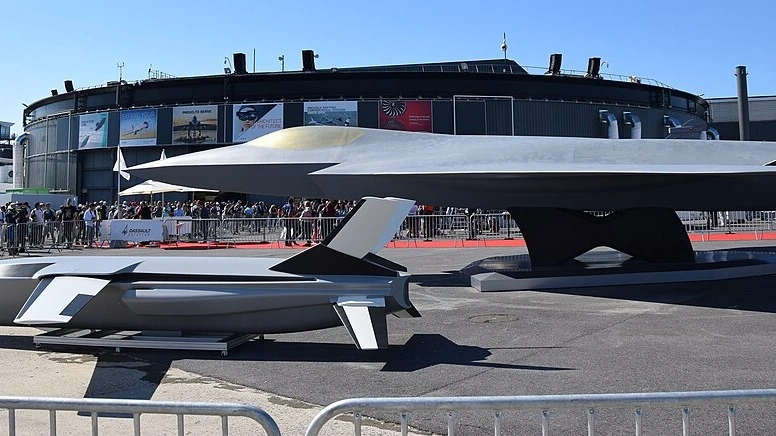
FCAS Falters Amid Industrial and Political Disputes
The Future Combat Air System, a joint program between France, Germany, and Spain led by Dassault Aviation and Airbus, continues to face severe internal disagreements that threaten the program’s survival.
A core dispute centers on workshare. France has sought to claim 80% of the industrial work, a demand Germany has resisted. Compounding this are design conflicts: France requires a carrier-capable aircraft that can deliver nuclear weapons, requirements Germany has little strategic interest in, as it operates no aircraft carriers and holds no nuclear weapons.
Dassault Aviation CEO Éric Trappier reinforced the depth of the impasse at a Le Point magazine forum.
He gave the two sides “2 to 3 weeks” to reach a workable compromise, adding that he does not support joint management structures and believes the program needs a single industrial leader.
Trappier also referenced France’s independent track record with the Rafale as evidence that France possesses the full capability to develop a fighter jet without a partner.
Despite a March meeting between French President Emmanuel Macron and German Chancellor Friedrich Merz, in which both leaders agreed to make a final attempt to rescue the program, no substantive breakthrough has followed.
The FCAS program carries an estimated value of over 100 billion euros (approximately $116.85 billion), but disputes over intellectual property rights between France and Germany, combined with rivalries within their respective national industries, continue to block progress. Germany’s joining GCAP remains a possibility being discussed.
Strategic Implications
The divergence across these three programs reflects differing approaches to defense procurement and international cooperation. The F-47 benefits from a unilateral U.S. government commitment and a clear industrial lead in Boeing.
GCAP has successfully transitioned from competing national programs into a unified international structure. FCAS, despite its enormous projected value, remains stalled by the very multinational dynamics it was built.
The urgency of developing sixth-generation capabilities has been underlined by active combat experience. Iran’s downing of an F-15E, an A-10, and the damaging of an F-35 during the ongoing conflict has demonstrated the limitations of current fifth-generation platforms against lower-tier adversaries, reinforcing U.S. and allied timelines to field more capable systems.
Stay tuned with us. Further, follow us on social media for the latest updates.
Join us on Telegram Group for the Latest Aviation Updates. Subsequently, follow us on Google News
