

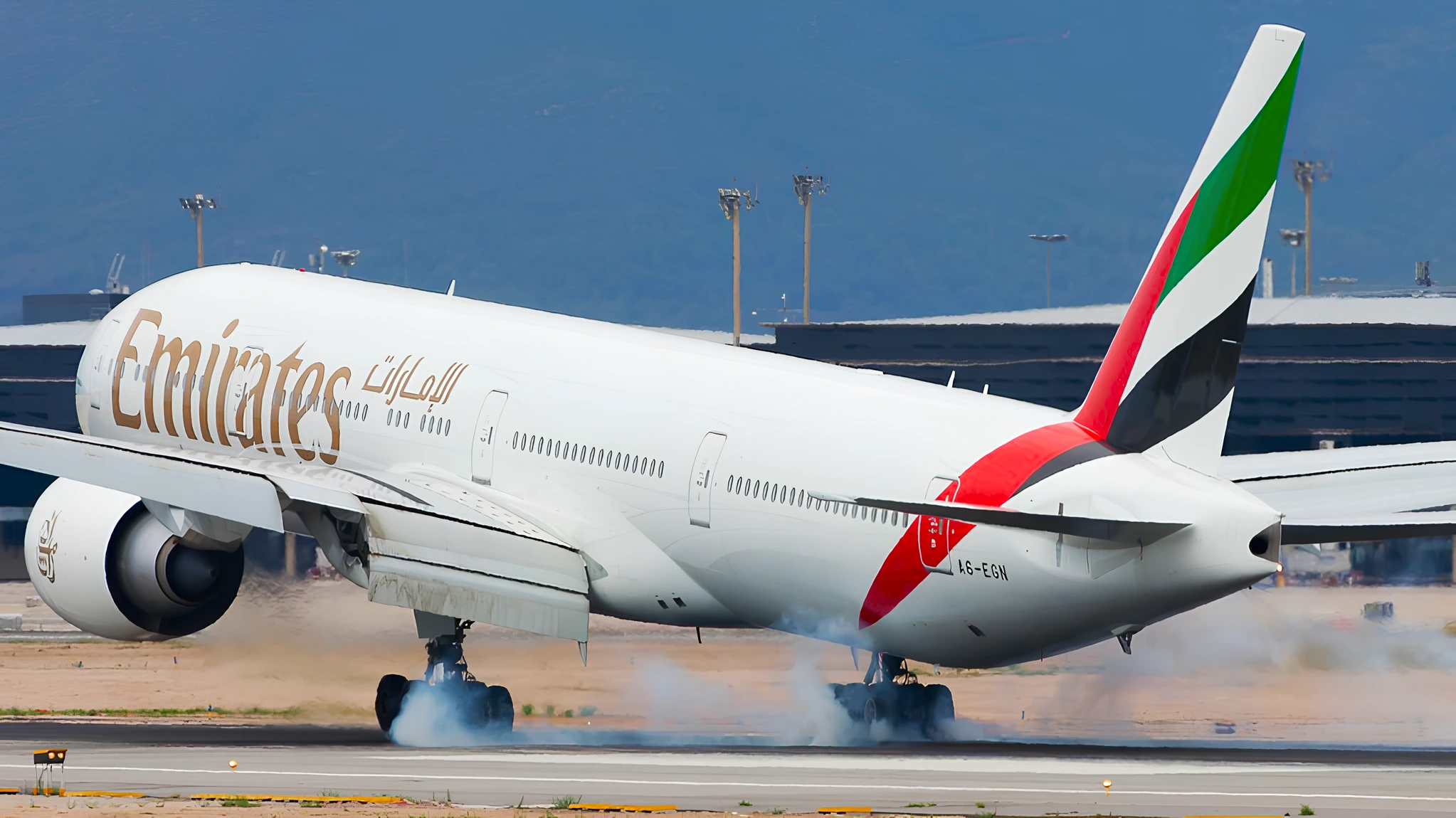
DUBAI- An Emirates Airline (EK) Boeing 777 operating flight EK 9314 from Ras Al Khaimah (RKT) to Singapore (SIN) was briefly denied entry into Indian airspace on April 5, 2025, after its flight plan was incorrectly filed as a non-scheduled service, for which no approval had been obtained from Indian authorities.
The issue was resolved only after Emirates and the flight crew confirmed to air traffic controllers that the flight was, in fact, a scheduled operation. The aircraft was then permitted to enter and overfly Indian airspace and continue to its destination, TOI reported.
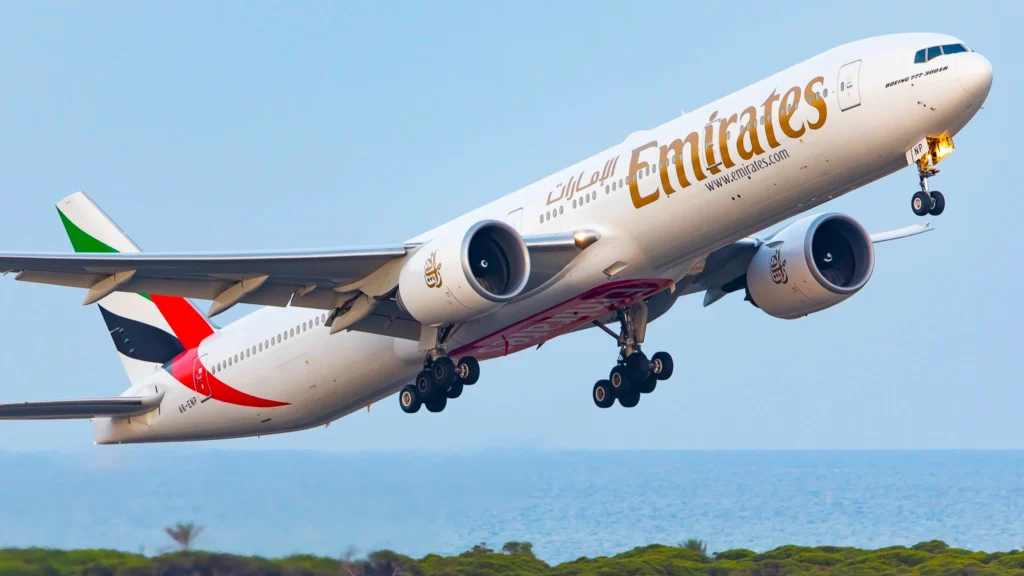
Emirates Flight Briefly Barred from Indian Airspace
Flight EK 9314 departed from Ras Al Khaimah International Airport (RKT) and was approaching Indian airspace over the Arabian Sea at approximately 6:25 AM IST when alert air traffic controllers at Mumbai ATC flagged the aircraft.
The flight’s plan had been filed as a non-scheduled service, which requires a specific approval from the Directorate General of Civil Aviation (DGCA) in the form of a document known as a YA number.
The DGCA issues a YA number for every approved non-scheduled flight operating to, from, or over India. When ATC staff checked with the DGCA, the airline, and the flight crew, no such clearance could be found on record.
Unable to verify the flight’s status, controllers denied the aircraft entry and directed it to hold. The Boeing 777 turned around and remained in a holding pattern while the confusion was being resolved on the ground.
After further verification, Emirates (EK) confirmed to authorities that EK 9314 was a scheduled flight and not a non-scheduled charter. The flight crew also independently confirmed this to ATC.
With the classification clarified, the required airspace entry clearance was issued, and the aircraft was allowed to resume its route toward Singapore (SIN).
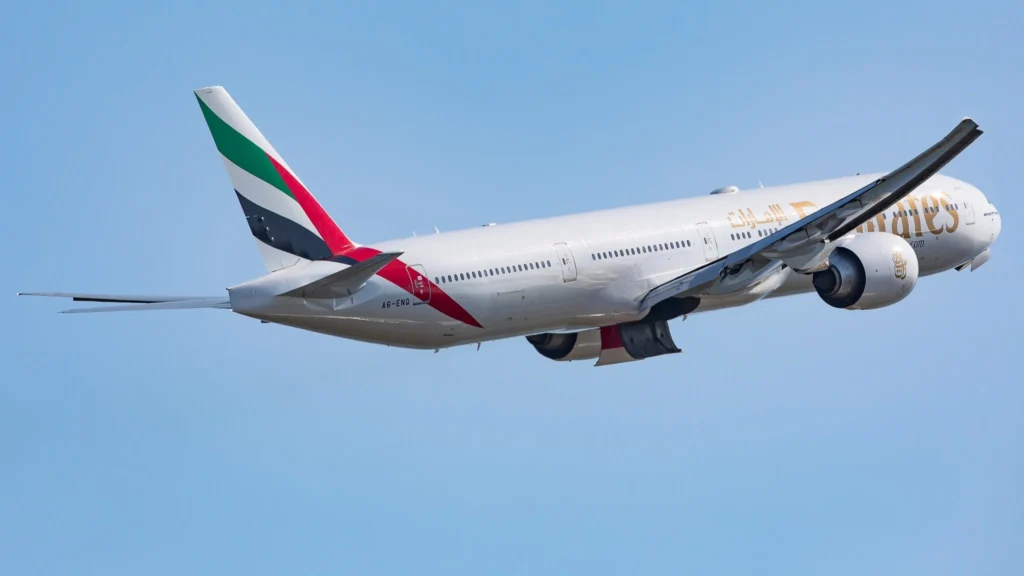
The DGCA’s Role in Airspace Entry Approvals
India’s aviation regulator, the Directorate General of Civil Aviation (DGCA), maintains a strict approval process for non-scheduled flights, including charter and special operations, transiting through Indian airspace.
Each such flight must carry a DGCA-issued YA number as proof of authorization. Scheduled flights, by contrast, operate under pre-established approvals tied to their airline designator codes and published timetables.
The error in the EK9314 case appears to have originated at the flight plan filing stage, where the flight was incorrectly categorized. Because ATC operates on the information present in the flight plan, the absence of a YA number for what appeared to be a non-scheduled flight was a legitimate ground for denial.
The resolution came only through direct clarification from both the airline and the pilots, highlighting how a documentation error can delay an otherwise routine overflight.
Similar Incident
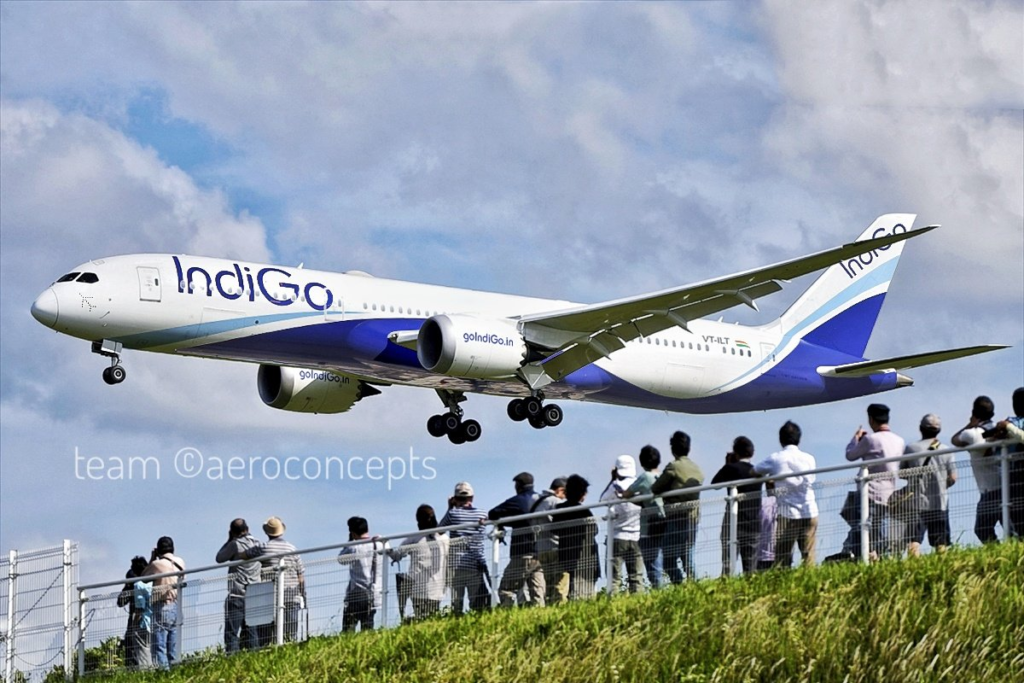
The Emirates (EK) incident was relatively minor compared to an airspace confusion that hit IndiGo (6E) about a month earlier. IndiGo (6E) flight 6E 033, a Delhi (DEL) to Manchester (MAN) service, was forced to turn back to Delhi (DEL) after being airborne for more than seven hours.
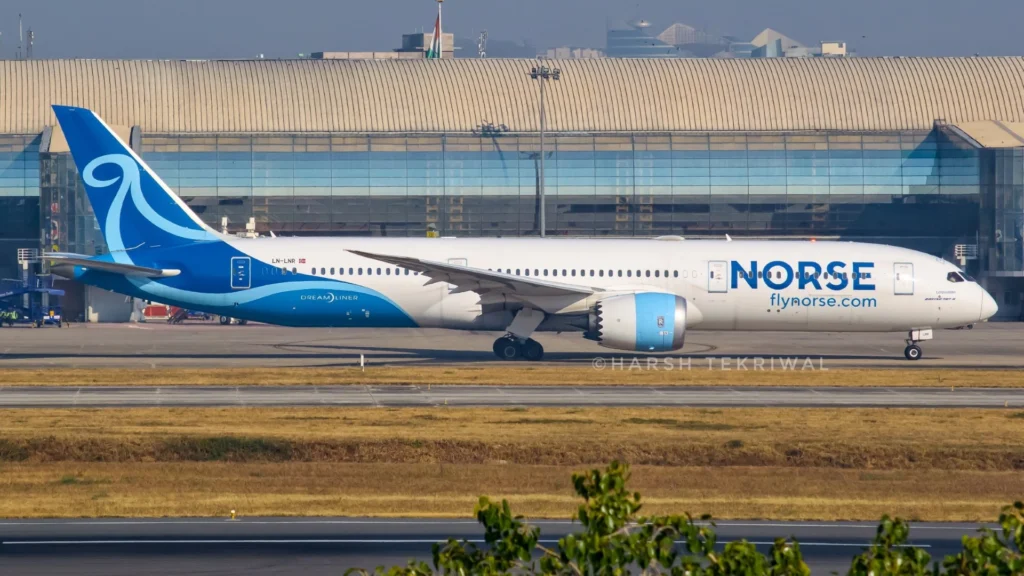
The Boeing 787-9 Dreamliner used on this route, bearing tail number LN-FNC, was wet-leased from Norwegian carrier Norse Atlantic Airways.
The restriction arose because the plane was a Norse Atlantic Airways aircraft, but IndiGo (6E) was doing the paperwork and requesting clearance under their own name.
When the aircraft entered Eritrean airspace, a discrepancy between the call sign and the aircraft registration triggered a query from the Eritrean ATC, leading to the turnaround.
Authorities in Eritrea were reportedly unclear about the involvement of two airlines linked to the same aircraft, the owner Norse and the operator IndiGo, which led to the diversion.
The passengers aboard flight 6E 033 spent an excruciating 14 hours in the air, only to return to their starting point in Delhi (DEL). IndiGo (6E) had secured all required en-route clearances for the flight, making the outcome especially costly in operational and passenger impact terms.
Why Norse Atlantic Takes the Africa Route
In the wake of the Middle East conflict, the European Union Aviation Safety Agency (EASA) barred aircraft registered with it, including those of Norse Atlantic, from using certain airspaces in the Middle East, including Saudi Arabia. As a result, IndiGo (6E) began taking a longer flight route through Africa to enter Europe.
For its European flights, IndiGo (6E) flies over the Arabian Sea, Ethiopia, Eritrea, the Red Sea, and Egypt before entering Europe.
Indian carriers such as Air India (AI), which are not bound by EASA restrictions, continue to overfly Saudi Arabia on their routes to Europe, the United Kingdom, and North America, making their routing significantly shorter.
IndiGo (6E) is operating its flights to European cities and London, except for Athens, with Boeing 787-9 planes leased from Norway’s Norse Atlantic Airways. Flights to Athens are operated with IndiGo’s own A321 XLR aircraft.
Norse Atlantic resumed its Europe services for IndiGo (6E) only after February 28, following a pause triggered by the EASA advisory on West Asian airspace.
Stay tuned with us. Further, follow us on social media for the latest updates.
Join us on Telegram Group for the Latest Aviation Updates. Subsequently, follow us on Google News
