

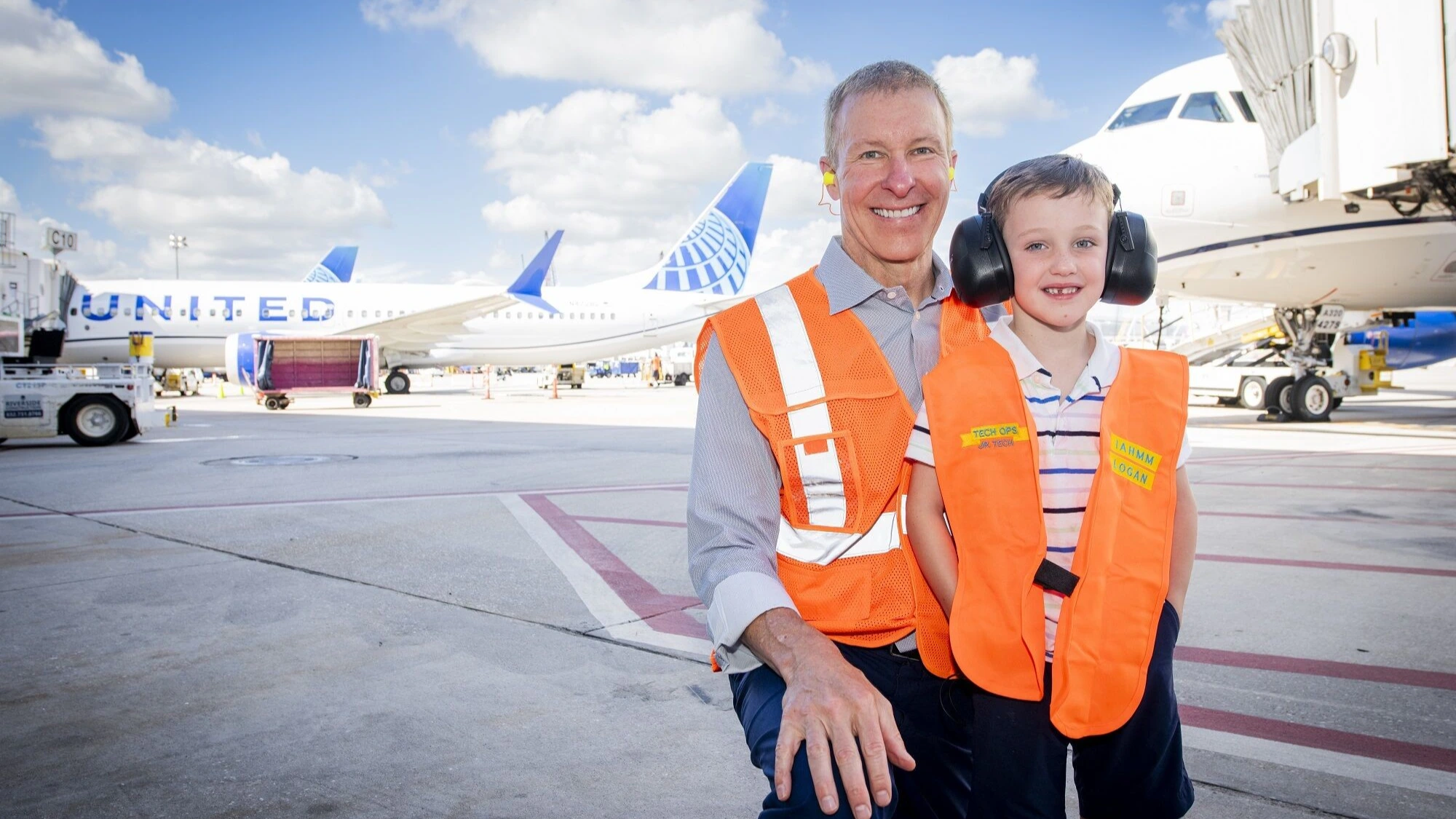
CHICAGO– United Airlines (UA) CEO Scott Kirby encouraged the carrier’s summer interns to adopt a simple leadership principle that has shaped his career: never make excuses and instead focus on solving problems. His message drew from lessons he learned during his training at the U.S. Air Force Academy.
Speaking to interns at United Airlines (UA), Kirby reflected on how the mindset helped him navigate major industry challenges, including the COVID-19 crisis, when the airline faced historic losses. His comments come as many young professionals enter a competitive job market while building their careers.

United CEO Kirby Explains Accountability Matters More Than Excuses
United Airlines CEO Scott Kirby believes that one of the most valuable lessons anyone can learn is to stop making excuses and instead concentrate on overcoming challenges.
In a video shared on Instagram following a meeting with United’s summer interns, Kirby explained that this philosophy changed the way he approached both his personal and professional life.
He said that people inevitably face setbacks, whether they involve missed career opportunities, workplace conflicts, or business failures. Rather than dwelling on the reasons behind those setbacks, he encouraged people to redirect their energy toward finding practical solutions.
According to Kirby, adopting a “no excuses” mindset shifts attention away from self-pity and toward action. He believes that this change in thinking helps individuals become more resilient and better prepared for future challenges.
Kirby also reinforced the message in the caption accompanying the Instagram post, stating that everyone will encounter difficulties throughout life and business. He said individuals can either spend time explaining what went wrong or spend that same time working to overcome the obstacle.
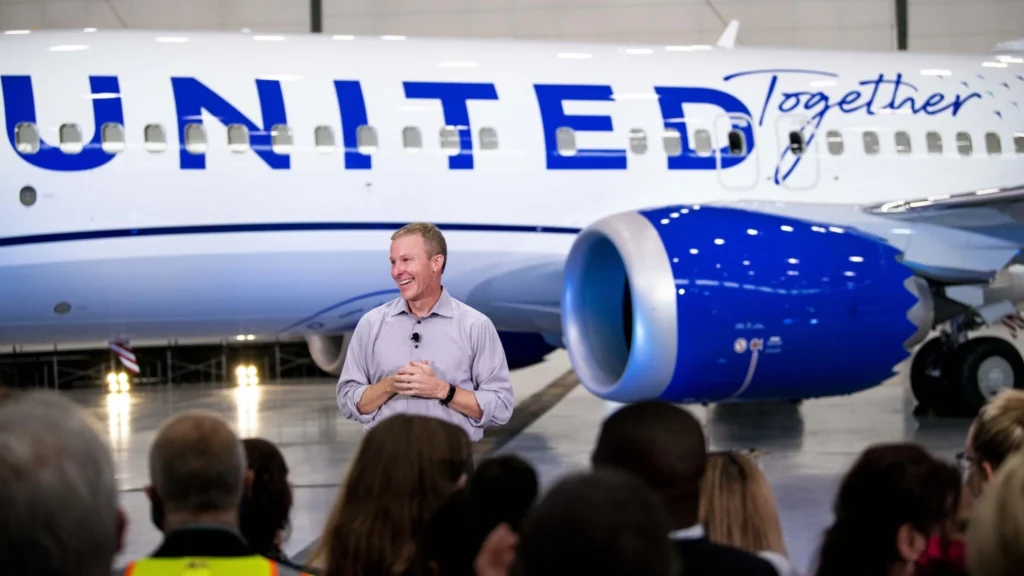
Air Force Training Shaped His Leadership Style
Kirby credits much of his leadership philosophy to his time at the U.S. Air Force Academy.
He graduated in 1989 with a bachelor’s degree in computer science and operations research before beginning his career as a budget analyst at the Pentagon. The military training emphasized accountability, discipline, and problem-solving under pressure, principles that Kirby says have remained central throughout his career.
Those lessons became especially important when he assumed the role of CEO of United Airlines in May 2020, one of the most difficult periods in aviation history.
As the COVID-19 pandemic severely reduced global air travel demand, U.S. passenger traffic dropped dramatically. United’s operating revenue declined by 64.5 percent during 2020, and the airline reported a net loss of $7.1 billion.
To stabilize the company, United reduced flight schedules, managed significant cash burn, secured a $6.8 billion loan backed by its MileagePlus loyalty program, and implemented extensive cost-cutting measures. Kirby also accepted a 100 percent salary reduction during the crisis.
The airline has since recovered strongly and rebuilt its financial position as travel demand returned.

Entrepreneurial Beginnings Before Aviation
Before becoming one of the airline industry’s most recognized executives, Kirby developed an entrepreneurial mindset at an early age.
Growing up in a middle-class farming community outside Dallas, Texas, he looked for opportunities to earn money through various jobs. He mowed lawns, delivered newspapers, and even started a small fireworks business with a friend.
Although he has said he never planned a career in aviation from childhood, those early experiences taught him initiative and responsibility.
After leaving the Pentagon, Kirby joined American West Airlines in 1995, where he steadily advanced through management positions.
He later became president of US Airways in 2006. Following the merger between US Airways and American Airlines (AA), he served as president of the combined airline before joining United Airlines as president in 2016. Four years later, he was appointed CEO.
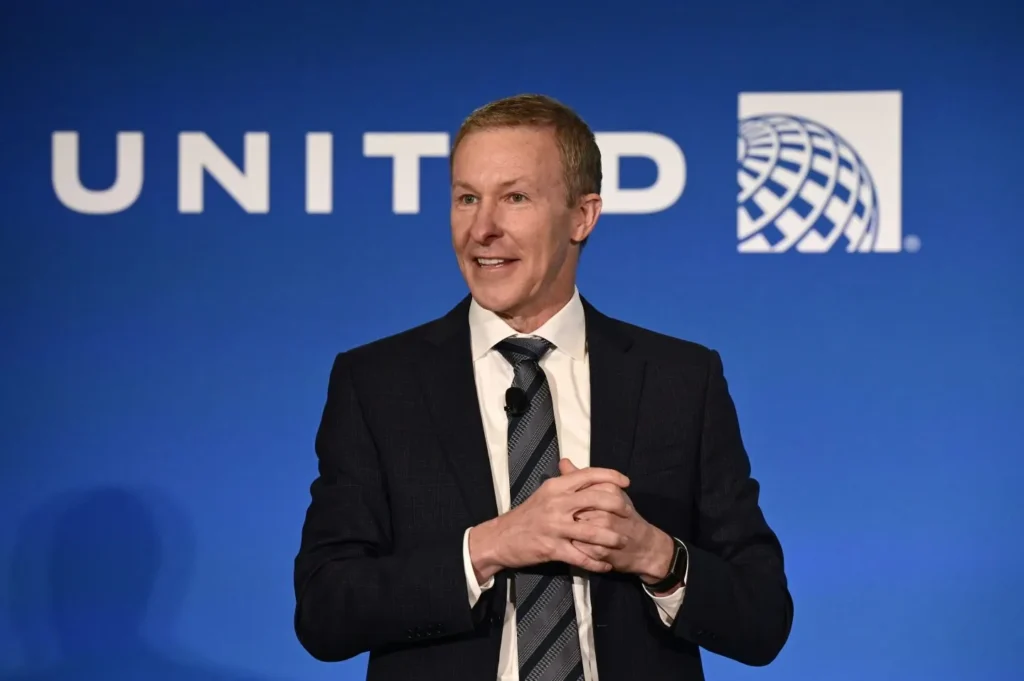
Building Teams Around Character and Trust
Kirby believes that strong leadership depends not only on technical ability but also on surrounding oneself with people who genuinely care about others.
During an interview with McKinsey, he described how United strengthened its pilot hiring process by involving experienced pilots in candidate interviews.
Rather than focusing only on flying qualifications, Kirby asked interviewers to answer one simple question: Would they want to spend a four-day trip flying with that individual?
If the answer was no, the candidate would not move forward in the hiring process.
Kirby explained that this approach helps United identify people who demonstrate professionalism, teamwork, and empathy alongside technical competence.
According to Fortune, this people-first philosophy has become an important element of United’s broader leadership and recruitment strategy.
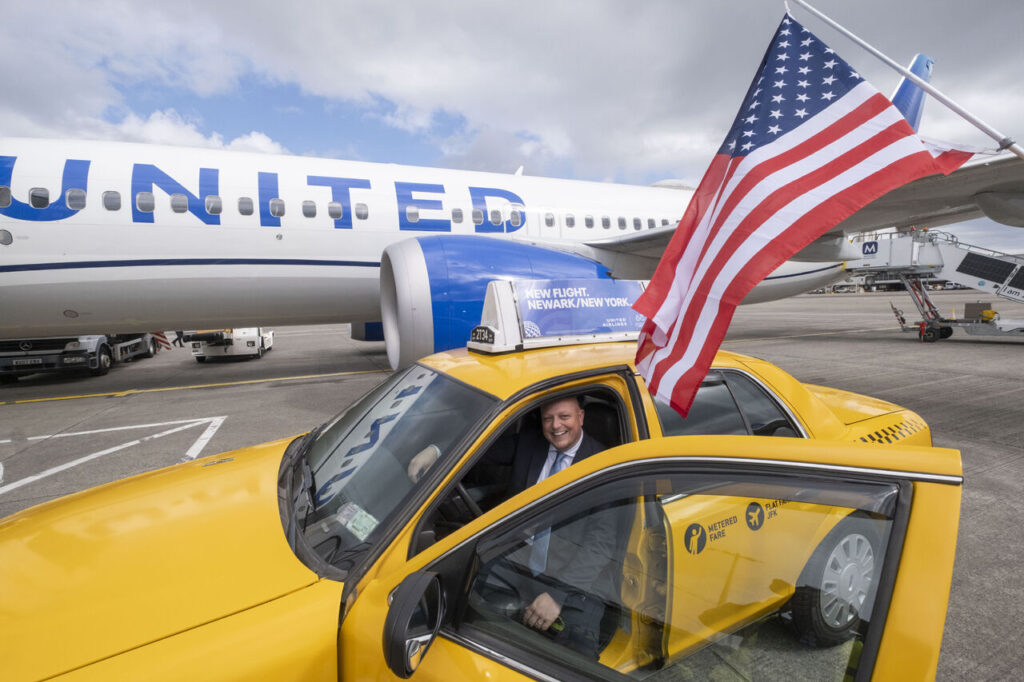
Confidence and Resilience Go Hand in Hand
Kirby also believes that confidence can influence long-term success.
He has previously spoken about the concept of self-fulfilling prophecies, explaining that believing in ambitious goals makes it more likely individuals will pursue and ultimately achieve them.
That confidence, however, is paired with resilience. Kirby argues that confidence without accountability has limited value, while confidence combined with persistence creates stronger leaders.
United has emerged from the pandemic in a significantly healthier financial position. The airline’s market capitalization has recovered substantially, placing it among the largest airline groups in the United States.

Other Business Leaders Echo Similar Views
Kirby’s perspective on adversity is shared by several prominent business leaders.
Delta Air Lines (DL) CEO Ed Bastian has repeatedly emphasized humility and continuous learning when responding to crises. He believes organizations become stronger by learning from difficult experiences rather than avoiding them.
Similarly, Nvidia CEO Jensen Huang has argued that resilience is one of the most important qualities for success. Huang has suggested that individuals who experience setbacks often develop stronger problem-solving abilities and greater adaptability over time.
While each leader expresses the idea differently, they all emphasize that career growth depends less on avoiding adversity and more on responding constructively when challenges arise.
Stay tuned with us. Further, follow us on social media for the latest updates.
Join us on Telegram Group for the Latest Aviation Updates. Subsequently, follow us on Google News
