

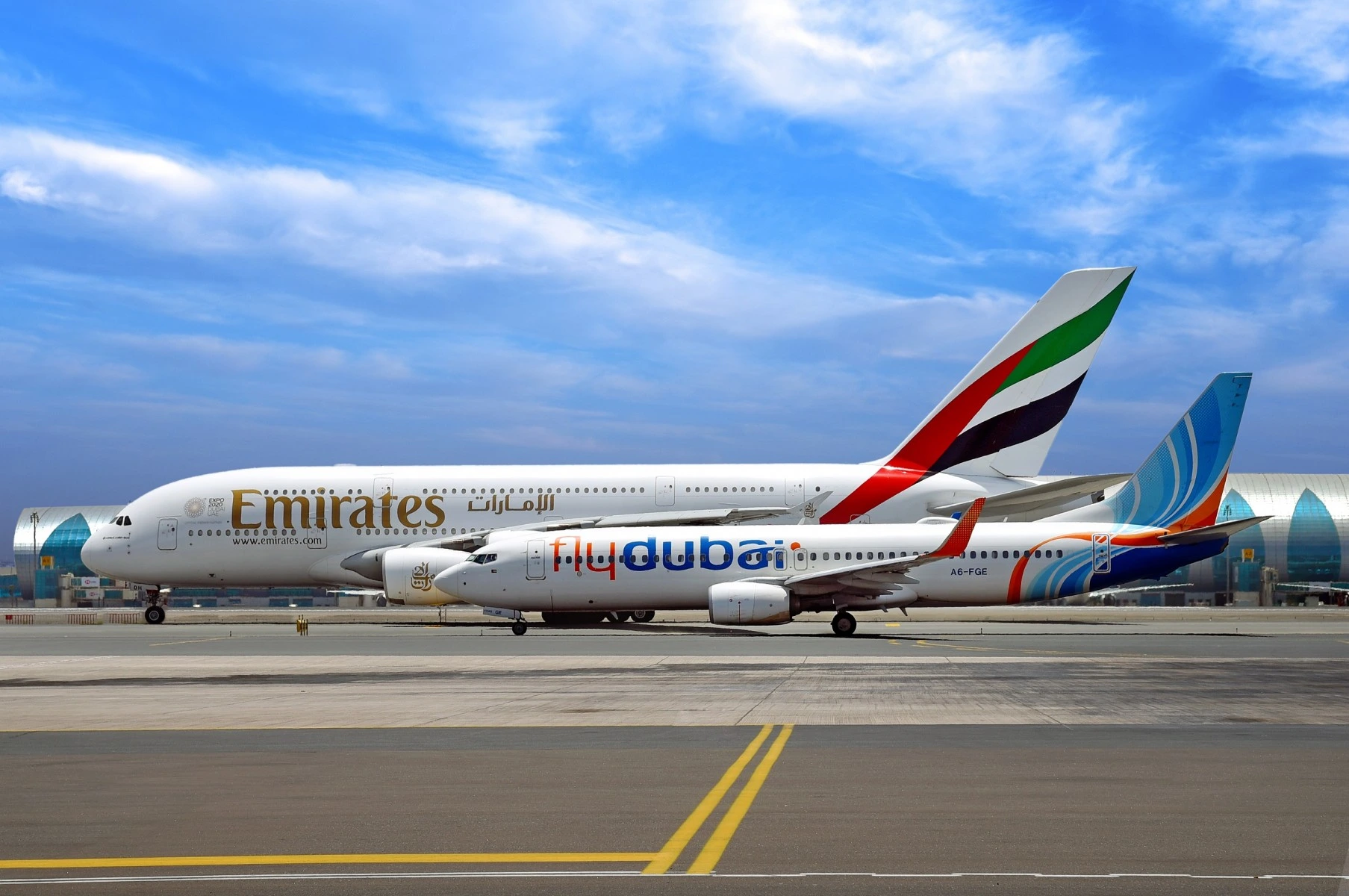
DUBAI- A 25-year-old British flight attendant employed by FlyDubai (FZ) now sits in Dubai’s Al Barsha pre-trial detention centre after sharing a photo of an Iranian drone strike near Dubai International Airport (DXB) in a private WhatsApp group chat with coworkers.
The incident has drawn international attention to the UAE’s increasingly aggressive enforcement of cybercrime laws amid the ongoing Iran war.
The cabin crew member was detained after posting a photo of damage near Dubai International Airport (DXB) in a private WhatsApp group, where he asked colleagues whether it was safe to walk through the airport. He now faces up to two years in prison and a fine exceeding $50,000.
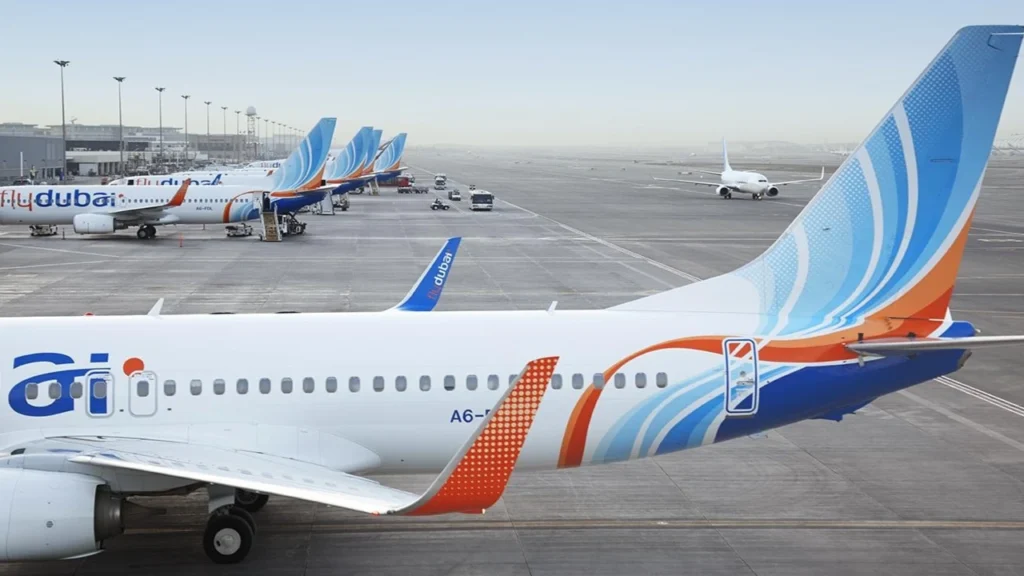
Flydubai Cabin Crew Arrested in Dubai
The flight attendant, based in London, works for low-cost carrier FlyDubai (FZ) and allegedly photographed damage caused by an Iranian drone near Dubai International Airport (DXB) on March 7, then shared the image with colleagues before being detained.
One of those colleagues reportedly informed Dubai Police, who raided his apartment and searched his personal phone.
The March 7 drone strike occurred during the early weeks of the Iran war. Footage verified by open-source investigators shows the drone struck next to an airport terminal building.
The Dubai Media Office acknowledged only a temporary suspension of operations at Dubai International Airport (DXB), stating that the situation was being handled under safety protocols.
The UAE’s cybercrime laws make it an offense to broadcast, publish, or circulate content that may incite public opinion or disturb public security. Offenders face deportation, up to two years in prison, and fines ranging from AED 20,000 to AED 200,000 (approximately $5,450 to $54,500).
According to PYOK, the case reflects a growing pattern of arrests targeting foreign nationals over content shared in private digital channels, raising serious concerns about the scope of these laws.
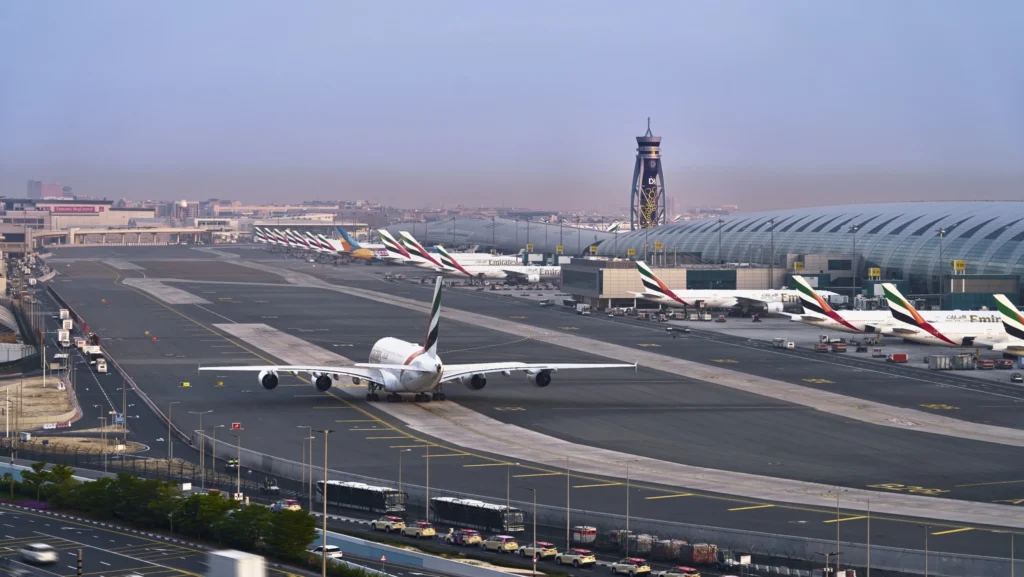
The March 7 Strike and Its Impact on DXB
The drone attack on March 7 was one of several Iranian strikes targeting Dubai International Airport (DXB) since the Iran war began on February 28.
In this particular incident, a drone evaded air defense systems and exploded near Terminal 3, the primary hub of Emirates (EK), the UAE’s flagship carrier.
Reports confirmed that an Emirates (EK) Airbus A380 superjumbo and a Saudia (SV) Airbus A321 sustained damage in the strike. As of April 1, 2026, Iran had fired a total of 438 ballistic missiles, 2,012 drones, and 19 cruise missiles at targets in the UAE, with most intercepted by UAE air defenses.
A separate strike on March 16 hit a large fuel tank at the airport, sending thick black smoke over the Dubai skyline. Air traffic resumed within hours, even as firefighting efforts continued.
On the first day of the war, another drone appeared to have struck the roof of Terminal 3, damaging the concourse and injuring at least four people.
Dozens of Britons and Foreign Nationals Detained
Since the outbreak of the Iran war, the UAE has implemented a broad cybercrime enforcement campaign targeting individuals who filmed, shared, or discussed events linked to missile and drone activity.
Over 100 individuals are currently reported to be in detention, with police sources confirming additional cases corroborated by multiple independent accounts.
Radha Stirling, chief executive of Detained in Dubai, stated that approximately 50 to 70 British citizens have been detained in the UAE for capturing or sharing images of Iranian attacks, and the number could climb to 100 or even 150.
Canadian, Russian, and German nationals were also arrested after privately sending photos of drone strikes on their own residences to family members simply to confirm they were safe. A 20-year-old French resident was detained after sending a video to his parents.
Stirling stated that those detained are being held in harsh conditions and pressured to sign confessions without legal representation, calling for urgent diplomatic intervention. She described them as ordinary tourists, workers, and residents who acted without malicious intent.
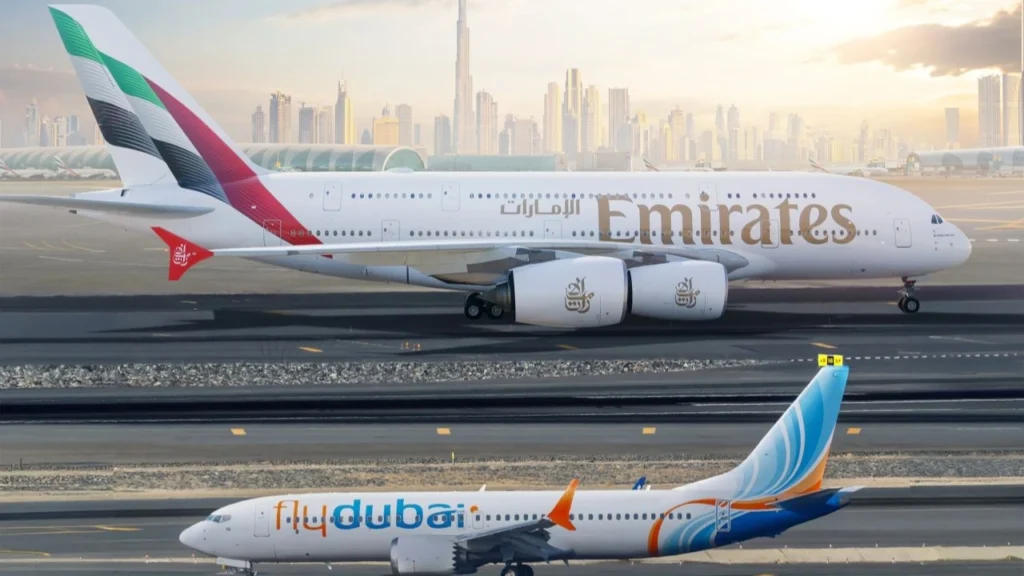
Airline Schedule Recovery Remains Slow
The arrests come as airlines based at Dubai International Airport (DXB) continue to rebuild operations disrupted by the conflict.
As of April 4, FlyDubai (FZ) had restored approximately 43% of its pre-war flight schedule, based on data from FlightRadar24. Emirates (EK) had recovered around 74% of its pre-war schedule by the same date.
Days after the March 7 strike, 21 people were detained for sharing news of attacks in a private group message, with authorities citing violations of laws prohibiting content that could disturb public security. The broader legal environment has created significant self-censorship among residents, tourists, and aviation workers across the UAE.
Stay tuned with us. Further, follow us on social media for the latest updates.
Join us on Telegram Group for the Latest Aviation Updates. Subsequently, follow us on Google News
