

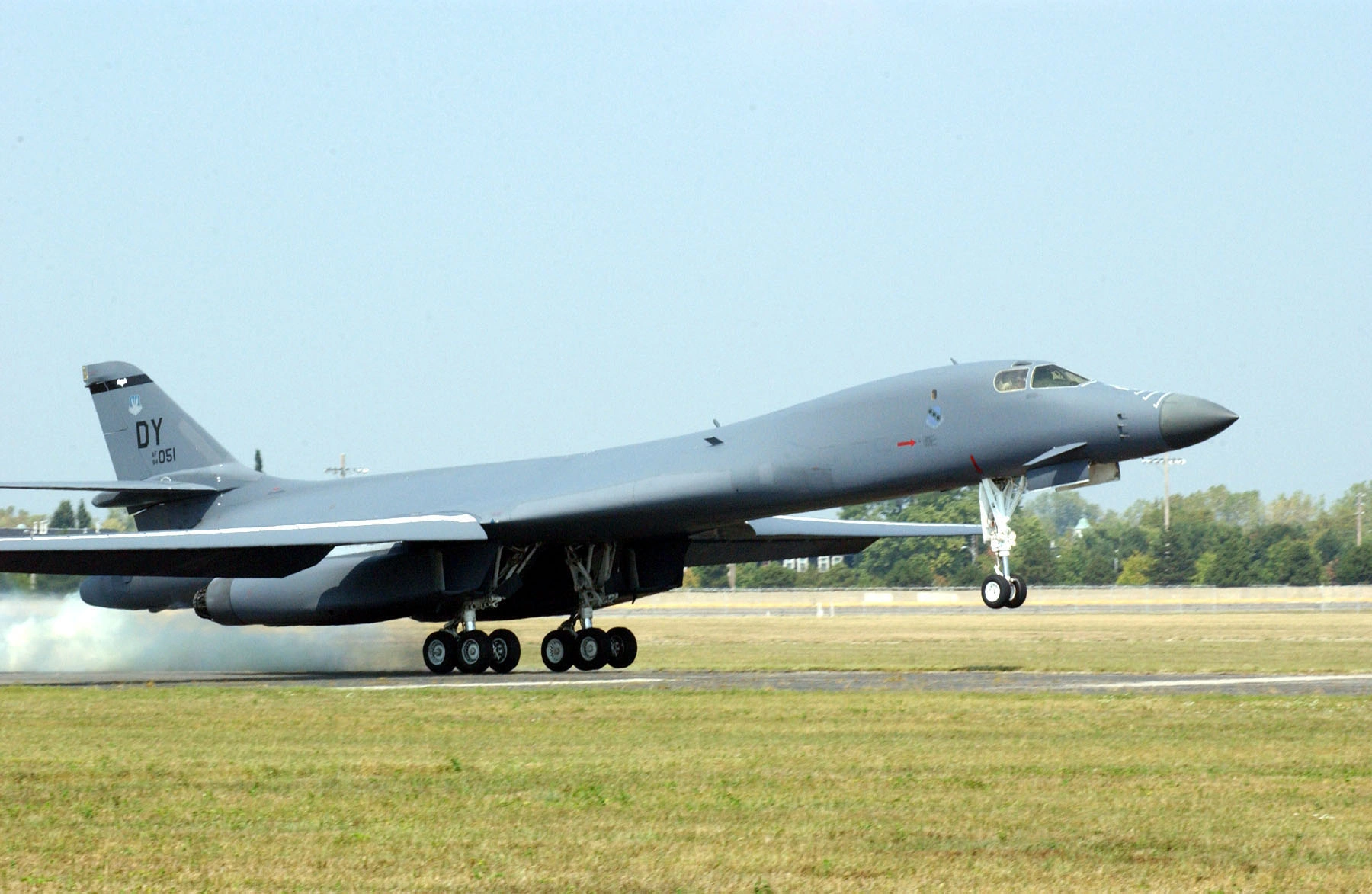
RAF FAIRFORD, UK— Three additional B-1B (RS) Lancer bombers arrived at RAF Fairford (EGVA) on March 26, 2026, raising the total number of U.S. bombers stationed at the Gloucestershire base to 21. The deployment now stands as one of the largest forward bomber concentrations in recent American military history.
The buildup is directly tied to Operation Epic Fury, the U.S.-led campaign that began on February 28, 2026, targeting Iranian missile facilities.
The U.S. Air Force is now operating 15 B-1B (RS) Lancers and six B-52H (BUFF) Stratofortresses from RAF Fairford (EGVA), a base in southwest Britain that serves as the only dedicated U.S. heavy bomber forward operating location in Europe, Air and Space Forces reported.
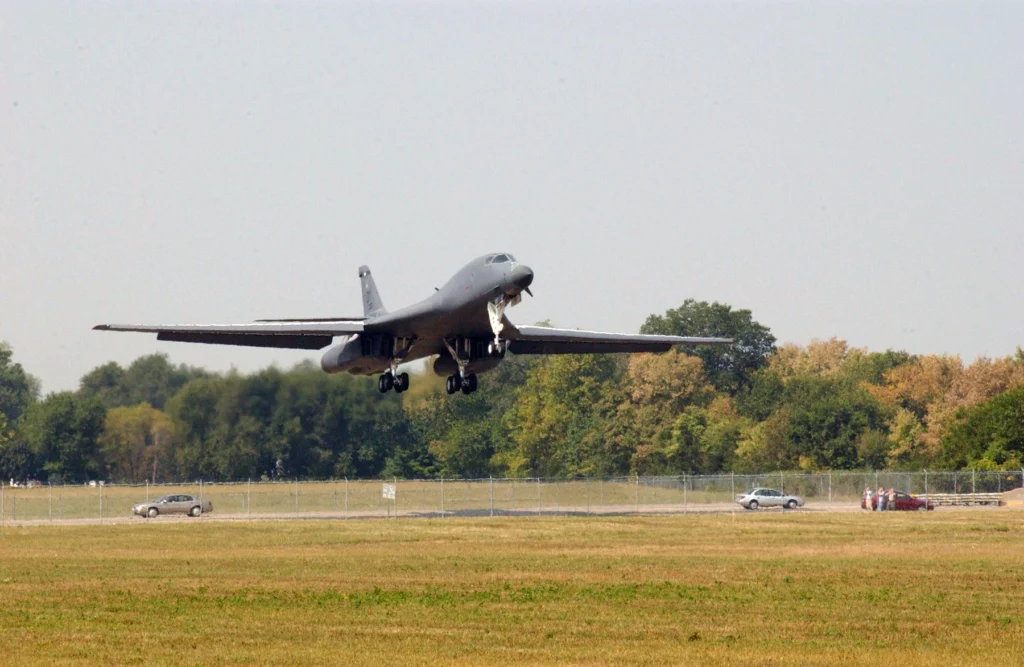
Record Bomber Buildup at a British Base
The three B-1Bs that arrived on March 26 were assigned to Ellsworth Air Force Base in North Dakota and used the callsign “PURSE” during their transatlantic flight. Their arrival was confirmed by local spotters, air traffic control communications, and open-source flight-tracking data collected by the Military Air Tracking Alliance.
The 15 B-1Bs currently at Fairford represent roughly one-third of the entire Lancer fleet still in service. With the Air Force maintaining a 47 percent mission-capable rate for the B-1B as of late 2024, the aircraft present at Fairford could account for a significant majority of the operationally available fleet at any given time.
The total B-1B inventory stands at 44 aircraft, but not all are available for active operations at once due to maintenance cycles and testing requirements.
The U.S. military has declined to comment on its assets at RAF Fairford, though the bombers remain visible to local enthusiasts and journalists who regularly document arrivals, departures, and munitions loading.

Why RAF Fairford Matters to Operation Epic Fury
The distance from RAF Fairford to Tehran is approximately 4,500 kilometers, which is less than half the distance from the continental United States to Iran. This geographical advantage directly increases sortie rates and reduces the number of aerial refueling tankers required per mission.
UK Prime Minister Keir Starmer authorized U.S. use of British bases on March 1, 2026, describing it as a “specific and limited defensive purpose” of eliminating Iran’s missiles at their source.
The U.K. government confirmed that U.S. forces were using RAF Fairford (EGVA) for operations aimed at preventing Iran from launching further missiles into the region.
Before the UK granted access, bombers were flying roughly 36-hour round-trip sorties from the continental United States to Iran and back. Basing the aircraft at Fairford significantly reduced crew fatigue, shortened mission durations, and enabled a higher operational tempo across the campaign.
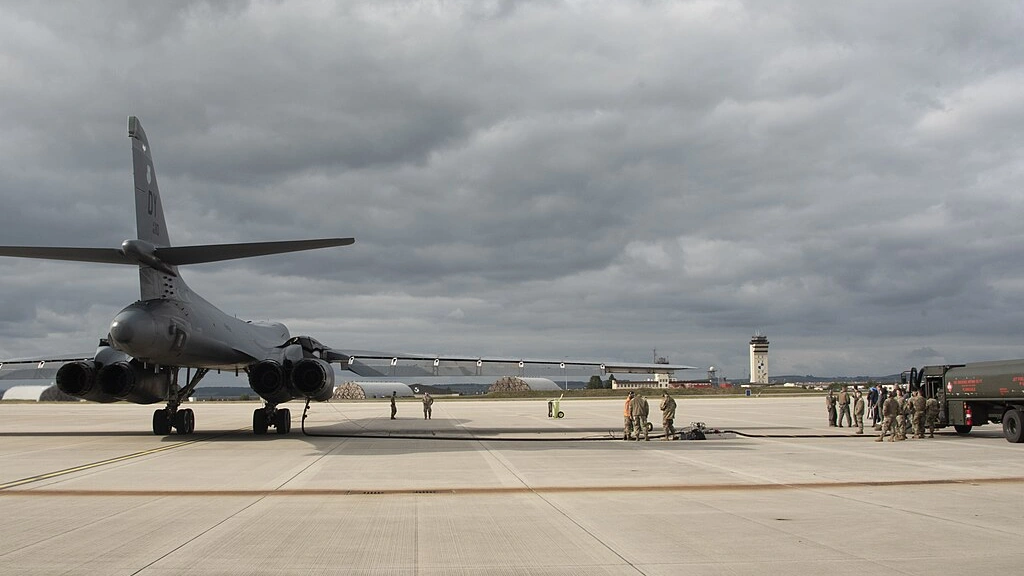
B-1B Lancer: The Primary Strike Platform
The B-1B (RS) Lancer has emerged as the dominant strike aircraft in Operation Epic Fury due to its payload capacity and flexibility. The aircraft can carry up to 75,000 pounds of weapons internally, including up to 24 GBU-31 precision-guided munitions or up to 84 500-pound Mk-82 bombs.
B-1B bombers operating from RAF Fairford have struck Iranian ballistic missile production facilities, underground command centers, and mobile launchers across Iranian territory using GBU-31 JDAMs fitted with BLU-109 penetrator warheads.
U.S. Central Command has stated that the vast majority of missions use stand-in munitions, and airmen have been photographed loading B-1Bs with JDAM guided bombs at the base.
U.S. warplanes have also deployed GBU-72 Advanced 5K bombs, which are 5,000-pound guided munitions, in the conflict, according to people familiar with the matter who spoke to Air and Space Forces Magazine. The platform that delivered the larger munitions was not specified.
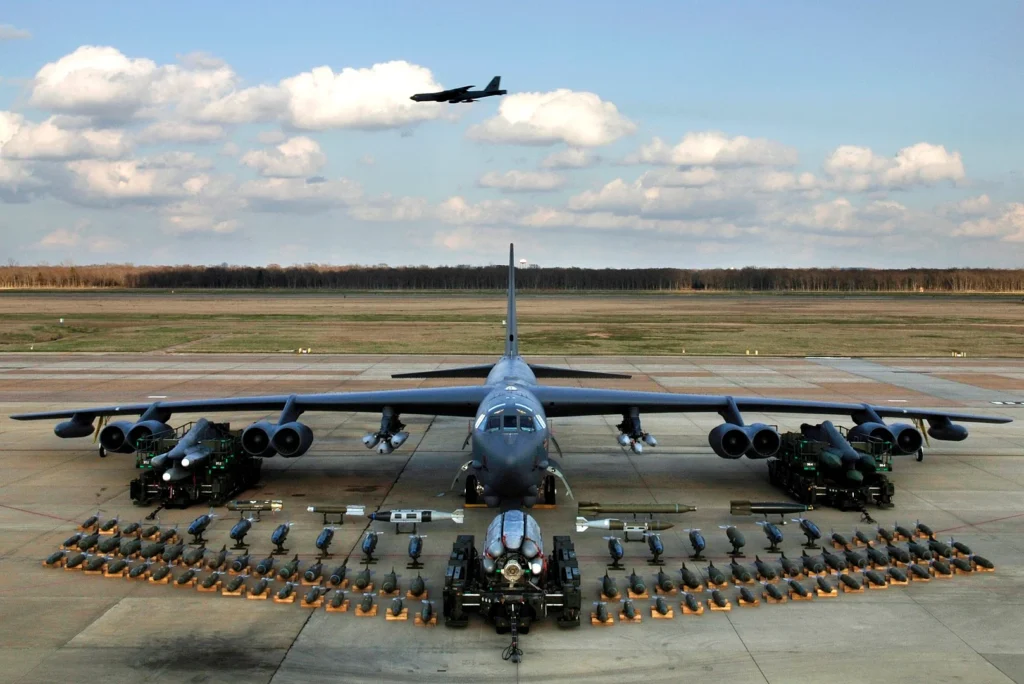
Role of the B-52H Stratofortress
Six B-52H Stratofortresses are now based at RAF Fairford, bringing the total bomber count alongside the 15 B-1Bs to 21 aircraft. The B-52H (BUFF) has primarily carried AGM-158 JASSM-variant standoff missiles, which deliver precision strikes from beyond the range of many air defense systems.
Photos released by U.S. Central Command showed B-52s carrying 12 AGM-158 JASSM missiles on external pylons, though it remains unclear whether additional missiles were carried internally. The JASSM carries a smaller warhead compared to the 2,000-pound JDAMs that have been the traditional munition of choice for U.S. bombers in less contested environments such as Iraq, Afghanistan, and Syria.
Secretary of Defense Pete Hegseth noted on March 4 that as Iran’s air defenses degraded, the U.S. shifted from advanced standoff weapons to gravity bombs, reflecting a change in the threat environment over the course of the campaign.

B-2 Spirit: Early Campaign Role
The B-2 Spirit stealth bomber played a significant role in the opening phase of Operation Epic Fury.
The B-2 conducted early, long-range, stealthy strikes during the initial stage of the operation, before the campaign transitioned to heavier use of the B-1B and B-52H from RAF Fairford. Its stealth characteristics made it particularly suited to the higher-threat environment present at the start of the conflict.
Stay tuned with us. Further, follow us on social media for the latest updates.
Join us on Telegram Group for the Latest Aviation Updates. Subsequently, follow us on Google News
