


The U.S. military will begin accepting new F-35 Joint Strike Fighters without operational radars as early as fall 2026, sources familiar with the program have confirmed. The issue stems from delays in the APG-85 radar, which cannot be swapped with the existing APG-81 due to a redesigned bulkhead.
Aircraft delivered without the radar will remain flyable but will be restricted to training use only, making them ineligible for combat operations. In the best case, the new radar could be ready during Lot 18 production; if delays continue, over a hundred jets may require costly retrofits at a later, undetermined date, Breaking Defense reported
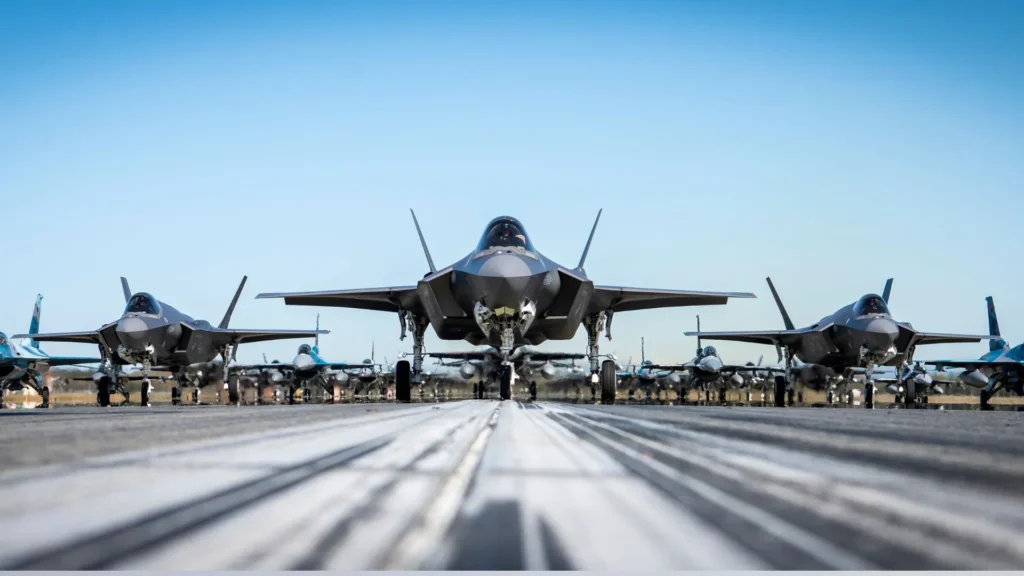
US Accepts F-35 with Incomplete Radars
At the center of the issue is the APG-85, an upgraded radar manufactured by Northrop Grumman that is planned to replace the current APG-81 radar.
The APG-85 is larger and requires a redesigned bulkhead, which means it cannot be installed in airframes built for the APG-81. The Pentagon attempted to synchronize the radar’s introduction with the Lot 17 production batch, but the sensor is not yet ready.
The U.S. Marine Corps is expected to be the first service to accept F-35B (STOVL variant) jets without radar within months.
The U.S. Air Force and the U.S. Navy are then expected to follow with their F-35A and F-35C variants later in 2026, respectively. The Marine Corps also operates a small number of F-35Cs.
According to two anonymous sources familiar with the program, aircraft accepted without the radar will be usable as training assets but will not be combat-coded. “They can still take delivery of the jet. They can still use it as a flyable asset, obviously not a combat-coded asset. So they can still do limited training with it,” one source stated.
Representative Rob Wittman, chairman of the House Armed Services tactical air and land forces subcommittee, confirmed at the McAleese and Associates defense conference that new jets would be produced with ballasts in place of radar.
He attributed the delay primarily to lengthy certification timelines. “With the new radar, there’s only so much that you can do to compress the time frame, just because of the rigor necessary in certifying a new radar system,” Wittman said.
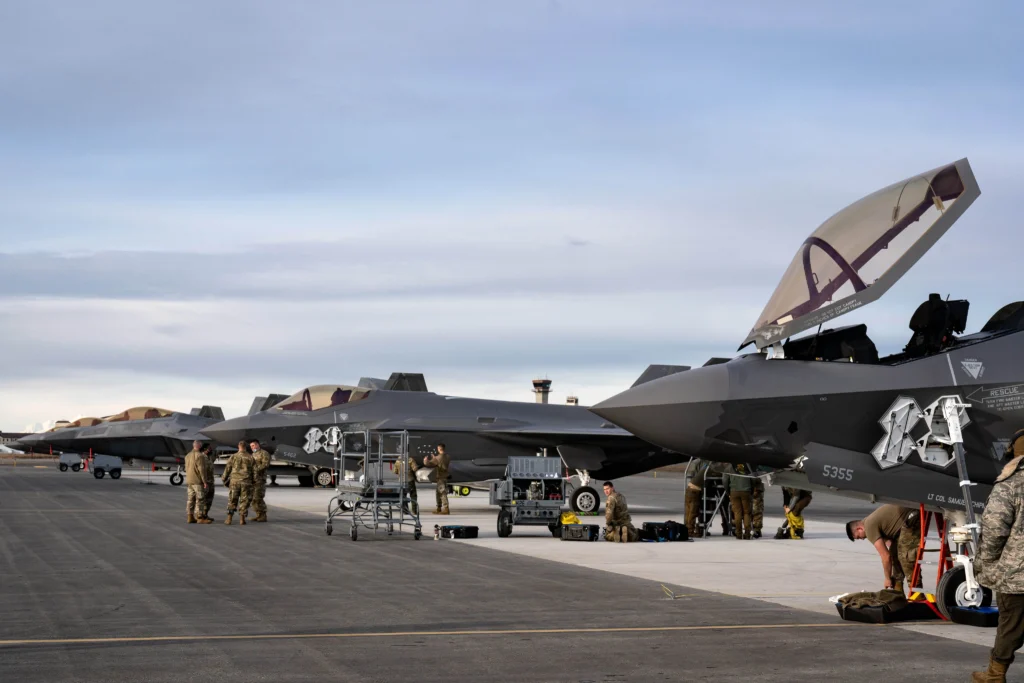
Lockheed Martin and the F-35 Joint Program Office Respond
Lockheed Martin, the primary manufacturer of the F-35, clarified that the APG-85 is government-furnished equipment outside the scope of its production and sustainment contracts.
A company spokesperson confirmed that Lockheed is “delivering aircraft in the configuration defined by our contract” and stands ready to support the government and radar supplier throughout the delivery process. Further questions were referred to the F-35 Joint Program Office (JPO).
The JPO confirmed in a statement that U.S. F-35s are being “built to accommodate” the APG-85, and that initial fielding for some Lot 17 aircraft is planned. The JPO acknowledged that the program had “deliberately undertaken a highly concurrent development and production program for advanced capabilities,” with full awareness of the production-ahead-of-capability risk.
Plans to accelerate APG-85 production are in place, though specific schedules and capabilities remain classified.
The Air Force confirmed that current Lot 17 F-35A jets are delivering with the older APG-81 radar and that it is working with the JPO to transition to APG-85-equipped aircraft. The Navy declined to provide additional details beyond JPO statements, citing operational security.
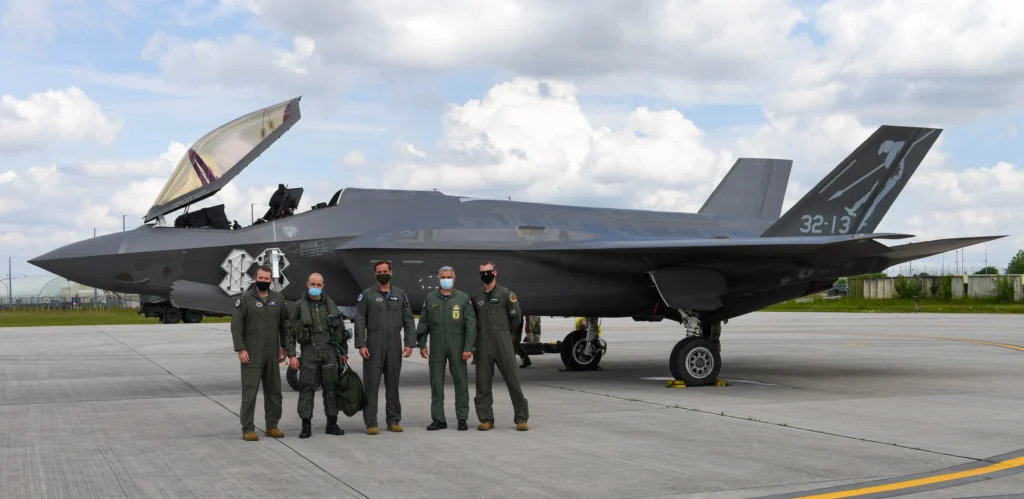
Bulkhead Design and Production Lot Breakdown
The Marine Corps ordered its Lot 17 jets with the newer bulkhead design capable of accommodating the APG-85.
The Air Force and Navy, however, will not transition to the new bulkhead design until Lot 18, production of which begins in fall 2025. Until that transition, Lot 17 jets for those two services will continue delivering with the APG-81.
Once Lot 18 production starts for the Air Force and Navy, those aircraft will share the same radar gap as the Marine Corps’ Lot 17 jets. A dual-compatible bulkhead that could accept either the APG-81 or APG-85 is being explored but is not expected to be available until Lot 20, with deliveries beginning in 2028.
In terms of contract scope, the Pentagon finalized Lots 15-17 with Lockheed Martin in December 2022, with final terms for Lots 18-19 reached in September 2025.
The original Lot 17 option included up to 126 aircraft. Lots 18 and 19 each cover 148 jets, including international buyers. The Lot 18 contract covers 83 U.S. military aircraft, and Lot 19 includes 69 U.S. military jets, with the remainder allocated to foreign customers.
Foreign buyers of the F-35 will not be affected by the radar shortage, as the APG-85 has not been cleared for export. International customers will continue receiving jets equipped with the APG-81.
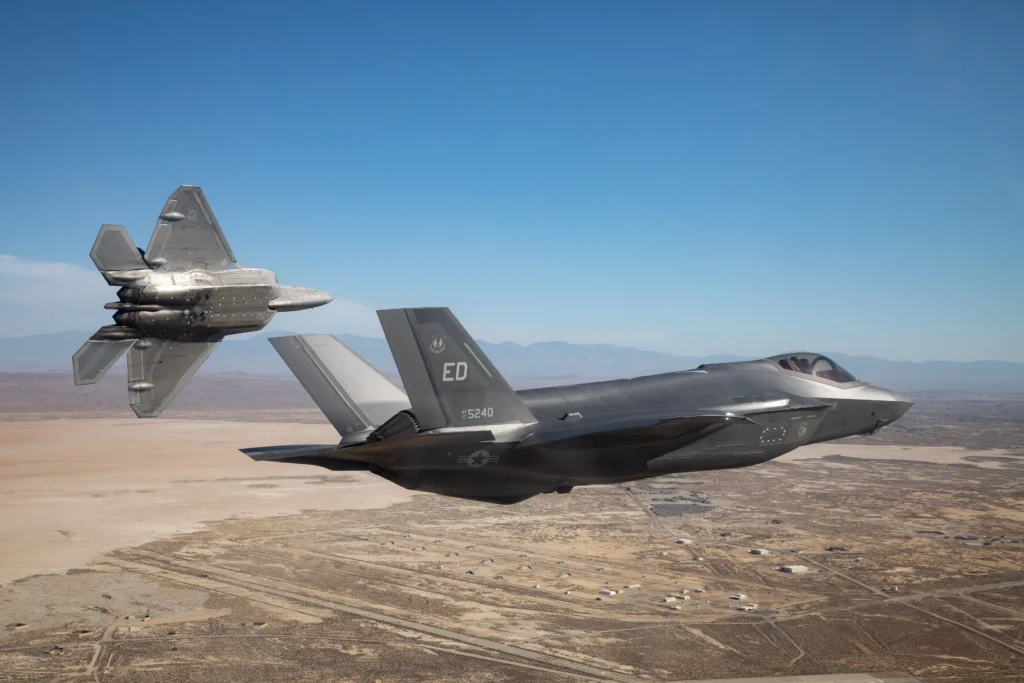
Combat Readiness and Strategic Implications
Defense analysts have raised concerns about the long-term impact on U.S. air combat capability. Since July 2024, new F-35 deliveries have already been reserved for training due to delays in the Technology Refresh 3 (TR-3) software suite, a separate but compounding issue.
F-35s currently in active operations, such as those deployed in the U.S. Central Command (CENTCOM) area of responsibility, operate on older TR-2 software.
Stacie Pettyjohn, director of the defense program at the Center for a New American Security, told Breaking Defense that the APG-85 is designed to offer enhanced long-range detection and offensive electronic attack capabilities, specifically to counter advances made by China.
She described an F-35 without a radar as “very near-sighted,” noting that while the aircraft carries other sensors and can receive off-board data via datalinks, doing so introduces communication latency and vulnerability to enemy jamming.
“F-35s have performed really well in the Middle East and wherever they’ve been deployed against lesser adversaries,” Pettyjohn noted. She added that against adversaries like China, with sophisticated integrated air and missile defenses, the F-35 will need continued capability upgrades to remain effective.
Pettyjohn also cautioned that a large-scale retrofit effort would be “a huge blow to the tactical aircraft fleet, which is shrinking right now,” warning that delivery numbers could mask genuine combat availability shortfalls.
One source familiar with the program called the situation a result of poor planning, stating: “The bulkhead conversation should’ve been had years ago.”
Stay tuned with us. Further, follow us on social media for the latest updates.
Join us on Telegram Group for the Latest Aviation Updates. Subsequently, follow us on Google News
