


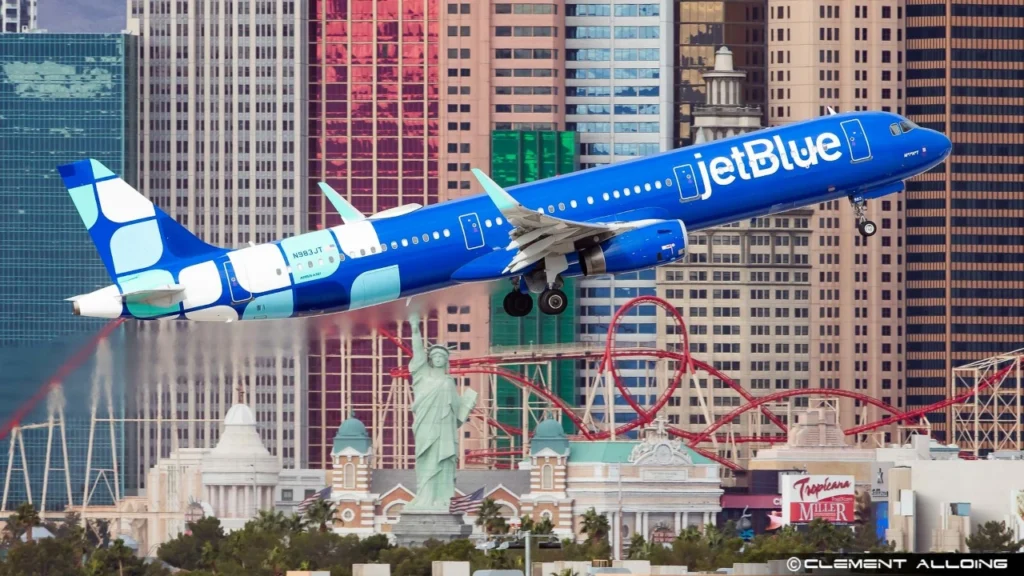
NEW YORK- JetBlue Airways (B6) is facing a lawsuit after a passenger alleged she suffered severe burns on a flight from New York JFK to Paris Charles de Gaulle (CDG). The case centers on the use of dry ice as a first aid measure onboard.
The incident highlights critical safety concerns around inflight medical assistance and the risks tied to improper handling of hazardous materials like dry ice.

JetBlue Lawsuit Over Dry Ice Burns
A passenger has filed a lawsuit against JetBlue Airways following an incident on flight B6 1908 between New York JFK and Paris Charles de Gaulle (CDG) on March 31, 2025.
The passenger, Patricia Matzenbacher, claims she suffered significant tissue damage after a flight attendant allegedly provided her with a pack containing dry ice to treat a swollen leg.
According to the complaint, the passenger requested an ice pack to reduce swelling during the flight. Cabin crew reportedly handed over a sealed pack without clarifying its contents. Believing it to be standard ice, she applied it directly to her skin. The extreme cold of dry ice caused immediate burns and injury.
Dry ice, a solid form of carbon dioxide, is commonly used in aviation catering to preserve perishable items. It maintains temperatures as low as -78.5°C, which makes it far colder than regular ice. Direct skin contact can result in frostbite-like injuries within seconds. Safe handling requires protective equipment such as insulated gloves.
Reported by PYOK, the case emphasizes the gap between intent and execution in inflight care. While crew actions may have been intended to assist, the lack of proper handling and communication led to serious consequences.
Understanding the Legal Framework
The lawsuit has been filed under Article 17 of the Montreal Convention, which governs airline liability for passenger injuries during international travel. This provision allows passengers to seek compensation for damages sustained onboard an aircraft.
Under current limits, passengers can claim up to 151,880 Special Drawing Rights, which is approximately USD 215,800 based on recent exchange rates. However, this cap does not apply if negligence or wrongful conduct by the airline is proven.
In this case, the passenger alleges that JetBlue’s cabin crew acted negligently by providing a hazardous substance without adequate warning. If the court finds sufficient evidence of negligence, the airline could face uncapped liability.
Why Dry Ice Is Not Suitable for First Aid Use
Dry ice is not designed for medical or first aid purposes. Its extreme temperature can cause severe cold burns upon direct contact with skin. Unlike regular ice, which is commonly used to reduce swelling when properly wrapped, dry ice presents a high risk of injury.
Airlines typically rely on standard ice or approved cold packs for inflight medical needs. The use of dry ice outside controlled environments, especially without protective measures, violates basic safety handling protocols.
This incident serves as a reminder of the importance of proper training and adherence to safety guidelines in aviation operations. Even routine passenger assistance can lead to serious outcomes if hazardous materials are misused.
Stay tuned with us. Further, follow us on social media for the latest updates.
Join us on Telegram Group for the Latest Aviation Updates. Subsequently, follow us on Google News
