

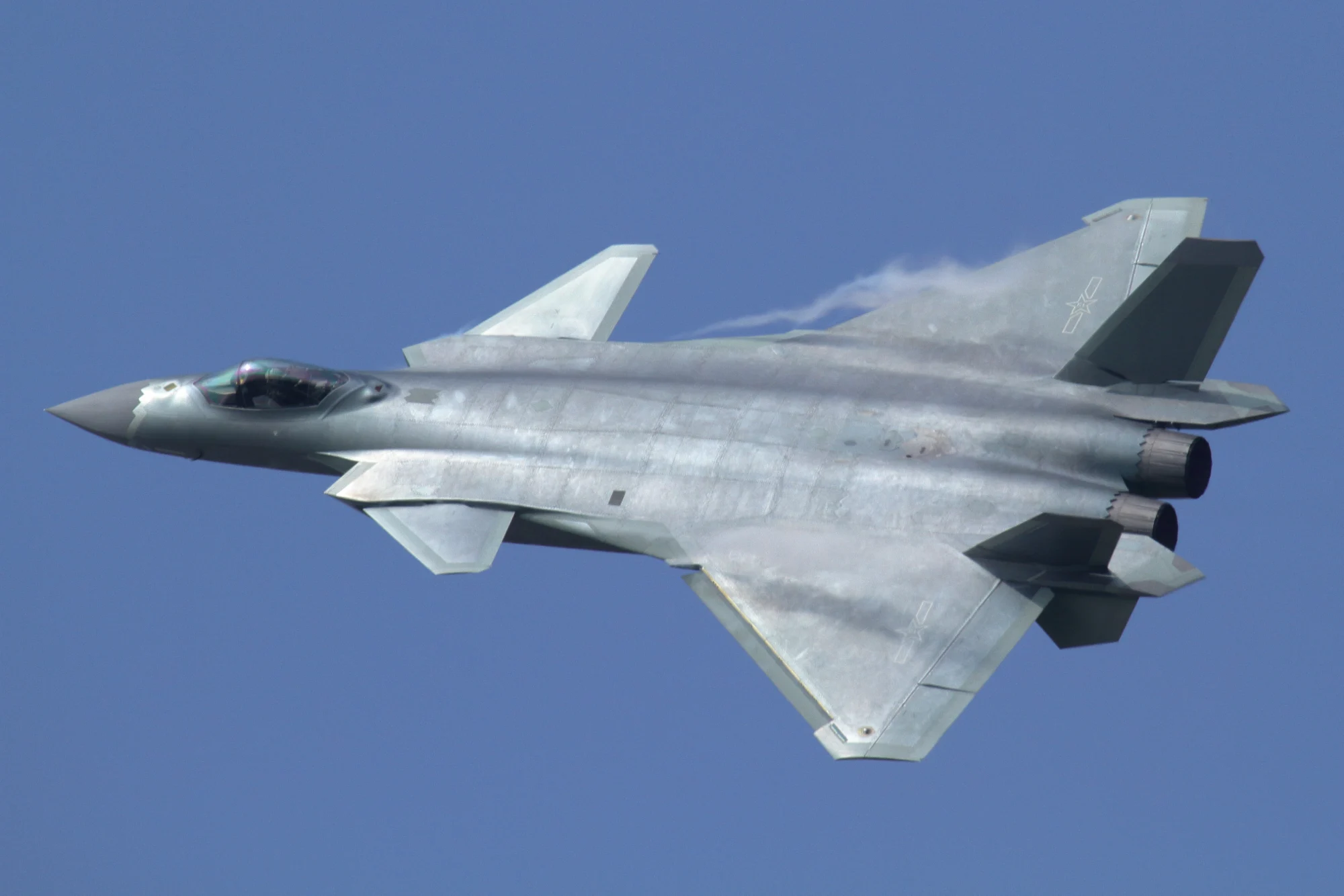
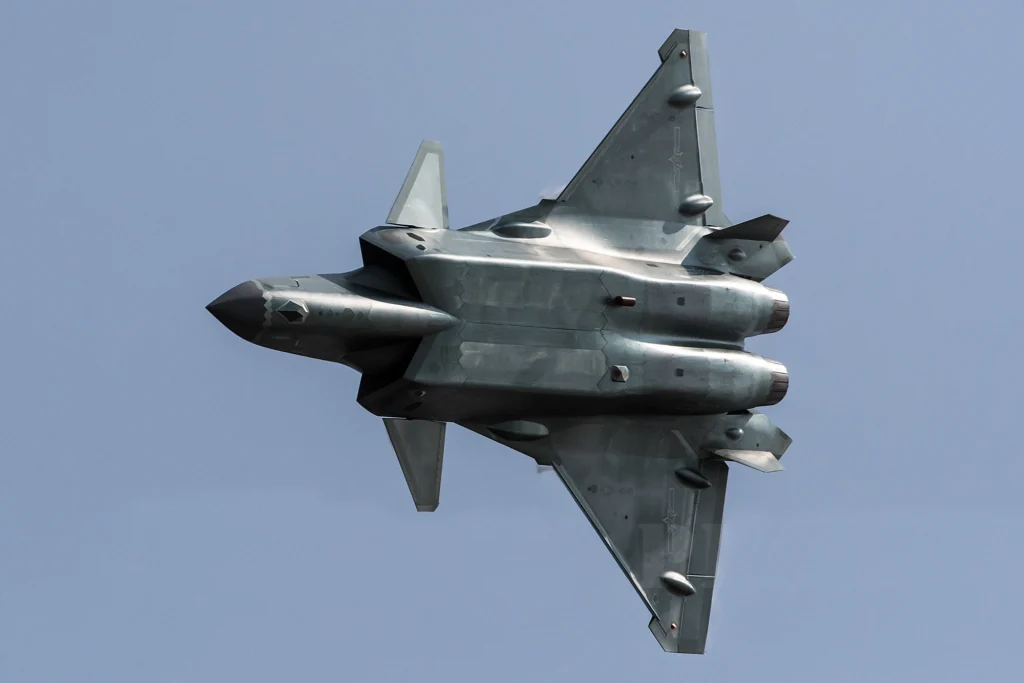
CHENGDU- China is rapidly increasing its fighter aircraft production capacity, focusing on advanced stealth platforms such as the J-20 and J-35. Satellite-based analysis indicates a significant rise in manufacturing infrastructure and output potential.
Chengdu, Shenyang, and Jingdezhen are key aerospace hubs supporting this expansion, enabling higher production of fifth-generation fighters and military aircraft for the People’s Liberation Army.

China Increases J-20 and J-35 Production Capacity
China is accelerating its military aviation growth through large-scale investments in manufacturing and testing infrastructure led by the Aviation Industry Corporation of China (AVIC).
This expansion reflects a long-term strategy to increase both fleet size and combat capability.
According to Flight Global, the analysis is based on commercially available satellite imagery assessed by J. Michael Dahm, a senior fellow at the Mitchell Institute for Aerospace Studies.
His findings, presented at the 2026 Air & Space Forces Association Warfare Symposium, indicate that China’s inventory of fighter and attack aircraft will grow significantly over the next five years.
The use of commercial satellite data, including imagery from Planet Labs, highlights a shift in how military developments are monitored.
Open-source intelligence now plays a critical role in defence analysis, with similar imagery previously used to track Russian troop movements and more recently to reveal US military positions in the Middle East.
Expansion of Core Production Facilities
Chengdu J-20 Manufacturing Complex
The Chengdu facility remains central to China’s fifth-generation fighter production. Since 2021, approximately 278,700 square metres of additional manufacturing space have been added, bringing the site to five active production lines.
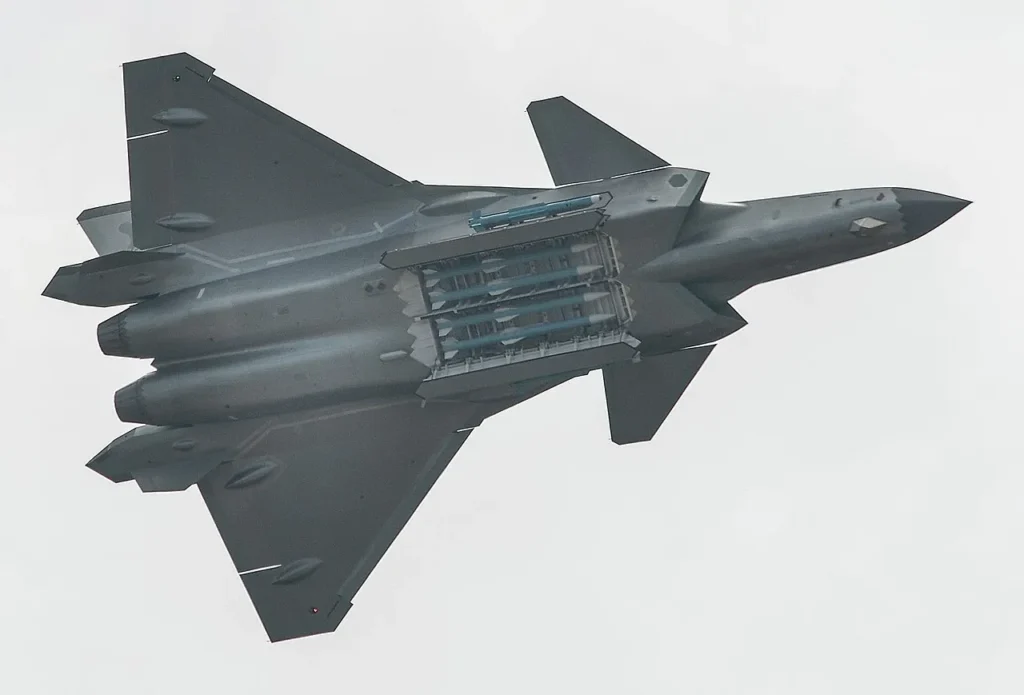
Estimates suggest the annual output of the J-20 ranges between 100 and 120 aircraft. The platform, which has been operational for over a decade, is designed to rival advanced Western air superiority fighters.
Recent satellite imagery also shows around 20 hectares of cleared land near the plant, previously occupied by Sichuan University. This space may support further expansion or future sixth-generation aircraft production.
Shenyang Aircraft Production Hub
Shenyang is emerging as a major centre for next-generation fighter assembly. A new facility under development includes over 370,000 square metres of manufacturing space and a 3,660-metre runway.
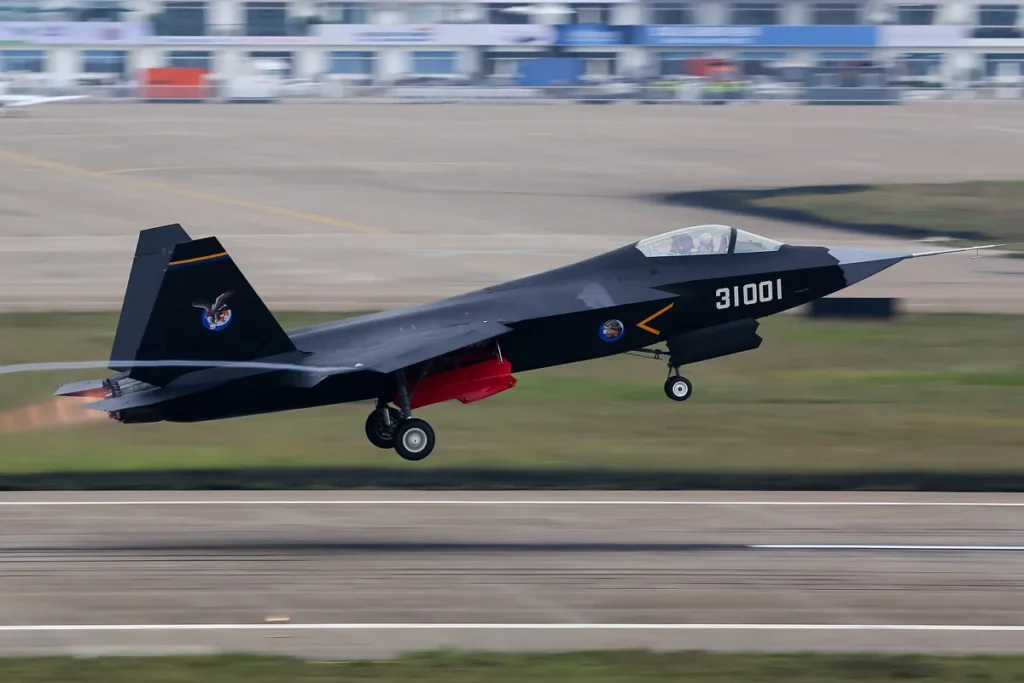
This site is expected to produce the J-35 and J-35A stealth fighters. The naval variant is being developed for carrier-based operations, including electromagnetic catapult launches from the CNS Fujian, while the land-based variant will serve the air force.
Existing production lines in Shenyang continue to deliver fourth-generation aircraft such as the J-15 and J-16.
Footage of these operations was previously shown in a state media documentary ahead of China’s 2025 military parade.
Changhe Helicopter Manufacturing Expansion
The Changhe facility in Jingdezhen is undergoing a 93,000 square metre expansion, increasing its capacity by approximately 30 percent.
This site produces a range of military helicopters, including attack and heavy-lift transport platforms.
Production Scale and Global Comparison
China’s combined infrastructure expansion across its major aerospace sites exceeds 743,000 square metres, equivalent to roughly 8 million square feet. This surpasses the total size of the F-35 manufacturing complex in Fort Worth, Texas.
Dahm estimates that AVIC could achieve an annual production capacity of 300 to 400 fighter aircraft, including both fourth and fifth-generation models. Even with partial utilisation, output is expected to reach at least 250 aircraft per year.
In comparison, the United States produces approximately 156 F-35 fighters annually. Additional production includes up to 48 F-16 Block 70/72 aircraft per year, with around 16 delivered annually in recent years, and 24 F-15EX fighters.
In Europe, France delivered 26 Rafale jets in 2025, with plans to increase output to 44 per year.
While Western manufacturers maintain advantages in technology and systems integration, China’s strategy emphasises scale. High production volumes provide operational flexibility and sustained force generation.
Lockheed Martin chief executive James Taiclet has stated that the J-20 is not equivalent to the F-35 in capability, reinforcing the view that the United States retains a qualitative edge despite China’s quantitative gains.
Development of Next-Generation Aircraft
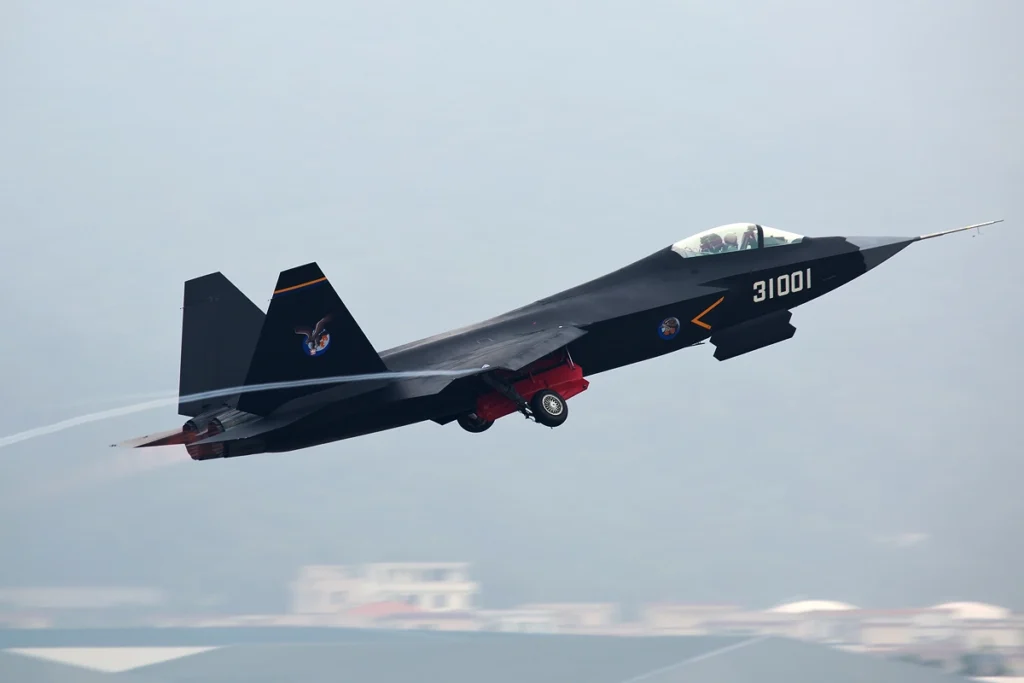
China is also advancing experimental fighter programmes. New aircraft, including the J-36 and the smaller J-50, have been observed during flight testing in Chengdu and Shenyang.
The J-50, also referred to as J-XDS, reappeared in March 2026, indicating continued development.
These aircraft feature advanced designs such as tailless configurations and possible thrust vectoring capabilities.
US Air Force General Kenneth Wilsbach has indicated that these platforms are likely intended for air superiority roles.
They are broadly comparable to sixth-generation programmes under development in the United States, including the F-47 and the Navy’s F/A-XX.
Expansion of Test Infrastructure
A remote test facility in Xinjiang, often described as “China’s Area 51”, has undergone rapid expansion.
Satellite imagery shows the addition of 5,570 square metres of hangar space and over 27,800 square metres of new facilities within a year.
In 2025, a J-50 aircraft was observed parked openly at this base. Analysts suggest this visibility may have been intentional, reflecting strategic signalling rather than operational oversight.

Strategic Implications for Global Air Power
China’s growing aircraft production capacity supports a broader military strategy focused on both regional readiness and global reach. Increased output enables faster fleet modernisation and sustained operational capability.
One key focus remains Taiwan. Military planners have identified potential scenarios ranging from a prolonged blockade to a direct cross-strait operation.
The so-called 2027 “Davidson Window”, named after Admiral Philip Davidson, marks a timeline by which China is expected to be prepared for such an operation. US officials have stated that Chinese forces are actively rehearsing related scenarios.
Beyond regional considerations, China’s expanding air power may enable greater global presence.
Analysts predict that Chinese air assets will increasingly operate in regions beyond East Asia, challenging existing power structures.
China may also use its increased production capacity to support export markets, strengthening its position in the global defence industry.
At the same time, ongoing conflicts such as the US and Israel air campaign involving Iran demonstrate both the strengths and limitations of air power. These developments provide real-world context for evaluating the effectiveness of large-scale air capabilities.
Stay tuned with us. Further, follow us on social media for the latest updates.
Join us on Telegram Group for the Latest Aviation Updates. Subsequently, follow us on Google News
