

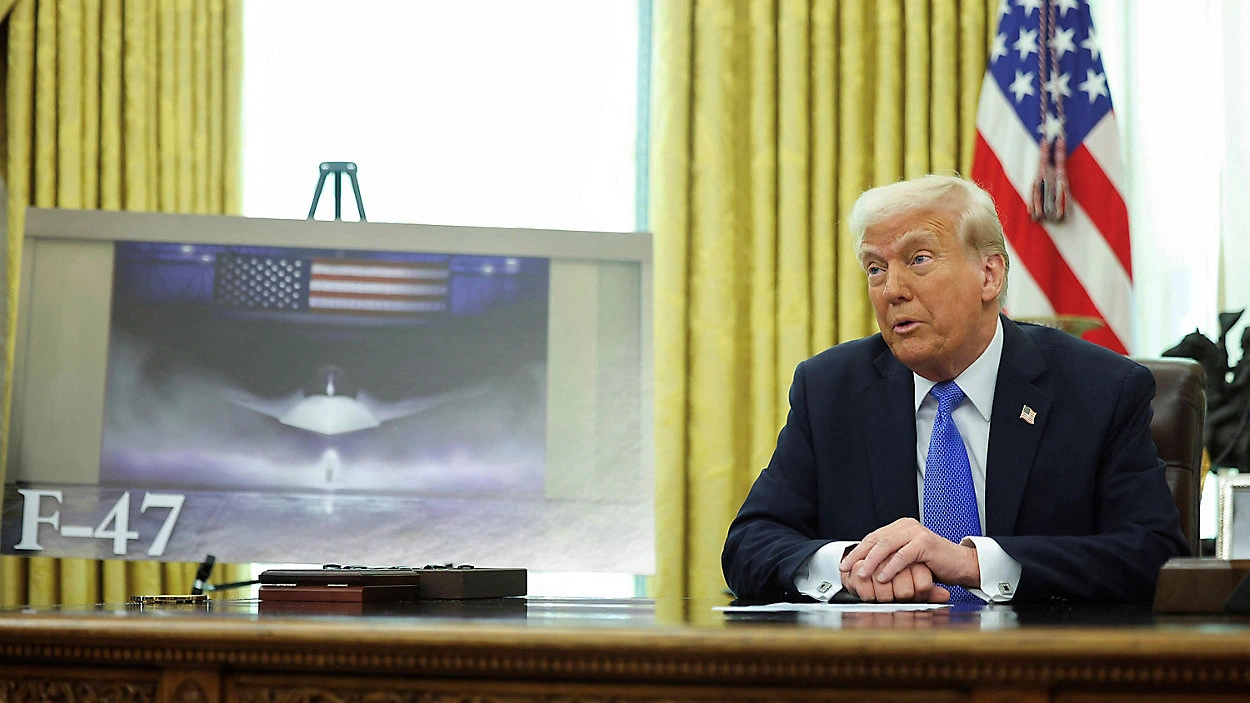
ARLINGTON- The US sixth-generation fighter program, now designated F-47, moved from concept to contract under President Donald Trump’s second term, with Boeing selected as the prime contractor. The announcement was positioned as a signal of long-term air dominance, particularly in the Indo-Pacific.
China’s response was swift and dismissive. State media and military analysts questioned the aircraft’s design choices, Boeing’s reliability, and Washington’s claims of technological leadership in sixth-generation combat aviation.
F-47 and the Strategic Messaging Behind the Program
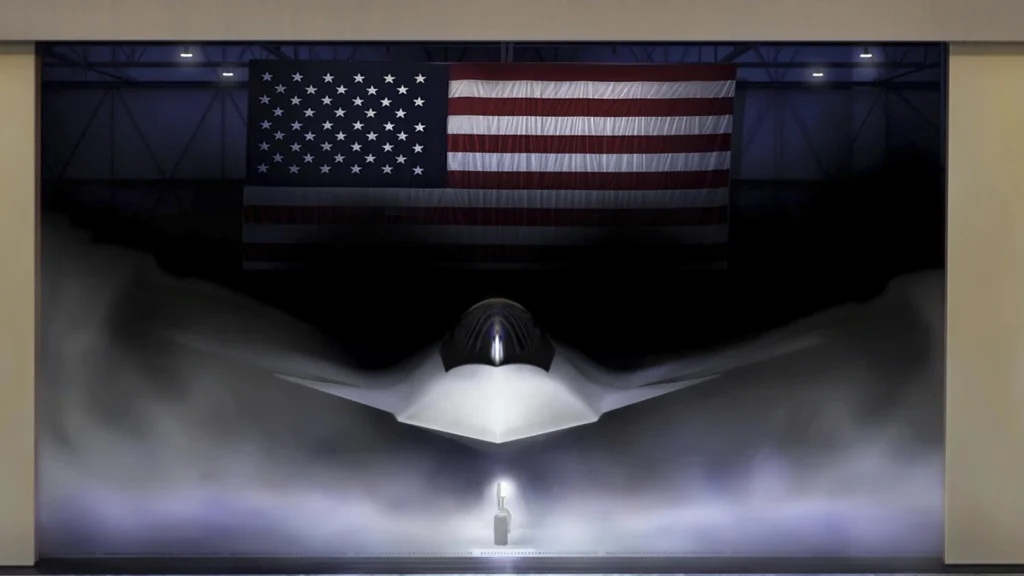
The F-47 sits at the core of the US Air Force’s Next-Generation Air Dominance initiative, a program intended to replace the F-22 Raptor and secure air superiority against near-peer competitors.
On March 20, 2025, President Trump formally awarded the contract for the crewed fighter component to Boeing, calling it the most capable combat aircraft ever envisioned.
The designation F-47 carried symbolic weight. It referenced the P-47 Thunderbolt, a World War II-era fighter, and the founding year of the US Air Force in 1947. Observers also noted the political undertone, linking the number to Trump’s position as the 47th US president.
Trump later signaled openness to changing the name, suggesting flexibility in how the aircraft is ultimately branded.
Claimed Capabilities of the F-47
According to the US Air Force, the F-47 represents a significant leap beyond fifth-generation platforms. While most technical details remain classified, official disclosures outline several key performance expectations.
The aircraft is projected to have a combat radius exceeding 1,000 nautical miles, allowing sustained operations deep inside contested airspace. This is a marked increase over the F-22 and F-35, both of which have shorter operational ranges.
Speed is expected to exceed Mach 2, matching or surpassing existing US air superiority fighters. The F-47 is also designed to operate alongside AI-enabled collaborative combat aircraft, extending its reach, survivability, and mission flexibility through manned-unmanned teaming.
Stealth, Sensors, and Design Philosophy
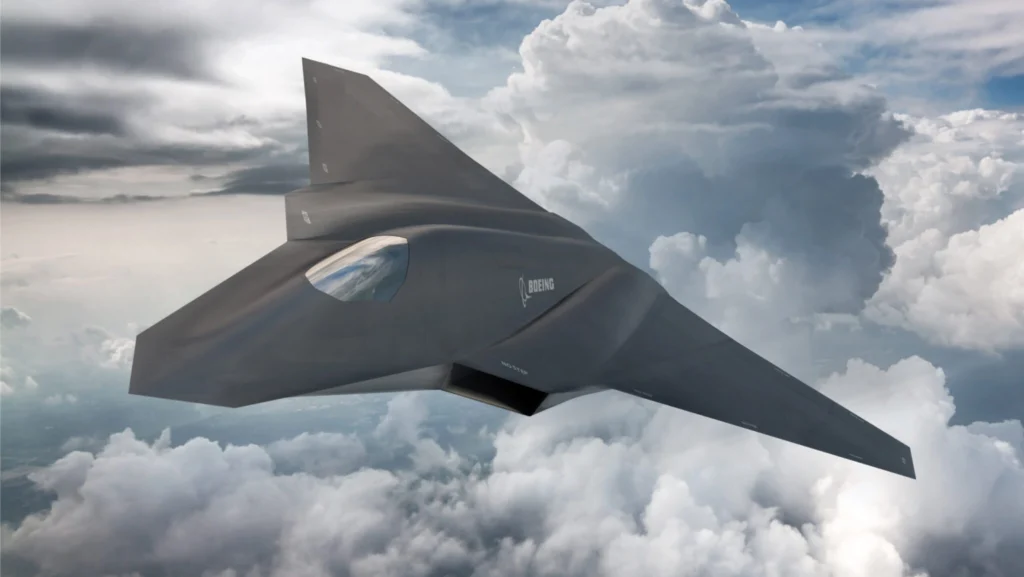
USAF leadership has described the F-47 as featuring stealth++, an evolution beyond the stealth characteristics of current-generation fighters. The platform is intended to reduce detectability across multiple sensor bands while integrating advanced electronic warfare and data fusion systems.
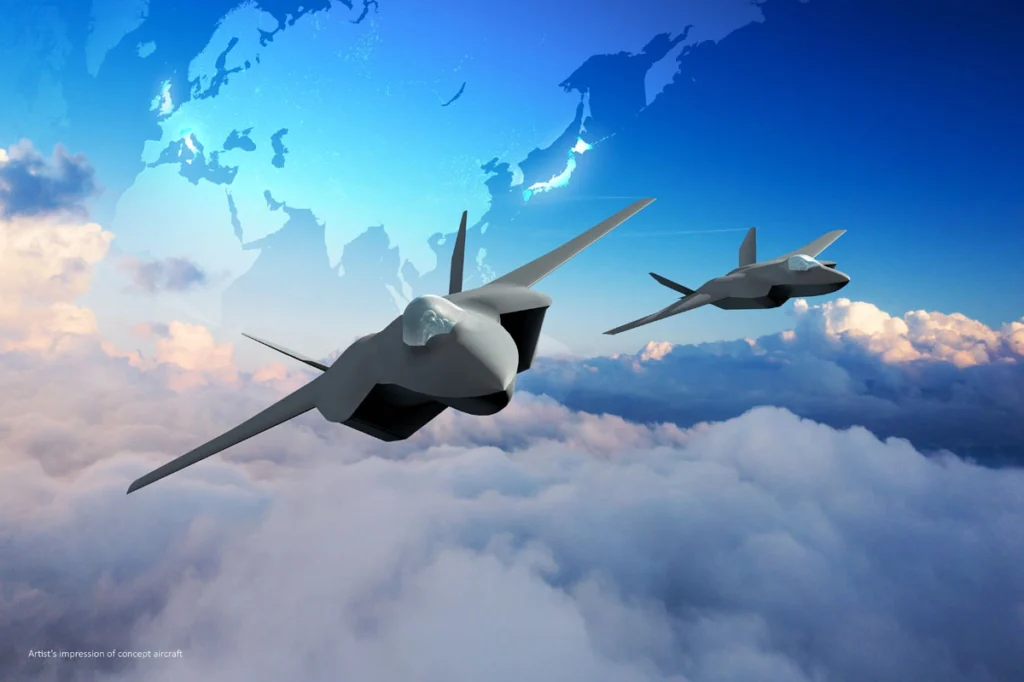
Artist renderings released by the Air Force suggest a tailless or near-tailless configuration, a lifting-body fuselage, and refined shaping for low observability. However, the presence of forward canards in some visuals has become a focal point of foreign criticism.
Western analysts caution that publicly released images may not reflect the final configuration and could be intended to obscure classified design elements.
China’s Critique of the F-47 Program
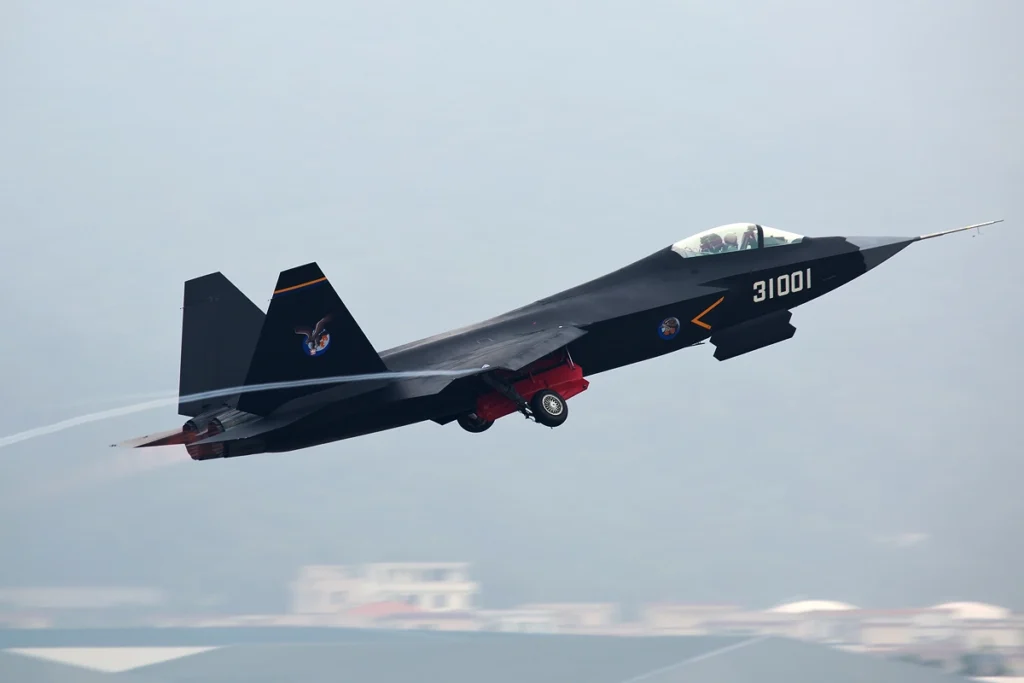
Chinese state media outlets, including Global Times and CCTV, have framed the F-47 as an unimpressive and potentially flawed response to China’s own sixth-generation efforts. Military analysts cited concerns over limited stealth, smaller airframe size, and Boeing’s track record on recent aerospace programs.
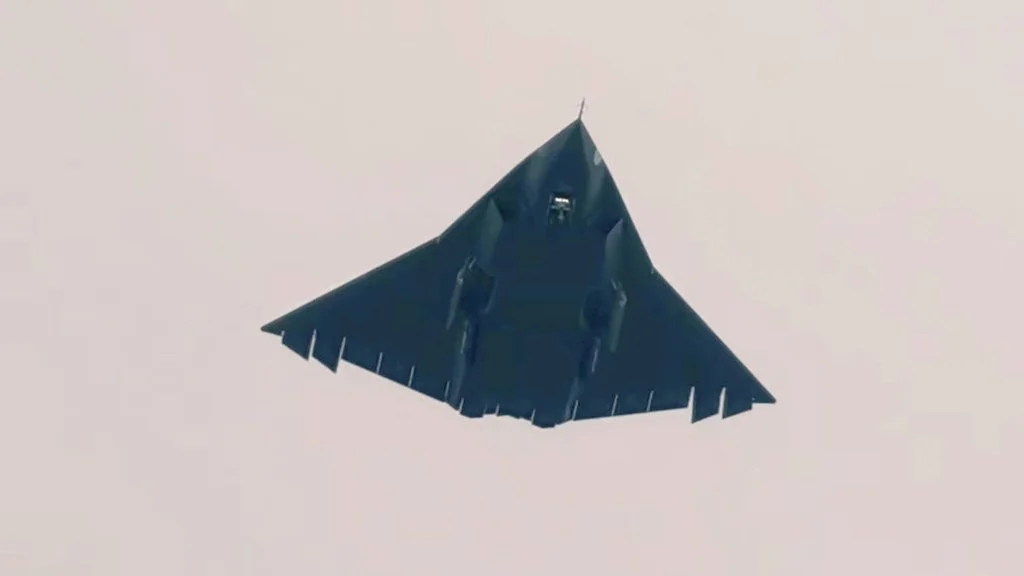
Zhang Xuefeng, a Chinese military affairs expert, argued that the inclusion of canards reflects outdated design thinking. Other commentators contrasted the F-47 with China’s J-36 and J-50 prototypes, which reportedly eliminate vertical tails and canards to maximize multispectral stealth.
Chinese analysts have also questioned US claims that sixth-generation demonstrators have been flying for years, noting the absence of photographic evidence and the reliance on conceptual imagery, flagged EurAsian Times.
J-36 and J-50 in China’s Narrative
China has flown two distinct sixth-generation fighter prototypes since late 2024. While official details remain scarce, both the J-36 and J-50 are described by Chinese sources as large, multi-role platforms designed for campaign-level operations rather than purely tactical missions.
State media presentations emphasize rapid development timelines and production readiness. Chinese engineers have publicly claimed breakthroughs in manufacturing methods that allow faster and more reliable fielding of next-generation aircraft.
The timing of publicized J-36 test footage, released shortly after the F-47 contract announcement, reinforced perceptions of an accelerating rivalry.
Western Counterarguments and Program Realities
Western defense analysts dispute the Chinese portrayal of the US lagging behind. They argue that the NGAD effort has benefited from over a decade of classified research, with technology demonstrators reportedly flying as early as 2020.
According to this view, the F-47’s secrecy protects advances in adaptive-cycle engines, AI-enabled mission systems, and next-generation stealth materials. Analysts also note that canards, when properly integrated, do not automatically compromise stealth and can improve lift and maneuverability.
One acknowledged challenge remains propulsion. The Next Generation Adaptive Propulsion program has faced delays, and the final engine selection for the F-47 has not been confirmed by the US Air Force.
What the Debate Signals for Air Superiority
The public dispute over the F-47 reflects more than technical disagreement. It highlights a broader contest over narrative control, credibility, and perceived momentum in sixth-generation fighter development.
While China presents its programs as mature and ahead of schedule, the United States continues to rely on classified progress and strategic ambiguity. The outcome will likely depend less on early prototypes and more on sustained funding, industrial execution, and operational integration over the next decade.
Stay tuned with us. Further, follow us on social media for the latest updates.
Join us on Telegram Group for the Latest Aviation Updates. Subsequently, follow us on Google News
