


ATLANTA— Delta Air Lines (DL) is facing scrutiny after a passenger reported that a visibly ill traveler vomited for nearly 45 minutes on a flight from Orlando International Airport (MCO) to Los Angeles International Airport (LAX).
The incident, first reported by ViewfromtheWing, raises concerns about onboard health protocols, communicable disease policies, and whether current fare rules discourage sick passengers from staying home.
Delta Passenger Vomits in Flight
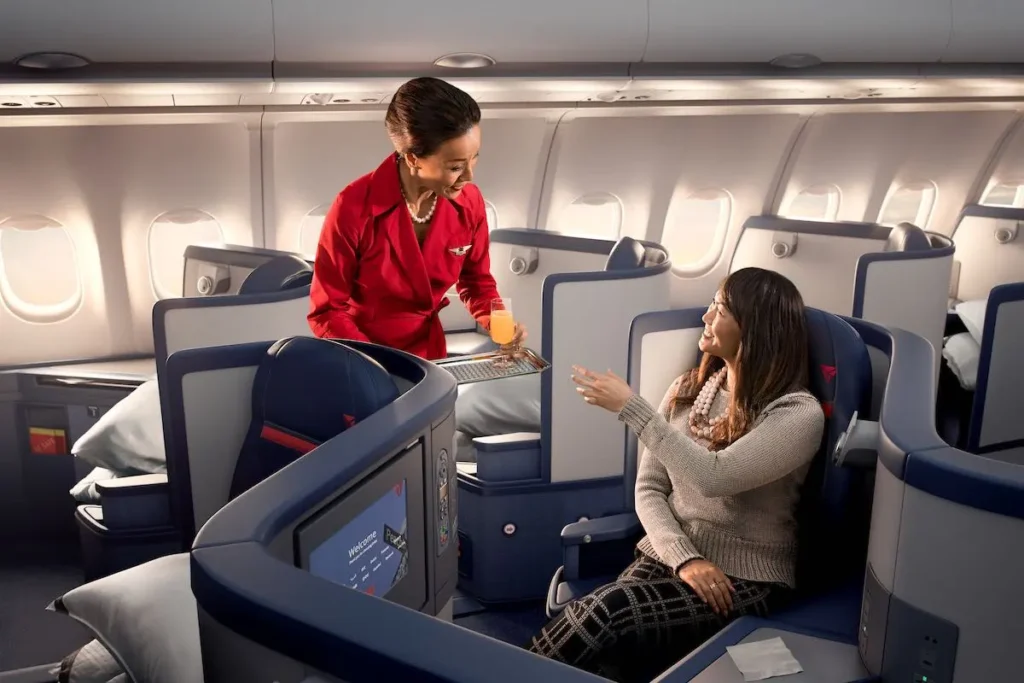
A passenger seated near row 16 described a disturbing situation mid-flight. According to her account, the man seated in 16E began vomiting repeatedly and remained in his seat for approximately 30 to 45 minutes instead of using the lavatory.
She stated that the passenger’s companion, seated in 16D, openly acknowledged that the illness was adenovirus and that multiple family members had been infected the previous week. Despite this, they chose to travel.
The reporting passenger also alleged that the companion was barefoot during the flight and encroached into her personal space. She further claimed that vomit covered the seat area and that the aircraft appeared scheduled for immediate turnaround, with passengers waiting to board the next departure upon arrival in Los Angeles.
Under U.S. public health regulations, certain communicable disease symptoms, including persistent vomiting, may require reporting to the Centers for Disease Control and Prevention. Vomit can carry infectious pathogens, particularly in cases involving viral gastroenteritis or respiratory-linked viral infections such as adenovirus.
Airlines are expected to follow established sanitation and operational protocols when bodily fluids contaminate cabin areas. These procedures may include isolating the affected passenger where feasible, notifying flight operations, requesting enhanced cleaning, replacing contaminated seat cushions, and ensuring ground personnel use appropriate personal protective equipment.

Communicable Disease Protocols
Modern commercial aircraft use high-efficiency particulate air filtration systems that reduce airborne transmission risk during flight. However, surface contamination remains a valid concern when bodily fluids are involved.
During the COVID-19 pandemic, airlines implemented enhanced cleaning procedures between flights. Many of those visible measures have since been scaled back. While routine cleaning remains standard practice, extensive contamination typically requires additional disinfection steps beyond a standard cabin refresh.
If an aircraft turnaround time is short, operational coordination becomes critical. The flight crew must notify operations control, so ground teams can assess whether deep cleaning or equipment replacement is required before the next departure.
Delta maintains a communicable disease refund policy, though eligibility thresholds can vary. Respiratory viruses and common infections may not always qualify for fee-free changes under certain fare types.
Fare Structures and Incentives to Fly While Sick
Most major U.S. airlines have eliminated change fees on standard economy and higher fare classes. However, basic economy tickets often remain restrictive. Passengers holding non-refundable basic economy fares may face financial loss if they cancel due to illness.
Price-sensitive travelers are more likely to purchase basic economy fares. As a result, those most constrained financially may also be the least able to absorb the cost of canceling travel when ill.
Public health experts have long noted that social and economic pressures influence decisions to travel while sick. Cultural expectations around work and personal commitments can reinforce the decision to proceed with planned travel despite symptoms.
Airport terminals, security checkpoints, and gate areas generally lack the same air filtration standards found onboard aircraft. While aircraft cabins are engineered to reduce airborne pathogen spread, ground facilities present a different risk environment.
Contract of Carriage and Passenger Conduct
Airlines outline behavioral expectations in their Contracts of Carriage. These documents typically require passengers to comply with crew instructions and maintain standards of hygiene and conduct that do not interfere with the safety or comfort of others.
Cabin crew is trained to manage onboard medical events, but real-time decisions depend on severity, available space, and operational constraints. Separating a symptomatic passenger may not always be feasible on a full flight.
The reported incident highlights broader industry questions about balancing operational efficiency, fare policies, public health obligations, and passenger comfort.
Stay tuned with us. Further, follow us on social media for the latest updates.
Join us on Telegram Group for the Latest Aviation Updates. Subsequently, follow us on Google News
