

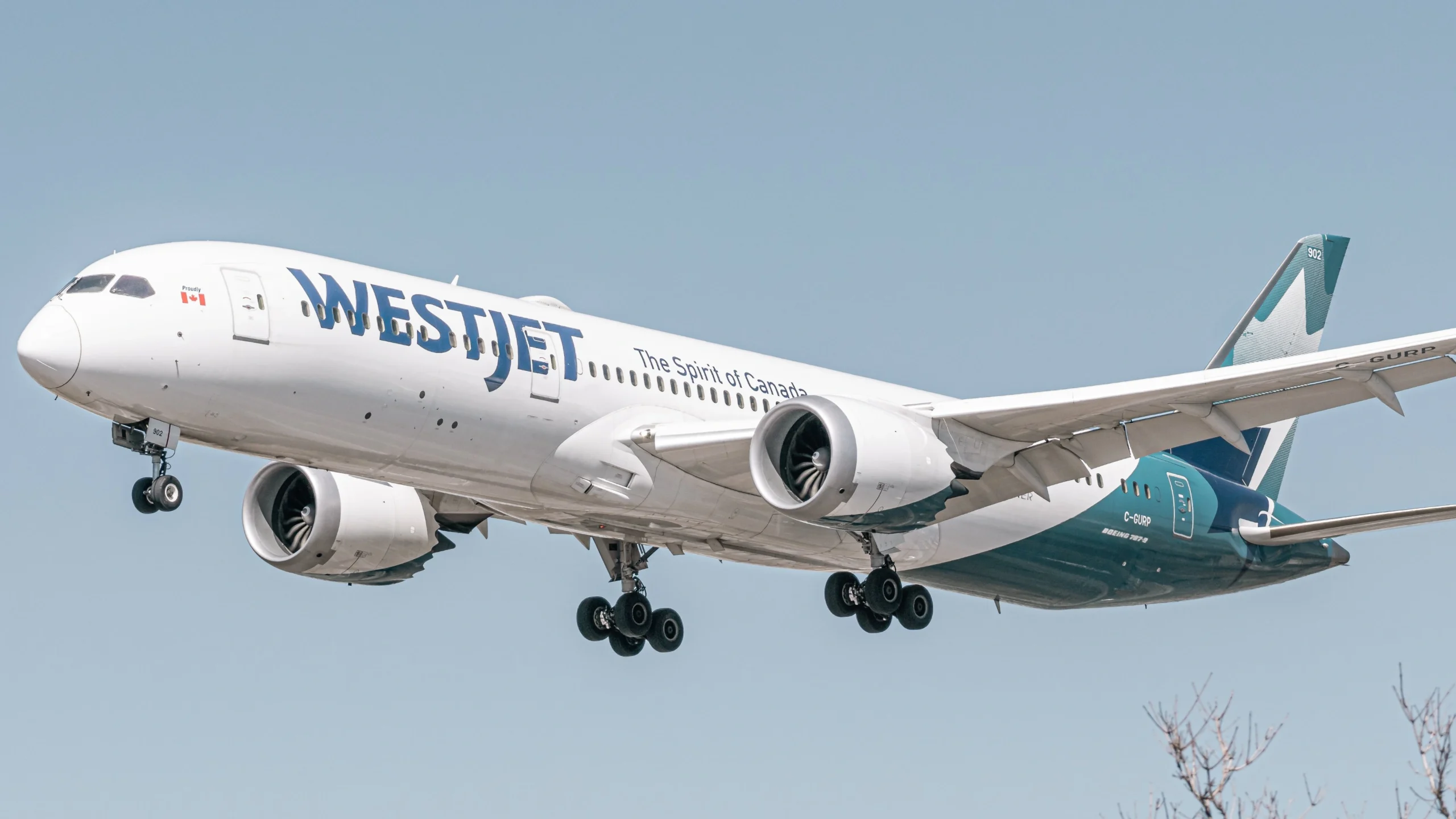
CALGARY- WestJet (WS) has revised its Boeing order book, converting six Boeing 737 MAX 10 aircraft into two Boeing 787-9 Dreamliners. The move signals a stronger focus on long-haul growth from Calgary International Airport (YYC), Airways Mag reported.
The airline has also adjusted cabin plans for its Boeing 737 MAX fleet after passenger backlash over reduced legroom. Updated configurations will restore comfort and add an extra lavatory on new deliveries.
WestJet Converts 737 MAX 10 with 787s
WestJet has converted six Boeing 737 MAX 10 orders into two Boeing 787-9 Dreamliners, increasing its confirmed 787-9 orderbook from seven to nine aircraft, with four additional options, Simple Flying flagged.
The airline previously ordered seven firm 787-9s and secured options for four more. With this latest adjustment, WestJet could operate up to 20 Dreamliners if all options are exercised.
According to fleet data from ch-aviation, WestJet currently operates seven Boeing 787-9 aircraft, with an average age of 6.1 years. These widebodies are the only twin-aisle aircraft in its fleet. Deliveries took place between January 2019 and September 2022 as part of an original order for ten units, of which three were later deferred.
The expanded Dreamliner fleet strengthens WestJet’s long-haul network. Cirium data shows 382 scheduled 787-9 flights this month. The busiest route is Calgary (YYC) to Cancun (CUN), operating 43 rotations.
The aircraft also serves daily services from Calgary to London Heathrow (LHR), Paris Charles de Gaulle (CDG), and Tokyo Narita (NRT), alongside additional routes to Hawaii and Mexico.
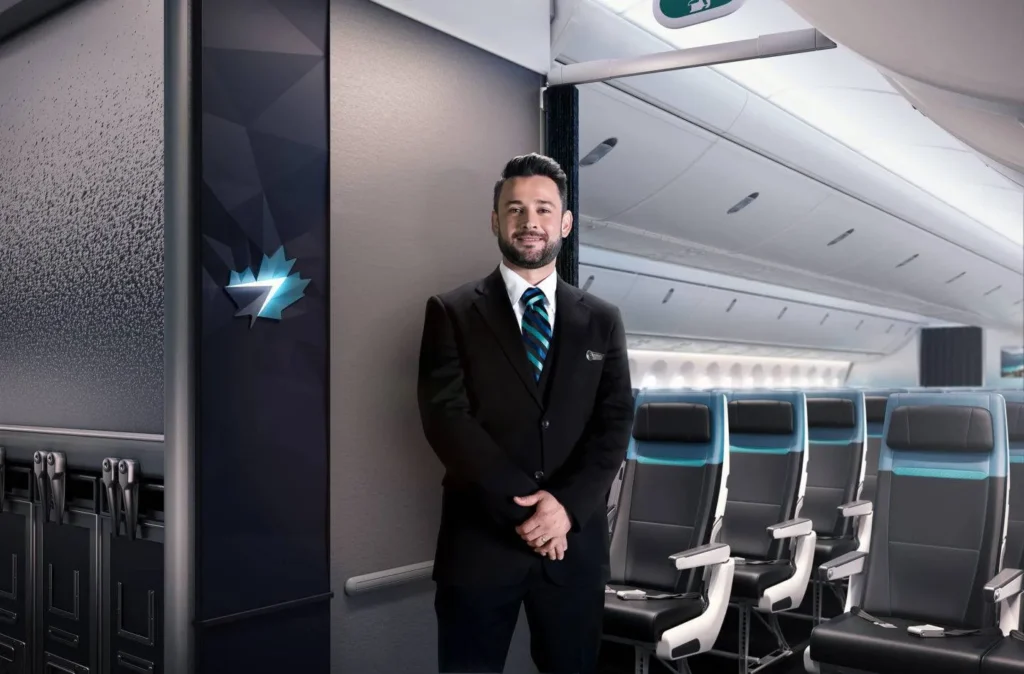
WestJet configures its 787-9 aircraft in a 320-seat, three-class layout. The business cabin includes 16 lie-flat seats in a 1-2-1 configuration. Premium economy features 28 seats in a 2-3-2 layout. The economy cabin offers 276 seats in a 3-3-3 configuration.
Revised Boeing 737 MAX 10 Layout
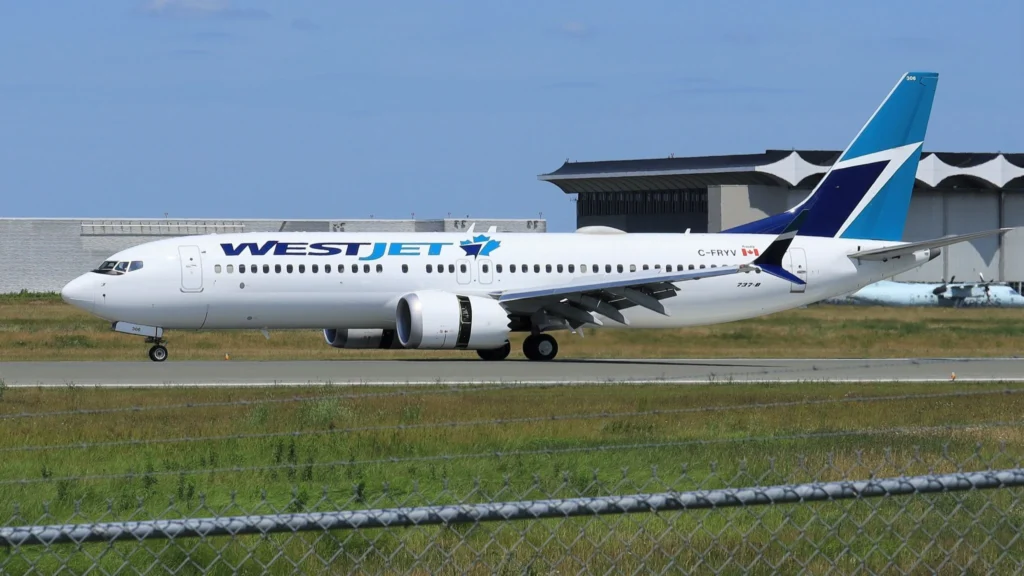
Despite the order conversion, WestJet retains a substantial commitment to the Boeing 737 MAX 10. The airline placed 60 firm orders last summer, with options for 25 additional aircraft.
Initial plans called for a 212-seat layout with 12 business class seats and 200 economy seats, supported by three lavatories. Following strong negative feedback from passengers on recent cabin densification across its 737-800 and 737 MAX 8 fleet, WestJet has revised its approach.
The airline had previously added an extra row of seats to certain narrowbody aircraft, reducing seat pitch and limiting recline. The change triggered widespread customer dissatisfaction. WestJet has since reversed the densification on existing aircraft and confirmed that incoming 737 MAX 10 jets will feature a reduced 199-seat configuration and four lavatories.
This adjustment reflects a balance between capacity growth and passenger experience. By moderating seat density and restoring comfort, WestJet aims to protect its brand while continuing fleet modernization.
Stay tuned with us. Further, follow us on social media for the latest updates.
Join us on Telegram Group for the Latest Aviation Updates. Subsequently, follow us on Google News
