

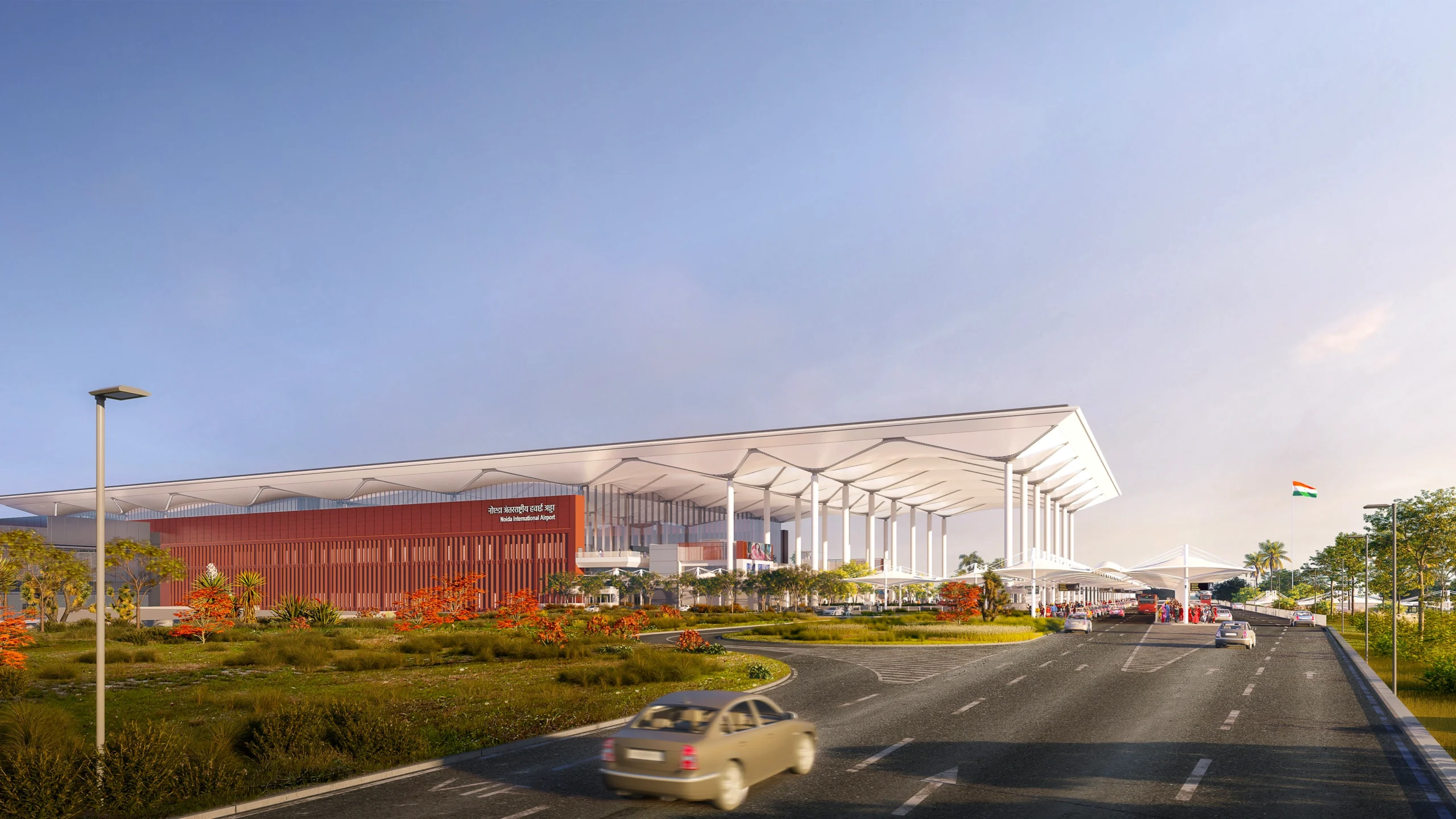
NOIDA- Prime Minister Narendra Modi will inaugurate Noida International Airport (DXN) in March, Uttar Pradesh Chief Minister Yogi Adityanath confirmed during his visit to Singapore. The airport is located in Jewar, Gautam Buddha Nagar district, and is set to become one of India’s largest aviation hubs.
The first phase of Noida International Airport (DXN) will feature one runway and a terminal with an annual capacity of 12 million passengers. The project is being developed in partnership with Zurich Airport International AG and is planned to expand to five runways, ET flagged.
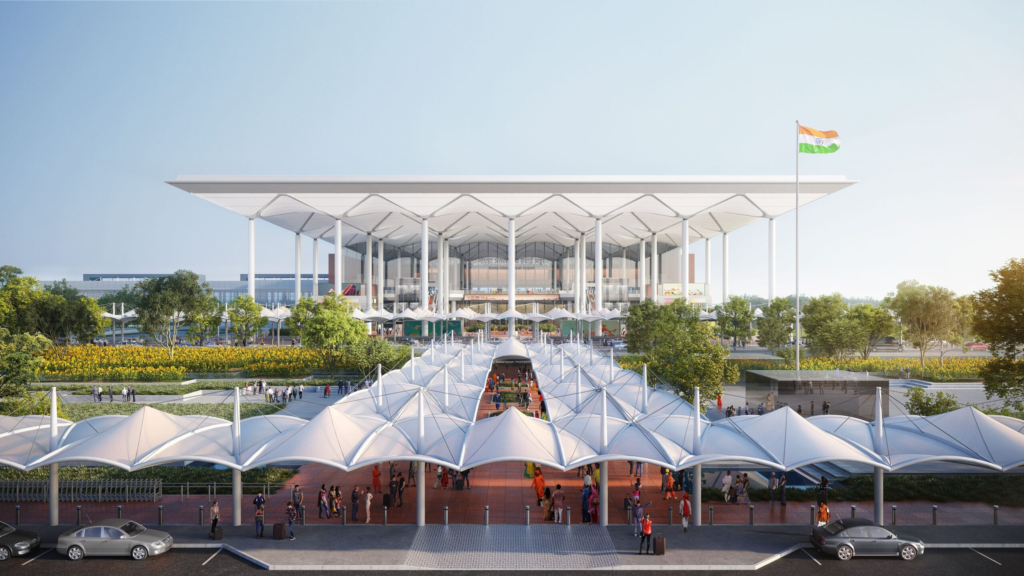
Noida International Airport Nears Operational Launch
The long-delayed Noida International Airport in Jewar is now approaching inauguration. Chief Minister Yogi Adityanath stated that the facility is almost ready and that time has been sought from the Prime Minister for its formal launch.
Initially planned with two runways, the airport’s master plan has been expanded to include five runways, positioning it among the largest airports in India once fully developed.
The first phase spans over 1,334 hectares and includes one runway and a terminal building designed to handle 12 million passengers annually. The Airports Authority of India conducted a successful calibration flight on October 31, 2025. This technical validation confirms the accuracy of navigation and communication systems, a mandatory step before commercial operations begin.
The project is being executed by Yamuna International Airport Private Limited, a wholly owned subsidiary of Zurich Airport International AG, under a public private partnership model with the Uttar Pradesh government.
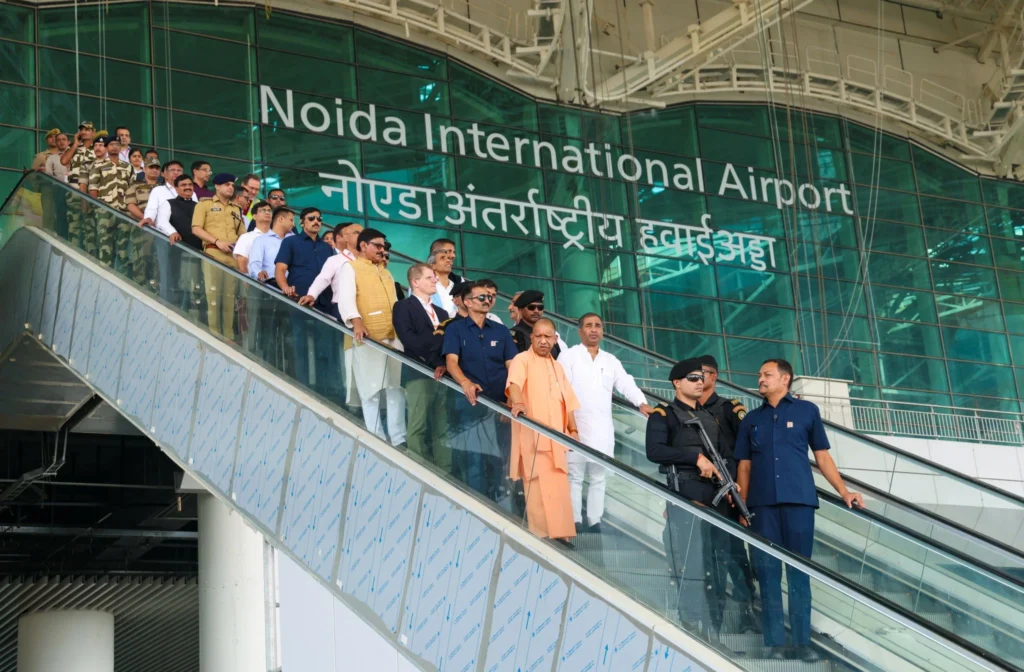
Budget Allocation Strengthens Aviation Infrastructure
In February, the Uttar Pradesh government proposed an outlay of Rs 2,111 crore for the civil aviation sector for the financial year 2026–27. Of this, Rs 750 crore has been earmarked specifically for the development of Noida International Airport in Jewar.
An additional Rs 1,100 crore has been proposed for the construction, expansion, and strengthening of airstrips across the state, along with land acquisition. This allocation reflects the state’s broader strategy to improve regional air connectivity and infrastructure capacity.
Singapore Visit Focuses on Investment and Infrastructure
During his official visit to Singapore, Chief Minister Yogi Adityanath met Prime Minister Lawrence Wong and senior ministers to discuss investment and infrastructure collaboration under the India-Singapore Comprehensive Strategic Partnership.
Meetings were held with Dr. Vivian Balakrishnan, Minister for Foreign Affairs, focusing on infrastructure cooperation, skill development, and digital economy partnerships.
The chief minister also met Sumit Nanda, Chairman and Managing Director of Golden State Capital Pte. Ltd., to discuss investment prospects in infrastructure, emerging technologies, and data centre development in Uttar Pradesh.
Memorandums of Understanding were signed with Universal Success Enterprises Limited for projects including an integrated township, a logistics park, and a hyperscale data centre park. These projects are expected to generate employment and strengthen the state’s infrastructure ecosystem.
Additional MoUs were signed for collaboration in technical and vocational education, aviation skills development, and industry-aligned training. Meetings were also held with Tan Su Shan, CEO of DBS Group, Lim Chow Kiat, CEO of GIC, and Teo Chee Hean, Chairman of Temasek, to discuss financial cooperation and project financing for infrastructure growth in Uttar Pradesh.
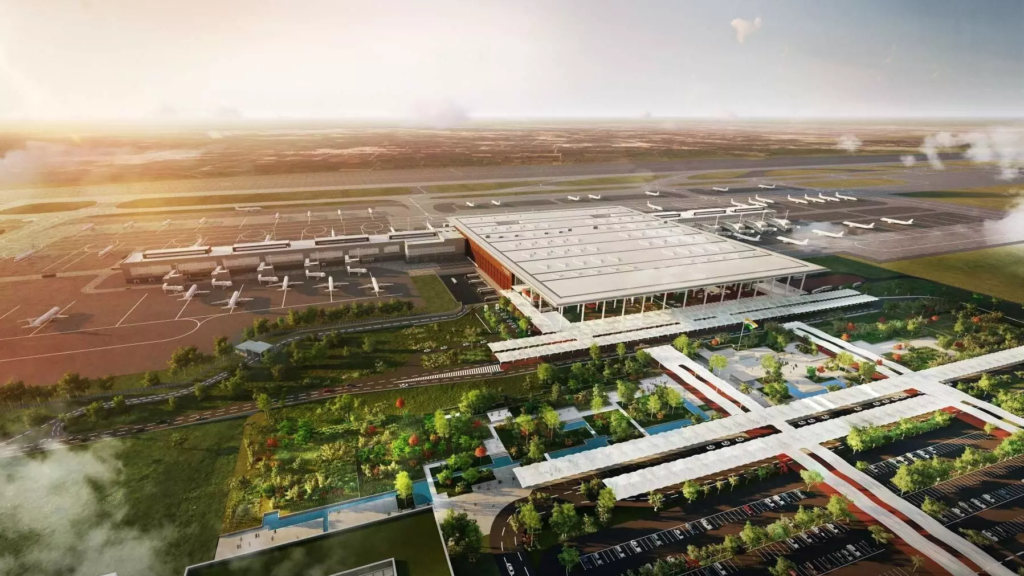
About Noida International Airport
Noida International Airport (DXN) is set to become the third commercial airport in the Delhi NCR region, easing pressure on Indira Gandhi International Airport (DEL) and expanding regional capacity.
Planned in four phases, the airport aims to handle up to 152 million passengers annually by 2050, with commercial operations now targeted for mid 2026.
Noida International Airport (DXN) is being developed near Jewar in Gautam Buddha Nagar district, Uttar Pradesh. It is positioned as an alternative to Indira Gandhi International Airport (DEL) in Delhi and Hindon Airport (HDO) in Ghaziabad.
Development Timeline and Expansion Plan
Noida International Airport was first proposed in 2001 as the Taj International Aviation Hub. The project underwent multiple location shifts and delays before being revived at Jewar in 2014.
The Union Government approved the airport in June 2015. The Ministry of Civil Aviation granted in principle approval in May 2018. Prime Minister Narendra Modi laid the foundation stone for Phase 1 on 25 November 2021.
The airport is being developed under a public-private partnership (PPP) model by Noida International Airport Limited. Flughafen Zürich AG won the bid in 2019 to design, build, and operate the airport for 40 years. Tata Projects Limited received the civil construction contract in 2022. In 2023, IATA assigned the airport code DXN.
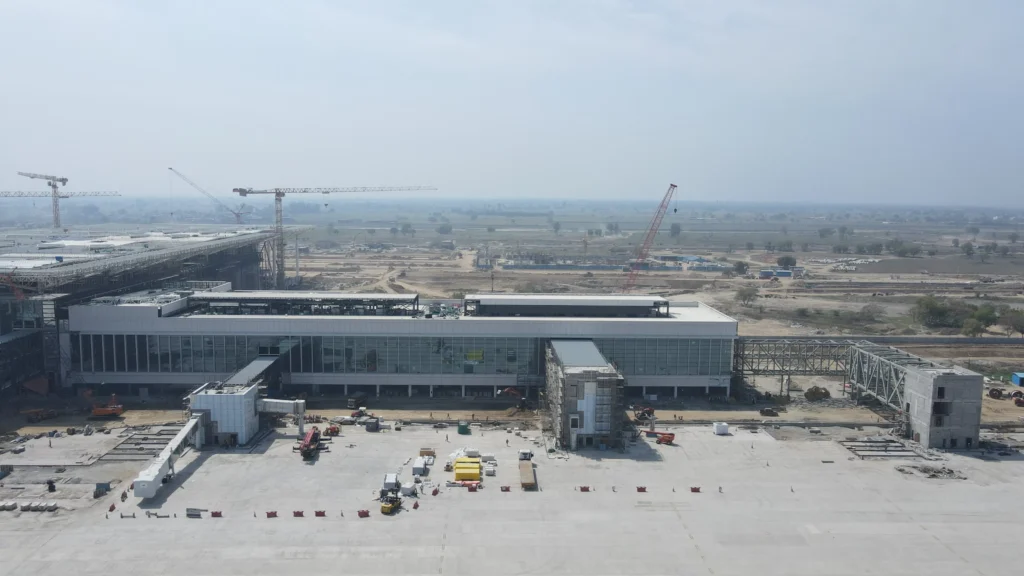
Originally expected to open in 2022, the launch has faced repeated delays. The inauguration is scheduled for 30 October 2025. Commercial flight operations are expected to begin in June or July 2026, subject to regulatory approvals. According to PYOK, the operational timeline has shifted multiple times due to infrastructure and readiness factors.
Phased Capacity Expansion
The airport is planned in four stages:
Phase I
Terminal 1 with capacity of 12 million passengers per annum
One runway
Estimated cost ₹4,588 crore
Phase II
Terminal 2 has a total capacity of 30 million passengers
Second runway
Estimated cost ₹5,983 crore
Phase III
Terminal 3 has a total capacity of 50 million passengers
Four runways in total
Estimated cost ₹8,415 crore
Phase IV
Terminal 4 has a total capacity of 70 million passengers
Six runways in total
Estimated cost ₹10,575 crore
Total projected capacity stands at 152 million passengers annually by 2050, with an overall investment of ₹29,561 crore.

Terminal and Airside Infrastructure
As of 2025, Terminal 1 is ready with a built-up area of 100,000 square metres for both domestic and international operations.
Key infrastructure includes:
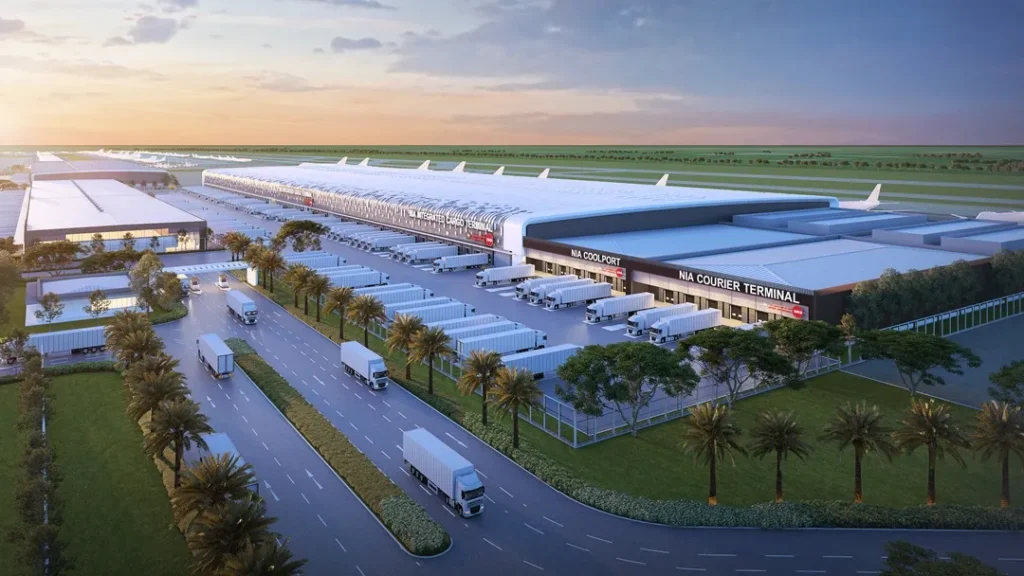
- One 3,900 metre runway
- Cargo terminals
- Air Traffic Control tower
- 10 aerobridges
- Automated baggage handling system
- Security managed by CISF
The airport has been designed with a long-term net-zero emissions objective.
Ground Transport and Road Connectivity
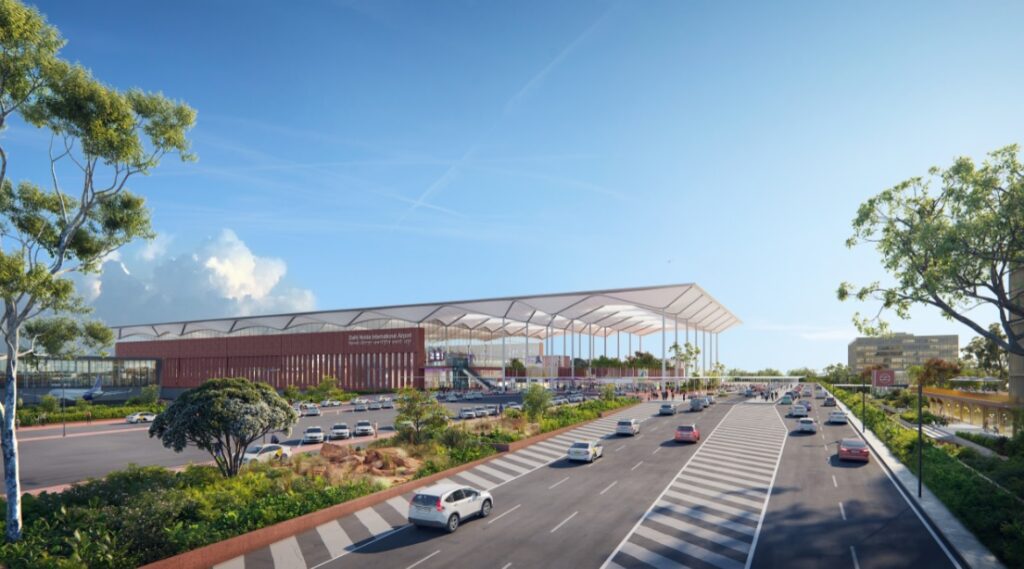
At launch, connectivity will rely primarily on road and bus services.
Ground Transportation Centre
A 20-acre Ground Transportation Centre is located near Terminal 1 and the upcoming Terminal 2. During Phase 1, it will serve taxis and buses.
The facility will be developed in three stages between 2025 and 2030. Once complete, it will support 50,000 vehicles simultaneously, including 40 buses and 4,500 cars. Future integration will include metro and Namo Bharat rail stations at underground levels, with retail and passenger amenities on upper levels.
The airport has partnered with UPSRTC, Haryana Roadways, and Uttarakhand Transport Corporation for direct bus services to major cities, including Delhi, Greater Noida, Faridabad, Ghaziabad, Gurugram, Agra, Mathura, and Aligarh.
Highway and Expressway Access
Noida International Airport connects to:
- NH 44 Delhi Palwal Agra
- NH 34 Ghaziabad Bulandshahr Aligarh
- Yamuna Expressway
- Delhi Ghaziabad Meerut Expressway
The Jewar Faridabad Expressway, under construction, will link the airport to the Delhi Mumbai Expressway. A new 130 metre wide road from Greater Noida to the airport’s eastern side has also been approved.
Rail and Future High Speed Links
Multiple rail projects are planned or under construction:
- Greater Noida to Noida Airport Metro extension
- Ballabhgarh to Jewar Airport Metro proposal
- Ghaziabad Jewar RRTS corridor
- Palwal Noida Airport Khurja Railway Line
- Hisar Airport to Noida Airport rail link
The airport is also planned as a station on the proposed Delhi Noida Varanasi High Speed Rail corridor.
Key Challenges and Concerns
Connectivity Gaps
The airport’s distance from central Delhi and Noida remains a concern. Metro and rapid rail projects are still under development. Limited public transport at launch may impact passenger adoption in early phases.
Ecological Issues
Environmental clearance is required for the protection of the Dhanauri Wetlands. Reports indicate continued risks to the wetland ecosystem due to land allocation and surrounding development.
Resettlement Concerns
Some displaced landowners have alleged delays in compensation and inadequate facilities at resettlement sites. Basic amenities such as running water and sanitation have been cited as issues.
Stay tuned with us. Further, follow us on social media for the latest updates.
Join us on Telegram Group for the Latest Aviation Updates. Subsequently, follow us on Google News
