

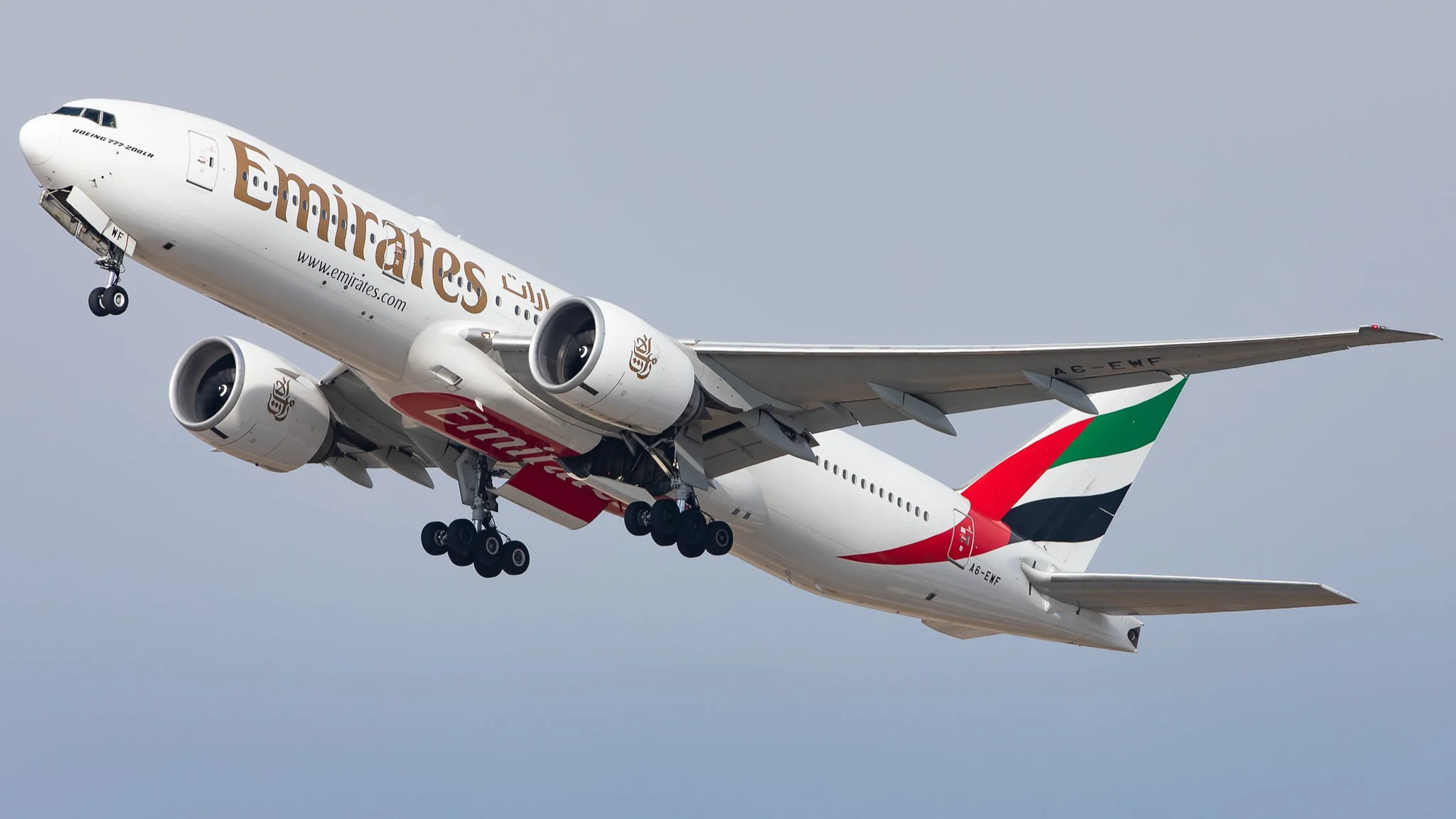
DUBAI- Emirates (EK) will operate some of the world’s longest nonstop commercial flights in 2026, with block times stretching beyond 17 hours from its hub at Dubai International Airport (DXB). The airline continues to strengthen its ultra-long-haul network as part of its long-haul expansion strategy.
In 2026, Emirates will average around 134 daily long-haul departures from Dubai, reinforcing its position as one of the largest intercontinental operators globally. More than half of its scheduled passenger services fall into the long-haul category, connecting the Middle East with North America, South America, Europe, and Oceania.
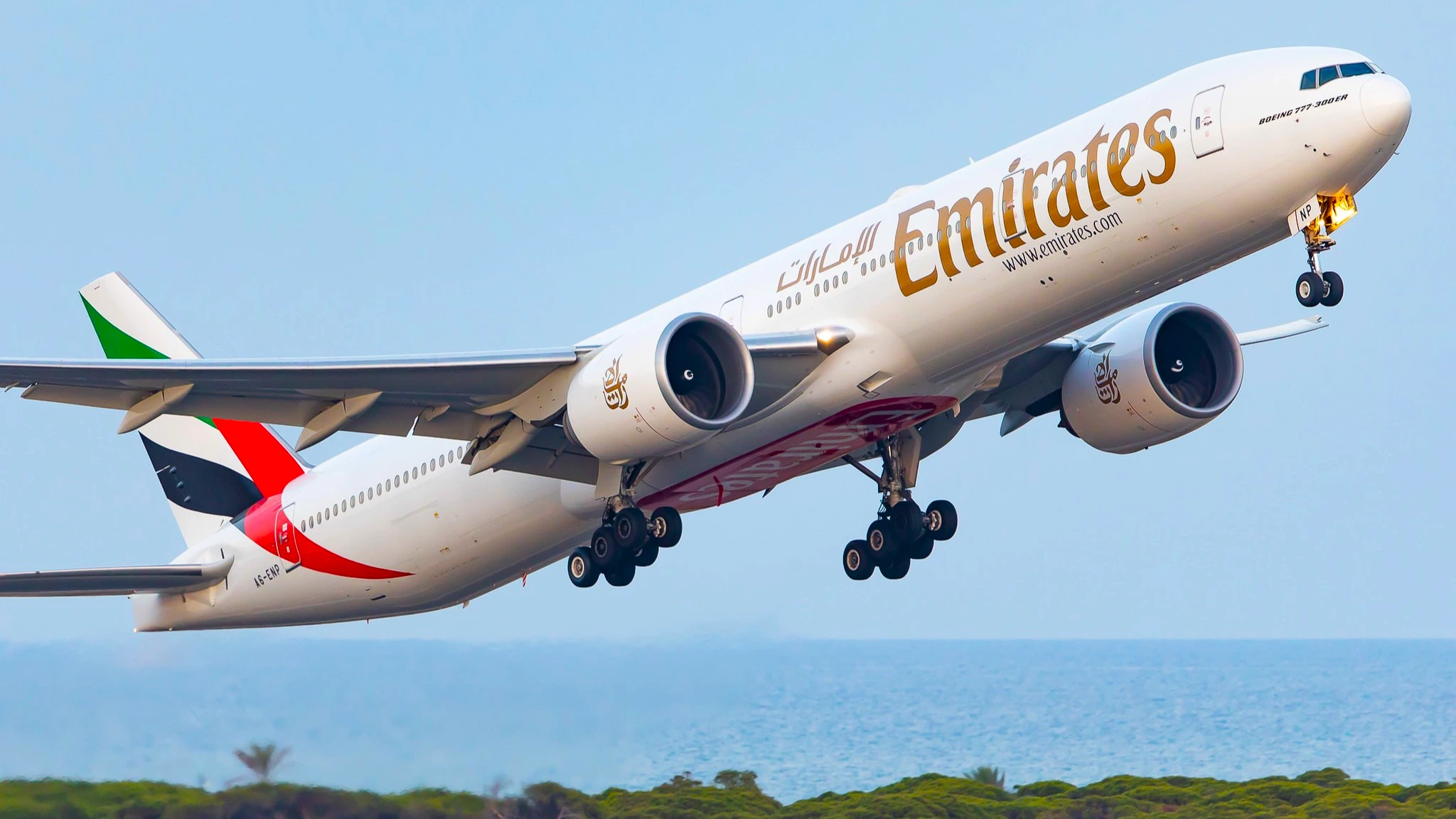
Emirates 10 Longest Nonstop Flights
Emirates’ longest nonstop service in 2026 will link Dubai with Auckland (AKL), with a maximum block time of 17 hours and 25 minutes on the return leg. The daily flight operates using the Airbus A380 in a four-class configuration.
Services to the United States dominate much of the top ten list. Flights to Houston George Bush Intercontinental Airport (IAH) and Miami International Airport (MIA) each reach 16 hours and 35 minutes, while Los Angeles (LAX) follows closely at 16 hours and 20 minutes.
Other extended routes include Dallas/Fort Worth (DFW) and Orlando (MCO), both timed at up to 16 hours and 15 minutes. San Francisco (SFO) completes the 16-hour category with daily A380 operations.
South America also features prominently. Flights to São Paulo (GRU) reach 15 hours and 35 minutes, while Rio de Janeiro (GIG) and Chicago O’Hare (ORD) each record block times of approximately 15 hours and 10 minutes.
| Max. Block Time (2026)*\ | Direction of Nonstop Route | Emirates’ Operations |
|---|---|---|
| 15h 10m | Dubai to Chicago O’Hare | Daily 777-300ER (saw an Emirates A380 once) |
| 15h 10m | Dubai to Rio de Janeiro | Daily 777-300ER (flights continue to Buenos Aires) |
| 15h 35m | Dubai to São Paulo | Daily A380 |
| 16h 00m | Dubai to San Francisco | Daily A380 |
| 16h 15m | Dubai to Orlando | Five to six weekly 777-300ER |
| 16h 15m | Dubai to Dallas/Fort Worth | Daily 777-300ER (used to be on the A380) |
| 16h 20m | Dubai to Los Angeles | Daily A380 |
| 16h 35m | Dubai to Miami | Daily 777-300ER (flights continue to Bogotá) |
| 16h 35m | Dubai to Houston Intercontinental | Daily A380 |
| 17h 25m | Auckland to Dubai | Daily A380 (Auckland once saw four Emirates A380s each day) |
Data: Simple Flying
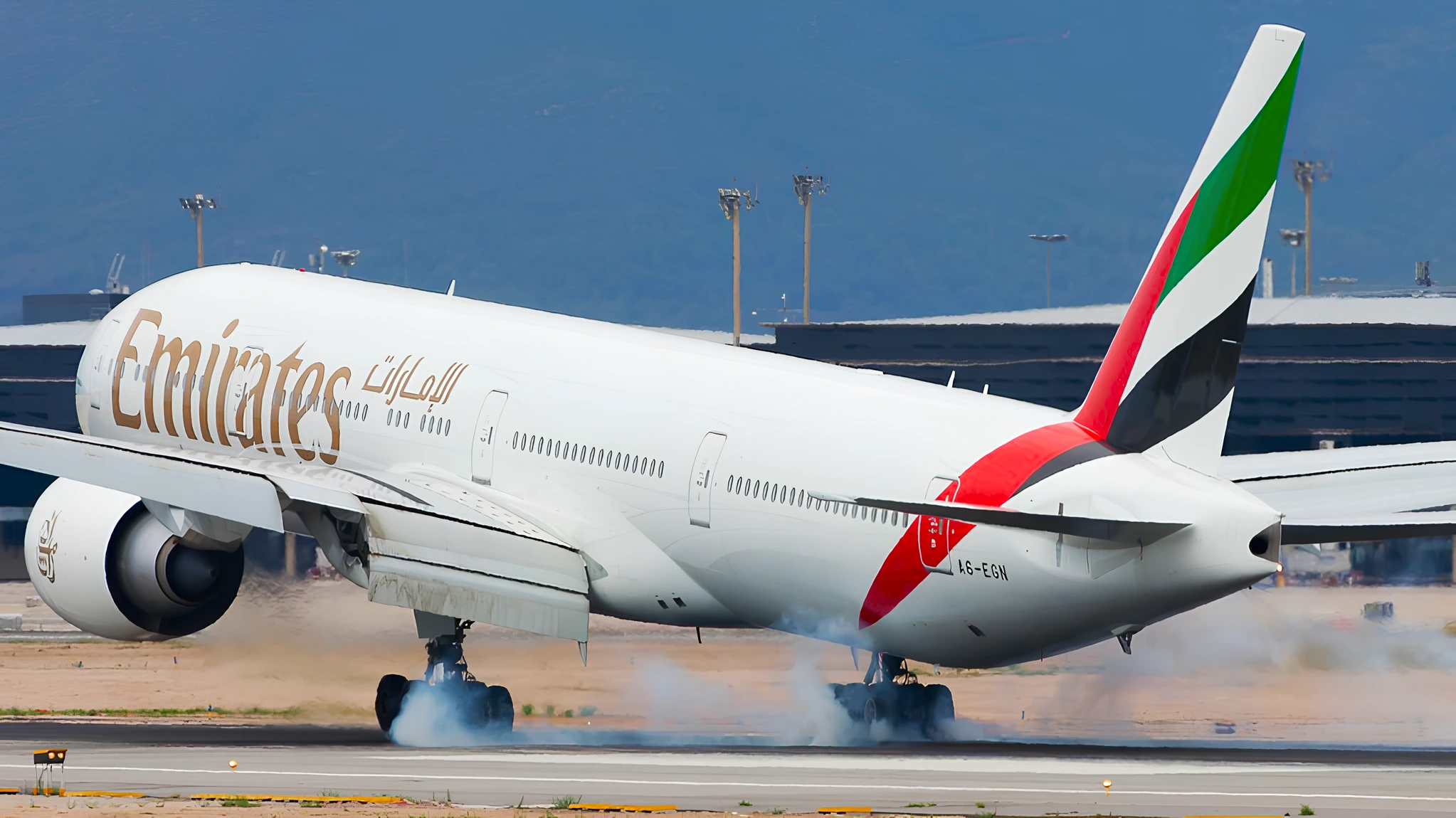
Emirates’ Fleet Deployment Strategy
All ten ultra-long routes rely on Emirates’ Airbus A380 and Boeing 777-300ER fleets. These aircraft provide the range and passenger capacity required for missions exceeding 15 hours.
The Auckland service remains a flagship operation for Emirates. Since launching nonstop flights in 2016, the airline has steadily optimized aircraft utilization to support high-demand connectivity between New Zealand and Europe via Dubai.
The Airbus A380 used on the Auckland route features 484 seats in four classes. This includes 14 first-class suites, 76 business class seats, 56 premium economy seats, and 338 economy seats, offering a premium-heavy configuration for long-haul travelers.
Meanwhile, Orlando represents one of Emirates’ longest US routes at 16 hours and 15 minutes. The airline introduced the service in 2015 and currently operates it primarily with the Boeing 777-300ER.

Emirates’ Hub Connectivity Focus
Ultra-long-haul services play a strategic role in Emirates’ network model. Departure and arrival timings in Dubai are carefully structured to maximize onward connections to Europe, Africa, and Asia.
Block times reflect gate-to-gate scheduling, including taxi periods and contingency buffers. These extended durations allow Emirates to secure optimal airport slots and maintain schedule reliability.
The emphasis on nonstop connectivity strengthens the airline’s competitive position against one-stop rivals. By linking distant city pairs directly to Dubai, Emirates captures both origin-destination and connecting traffic.
As 2026 approaches, Emirates’ network highlights the sustained demand for ultra-long-haul travel. With flights exceeding 17 hours and spanning multiple continents, the carrier continues to define the boundaries of long-distance commercial aviation.
Stay tuned with us. Further, follow us on social media for the latest updates.
Join us on Telegram Group for the Latest Aviation Updates. Subsequently, follow us on Google News
