

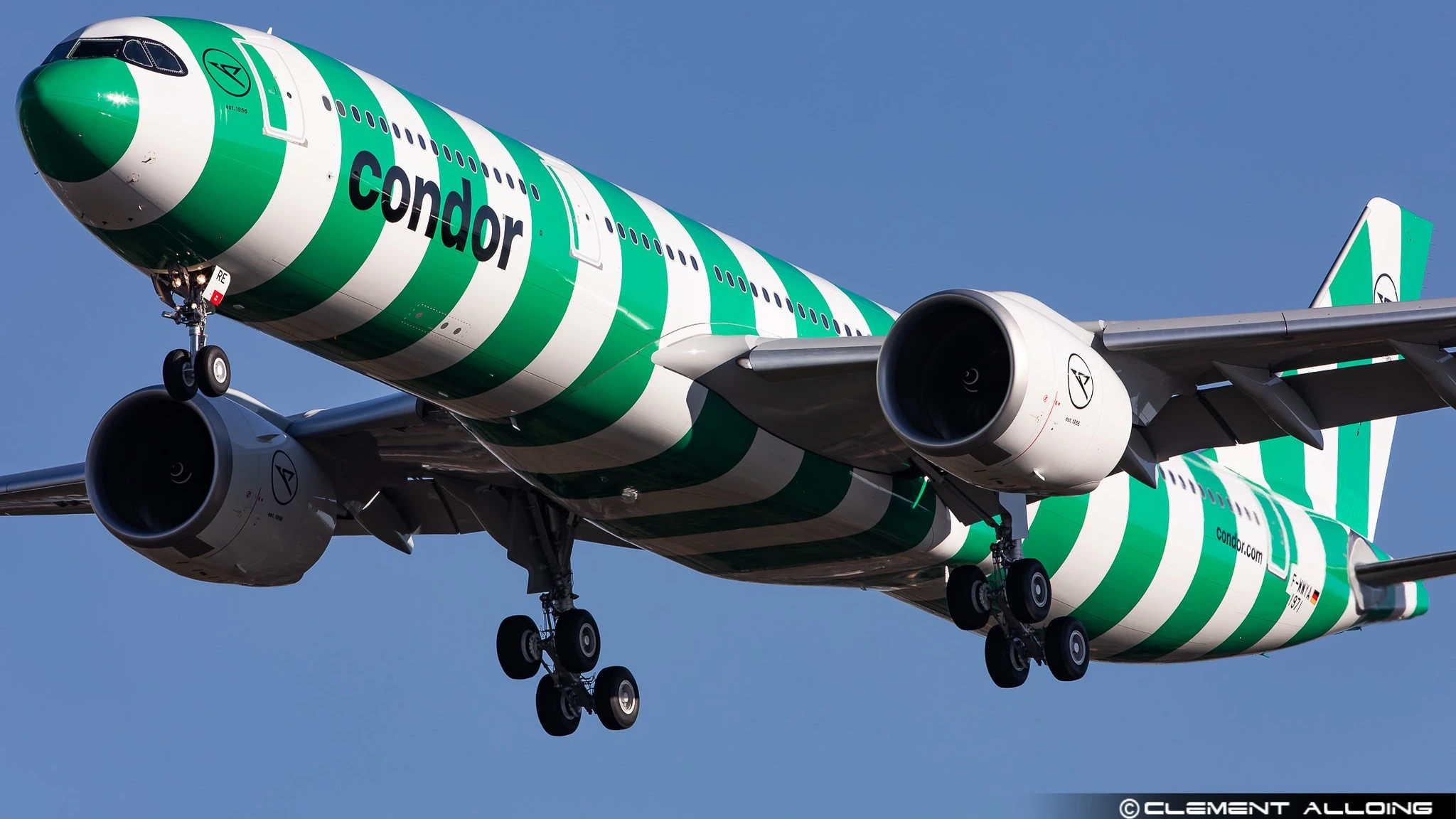
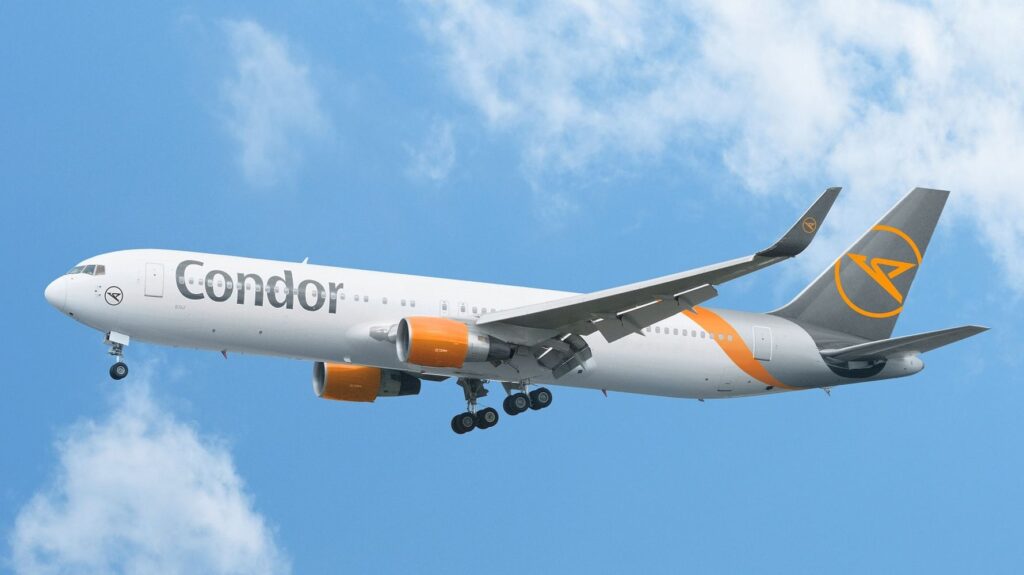
FRANKFURT- Condor (DE) will no longer operate flights between Berlin Brandenburg Airport (BER) and Dubai International Airport (DXB) during the summer season.
The leisure airline has confirmed that it will serve the route exclusively in winter, reflecting a shift in its seasonal network planning.
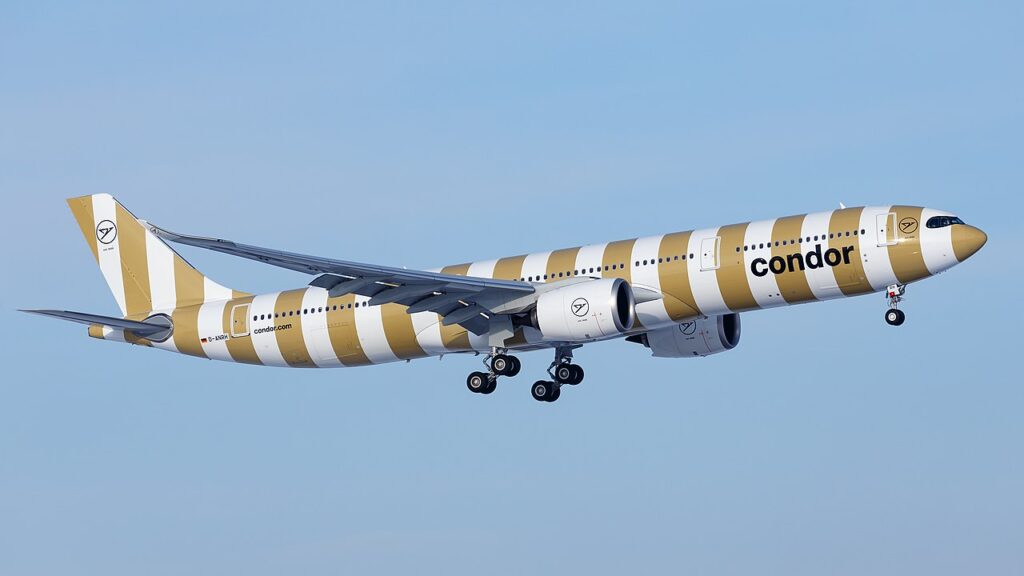
The airline launched the Berlin–Dubai service in October 2024 using Airbus aircraft and initially positioned it as a year-round connection.
According to Aero Telegraph, Condor now cites stronger winter demand and economic efficiency as the key reasons for withdrawing the route from its summer schedule.
Condor Ends Berlin to Dubai Flights for Summer
Condor originally planned to launch the Berlin–Dubai route in the winter of 2023/2024. These plans were postponed by one year due to capacity constraints at the German leisure airline, delaying the start of operations.
The service eventually commenced in October 2024, when the first Airbus jet departed Berlin for Dubai.
The route performed well enough that, in March 2025, Condor CEO Peter Gerber publicly announced the continuation of the service into the summer of 2025.
The airline made the announcement in the presence of Berlin Airport CEO Aletta von Massenbach, underlining the strategic importance of the connection.
Momentum continued the following month. In April 2025, Condor expanded the route further by adding a second daily frequency for the winter 2025/26 season, signaling confidence in long-haul leisure demand during peak travel periods.
Economic Efficiency
Despite earlier expansion plans, Condor has now reversed course. A company spokesperson confirmed that Dubai will be served from Berlin only as a winter destination and that the airline will not offer the route during the summer season.
Condor stated that it consistently aligns its network planning with economic efficiency. Demand on the Berlin–Dubai route is significantly higher in winter, while summer demand does not support year-round operations.
As a result, the airline will redeploy aircraft capacity to markets with stronger seasonal performance.
Emirates Partnership Remains Unchanged
The summer suspension comes despite Condor’s established cooperation with Emirates (EK). The 2 airlines use a Special Prorate Agreement that allows each carrier to sell the other’s tickets under fixed conditions.
In addition, members of the Emirates Skywards loyalty program can continue to earn miles on all Condor flights.
These partnership arrangements remain in place and are unaffected by the seasonal adjustment of the Berlin–Dubai route.
Strategic Context for Berlin and Dubai
Berlin Brandenburg Airport remains part of Condor’s long-haul strategy, particularly for winter-focused leisure travel.
Condor continues to position Dubai as a high-demand winter destination within its network rather than a year-round market from Berlin.
By limiting the route to winter operations, Condor aims to align capacity deployment with passenger demand patterns while maintaining profitability across its long-haul leisure network.
Is Emirates Planning Berlin Flights?
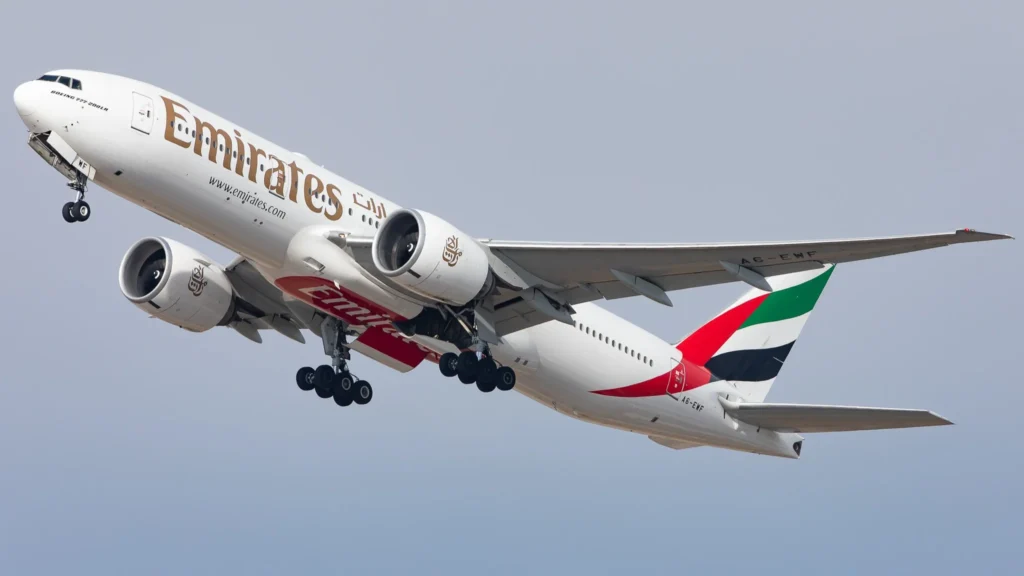
Emirates (EK) has recently secured operating slots at Berlin Brandenburg Airport, signaling plans to launch Dubai flights once regulatory approval is granted.
The planned route would connect Dubai (DXB) and Berlin (BER) using a Boeing 777 from December 2026, pending German government approval under existing air service limits.
Emirates Advances Berlin Service Planning
Emirates has taken a key operational step by obtaining arrival and departure slots at Berlin Brandenburg Airport. Slot coordination allows airlines to reserve fixed airport timings, usually signaling serious intent to start service.
The filing indicates Emirates plans to operate the route with a Boeing 777 aircraft beginning in December 2026. While slot allocation supports scheduling and fleet planning, flights cannot begin until German authorities approve expanded traffic rights.
Airlines typically avoid requesting slots far in advance unless confident that regulatory clearance may follow. Still, the Berlin route remains dependent on government approval rather than airport readiness.
Bilateral Agreement Limits UAE Airline Access
Air traffic access between Germany and the United Arab Emirates remains governed by a long-standing bilateral air service agreement. The agreement currently restricts UAE carriers to serving only four German cities.
Emirates presently operates services to Frankfurt (FRA), Munich (MUC), Düsseldorf (DUS), and Hamburg (HAM). Berlin has remained excluded despite repeated requests from the airline over several years.
Any expansion requires government-level negotiation and approval, making regulatory clearance the deciding factor for Emirates’ Berlin entry.
Lufthansa Opposition Influences Policy Debate
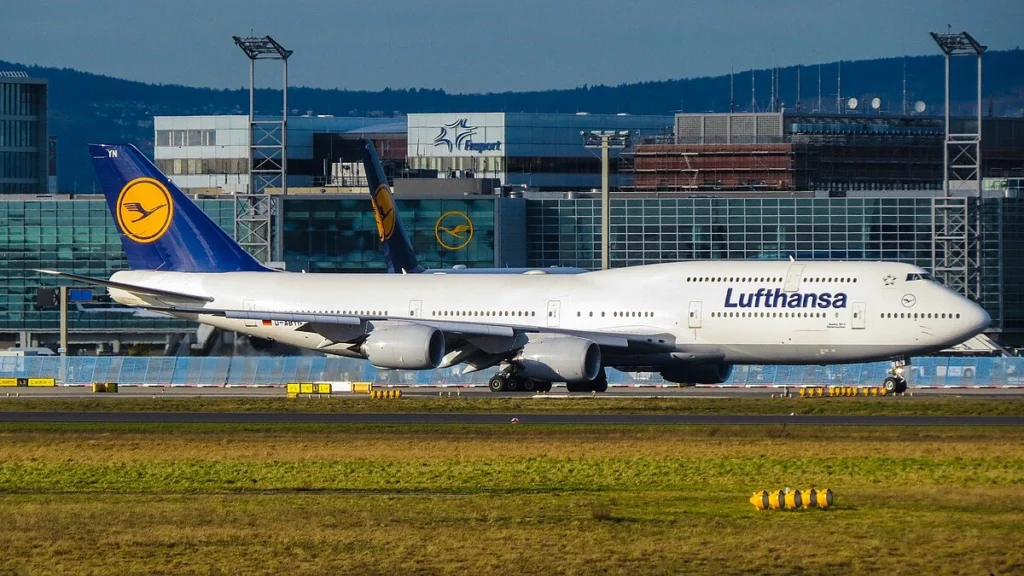
Lufthansa (LH) has consistently opposed expanded access for Gulf carriers, arguing that state-backed airlines benefit from financial advantages that distort competition in European markets.
The German carrier focuses its long-haul network around Frankfurt and Munich while maintaining mostly short-haul operations at Berlin. Protecting these hubs remains central to Lufthansa’s network strategy.
However, demand for Dubai connections from Berlin remains strong. Lufthansa Group subsidiary Eurowings (EW) previously operated Berlin–Dubai services using Airbus A320 aircraft, demonstrating market interest despite operational challenges.
Industry observers note that discussions around Gulf carrier expansion remain politically sensitive as European airlines push policymakers to prioritize domestic carrier competitiveness.
Stay tuned with us. Further, follow us on social media for the latest updates.
Join us on Telegram Group for the Latest Aviation Updates. Subsequently, follow us on Google News
