

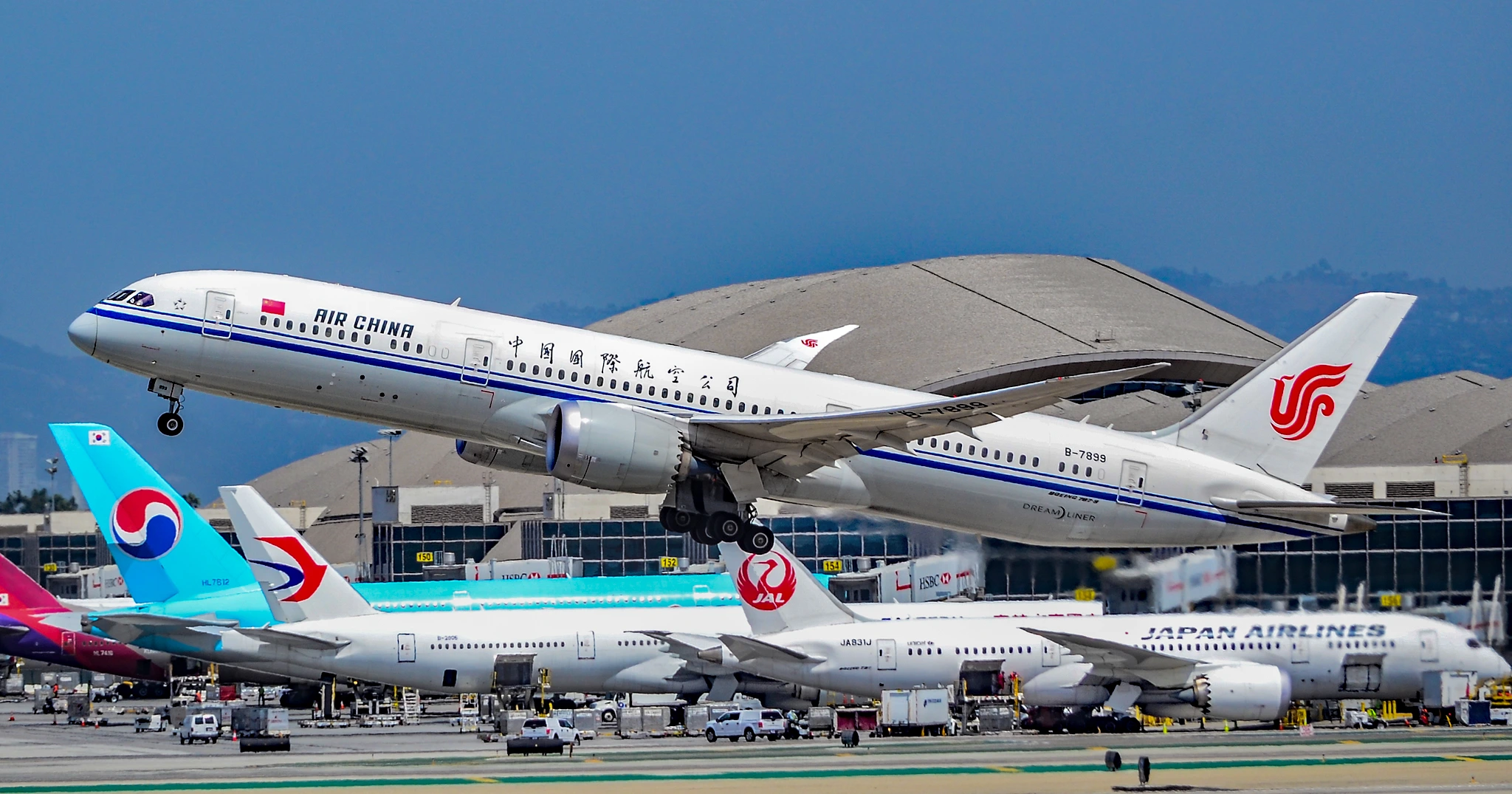
BEIJING- China has seen a sharp escalation in air connectivity disruptions with Japan after all scheduled flights on 49 bilateral routes were canceled for February. The suspensions affect services operated by Air China (CA), China Eastern Airlines (MU), and China Southern Airlines (CZ).
The cancellations reflect weakening short-term demand and follow official travel reminders issued to Chinese citizens. Airlines serving Japan-bound traffic have responded by adjusting capacity while offering flexible ticket handling measures for passengers booked on affected routes.

China Cancels Japan Flights on 49 Routes
Flight activity data indicates that the number of fully canceled China–Japan routes increased from January to February. In January alone, nearly half of all scheduled flights from mainland China to Japan were canceled, representing a notable rise compared with the previous month.
Flight information platforms show that all flights on 49 China–Japan routes have been removed from February schedules. This marks an expansion of cancellations compared with January, when the overall cancellation rate stood at 47.2 percent, reported Strait Times.
The increase signals sustained pressure on bilateral air travel demand. Airlines appear to be consolidating operations rather than running lightly loaded flights during the winter travel period.
Japan has historically been one of the largest outbound markets for Chinese travelers. The scale of these cancellations highlights how quickly geopolitical and advisory-driven factors can reshape regional aviation flows.

Airline Ticket Policies
China’s three largest state-owned airlines announced special ticket change and refund measures on January 26. These policies apply to eligible tickets purchased or reissued before midday on the same date.
Passengers can make one free change, subject to fare differences, or request fee-free refunds for unused segments.
The measures cover Japan-related flights scheduled between March 29 and October 24, spanning the peak spring, summer, and early autumn travel seasons.
The flexibility aims to manage passenger uncertainty while maintaining forward bookings. Airlines have emphasized that the policies are temporary and tied to current travel guidance.

Travel Advisory Impact
The latest capacity adjustments build on steps taken in late 2025, when airlines extended refund and rebooking deadlines beyond the end of the year.
Those extensions were aligned with travel advisories issued in mid-November discouraging trips to Japan.
Demand softened further after public remarks by Japan’s leadership triggered heightened caution among Chinese travelers. Airlines responded by delaying decisions on restoring capacity until clearer demand signals emerge.
Such advisories do not constitute formal travel bans, but they often influence passenger behavior. In this case, the effect has been significant enough to reshape schedules across dozens of international routes.
Bottom Line
The cancellation of all February flights on 49 China–Japan routes underscores how sensitive international aviation remains to policy signals and traveler sentiment.
While airlines have moved quickly to protect passengers through flexible ticket rules, the longer-term recovery of China–Japan air travel will depend on demand stabilization and diplomatic clarity.
For now, reduced capacity and uncertainty continue to define this key regional market.
Stay tuned with us. Further, follow us on social media for the latest updates.
Join us on Telegram Group for the Latest Aviation Updates. Subsequently, follow us on Google News
