

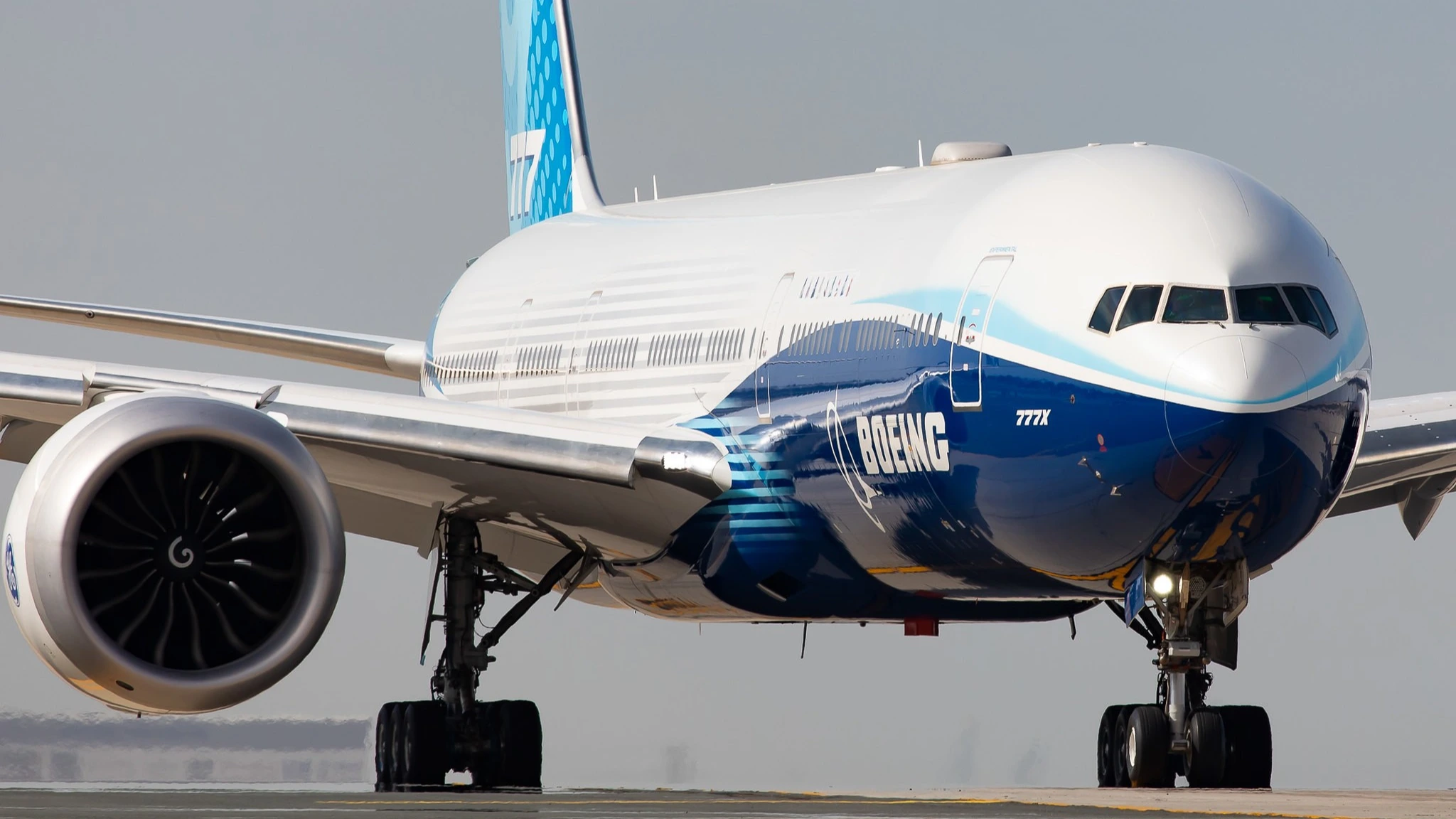
SEATTLE- Boeing has identified a durability issue affecting the GE Aerospace GE9X engines used on the 777-9, but the company maintains its first delivery target of 2027 remains unchanged. Certification flight testing continues as Boeing and GE work through inspections and corrective actions.
The issue surfaced as Boeing reported strong 2025 financial results and ongoing progress in the long delayed 777-9 programme, which remains under close regulatory oversight.
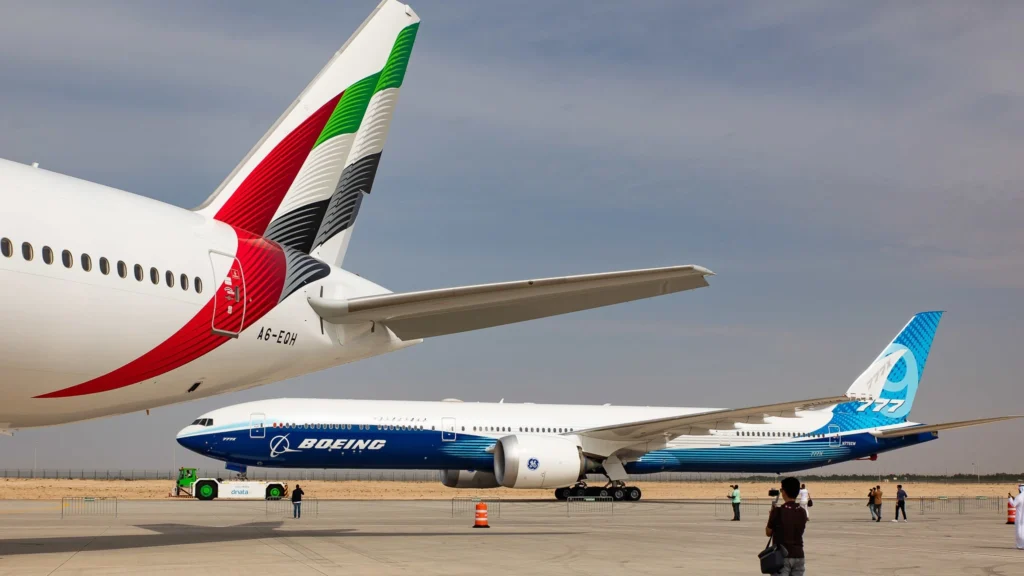
Boeing 777X Engine Issue
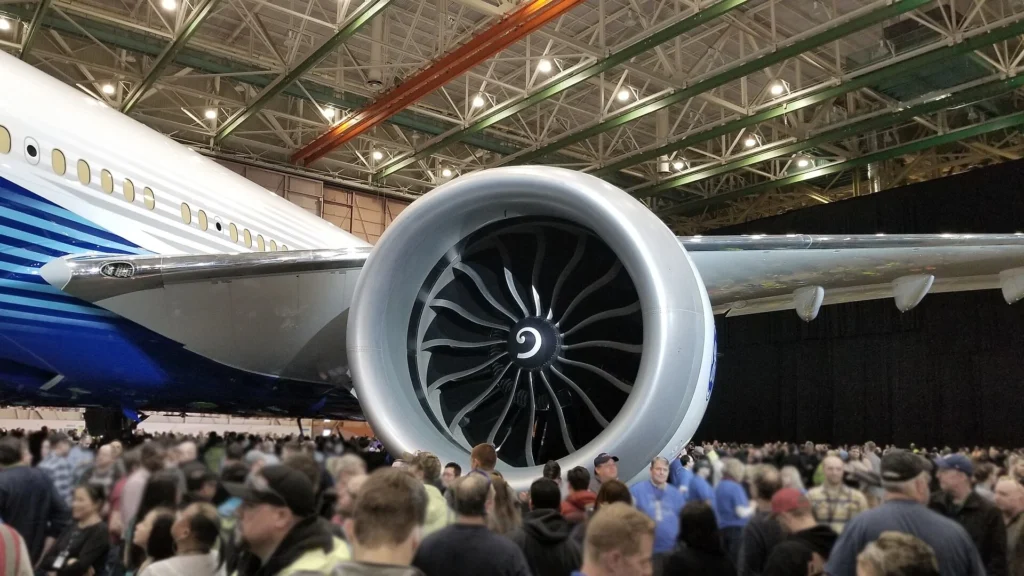
Boeing confirmed that a recent inspection uncovered a potential durability concern on the GE9X turbofan installed on the 777-9. The company has not disclosed technical specifics but stated that it is collaborating closely with GE Aerospace to determine the root cause and corrective measures.
Boeing chief executive Kelly Ortberg said the issue does not affect the overall certification timeline. Certification flight tests are continuing, and the company does not expect any impact on its planned 2027 entry into service.
GE Aerospace said it has implemented an on-wing inspection programme to support Boeing while analysis is underway. All actions are being managed through established safety and quality systems.
A Programme Shaped by Repeated Technical Challenges
The 777-9 has faced multiple engine and structural issues over several years. In 2024, Boeing grounded the test fleet after discovering failures in titanium thrust links that connect engines to the airframe. The pause lasted five months while design changes were introduced to address vibration-related causes.
Earlier disruptions include a 2022 suspension of flight testing linked to a GE9X temperature issue found during a borescope inspection. In 2019, durability concerns involving high-pressure compressor stator vanes also delayed the programme.
Despite these setbacks, Boeing says the aircraft and engines continue to perform well overall.
Certification Progress Under FAA Oversight
In the fourth quarter of 2025, the Federal Aviation Administration (FAA) approved Boeing to begin the third phase of certification testing under the 777-9 Type Inspection Authorization.
TIA Phase 3 focuses on avionics, environmental control systems, and the auxiliary power unit. While the FAA previously approved TIAs in full, recent practice has shifted to phased approvals, reflecting increased scrutiny of Boeing programmes.
TIA approvals indicate that an aircraft is likely to meet certification standards and allow test flights to count toward certification credit.
Financial Context Behind the Update
Boeing reported a $2.2 billion profit for the full year 2025, supported by $89.5 billion in revenue, a 34 percent increase year on year.
The fourth quarter alone delivered $8.2 billion in profit, with revenue rising 57 percent to $23.9 billion.
The results reflect higher aircraft production rates and the acquisition of former supplier Spirit AeroSystems, strengthening Boeing’s manufacturing control as it works to stabilise major programmes such as the 777-9.
About Boeing 777X
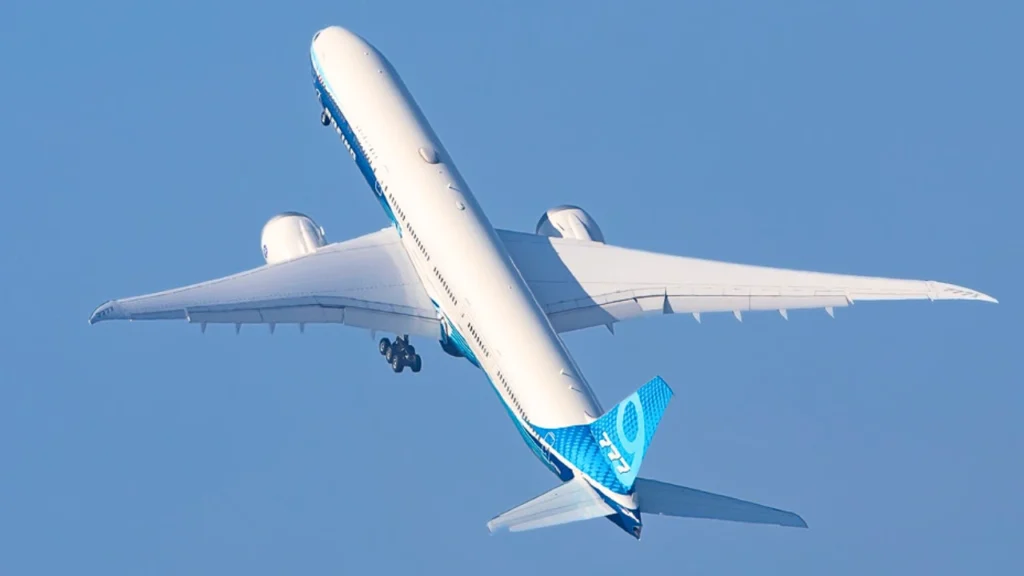
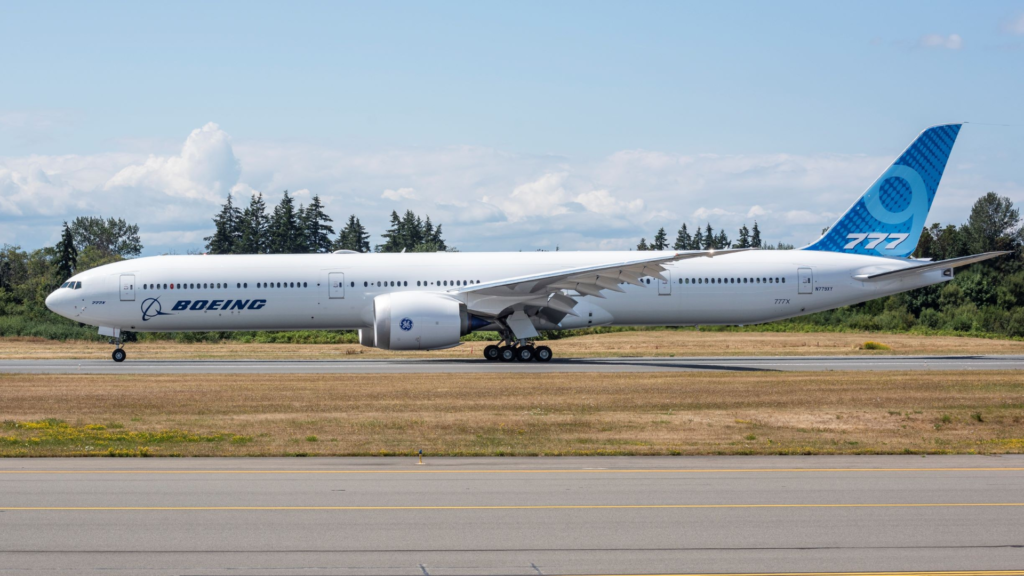
The Boeing 777X family represents a major step forward in widebody aircraft efficiency, performance, and passenger comfort. Built on proven platforms, it introduces new aerodynamic and engine technologies to reduce fuel use, emissions, and operating costs.
Designed as a true family of aircraft, the 777X supports airline growth with strong commonality, extended range capability, and a next-generation onboard experience derived from the 787 Dreamliner.
A New Benchmark in the 777 Family Evolution
The Boeing 777X is engineered to deliver measurable gains across efficiency, economics, and environmental performance.
The flagship 777-9 is expected to achieve 20 percent lower fuel use and emissions compared to the aircraft it replaces, along with a 40 percent smaller noise footprint. Operating costs are projected to be 10 percent lower than competing widebody aircraft in the same segment.
The program builds on the reliability of the 777-300ER while introducing advanced systems and materials. This approach allows airlines to integrate the 777X into existing 777 and 787 fleets with minimal operational risk and high dispatch reliability.
Advanced Aerodynamics and Wing Design
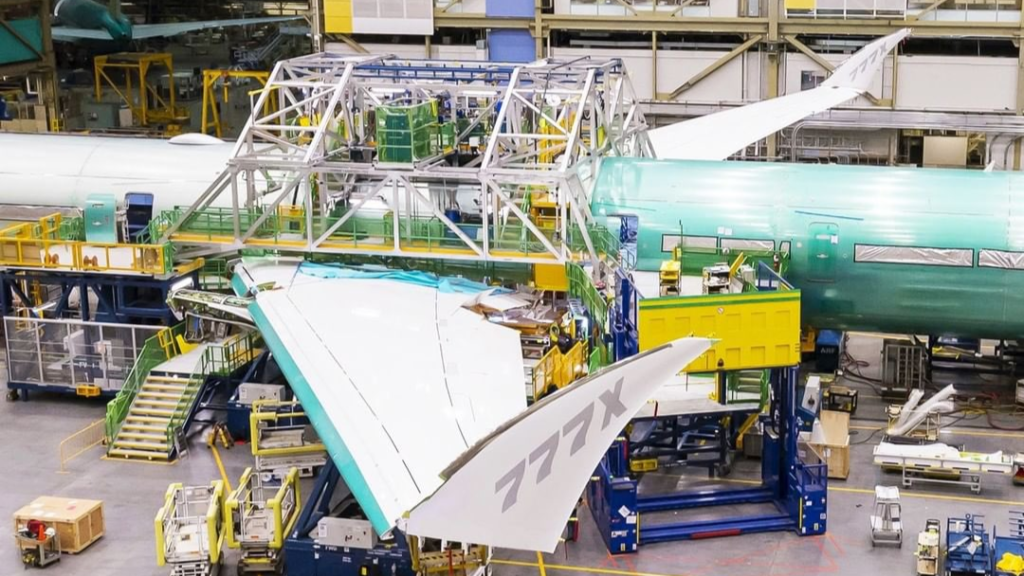
Aerodynamic efficiency is a core focus of the 777X design. The aircraft features a new high-span composite wing that is longer than that of the A350-1000, delivering improved lift and reduced drag. To maintain airport compatibility, the wing incorporates folding wingtips that extend in flight and fold on the ground.
Additional aerodynamic improvements include laminar flow engine nacelles that smooth airflow and reduce drag. Together, these features contribute to a reported 5 percent aerodynamic efficiency advantage over the A350-1000.
GE9X Engines and Environmental Performance
Powering the 777X is the GE9X engine, developed specifically for this aircraft family. It delivers 5 percent lower specific fuel consumption than competing engines and 10 percent lower specific fuel consumption compared with the GE90-115B.
The engine meets stringent environmental standards, with an 8 dB margin to Stage 5 noise limits and emissions levels that remain well within CAEP/8 requirements. The design emphasizes durability and long-term reliability to support high utilization rates.
Flight Deck and Digital Architecture
The 777X flight deck introduces the latest avionics and digital systems while retaining commonality with the 777 and 787. Large touchscreen displays simplify pilot interaction, reduce physical components, and support intuitive operation.
The computing and network architecture enables advanced connectivity across flight operations. Real-time data access supports connected flight crews, cabin crews, maintenance teams, and airline operations centers, improving situational awareness and operational efficiency.
Passenger Cabin and Onboard Comfort
Passenger experience is a defining element of the 777X program. The cabin architecture is wider than that of competing aircraft, offering up to 40 cm more interior width than the A350. This translates into more space and comfort across all seating classes.
Key cabin features include larger overhead bins, larger windows, immersive LED lighting, and a quieter cabin environment. Lower cabin altitude, improved humidity, cleaner air, and smooth ride technology contribute to reduced passenger fatigue on long-haul flights.
Variants and Growth Potential
The 777X family is designed to support diverse airline missions.
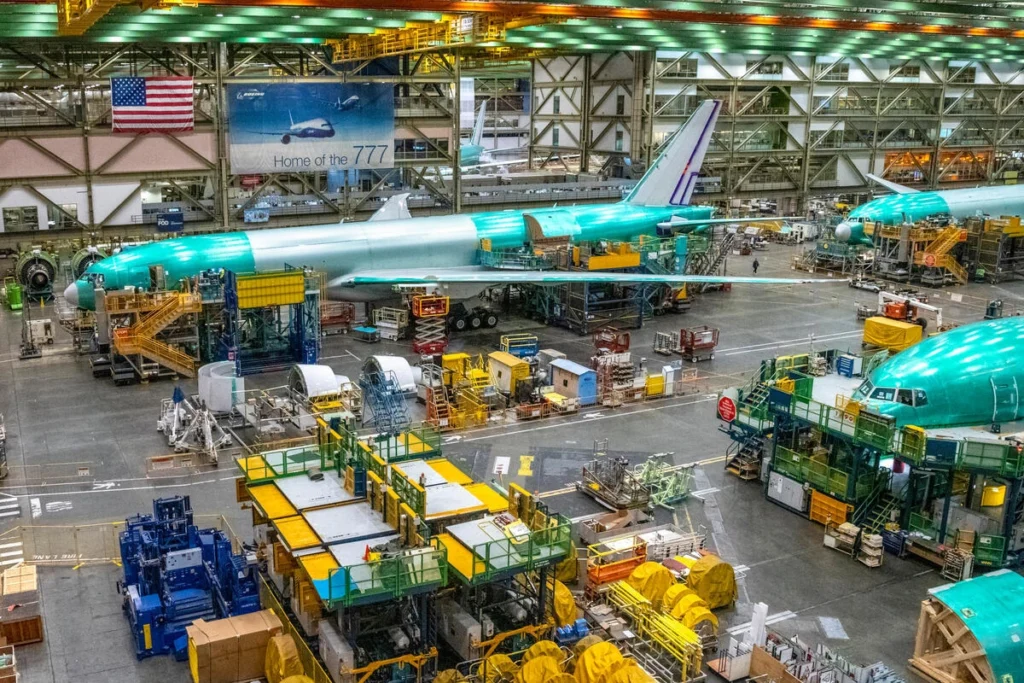
- The 777-9 is longer than the 777-300ER and accommodates more passengers while maintaining equivalent range.
- The 777-8 offers extended range capability with a shorter fuselage, enabling long-haul routes with high efficiency.
- The 777-8 Freighter builds on the proven 777F, offering increased payload capacity and additional cargo positions.
From hubs such as Dubai, the 777X provides greater range capability than the A350-1000 under standard operating assumptions, supporting both passenger and cargo network expansion.
A Platform for Long-Term Airline Value
By combining proven 777 systems with new-generation aerodynamics, engines, and digital architecture, the 777X is positioned as a long-term growth platform. Its focus on efficiency, reliability, and passenger comfort aligns with airline needs for sustainable operations and flexible fleet planning.
Stay tuned with us. Further, follow us on social media for the latest updates.
Join us on Telegram Group for the Latest Aviation Updates. Subsequently, follow us on Google News
