

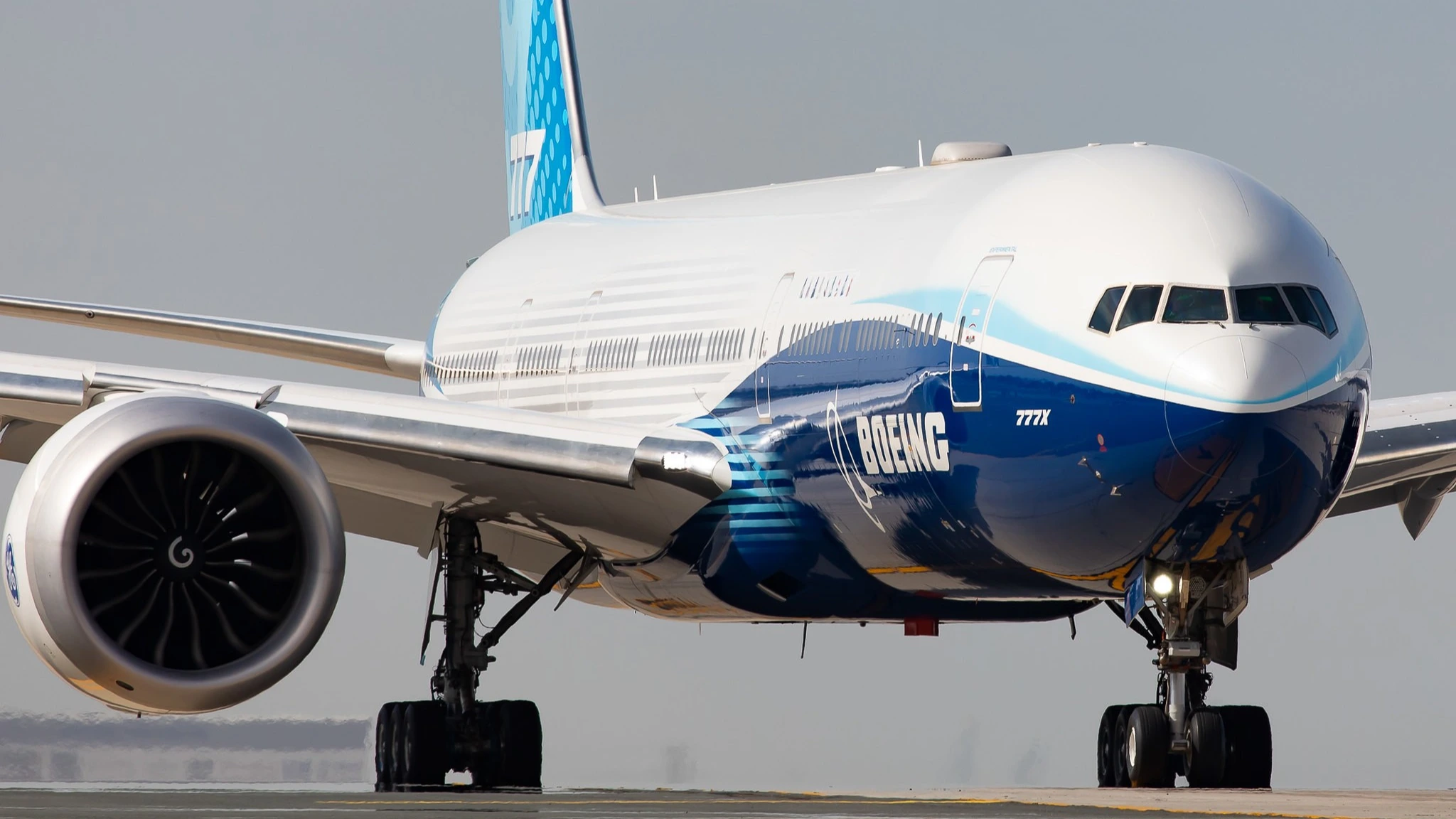
SEATTLE- Boeing’s 777-9 program has reached another important certification milestone after its seventh flight-test aircraft completed its maiden flight, taking the program beyond 4,800 flight-test hours.
The aircraft will now begin Extended-range Twin-engine Operational Performance Standards (ETOPS) certification testing, one of the final steps required before the next-generation widebody enters commercial service.
The latest flight took place on July 29 from Boeing Field (BFI), Seattle, marking another step toward the aircraft’s planned 2027 entry into service.
Launch customer Lufthansa (LH) is expected to be among the first operators of the Boeing 777-9, while Emirates (EK) remains the program’s largest customer despite concerns over early-built aircraft.
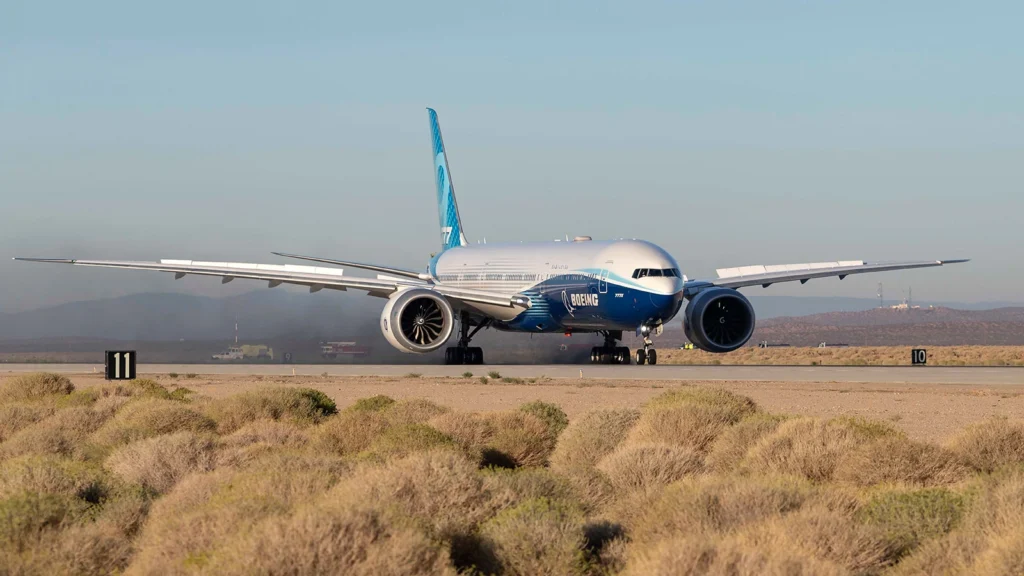
Boeing 777-9 ETOPS Testing
The seventh Boeing 777-9 completed a flight lasting approximately three hours over Washington, Oregon, and Idaho before returning to Boeing Field.
Unlike previous aircraft in the test fleet, this airframe will primarily support ETOPS certification, which validates the aircraft’s ability to safely operate long-distance routes far from diversion airports.
ETOPS approval is among the final stages of certification for twin-engine widebody aircraft. Boeing has indicated that the remaining certification work includes final Type Inspection Authorizations (TIAs) and ETOPS demonstrations before deliveries begin in 2027.
The manufacturer has already accumulated more than 1,700 test flights and over 4,800 flight hours across the 777-9 program, with roughly half of the planned certification campaign now complete, Simple Flying flagged.
The certification campaign has also progressed beyond several key FAA review phases, allowing Boeing to focus on performance validation and operational testing required for airline service.
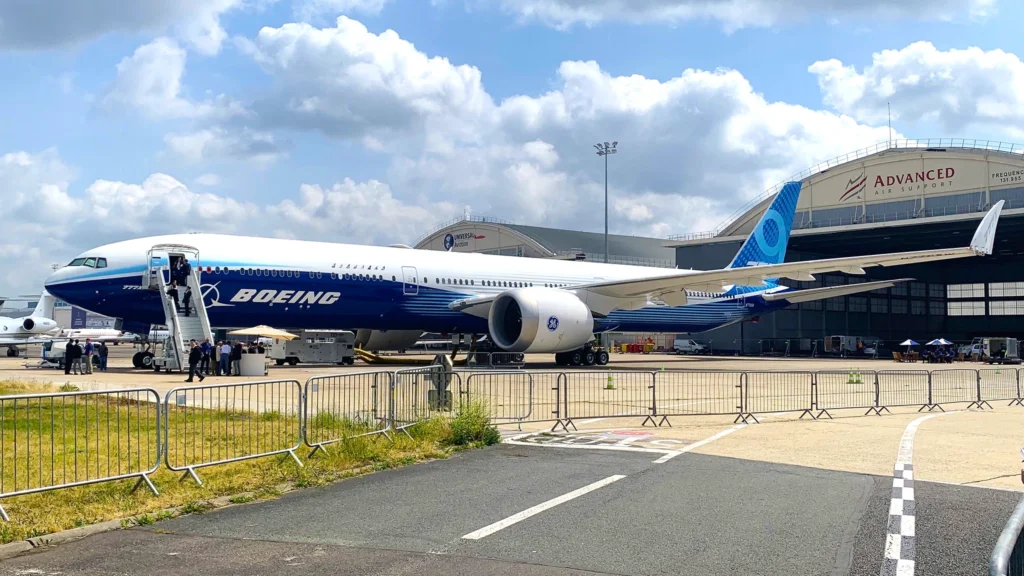
Boeing 777-9’s Certification Progress
The Boeing 777-9 was originally scheduled to enter commercial service in 2020. However, increased regulatory scrutiny following the two Boeing 737 MAX accidents, combined with additional design reviews and certification requirements, significantly delayed the program.
Over the past several years, Boeing has incorporated numerous engineering updates into the aircraft while modifying early test airframes to meet evolving certification standards.
The company has also continued structural fatigue testing, with one dedicated airframe already exceeding a full simulated service lifetime as engineers validate the aircraft’s long-term durability.
The 777X family features folding composite wingtips, new GE9X engines, and aerodynamic improvements designed to reduce fuel consumption while increasing passenger capacity compared with earlier Boeing 777 variants.
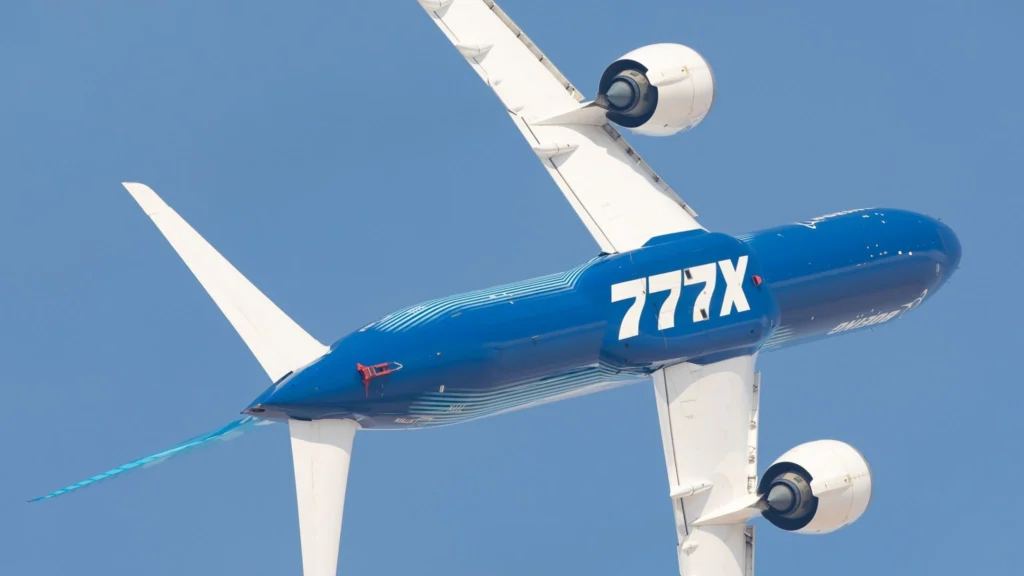
Customer Deliveries for 777-9
Although certification is nearing completion, Boeing still faces challenges with some of its earliest production aircraft. Emirates has previously indicated it does not intend to accept several early-built 777-9s because they would require extensive modifications after years of program delays.
Reports have also suggested Boeing recently scrapped one of its oldest unfinished 777-9 airframes after determining that upgrading it would not be economically viable.
Meanwhile, industry reports indicate United Airlines (UA) is evaluating a potential order for the 777X family. If finalized, the carrier could become the first U.S. airline to operate the next-generation widebody, while giving Boeing another important customer as it prepares for certification and production ramp-up.
With ETOPS testing now beginning on the newest aircraft, Boeing has entered one of the final phases before the 777-9 transitions from years of development to commercial airline service.
Stay tuned with us. Further, follow us on social media for the latest updates.
Join us on Telegram Group for the Latest Aviation Updates. Subsequently, follow us on Google News
