

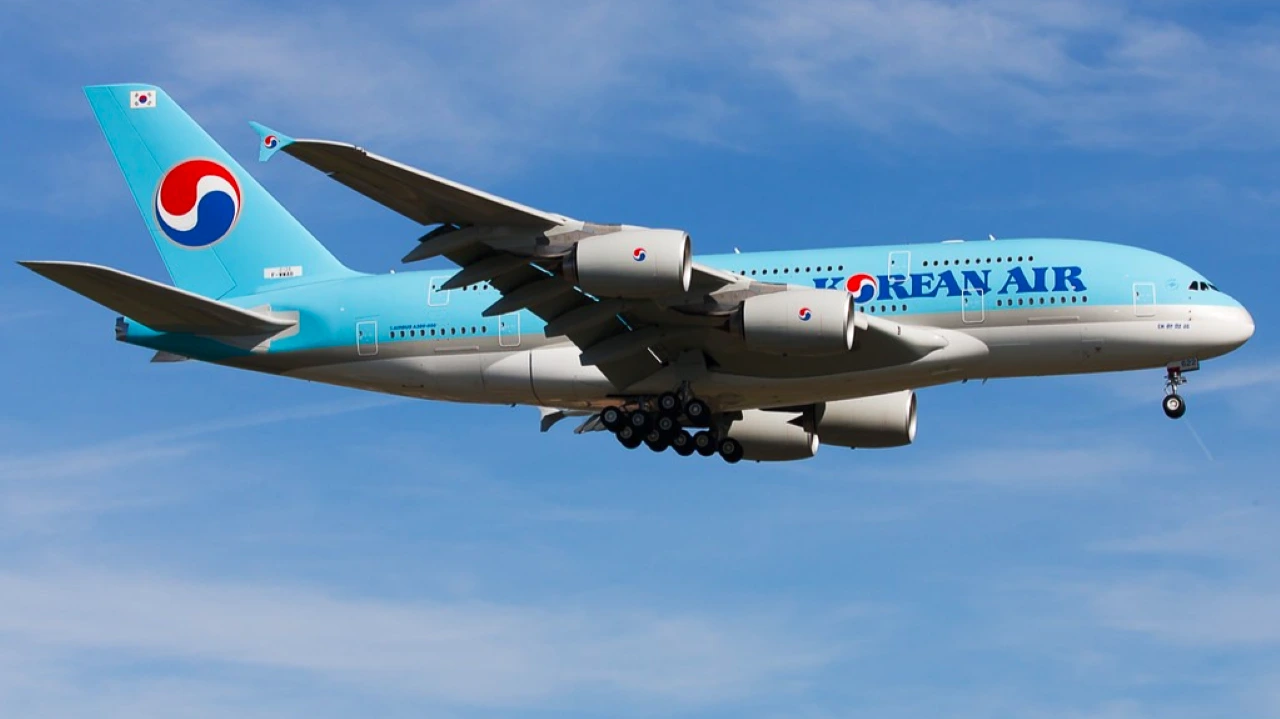
NEW YORK- Korean Air (KE) confirmed a hydraulic-related incident involving one of its Airbus A380 aircraft during approach into New York. The crew declared PAN-PAN and coordinated a precautionary landing with air traffic control.
The aircraft was operating from Seoul Incheon International Airport (ICN) to New York John F. Kennedy International Airport (JFK). Despite the technical issue, the flight landed safely, and passengers were not injured.
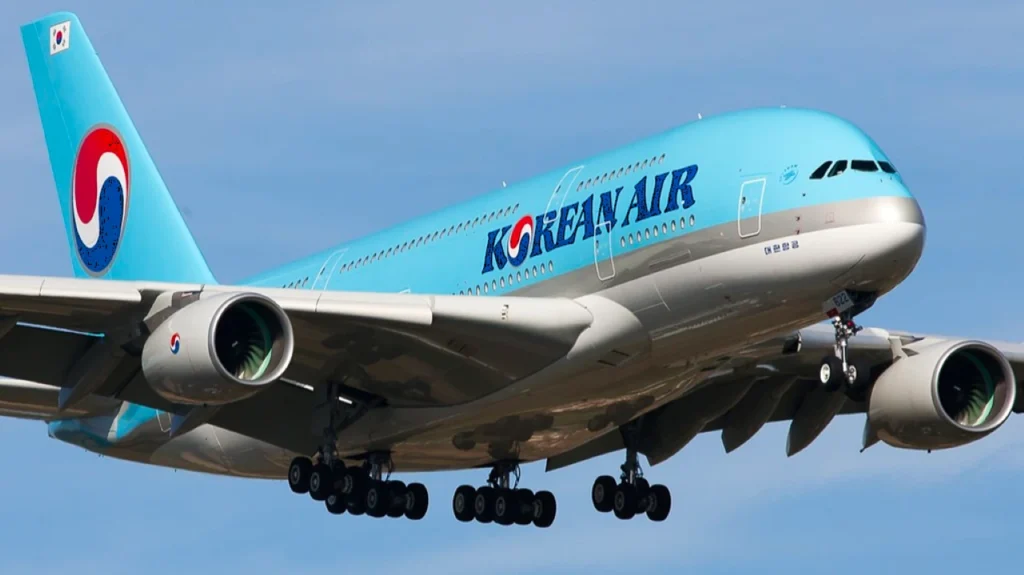
Korean Air A380 Emergency Landing
The incident involved a Korean Air Airbus A380-800, registered HL7627, operating flight KE81 from Seoul to New York. While descending toward JFK, the flight crew reported a hydraulic system problem that limited onboard system checks.
As a precaution, the pilots declared PAN-PAN, signaling an urgent but non-emergency situation. They requested a longer final approach to allow time for manual landing gear extension, a standard procedure when certain hydraulic systems are unavailable.
Air traffic control accommodated the request and coordinated vectors for an extended approach. The crew also informed controllers in advance that the aircraft would require towing assistance after landing.
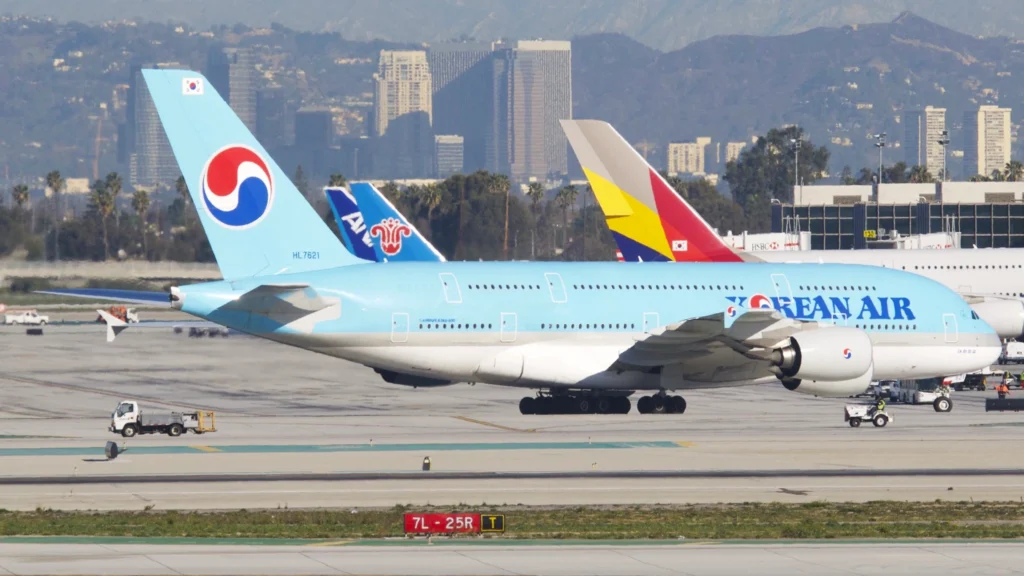
Landing and Runway Clearance at JFK
The Airbus A380 touched down safely on Runway 04R at John F. Kennedy International Airport. After landing, the aircraft vacated the runway via Taxiway FB but was unable to continue taxiing under its own power.
The crew stopped the aircraft clear of the runway and shut down engines as instructed. No emergency services were requested, as the situation remained stable and under control throughout.
The aircraft remained stationary for approximately one hour and three minutes while ground teams arranged towing. It was later towed to the gate without further incident.
ATC and Pilot Comms
Here’s a detailed transcription of the communication between Korean Air pilots and New York ATC as flagged by YouCanSeeATC and recorded by LiveATC.net:
00:14
Pilot: New York Approach, good morning, Pilot, heading 180, descending 8,000, information Romeo.
00:22
Approach: Pilot, New York Approach, altimeter 30.09.
00:27
Pilot: Altimeter 30.09. Pilot declaring PAN PAN, PAN PAN, PAN PAN. Due to a hydraulic problem, we will require a tow truck after landing. We plan to vacate the runway at the end of runway 04 Right.
00:52
Approach: Pilot, say again. I understand PAN PAN.
01:02
Pilot: We have a hydraulic problem that limits system testing. After landing, we will vacate at the end of the runway and require towing to the gate.
01:16
Approach: Roger.
01:18
Pilot: Request long final. We need to manually extend the landing gear.
01:23
Approach: Pilot, copy. You can expect a long final.
01:27
Pilot: Thank you.
01:31
Approach: Pilot, when able, say souls on board and fuel remaining in pounds.
01:39
Pilot: Stand by.
01:44
Approach: Pilot, turn right heading 200. Descend and maintain 2,000. Fuel remaining in pounds.
02:01
Pilot: Descend to 2,000, heading 200.
02:11
Approach: Pilot, would you prefer ILS runway 04 Right or ILS runway 04 Left? Current RVR for 04 Left is 4,000.
02:21
Pilot: We will take runway 04 Left, thank you.
02:24
Approach: Pilot, roger. Expect ILS runway 04 Left. Turn right heading 220. Speed at your discretion.
02:32
Pilot: Heading 220, ILS 04 Left.
02:40
Approach: Pilot, confirm fuel remaining in pounds.
02:47
Pilot: Fuel remaining 72,400 pounds.
02:58
Approach: Thank you.
03:04
Approach: Pilot, turn right heading 310.
03:16
Approach: Pilot, confirm fuel remaining was 2,400 pounds.
03:28
Pilot: Negative. Fuel remaining 71,700 pounds.
03:36
Approach: Roger, 71,700 pounds.
03:43
Approach: Pilot, would a 15-mile final work for you?
03:49
Pilot: Fifteen miles is good.
03:52
Approach: Roger.
03:57
Pilot: Approach, Pilot.
04:00
Approach: Pilot, go ahead.
04:02
Pilot: Due to weather, we prefer autoland. Request ILS runway 04 Right.
04:08
Approach: Pilot, roger. Expect ILS runway 04 Right. Are you ready to continue inbound?
04:15
Pilot: Affirmative, ready.
04:22
Approach: Pilot, turn right heading 020. Eleven miles from V2000. Cleared ILS runway 04 Right.
04:31
Pilot: Right heading 020, cleared ILS 04 Right.
04:46
Approach: Pilot, contact Kennedy Tower 119.1.
04:51
Pilot: 119.1, thank you.
04:58
Pilot: Kennedy Tower, good morning, Pilot, heading 020, 2,000, cleared ILS 04 Right. We will vacate at the end of the runway and require towing.
05:12
Tower: Pilot, Kennedy Tower, roger. Wind calm. Runway 04 Right cleared to land.
05:17
Pilot: Cleared to land runway 04 Right.
05:20
Tower: Pilot, confirm you can exit the runway after landing and then require a tow.
05:32
Pilot: Affirmative.
05:55
Tower: Pilot, continue on Foxtrot Bravo. Are you able to continue taxiing?
06:03
Pilot: Negative. We have vacated at Foxtrot Bravo and require towing to the gate.
06:13
Tower: Pilot, move forward slightly to ensure runway clearance, then hold position. Tow will be arranged.
06:20
Pilot: Wilco. We will clear the runway and stop.
06:28
Tower: Pilot, advise when stopped.
06:41
Pilot: After a 45 degree left turn, we will stop.
06:48
Tower: Confirm unable to make the left turn at Yankee?
06:54
Pilot: Negative. We will stop prior to Yankee.
06:57
Tower: Roger. Do you require emergency equipment for inspection?
07:10
Pilot: Negative. Tow only required.
07:19
Tower: Roger. Hold position.
07:22
Pilot: Holding position.
07:27
Pilot: We are holding position and will shut down engines.
07:35
Tower: Confirm engine shutdown prior to tow.
07:36
Pilot: Affirmative. Request approval.
07:42
Tower: Approved.
07:49
Pilot: Copy.
07:54
Tower: Remain on this frequency. Do not contact ground.
07:56
Pilot: Wilco. Maintaining this frequency.

Operational Impact and Safety Context
Declaring PAN-PAN is a precautionary step that allows flight crews to manage technical limitations with priority handling while avoiding unnecessary escalation.
Manual landing gear extension and post-landing towing are established procedures for widebody aircraft facing hydraulic constraints.
Korean Air did not report any injuries or additional operational disruptions linked to the event. The airline followed standard safety protocols in coordination with the US air traffic services.
Stay tuned with us. Further, follow us on social media for the latest updates.
Join us on Telegram Group for the Latest Aviation Updates. Subsequently, follow us on Google News
