


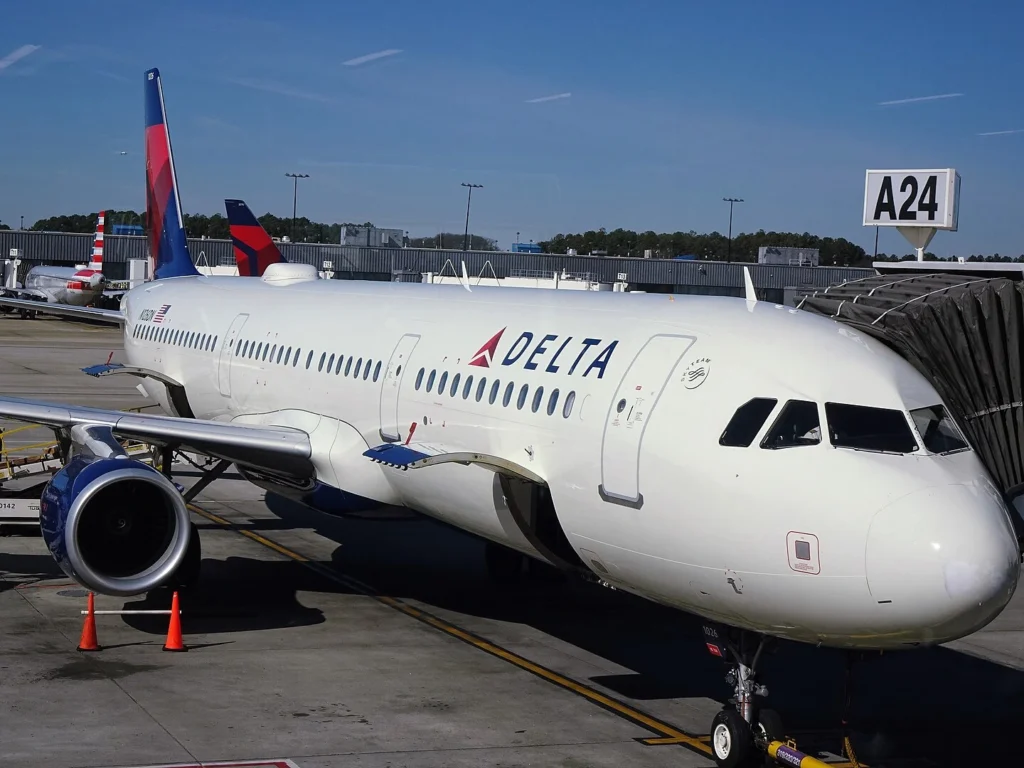
ATLANTA- Delta Air Lines (DL) faced criticism after a first class seating conflict on a domestic route exposed limitations in its premium cabin layout.
The incident occurred on a flight from San Antonio (SAT) to Los Angeles (LAX), drawing attention to seat recline usability.
A tall passenger’s physical inability to accommodate reclining led to an onboard dispute involving cabin crew.
The episode raised broader concerns about how Delta markets premium seating while delivering constrained personal space.
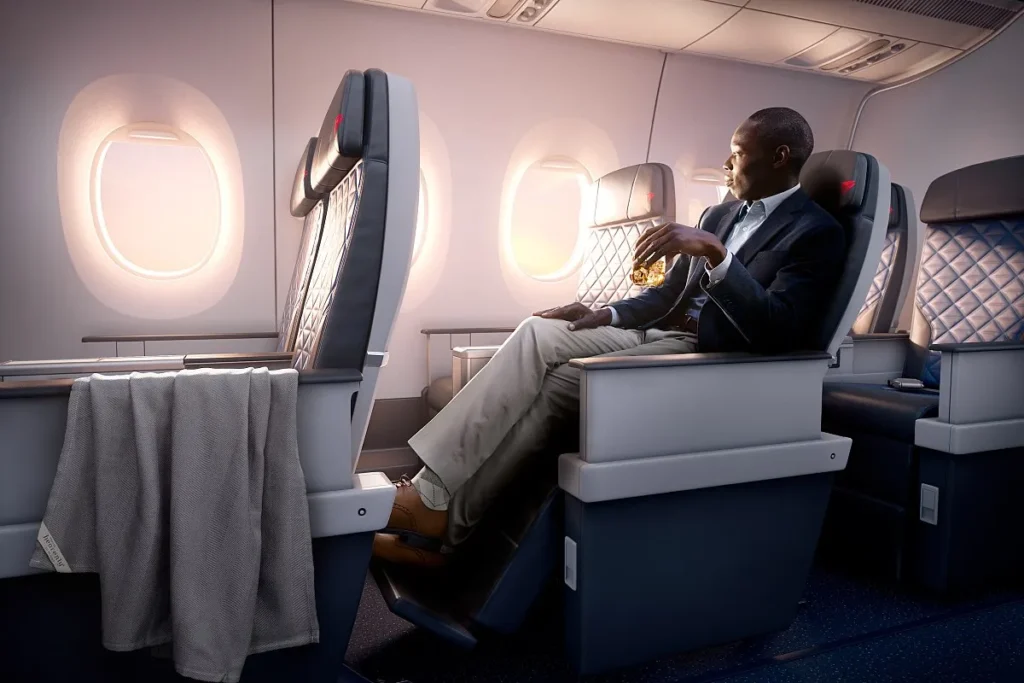
Delta First Class Recline Issue
A passenger standing 6 feet 8 inches tall was seated in Delta first class with his knees firmly pressed against the seatback ahead of him. When the passenger in front attempted to recline, the seat would not move because it was fully blocked.
The lead flight attendant explained that the seat could not recline due to a physical obstruction and stated she could not change that reality.
According to View from the Wing, this was the second time within five days that the same passengers experienced the same issue, with the passenger in front repeatedly attempting to force the recline on a prior flight.
The flight attendant’s blunt explanation, “I can’t make his legs smaller,” became the defining moment of the incident because it plainly reflected the mechanical truth of the situation.
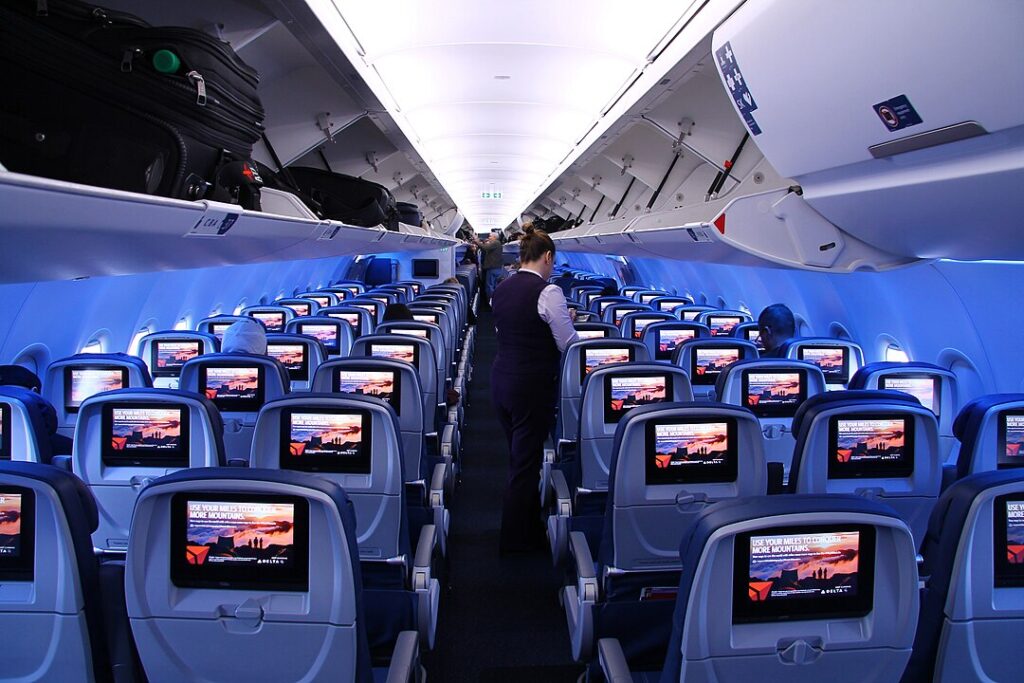
Delta’s Airbus A319, A320, and A321 aircraft feature first class seat pitch as low as 35 inches. Seat pitch measures the distance between seatbacks and directly determines usable legroom.
This configuration offers no more space than many extra-legroom economy seats. As a result, a core first class feature, seat recline, can become unusable when a tall passenger occupies the seat behind.
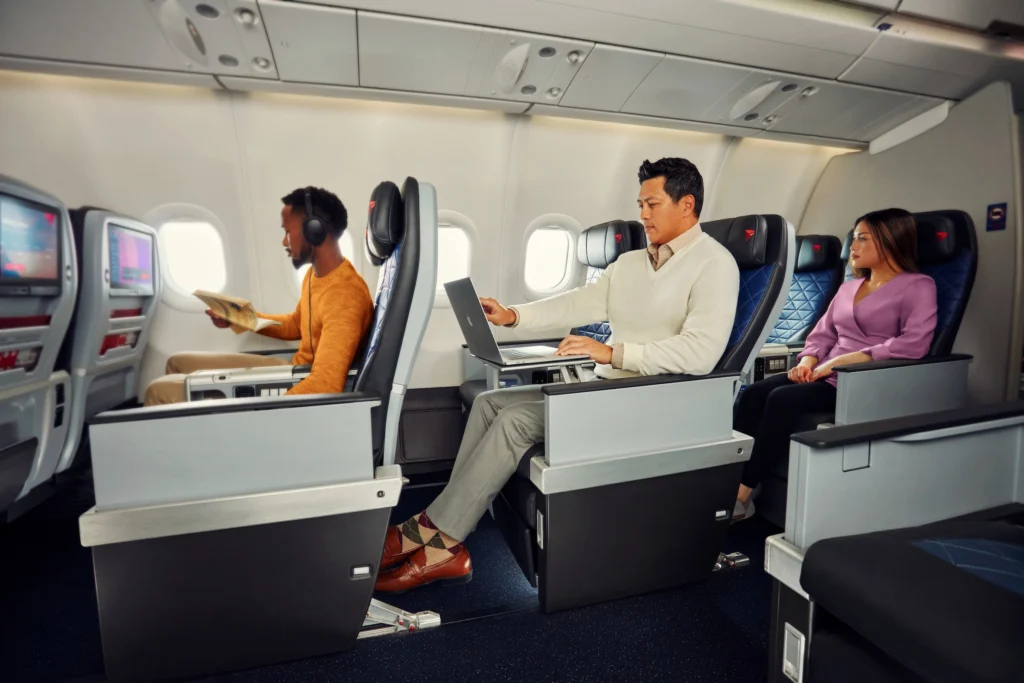
Comparison With Other US Airlines
American Airlines’ legacy US Airways Airbus A320 aircraft provide approximately 36 inches of pitch in first class, which is widely regarded as extremely tight. Most other American Airlines first class cabins offer about 37 inches.
Before current seating reconfigurations, American commonly offered 38 to 40 inches of pitch.
United Airlines also averages roughly 37 inches, with several aircraft measuring about 36.7 inches. United’s A320s and CRJ-550s are notable exceptions, offering more generous space.
Delta’s tighter configurations place it at the lower end of first class legroom among major US carriers.
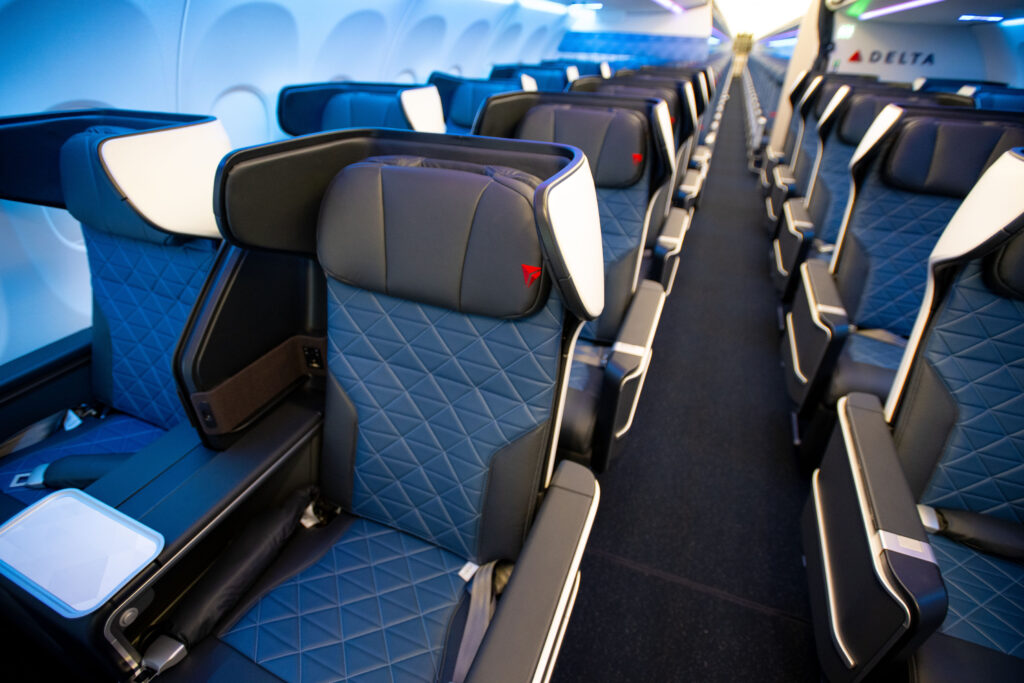
Premium Branding Versus Cabin Reality
Delta positions itself as a premium airline, yet it offers less of the most valuable onboard commodity, physical space.
This approach reflects a cabin philosophy reminiscent of legacy Northwest Airlines, where density outweighed comfort.
Delta effectively sells a reclining first class seat while also selling a seat behind it where a tall passenger cannot exist without blocking that function.
This creates an unavoidable conflict built into the product itself.
Passenger Reactions and Ethics
Public reaction to the incident fell into clear camps. Some argued that recline is a paid feature and passengers are entitled to use it as designed.
Others claimed tall passengers should book different seats, choose bulkheads or exit rows, or avoid flying altogether.
Another group viewed reclining as rude and antisocial, citing unwritten rules against reclining on daytime flights or when not sleeping.
Some commenters escalated further, suggesting forceful recline regardless of injury risk, framing discomfort as acceptable collateral.
A more balanced view placed responsibility squarely on the airline, arguing that neither passenger was at fault when the cabin design itself created the conflict.
Delta Policy and Position
Delta CEO Ed Bastian has stated that passengers retain the right to recline when seats are designed to do so, while advising discretion and courtesy.
In practice, this guidance fails when physical constraints make reclining impossible regardless of intent or etiquette.
The disconnect between policy statements and cabin design places frontline crew in an unenviable position and leaves passengers frustrated.
Design Solutions and Service Recovery
If Delta intends to maintain tight first class seat pitch, it should install articulating or cradle-style recline seats that shift the seat base forward instead of pushing into the passenger behind.
When a premium feature cannot be used, Delta should provide service recovery through miles or travel credit to the affected customer.
This approach acknowledges the product failure, avoids penalizing tall passengers for their height, and reduces the risk of onboard escalation by assuring resolution after landing.
Stay tuned with us. Further, follow us on social media for the latest updates.
Join us on Telegram Group for the Latest Aviation Updates. Subsequently, follow us on Google News
