

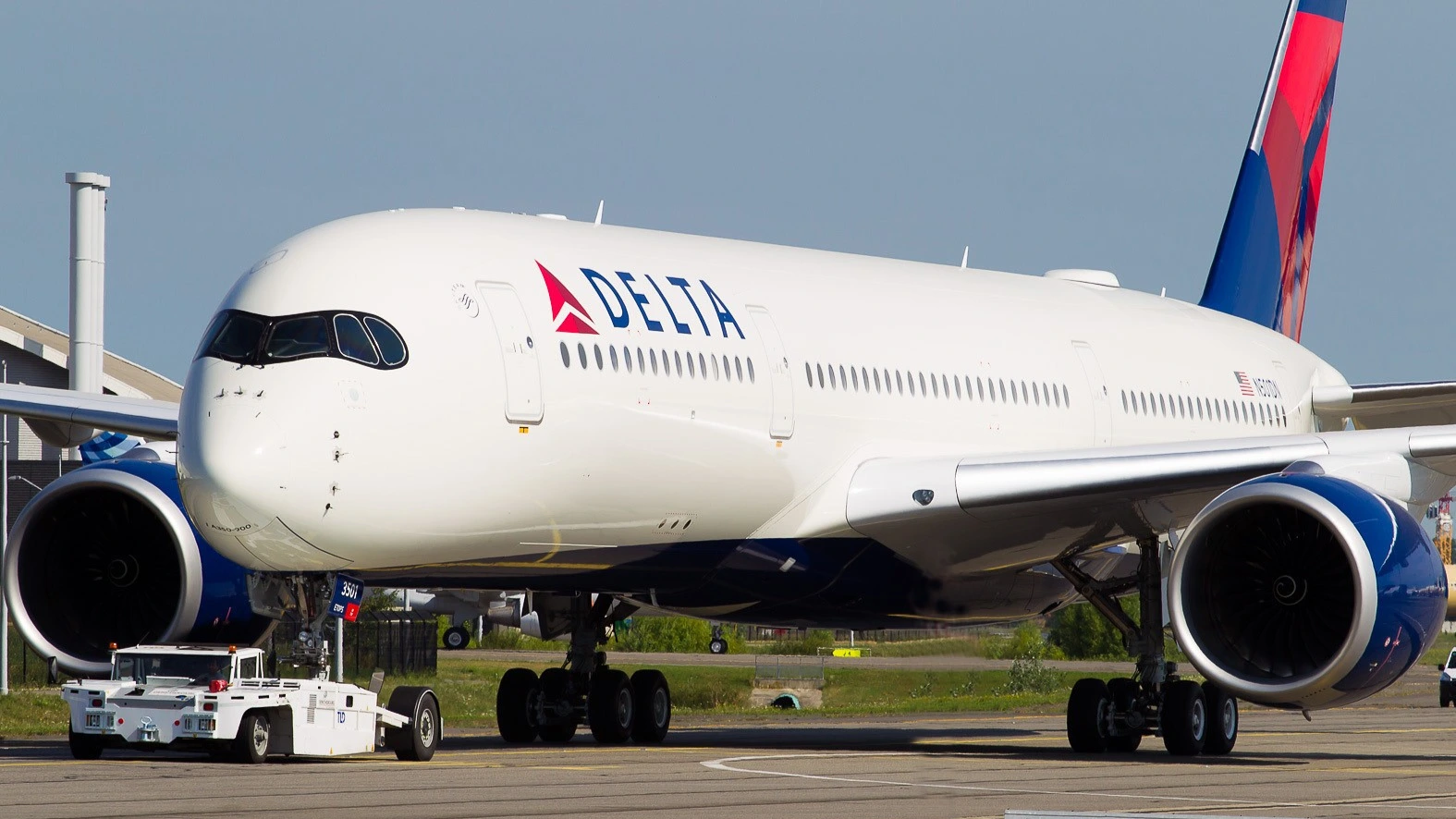
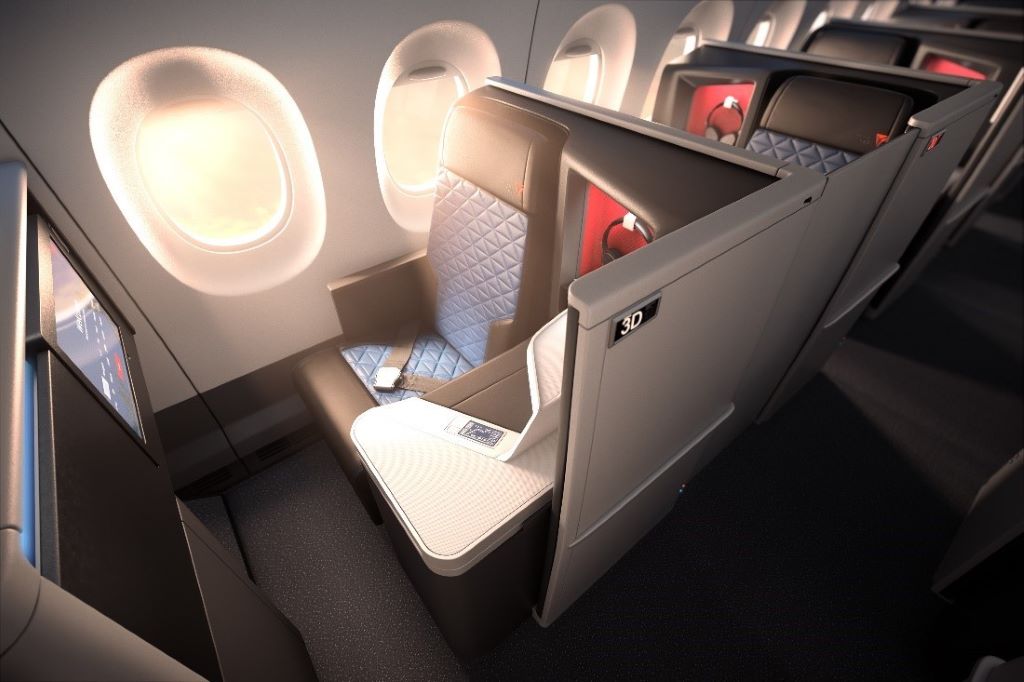
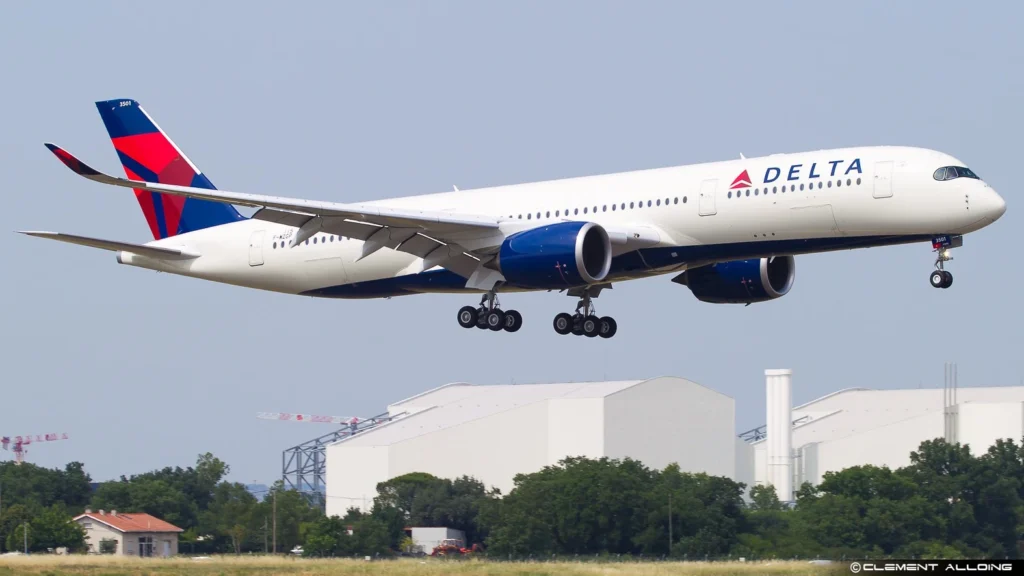
ATLANTA- Delta Air Lines (DL) is preparing to launch a Basic Business Class fare as part of a plan to unbundle every cabin product across its network by the end of 2026. The move will fundamentally change premium seat pricing by separating the seat itself from bundled benefits.
From its primary hub at Hartsfield-Jackson Atlanta International Airport, Atlanta (ATL), Delta intends to apply the same fare segmentation logic used in economy cabins to business class, domestic first class, and premium economy.
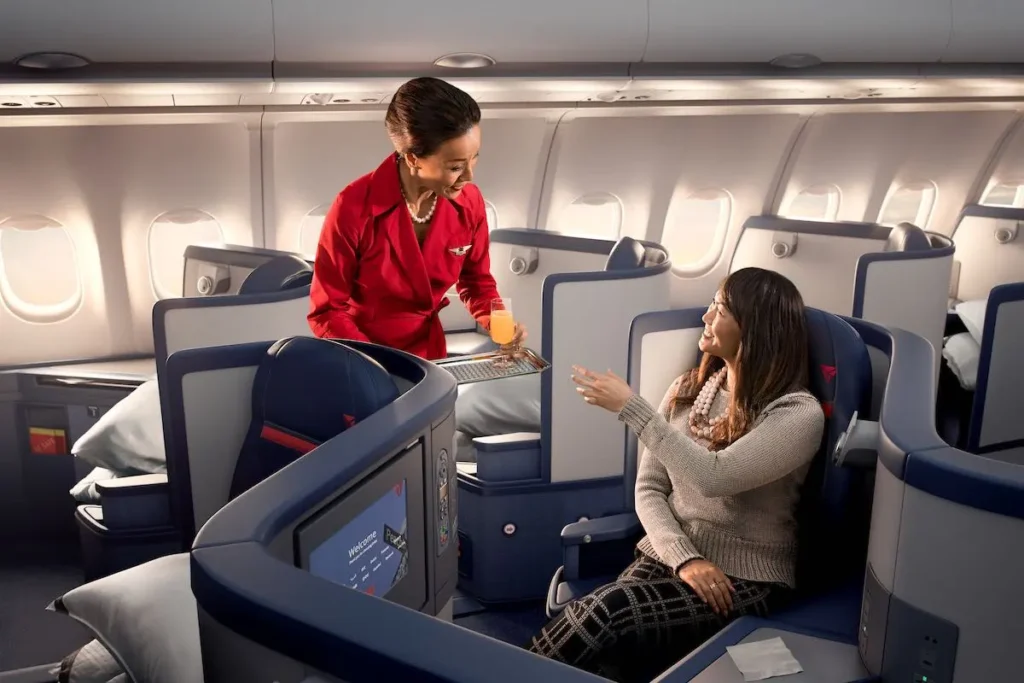
Delta’s Basic Business Class
Delta has confirmed that all cabin products will eventually follow a 3-tier structure labeled basic, main, and extra. This approach gives customers the ability to choose not only a seat but also the level of flexibility and services attached to that seat.
During Delta’s 2025 earnings call, President Glen Hauenstein explained that the airline is disaggregating the seat from product attributes.
A traveler may see a business class seat priced lower if they accept restrictions such as delayed seat assignment, limited refundability, or fewer included services. Higher tiers restore flexibility, earlier seat access, and full benefits.
According to OMAAT, Delta expects this structure to roll out progressively through 2026, with all cabins potentially unbundled before the end of the year.
Based on Delta’s comments and existing global airline practices, Basic Business Class will include the core premium seat while limiting several traditionally included perks.
Likely characteristics include paid or restricted seat assignments, change and cancellation fees, reduced mileage earning, limited elite status qualification, and restricted or excluded lounge access.
The airline may also remove priority check-in, priority security screening, and priority boarding from the basic tier or offer them only for an additional charge.
This mirrors practices already in place at several international carriers that have adopted unbundled business class products.
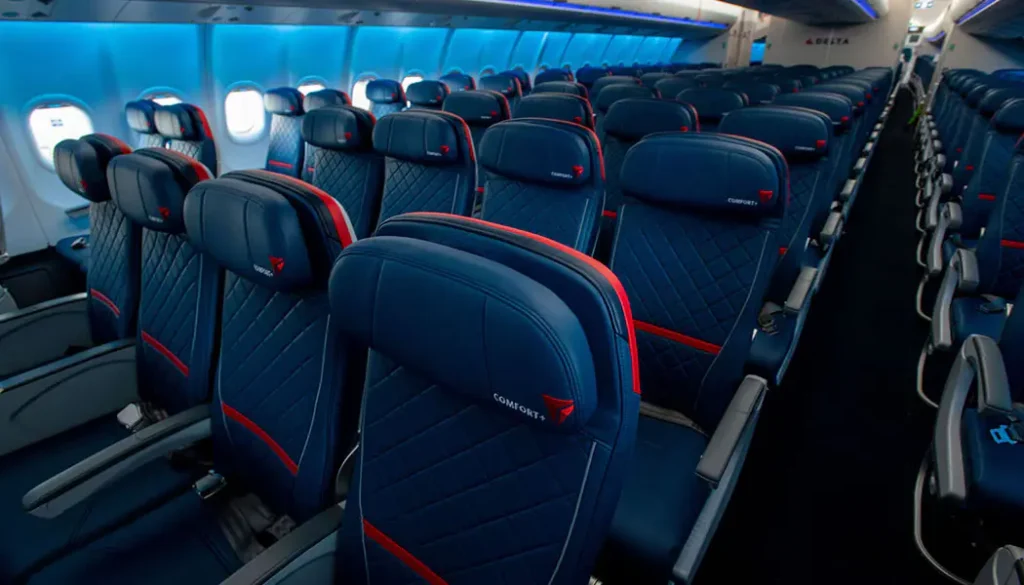
Comfort+ for Premium Unbundling
Delta has already implemented a 3 tier pricing structure for its Comfort+ extra-legroom cabin.
The airline confirmed that this change has delivered results slightly above internal projections.
This performance has reinforced Delta’s confidence that customers will actively choose higher-priced bundles when given clear options.
The Comfort+ rollout provides a clear indication of how unbundling may function in domestic first class and international business class.
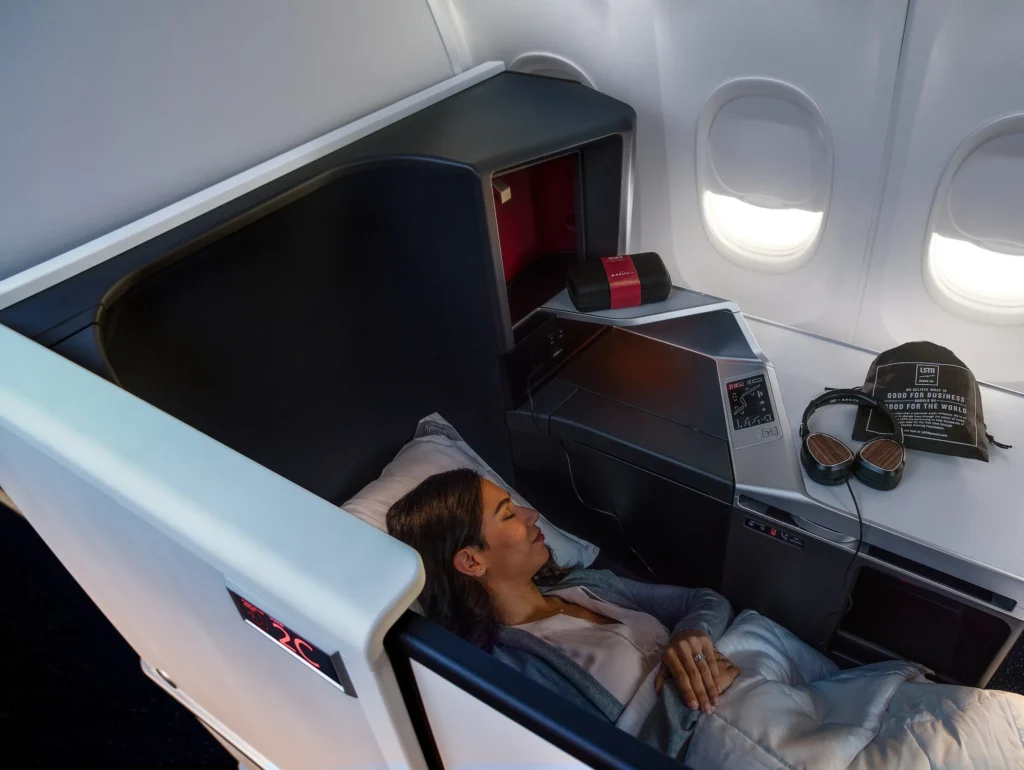
Revenue Segmentation and Financial Rationale
Delta views premium unbundling as a long-term revenue strategy rather than a short-term pricing adjustment.
Executives have described the initiative as a multibillion-dollar opportunity enabled by improved retailing and pricing technology.
By offering a lower entry price for premium seats, Delta can attract price-sensitive leisure travelers while encouraging upgrades to higher-margin fare bundles.
This approach also reflects current demand patterns, where premium leisure travel remains strong but corporate travel has not fully recovered.
International Routes and JV Coordination
Unbundling business class on long-haul routes involves additional complexity due to joint ventures.
Delta coordinates fares and product rules with Air France-KLM and Virgin Atlantic across the Atlantic and with Korean Air across the Pacific.
Any Basic Business Class introduction on these routes will likely be implemented jointly rather than by Delta alone.
Some partners have already introduced elements of premium unbundling, such as paid seat assignments in business class, indicating alignment across alliances.

Lounge Access and Premium Service Differentiation
One unresolved question concerns how the airline will handle lounge access. The airline may continue to offer Sky Club access to Basic Business Class passengers while reserving Delta One Lounge access for higher-tier business class fares.
Such differentiation would allow Delta to protect the exclusivity of its flagship lounges while still offering a lower-priced premium seat.
Delta’s move is expected to influence the wider US airline industry. Once Delta establishes unbundled premium cabins, other major carriers are likely to follow with similar strategies.
For travelers, the change increases pricing transparency but reduces included benefits at the lowest premium fare levels.
Many customers may find that today’s entry-level business class fares become tomorrow’s basic option with fewer services included.
Bottom Line
Delta plans to introduce Basic Business Class and fully unbundle its premium cabins by the end of 2026.
The strategy separates seat pricing from flexibility and benefits, expands customer choice, and creates new revenue opportunities.
While the model aligns with global airline trends, it will also redefine expectations for what a premium ticket includes.
Stay tuned with us. Further, follow us on social media for the latest updates.
Join us on Telegram Group for the Latest Aviation Updates. Subsequently, follow us on Google News
