

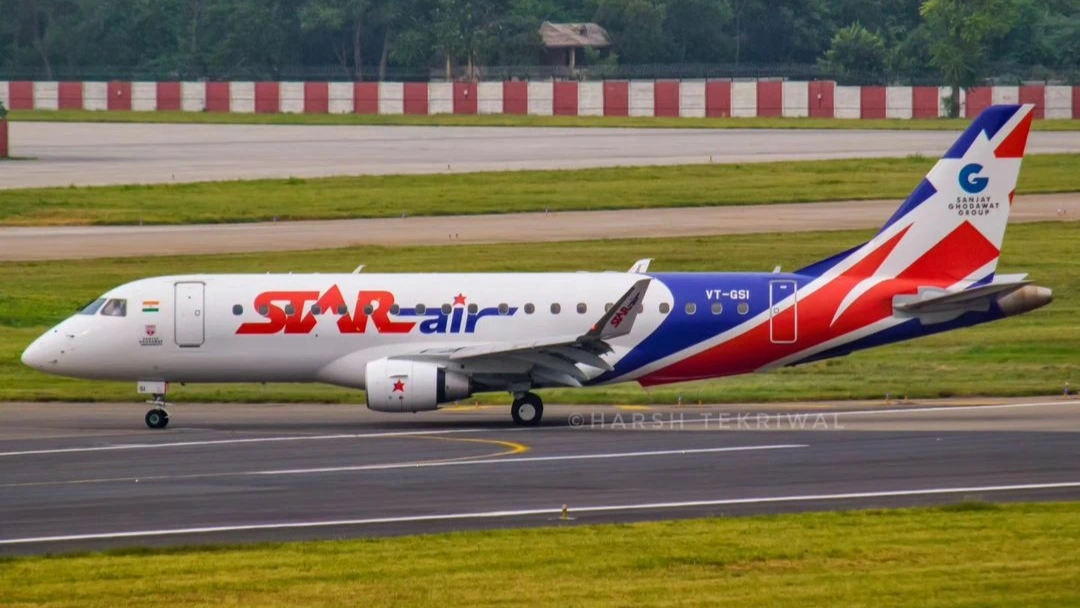
NEW DELHI- Star Air (S5), owned by Ghodawat Enterprises Pvt Ltd, has set a revenue target of ₹1,100 crore for FY26 as it accelerates expansion across India’s regional aviation market. The airline is scaling operations from its base in New Delhi while deepening its focus on underserved and unserved city pairs.
The privately held carrier reported revenue of about ₹650 crore in FY25 and expects nearly 70% year-on-year growth in the current fiscal. Management attributes the outlook to fleet expansion, capital infusion, and sustained demand for direct regional connectivity.
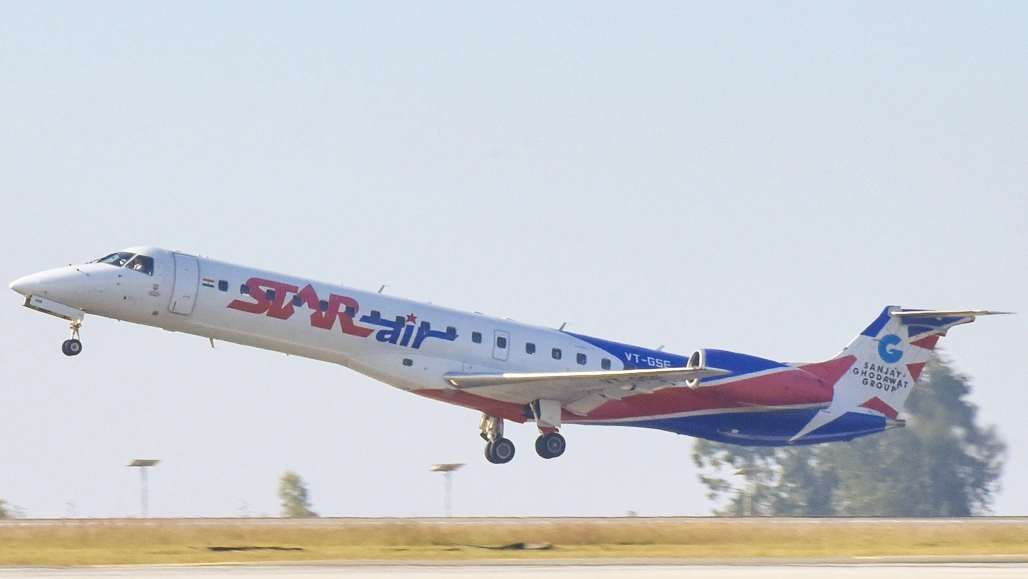
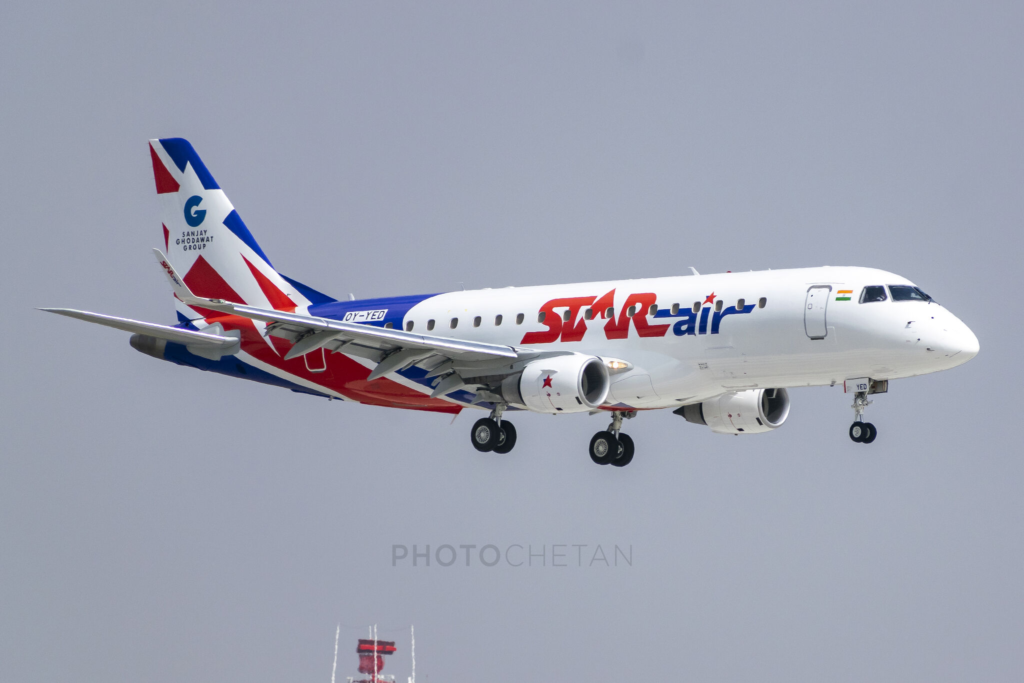
https://commons.wikimedia.org/wiki/File:15_January_2023_72.jpg
Star Air Eyes 1,100 Crore Turnover
Star Air’s projected ₹1,100 crore turnover for FY26 reflects a sharp step-up from the previous year’s performance.
In FY25, roughly ₹200 crore of revenue came from viability gap funding under the UDAN regional connectivity scheme, accounting for close to one-third of total income.
The airline continues to rely on UDAN support for a significant portion of its network, with around 65% of routes operating under the scheme. Load factors currently range between 70% and 75%, indicating stable demand across smaller city markets, reported Live Mint.
VGF support provides partial insulation from fuel price volatility, although the benefit applies only to capped UDAN seats and is limited to three years per route.
Management maintains that disciplined route selection, rather than aggressive capacity addition, underpins its revenue strategy.
Regional Connectivity Focus
Founded in 2019, Star Air has positioned itself outside India’s busiest aviation corridors by linking tier-3, tier-4, and tier-5 cities directly. This point-to-point strategy differentiates the airline from hub-centric models used by larger carriers.
The airline currently operates eight Embraer aircraft with seating capacities between 50 and 80 seats, serving 31 cities.
Over the next six months, Star Air plans to induct four additional aircraft and gradually expand its network to around 50 cities.
Many of the airline’s routes face limited competition due to thin demand profiles that make larger aircraft uneconomical.
Management estimates that 70–75% of routes are effectively monopolistic, either because of UDAN exclusivity or operational constraints for bigger jets.
Fleet And Capital
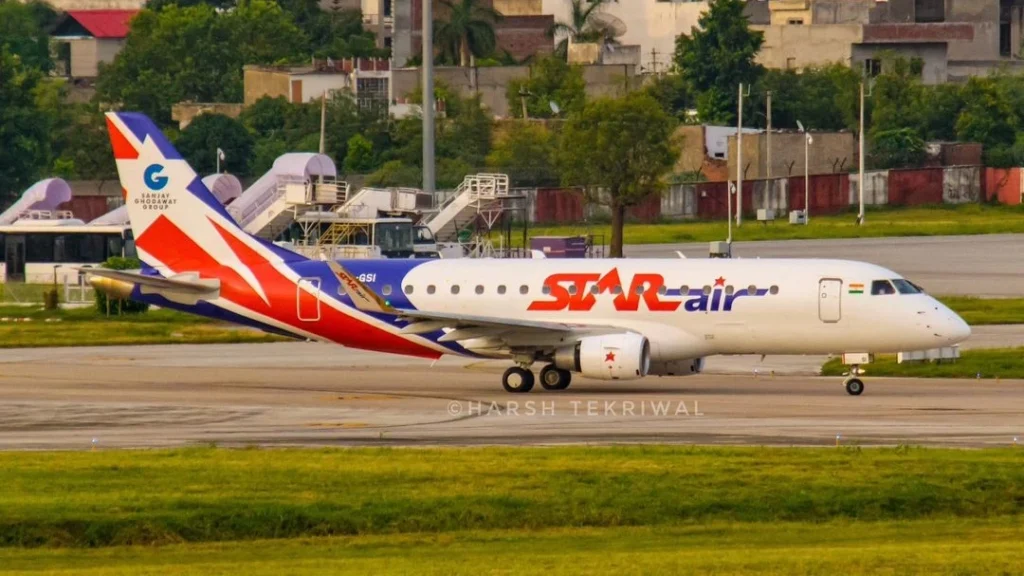
Star Air’s fleet strategy emphasizes cost control and operational flexibility. The airline purchased its first four aircraft outright and leases the remainder through dry lease agreements, avoiding sale-and-leaseback structures.
Over the next four to five years, the airline aims to scale its fleet to 40–50 aircraft using a mix of operating leases, finance leases, and selective purchases.
To support this growth, Star Air has raised ₹150 crore in fresh capital and plans to raise another ₹200–250 crore next year.
About ₹50 crore of the funds have been allocated for setting up a domestic maintenance, repair, and overhaul facility focused initially on Embraer aircraft.
The remaining capital will support aircraft deposits, spares, tools, digital systems, and reliability upgrades, helping manage rising dollar-denominated costs.
Bottom Line
Star Air’s FY26 revenue target of ₹1,100 crore signals confidence in India’s regional aviation demand and the UDAN framework.
While reliance on subsidies remains a structural feature, steady load factors, controlled fleet expansion, and fresh capital position the airline for sustained growth beyond its initial regional footprint.
Stay tuned with us. Further, follow us on social media for the latest updates.
Join us on Telegram Group for the Latest Aviation Updates. Subsequently, follow us on Google News
