

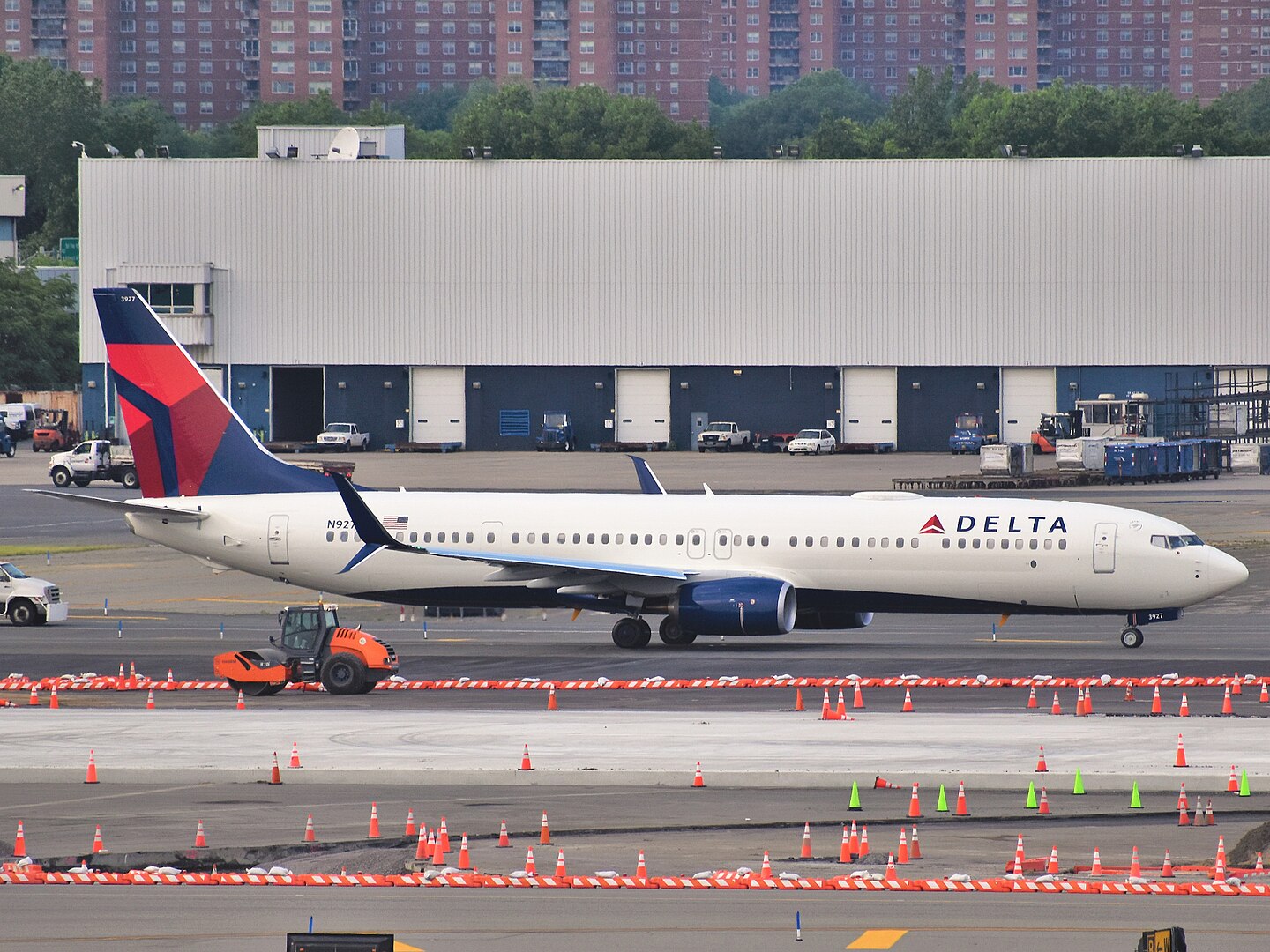
ATLANTA- A Delta Air Lines (DL) passenger passed through TSA security at Portland International Airport (PDX) on Thursday evening with a meat cleaver and boarded a flight to Salt Lake City International Airport (SLC).
A flight attendant noticed the large blade in the cabin, reported the threat, and triggered a full deplaning and re-screening process.
TSA stated that the screening team was not sufficiently trained to detect the weapon and confirmed it would review the incident, evaluate staff performance, and consider corrective actions.

Delta Flight Delayed Due to TSA
The passenger carried a prohibited bladed weapon through the TSA checkpoint and into the sterile area without detection.
According to View from the Wing, the crew identified the hazard only after boarding, leading to a delay of roughly two and a half hours as all passengers were ordered off the aircraft and screened again.
No one was arrested. Walking a prohibited weapon through a checkpoint can result in both a TSA civil violation and a criminal charge, yet the lack of arrest suggests investigators viewed the threat as minimal and recognized that pursuing the case could add further embarrassment for TSA.
Travelers often bring knives through checkpoints unintentionally. Many reuse bags from picnics or outdoor activities, forgetting that kitchen knives or cleavers remain inside. Others carry pocketknives or even firearms and later claim they forgot the items were in the bag.
Some passengers travel with blades for personal safety and are unaware of screening rules. Even with these common situations, missing a meat cleaver reflects a significant screening failure.
TSA’s Longstanding Detection Problems
TSA has a documented history of missing contraband during internal testing. Earlier covert testing revealed miss rates above 90 percent over multiple years.
After repeated failures, the agency stopped releasing performance data, labeling it sensitive security information.
In the past, TSA has highlighted minor successes in disproportionate ways, yet its continued silence on detection capabilities signals ongoing performance issues.
In response to the incident, local TSA leadership at Portland Airport will likely complete an incident report. Training emphasis may shift toward X-ray image interpretation, with short-term focus on threat recognition refreshers.
These steps align with TSA’s typical pattern of incremental adjustments rather than systemic reform.
Workforce Conditions and Operational Realities
Screeners in Portland, like those at other airports, recently worked through a government shutdown with delayed pay.
Many are still waiting to be fully compensated, although some are expected to receive significant bonuses.
There is no evidence that these factors contributed to the incident, but the workforce continues to operate under financial and operational pressures.
TSA will conduct an internal review, a process that historically concludes with minimal accountability, often finding the agency’s own operations blameless.
Dangerous Implications
TSA officers routinely confiscate items such as peanut butter jars or bottled water, discarding them into bins near the checkpoint rather than treating them as hazardous. Yet a sizeable bladed weapon passed onto an aircraft unnoticed.
In this case, the most effective security layer was the cabin crew, despite TSA’s claims of multiple overlapping layers of protection.
This incident reinforces concerns about the reliability of checkpoint screening and the agency’s ability to manage real threats while focusing on lower-risk items.
Stay tuned with us. Further, follow us on social media for the latest updates.
Join us on Telegram Group for the Latest Aviation Updates. Subsequently, follow us on Google News
