


NAVI MUMBAI- IndiGo (6E) will begin flights from Navi Mumbai International Airport (NMI) on December 25, linking the new airport with major cities, including Delhi (DEL) and Bengaluru (BLR). Akasa Air (QP) has also opened bookings for routes connecting Navi Mumbai NMI with Delhi (DEL), Goa (GOX), Kochi (COK), and Ahmedabad (AMD).
The new airport is set to handle rising traffic in the Mumbai region, complementing Mumbai CSMIA (BOM) and strengthening nationwide connectivity through both IndiGo and Akasa Air’s expanding networks.

Akasa, IndiGo Navi Mumbai Flights
Navi Mumbai International Airport is designed as the second major gateway for the Mumbai Metropolitan Region. Its role is to ease congestion at Mumbai CSMIA and support long-term aviation growth in western India.
IndiGo plans to open ten domestic routes at launch, linking the airport with Delhi (DEL), Bengaluru (BLR), Hyderabad (HYD), Ahmedabad (AMD), Lucknow (LKO), North Goa GOX, Jaipur (JAI), Nagpur (NAG), Cochin (COK), and Mangalore (IXE). The airline aims to add more direct connections as operations scale.
Akasa Air has outlined its own initial network, offering daily flights to Delhi (DEL) and Goa (GOX), five-weekly service to Kochi (COK), and a weekly rotation to Ahmedabad (AMD). These additions widen passenger choice during the first phase of airport operations.
The airport will run for twelve hours a day during its first month, from 8 am to 8 pm, with an expected 8 to 10 movements per hour. Capacity will rise gradually to 20 and later 30 movements per hour as systems stabilize and airlines expand schedules.

Role in Regional Growth
Navi Mumbai International Airport is expected to become a key driver of economic development by improving access to Mumbai, one of India’s busiest commercial hubs.
The launch aligns with national efforts to boost regional air travel and strengthen links between financial centers and emerging Tier-2 and Tier-3 cities.
The airport’s first commercial operations coincided with December 25, marking a milestone for the region. With IndiGo and Akasa Air leading the early rollout, passengers will gain new options during the busiest travel period of the year.

About Navi Mumbai Airport
Navi Mumbai International Airport (NMI) is positioned to support rising traffic from Mumbai’s existing Chhatrapati Shivaji Maharaj International Airport (BOM). The new hub will open in phases with an initial handling capability of 20 million passengers per year.
The project is led through a public-private partnership between Mumbai International Airport Limited (MIAL) and CIDCO, forming a core part of India’s broader plan for Viksit Bharat 2047.
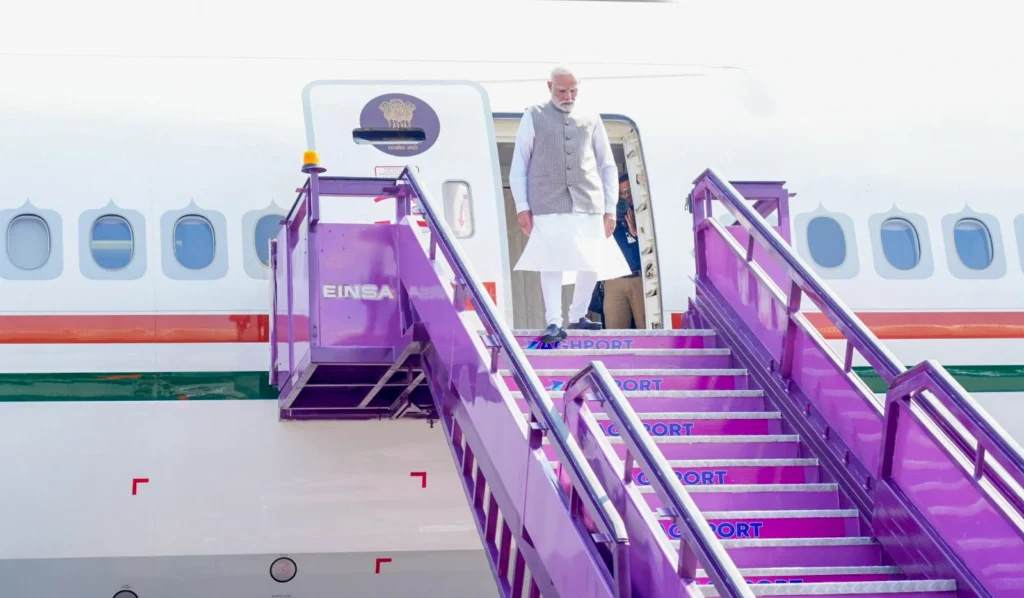
A Major Step in India’s Airport Expansion
Navi Mumbai International Airport has been planned as a dual-airport system that strengthens connectivity across the Mumbai Metropolitan Region.
Built over 1,160 hectares, it will gradually scale to a 90-million-passenger capacity, placing it among India’s largest aviation hubs. The project highlights India’s push for future-ready transportation infrastructure.
Designed as a multimodal hub, the airport will link directly with the Mumbai Trans Harbour Link, suburban rail, the Navi Mumbai and Mumbai Metro networks, and planned waterways. This network is expected to cut travel times and support stronger cargo and passenger flows across western India.
The airport’s design draws inspiration from the Lotus, integrating cultural elements with efficient layout planning and sustainable building practices. Its fluid architecture aims to balance visual identity with operational practicality, ensuring smooth movement across terminals and future expansion areas.
In the first two phases, the airport will operate a single runway and a primary terminal sized for 20 million passengers annually. As demand increases, the site will evolve to four runways and multiple terminals. Dedicated cargo infrastructure will support perishables, express freight, and high-value shipments, contributing to India’s logistics ambitions.
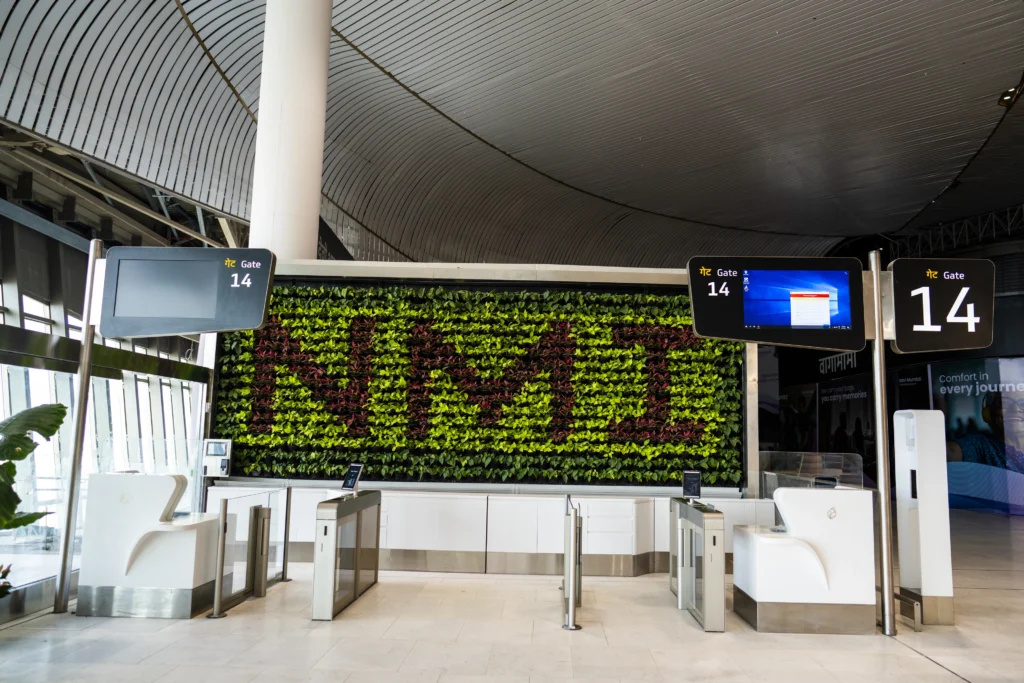
Role of NMIAL in the Project
Navi Mumbai International Airport Private Limited (NMIAL) oversees development, construction, operations, and long-term management. MIAL holds a 74 percent stake under Adani Airport Holdings Limited, while CIDCO retains 26 percent.
The partnership structure supports coordinated planning, transparent investment, and long-term operational stability.
NMIA will play a key role in India’s aviation growth by relieving pressure on CSMIA and offering the region a modern, high-capacity alternative. Its sustainable design, renewable-energy integration, and efficient terminal systems are expected to set new benchmarks for Indian airports.
With its scale and strategic location, NMIA is projected to become a prominent gateway for domestic and international travel.
Stay tuned with us. Further, follow us on social media for the latest updates.
Join us on Telegram Group for the Latest Aviation Updates. Subsequently, follow us on Google News
