

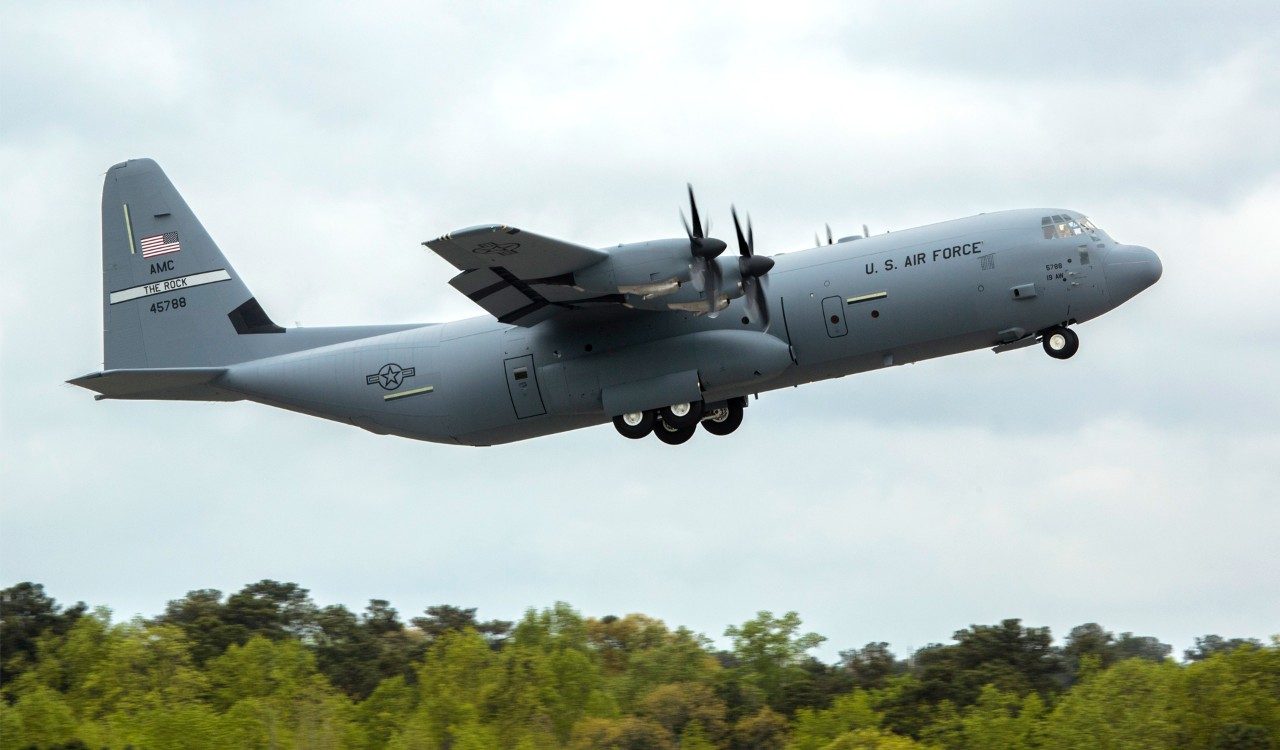
GEORGIA- A Turkish Air Force C-130 military cargo plane carrying 20 personnel crashed in eastern Georgia near the Azerbaijan border on Tuesday (November 11, 2025), authorities confirmed. The aircraft was returning to Turkey after departing from Baku when it lost contact and went down in mountainous terrain.
Turkey’s President Recep Tayyip Erdogan, along with officials from Georgia and Azerbaijan, acknowledged the likelihood of casualties among those on board, though no official death toll has been released. Search and rescue teams reached the crash site as investigations began.
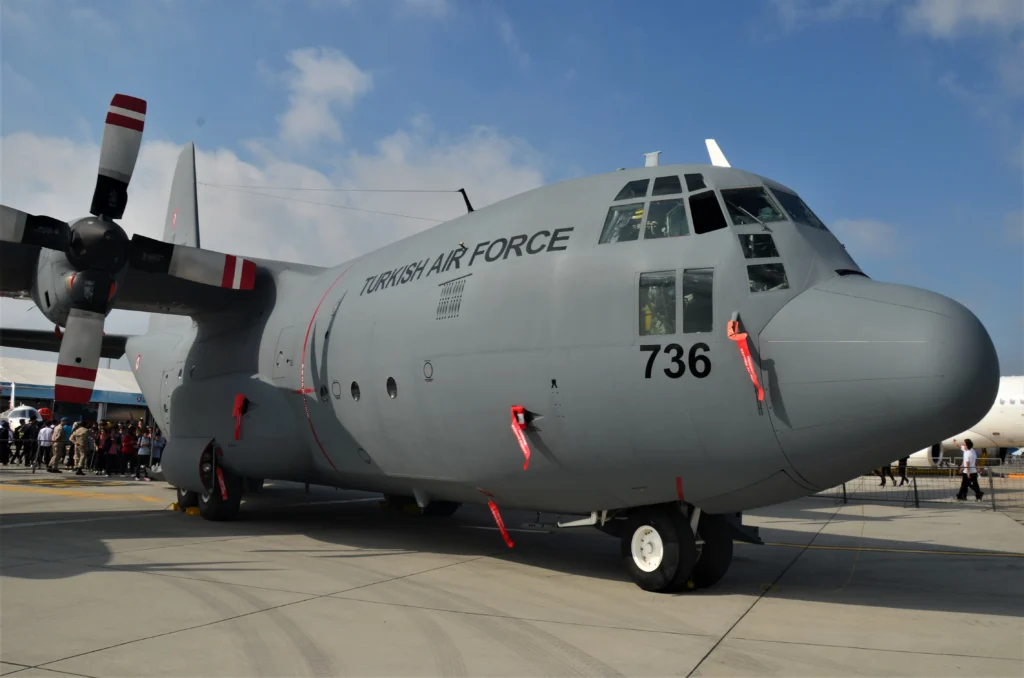
Turkish Air Force C-130 Crash in Georgia
According to Turkey’s Ministry of National Defense, the C-130 Hercules had taken off from Heydar Aliyev International Airport (GYD) in Baku and was en route to Turkey when it disappeared from radar shortly after entering Georgian airspace.
Georgian aviation authorities reported that radio contact was lost within minutes, and the aircraft issued no distress signal before impact.
Eyewitness video circulated by Turkish news outlets showed the aircraft spiraling down, trailing smoke before hitting the ground near Sighnaghi municipality in Georgia’s Kakheti region. The crash site, located close to the Azerbaijan border, was secured by Georgian emergency services around 5 p.m. local time.
Turkish Interior Minister Ali Yerlikaya said rescue teams were working under difficult terrain conditions, with an unmanned aerial vehicle deployed to assist operations.
The Ministry of National Defense confirmed that an accident investigation team had been dispatched to Georgia to coordinate recovery and inquiry efforts.
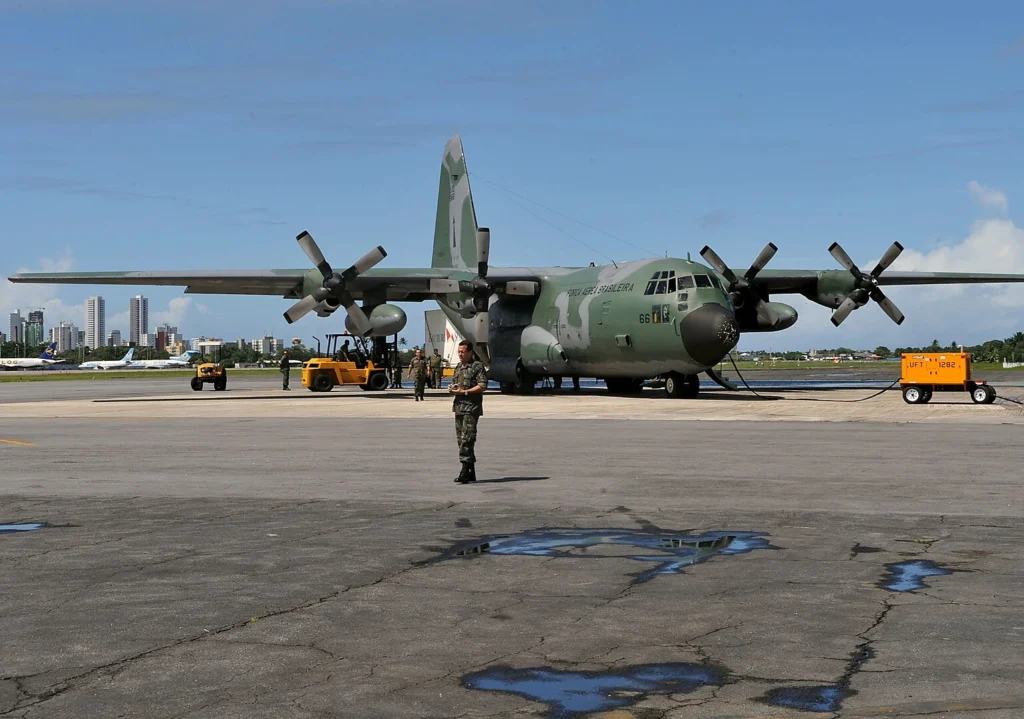
Remarks from Turkey, Georgia, and Azerbaijan
President Erdogan expressed deep sorrow, offering condolences to the families of the fallen and emphasizing national unity in facing the tragedy.
Azerbaijan’s President Ilham Aliyev and Georgia’s Foreign Minister Maka Botchorishvili also extended their condolences to Turkey, reaffirming regional solidarity.
Aliyev stated that Azerbaijan was “deeply shocked” by the loss of Turkish soldiers on Georgian soil, reflecting the close military partnership between Ankara and Baku.
Turkish and Azerbaijani forces regularly conduct joint training and logistical missions, with the C-130 Hercules being a primary transport aircraft in their cooperative defense operations.
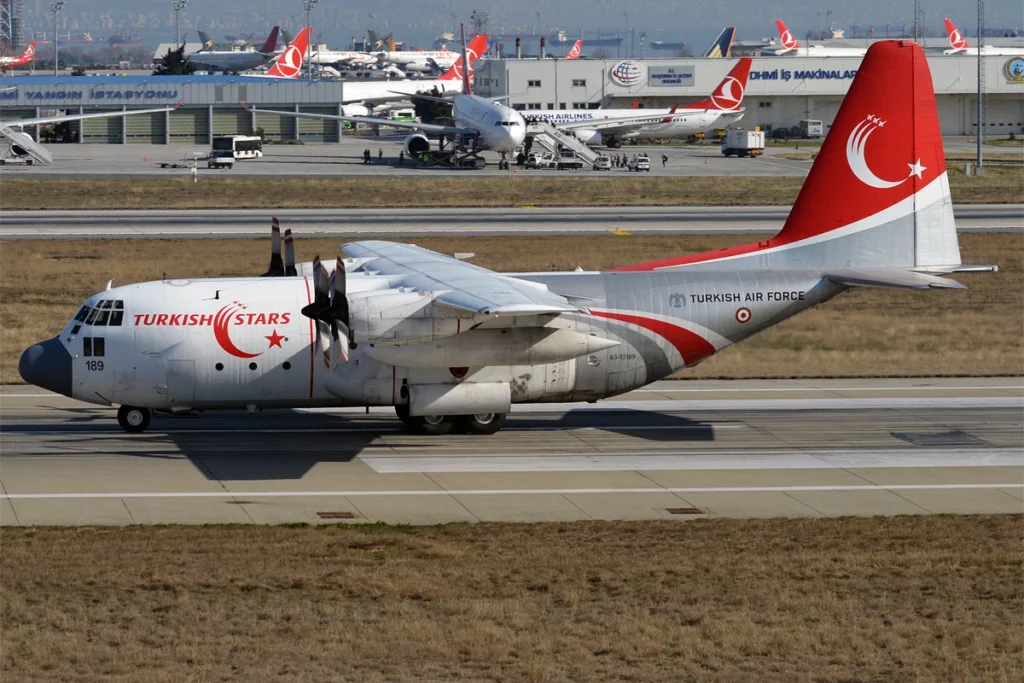
C-130 Hercules and Ongoing Military Ties
The C-130 Hercules has been a key element of Turkey’s military airlift capability for decades, used primarily for troop transport, equipment delivery, and humanitarian missions.
The aircraft’s reliability has made it a global workhorse for air forces worldwide, though accidents involving older models remain a concern.
The crash occurred shortly after Turkish officials, including President Erdogan, attended Azerbaijan’s Victory Day celebrations in Baku on November 8, commemorating the 2020 Nagorno-Karabakh conflict.
The timing underscores the operational linkages and frequent cross-border missions between the two allied nations.
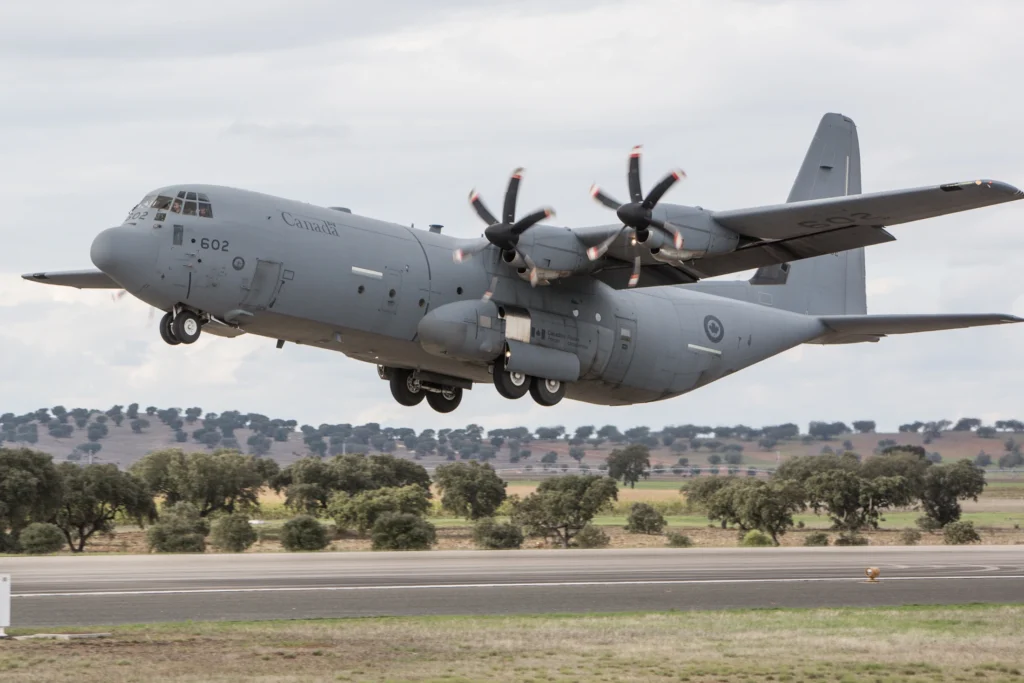
About C-130: Longest Continuously Produced Military Aircraft
The C-130 Hercules remains one of the most versatile and enduring aircraft in U.S. Air Force history. Built by Lockheed Martin, this four-engine turboprop has defined tactical airlift for decades, supporting missions across global conflict zones and disaster relief operations.
Stationed at key U.S. Air Force hubs including Little Rock AFB (LRF) and Ramstein Air Base (RMS), the C-130 Hercules continues to deliver troops, cargo, and humanitarian aid with unmatched reliability. Designed to operate from unprepared airstrips, it remains indispensable for both combat and peacekeeping missions.
Tactical Role and Versatility
The C-130 Hercules is engineered for tactical airlift, capable of delivering personnel, vehicles, and supplies directly into hostile or remote environments. Its ability to take off and land on rough, dirt runways gives it a unique operational edge, especially during combat and crisis scenarios.
Equipped with a rear loading ramp, the aircraft handles a wide range of cargo — from helicopters and armored vehicles to pallets and humanitarian supplies. In its airdrop configuration, it can deploy up to 42,000 pounds of equipment or personnel with pinpoint accuracy.
The same aircraft can be rapidly reconfigured for aeromedical evacuation, firefighting, or weather reconnaissance, making it a true multi-mission platform.
Advanced Technology and Performance
The latest variant, the C-130J Super Hercules, represents a leap in performance and efficiency. Featuring Rolls-Royce AE 2100D3 engines with six-bladed composite propellers, it offers faster climb rates, higher cruising speeds, and improved fuel efficiency compared to earlier models.
The cockpit is built around a two-pilot configuration with digital avionics, head-up displays, and integrated GPS navigation systems. Its advanced autopilot and defensive systems enhance operational safety in complex missions.
The stretch version, C-130J-30, adds 15 feet of fuselage length, expanding its payload capacity and range for extended operations.
Global Deployment and Operational Reach
The Hercules operates across multiple U.S. Air Force commands, including Air Mobility Command and Air Force Special Operations Command. Active-duty units are based at Dyess AFB (DYS), Little Rock AFB (LRF), Ramstein AB (RMS), and Yokota AB (OKO).
Air Force Reserve and Air National Guard units operate from locations such as Dobbins ARB (MGE), Keesler AFB (BIX), Cheyenne Airport (CYS), and Great Falls ANGB (GTF).
Its mission diversity spans Arctic resupply in Antarctica, combat zone logistics, medical evacuations, and wildfire suppression. The C-130 also supports global humanitarian efforts, delivering aid to disaster-stricken regions where no other aircraft can land.
Design Evolution and Enduring Legacy
Since its introduction in 1956, the Hercules has evolved through multiple iterations — from the C-130A and B models to today’s J and J-30 versions. Each generation brought more powerful engines, increased payloads, and improved avionics.
The aircraft’s modular design allows mission-specific equipment to be added or removed with minimal downtime.
The C-130’s ongoing production after seven decades highlights its enduring utility. More than 2,500 units have been built, and the platform continues to serve not only in the United States but also with over 60 allied nations. Its adaptability, reliability, and proven track record make it one of the most successful military aircraft ever produced.
Technical Overview
- Manufacturer: Lockheed Martin Aeronautics Company
- Primary Function: Global tactical airlift
- Engines: Four Rolls-Royce AE 2100D3 (C-130J)
- Crew: Three (two pilots, one loadmaster)
- Payload Capacity: Up to 44,000 lbs (C-130J-30)
- Speed: Up to 417 mph (Mach 0.59)
- Range: 2,071 miles with max payload (C-130J)
- Service Ceiling: Up to 28,000 feet
- Date Introduced: December 1956 (C-130A), February 1999 (C-130J)
Stay tuned with us. Further, follow us on social media for the latest updates.
Join us on Telegram Group for the Latest Aviation Updates. Subsequently, follow us on Google News
