

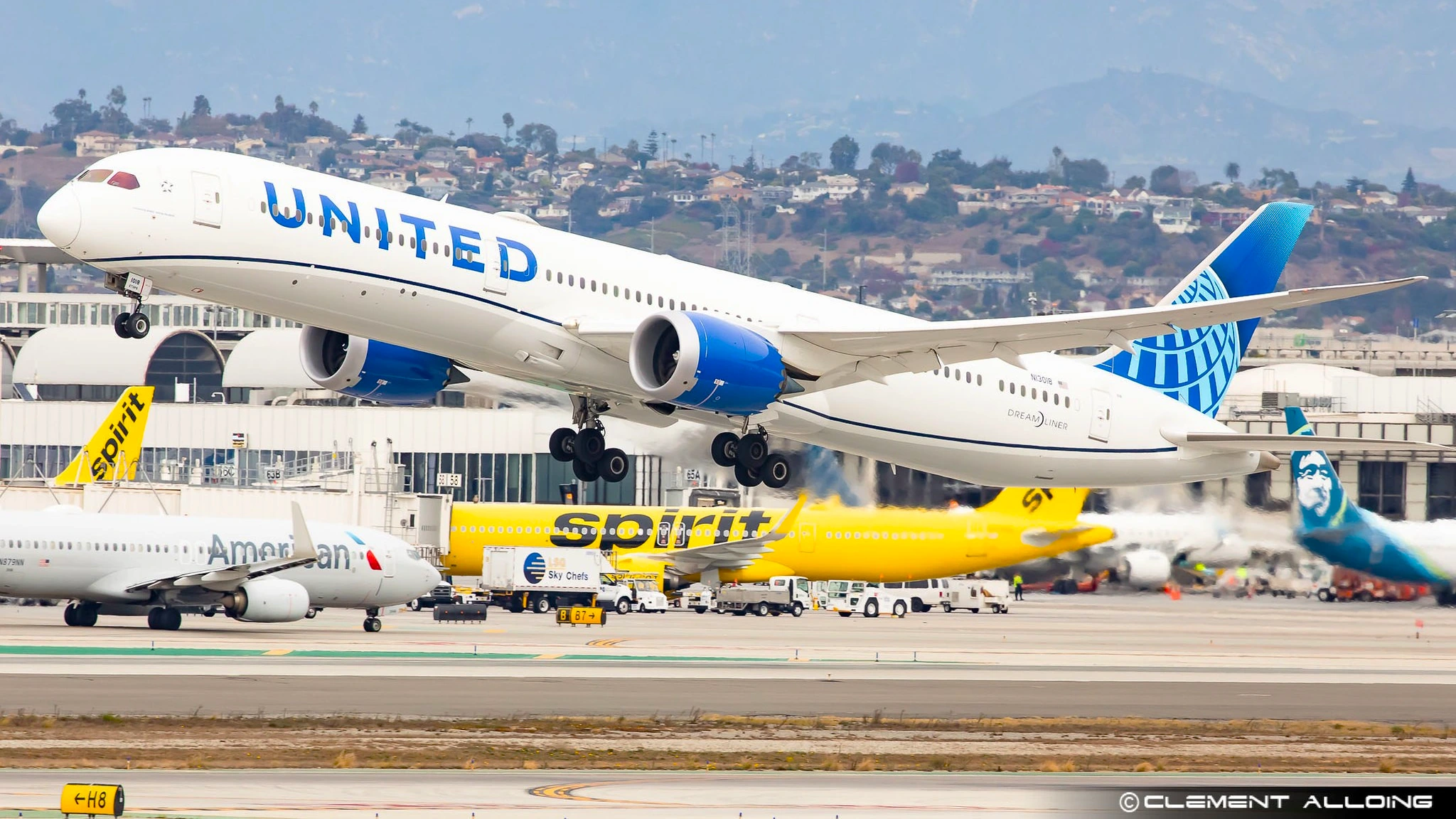
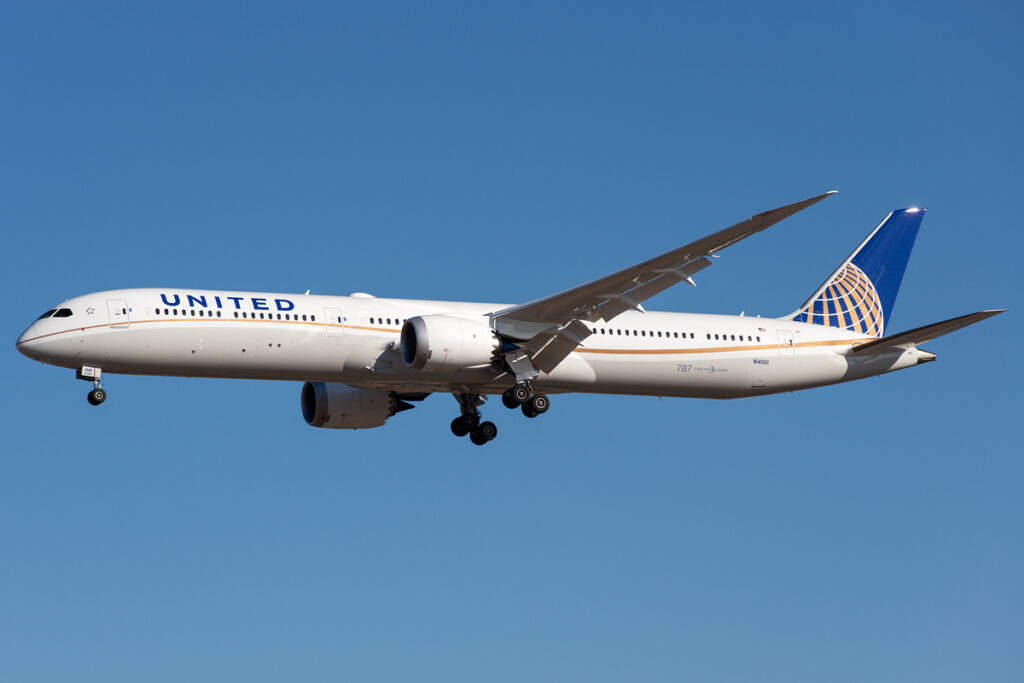
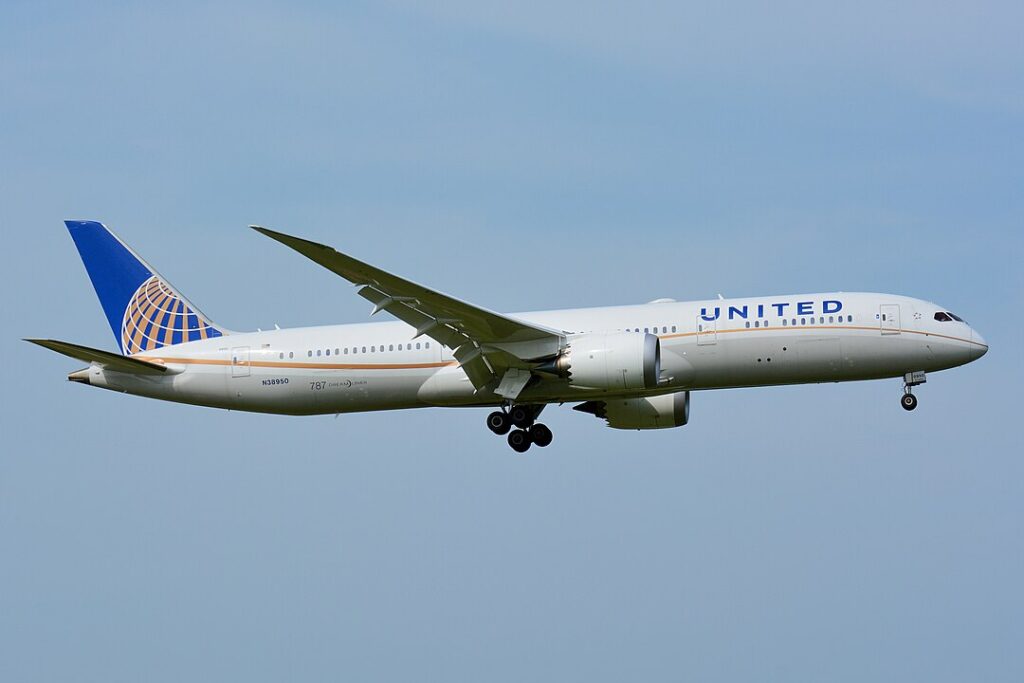
LOS ANGELES- United Airlines (UA) Boeing 787-9 Dreamliner, registration N24974, operating flight UA923 from Los Angeles International Airport (LAX) to London Heathrow Airport (LHR), was involved in a departure deviation shortly after takeoff.
United 923 was cleared for takeoff from LAX Runway 25R with an RNAV departure. The aircraft initially turned north instead of following the expected westbound routing, prompting air traffic control to issue an immediate heading correction and later advise the crew of a possible pilot deviation.
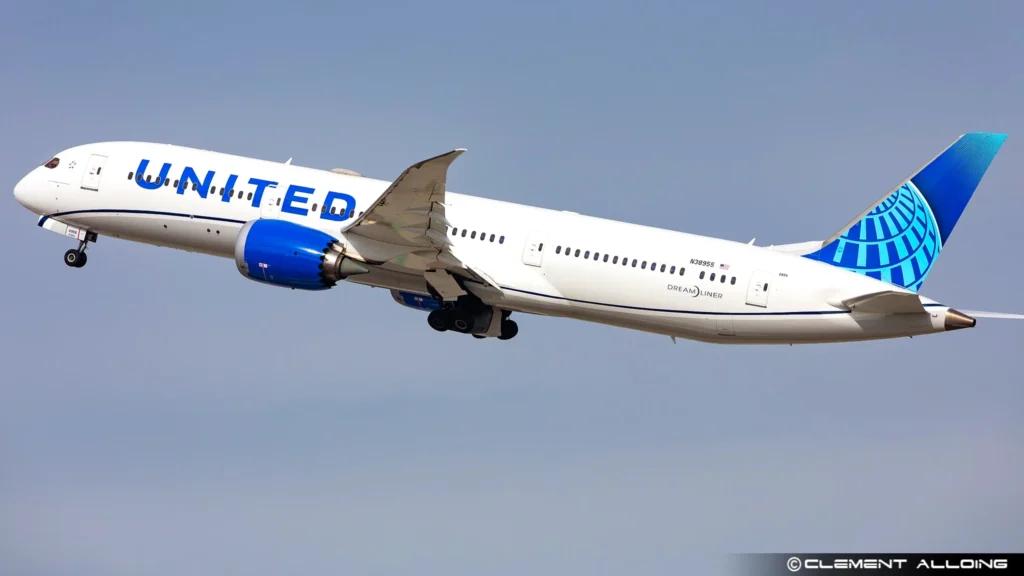
United Boeing 787-9 Deviates From LAX Departure Route
United Airlines (UA) Flight UA923, operated by a Boeing 787-9 Dreamliner registered N24974, departed Los Angeles International Airport (LAX) for London Heathrow Airport (LHR).
The aircraft was cleared for takeoff from Runway 25R under the RNAV Docker departure procedure. After becoming airborne, the Boeing 787-9 did not follow the expected routing and instead turned northbound.
The unexpected turn took the aircraft across the departure corridors associated with LAX’s two northern runways. Air traffic control quickly identified the deviation and instructed the crew to correct its heading.
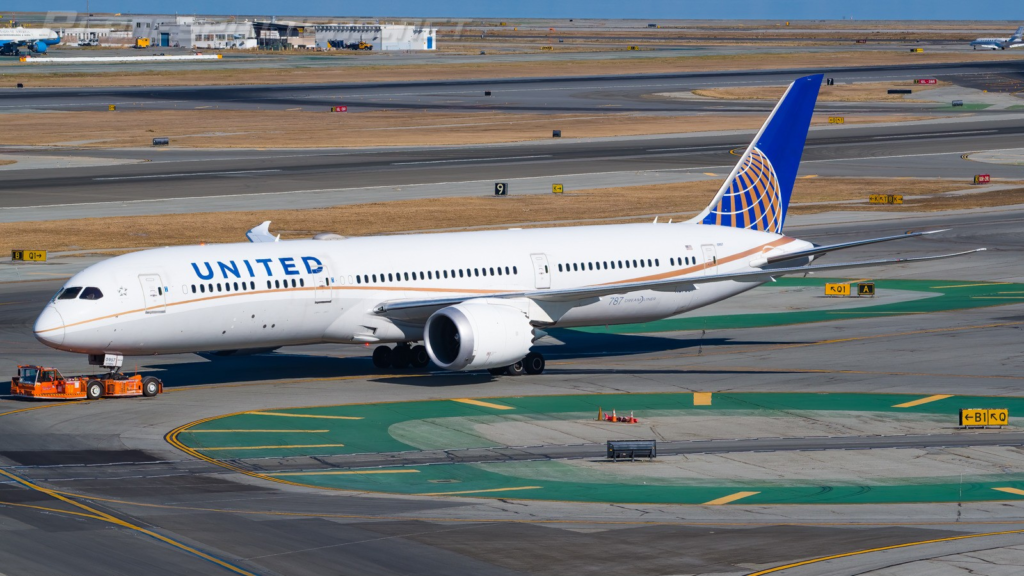
ATC Orders Immediate Heading Correction
At approximately 10 seconds into the recorded exchange, the tower controller cleared United 923 for takeoff on Runway 25R.
United 923, RNAV Docker, runway 25R, cleared for takeoff.
The crew correctly read back the clearance and began the departure. Shortly afterward, the tower controller issued an urgent instruction:
United 923, turn left now, heading 251, turn left now.
The crew acknowledged the instruction and apologized, explaining that there had been an issue with the aircraft’s flight management computer (FMC).
Left 251, United 923, roger, sorry, the FMC got messed up.
The Boeing 787-9 then continued under the corrected heading before being handed over to the departure controller.
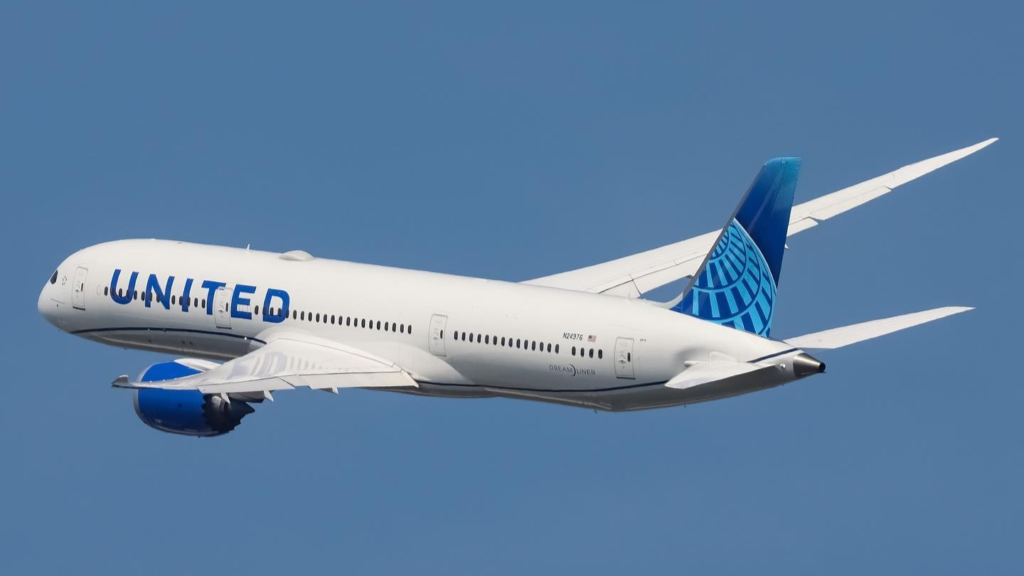
Crew Acknowledges the Deviation
United 923 contacted the Southern California departure controller after passing approximately 2,500 feet and reported its assigned heading.
The controller established radar contact and instructed the aircraft to climb to 5,000 feet. The flight was subsequently cleared direct to Malibu and instructed to climb to 7,000 feet.
The crew acknowledged the revised routing and altitude.
Shortly afterward, the controller increased the aircraft’s cleared altitude to 8,000 feet. The flight crew again read back the instruction.
ATC Issues Possible Pilot Deviation Notice
The departure controller then informed the crew that the flight could be subject to a pilot deviation and said a telephone number was available for them to copy.
United 923 heavy, possible pilot deviation, I have a phone number for you guys to copy when you’re ready.
The crew acknowledged the issue without disputing the deviation.
Yeah, go ahead, we definitely had a deviation, go ahead.
The controller then explained that the aircraft appeared not to have made the required turn at Malibu.
And United 923 heavy, looks like you guys didn’t make the turn there at Malibu, turn right heading 030, and when able, direct Lady J.
The pilots confirmed that they had already passed Malibu and would proceed toward Lady J.
Yeah, we just passed Malibu, heading to Lady J now, sir, United 923.
Flight Continues Toward London
Following the correction, United 923 was transferred to another departure frequency. The controller also provided the crew with an LAX telephone number in connection with the possible pilot deviation.
The available radio exchange does not indicate that the aircraft encountered an emergency or that the flight was unable to continue normally. The deviation appears to have been addressed through ATC heading instructions before the aircraft proceeded along its transatlantic route.
The incident highlights the importance of accurate flight management system programming and close coordination between flight crews and air traffic controllers during the complex departure phase at LAX.
Stay tuned with us. Further, follow us on social media for the latest updates.
Join us on Telegram Group for the Latest Aviation Updates. Subsequently, follow us on Google News
