

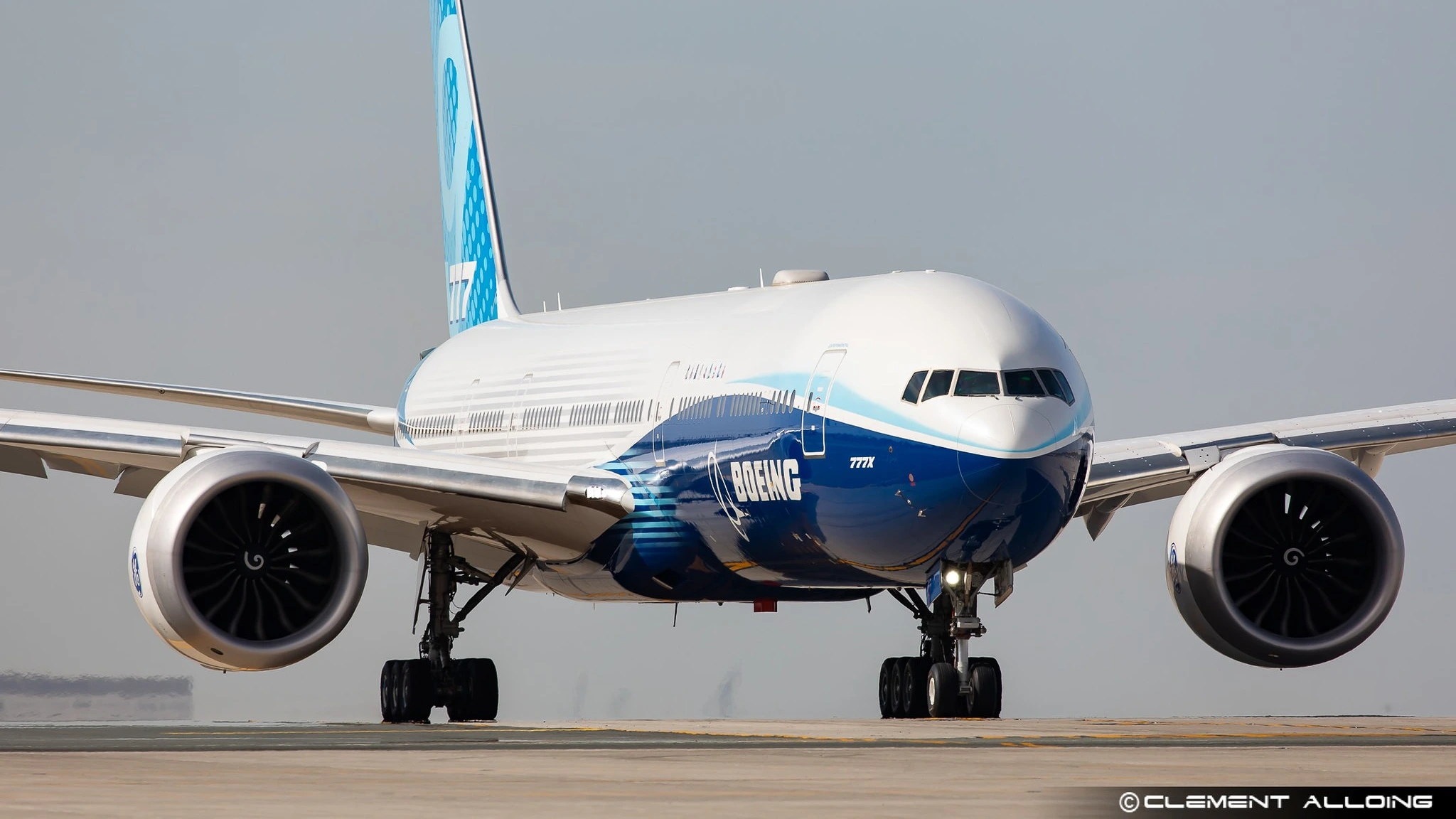
SEATTLE- Boeing has once again postponed the entry into service of its long-delayed 777X widebody aircraft. The aircraft manufacturer announced that the first deliveries are now expected in 2027. The company also confirmed a $4.9 billion charge against the program, further weighing on its already weak quarterly results.
The latest delay marks the sixth major setback for the 777X since its launch because of Boeing’s ongoing challenges related to operations and regulatory issues. The aircraft manufacturer giant cited slow progress in Federal Aviation Administration (FAA) certification and lingering production issues as key reasons for the revised schedule.
Boeing Faces $4.9 Billion Loss
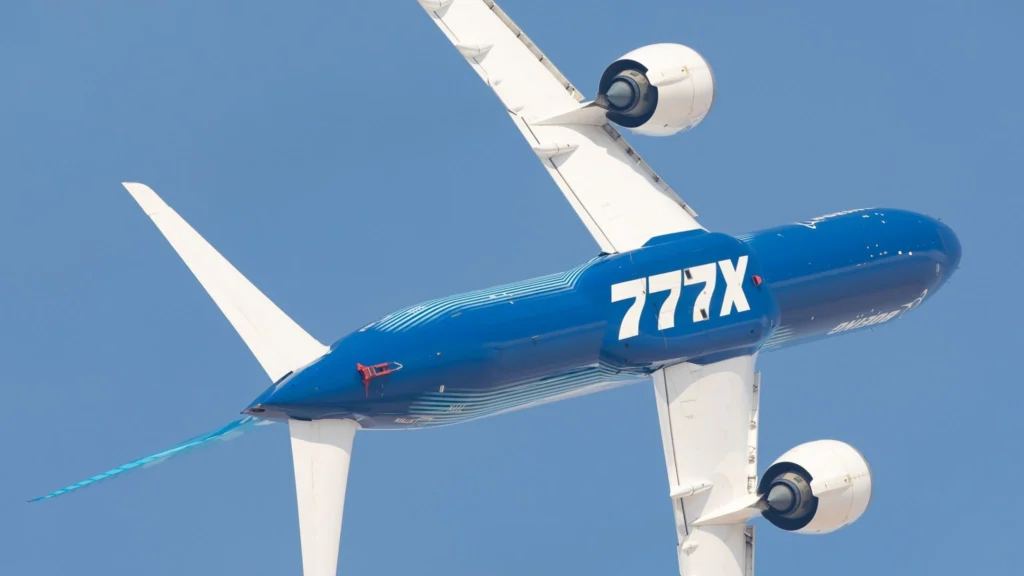
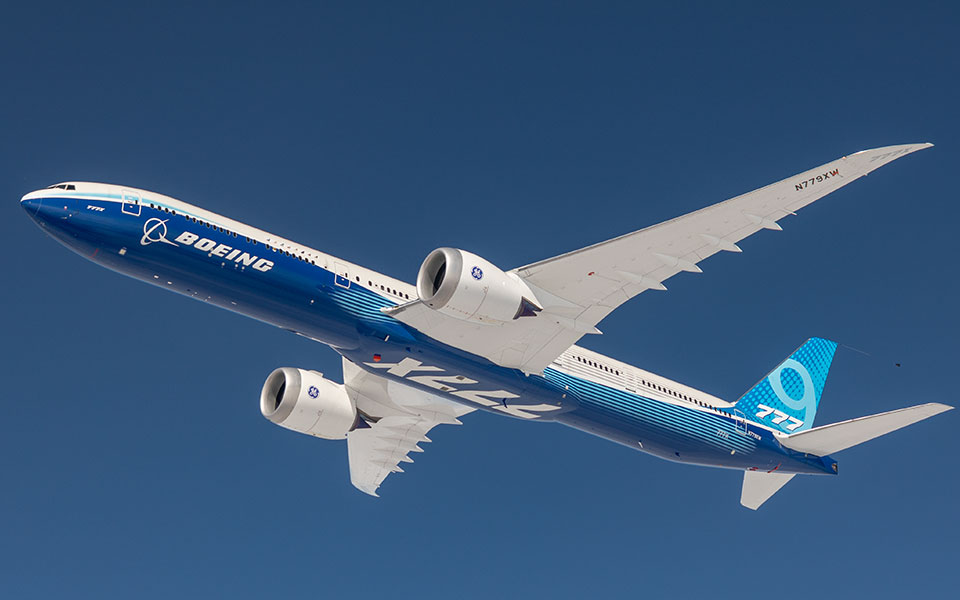
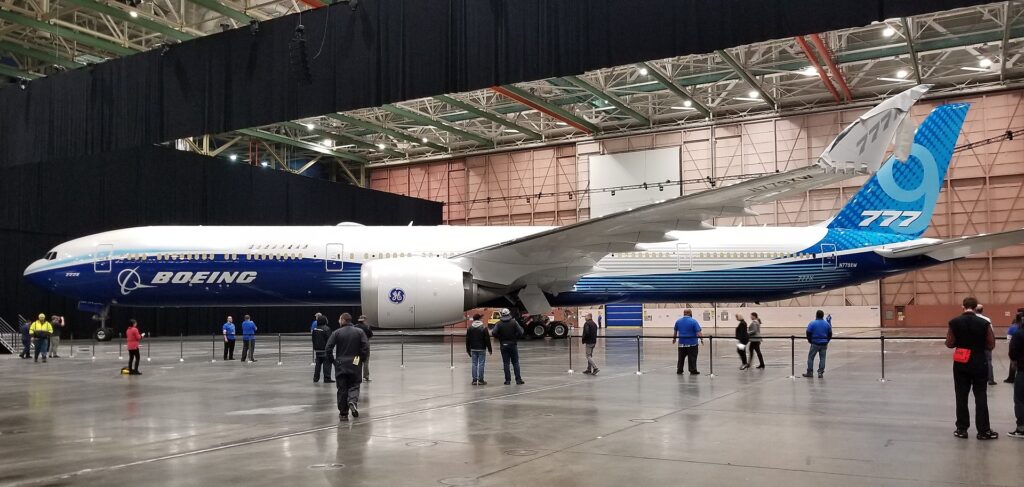
Originally introduced in 2013, the Boeing 777X was imagined as the next-generation aircraft after the successful 777 family. It features composite wings with folding wingtips, the powerful GE9X engines, and a cabin capable of carrying up to 426 passengers.
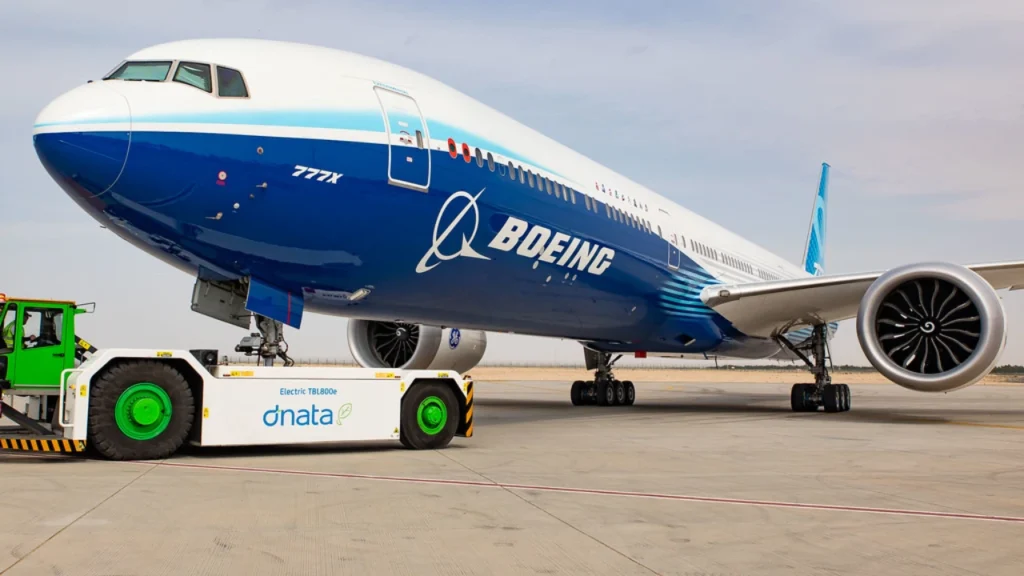
Designed to compete directly with the Airbus A350, it promised greater efficiency and range while maintaining compatibility with existing airport gates.
However, the program’s journey has been turbulent. Initial delays were caused by engine reliability issues and structural failures during testing, leading to extensive redesigns of the wing and fuselage.
Later, shifting certification requirements — tightened in the wake of the 737 MAX crisis, which further slowed development.
By 2025, cumulative delays have pushed total program charges to nearly $15 billion. This makes the 777X one of Boeing’s most expensive commercial aircraft projects ever.
Financial Strain and Industrial Pressures
The newly announced $4.9 billion write-down heavily impacted Boeing’s third-quarter financial results. The company showed a net loss of roughly $6 billion. Analysts note that the charge reflects both customer compensation for delivery delays and adjusted production rates.
Compounding the problem, a machinist’s strike earlier this year temporarily halted key manufacturing lines. While Boeing insists the strike did not directly cause the latest postponement, it added to the company’s ongoing production bottlenecks.
CEO Kelly Ortberg, who assumed leadership earlier in 2025, reiterated Boeing’s focus on operational discipline and transparency with regulators. Still, industry observers warn that the company’s repeated delays have strained relationships with major customers.
This includes airlines like Emirates, Lufthansa, and Qatar Airways, which together account for a large portion of the aircraft’s more than 500 orders.
Competitive Landscape for Boeing
With most drawing parallels between the 777X’s troubles and Boeing’s handling of the 737 MAX, it raises questions whether internal expertise has eroded in recent years.
Meanwhile, rival Airbus appears to be capitalizing on the uncertainty. The European manufacturer’s A350-1000 continues to gain market traction, with some airlines accelerating orders to fill the gap left by Boeing’s delays.
While Boeing retains deep technical capability, regaining customer confidence will depend on delivering the 777X without further disruption. This has been made difficult by ongoing certification scrutiny. The 777X’s eventual success — or failure — will likely shape Boeing’s position in the widebody market for the next decade.
Bottom Line
Boeing plans to increase flight testing and work more closely with the FAA in 2026 to clear outstanding certification hurdles. The first delivery, now targeted for early 2027, is expected to go to Emirates, the aircraft’s largest customer.
For Boeing, the 777X remains central to its recovery strategy. The company is bridging the gap between the 787 Dreamliner and the soon-to-be-retired 747 series. But with mounting costs, regulatory oversight, and strong competition from Airbus, the program’s future remains under tight scrutiny.
Stay tuned with us. Further, follow us on social media for the latest updates.
Join us on Telegram Group for the Latest Aviation Updates. Subsequently, follow us on Google News
