

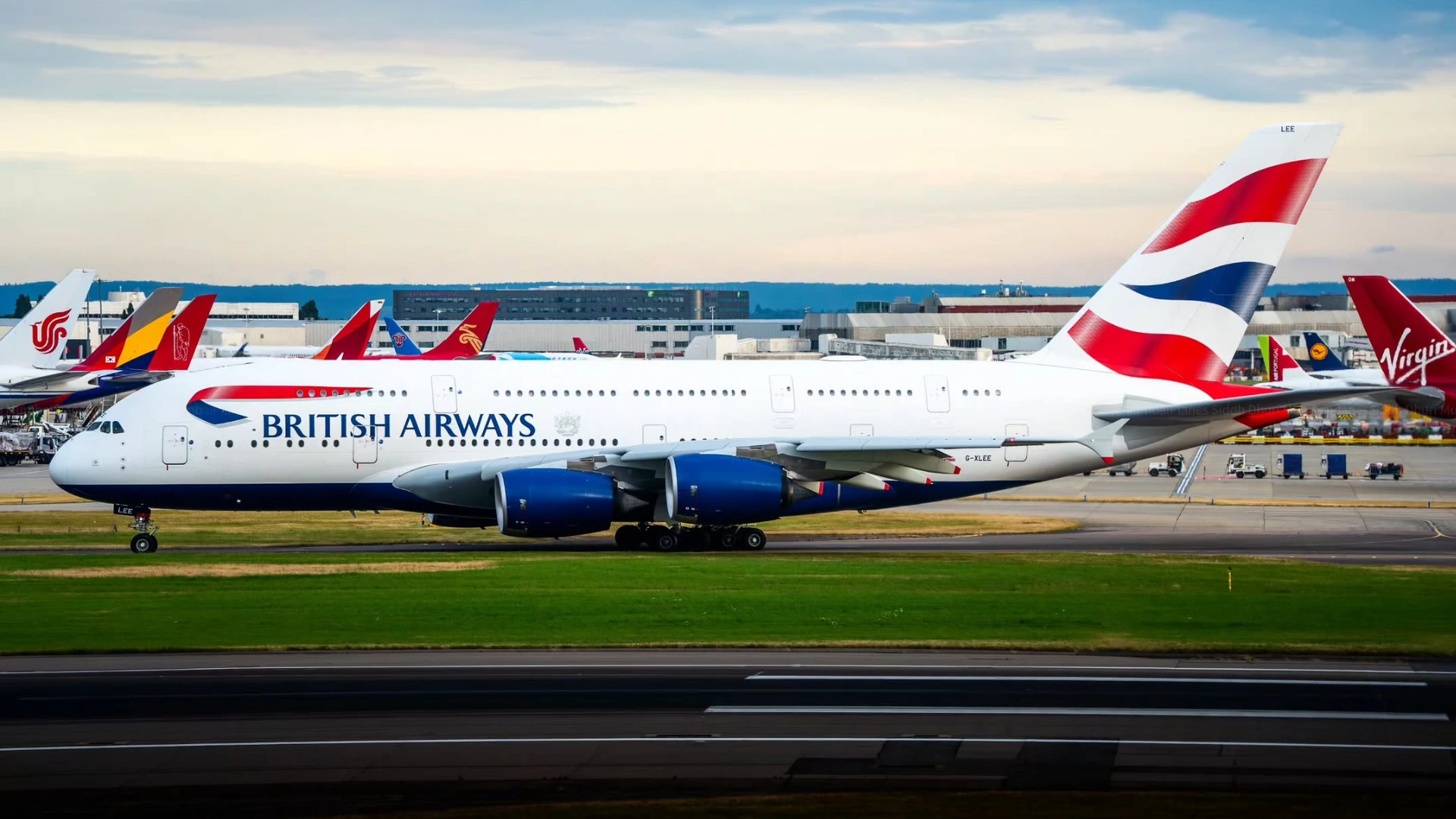
LONDON- British Airways (BA) will adjust several U.S. routes in 2025 and 2026 as part of its fleet renewal and route optimization plan. The airline will suspend Airbus A380 operations to Washington Dulles (IAD), resume A380 flights to Dallas/Fort Worth (DFW), and deploy the Airbus A350-1000 on the London Heathrow (LHR)–Nashville (BNA) route.
The changes also include a fleet swap on the London (LHR)–Cincinnati (CVG) route, where Boeing 777-200ER aircraft will replace the 787-8 starting March 29, 2026. Together, these adjustments reflect BA’s evolving long-haul strategy across its U.S. network.
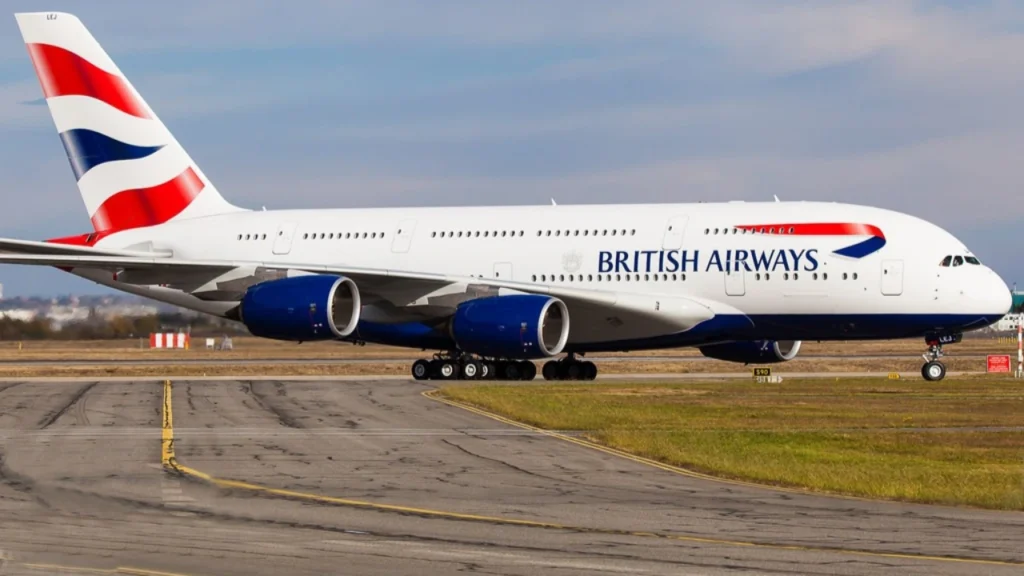
British Airways Suspends A380 Flights to IAD
British Airways will suspend Airbus A380 flights between London Heathrow (LHR) and Washington Dulles (IAD) on November 7, 2025. The service currently operates daily, and after suspension, the route is expected to continue with smaller widebody aircraft to align capacity with demand.
Meanwhile, A380 service will return to the London (LHR)–Dallas/Fort Worth (DFW) route from May 21, 2026. This marks the reintroduction of the superjumbo to Texas, a route that benefits from strong business and leisure traffic volumes.
In another network update, British Airways will resume Boeing 777-200ER operations on the London (LHR)–Cincinnati (CVG) route from March 29, 2026, replacing the smaller Boeing 787-8. This aircraft change increases overall capacity, particularly in business class, to meet rising transatlantic demand.
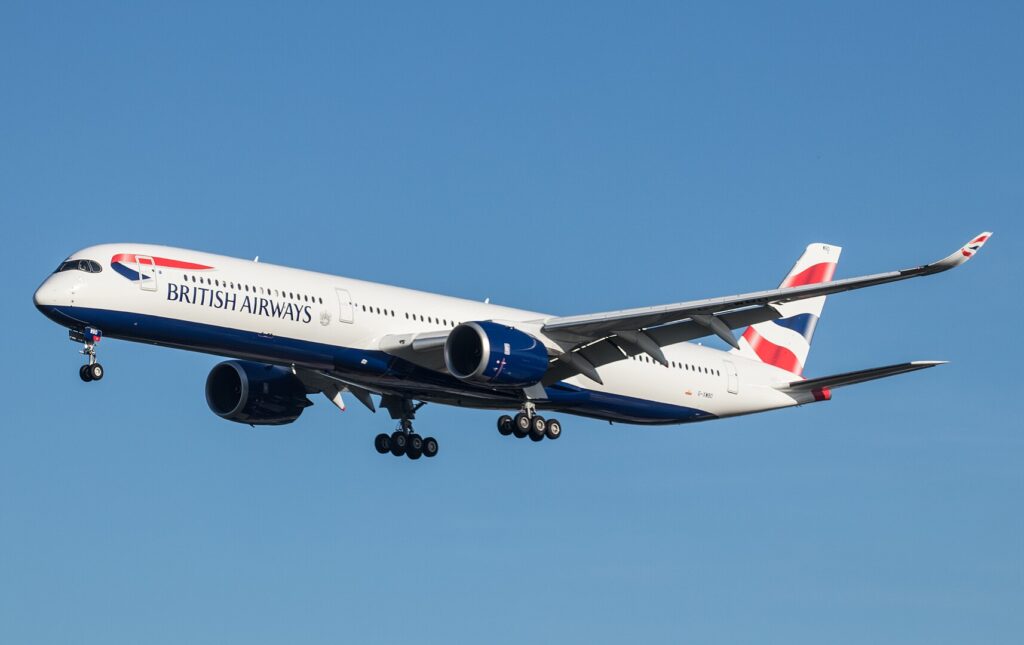
A350 to Replace 777 on Nashville Route
Starting March 29, 2026, British Airways will deploy the Airbus A350-1000 on its daily London Heathrow (LHR)–Nashville (BNA) service, replacing the Boeing 777-200ER for the entire summer schedule. The move forms part of BA’s fleet modernization as it expands A350-1000 operations across North America.
The A350-1000 will offer a total of 331 seats across three cabins: 56 Club Suites, 56 World Traveler Plus, and 219 World Traveler seats—59 more than the 777-200ER it replaces.
Both aircraft use the same business and premium economy seats, ensuring a consistent passenger experience, while economy passengers gain slightly wider seats due to the A350’s 3-3-3 layout compared with the 777’s 3-4-3 configuration.
British Airways operates the route year-round, with the 787-8 serving in winter. Flight numbers will remain BA223 (LHR–BNA) and BA222 (BNA–LHR), with scheduled block times of 9 hours 10 minutes outbound and 8 hours 10 minutes inbound.
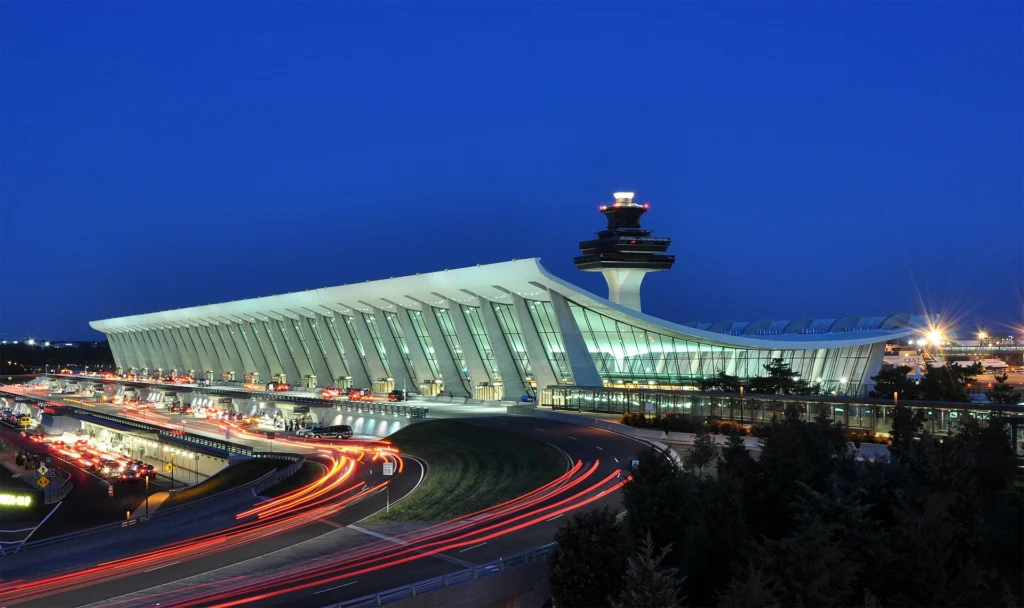
Washington Dulles: World’s First Airport Built for Jetliners
Washington Dulles International Airport (IAD) in Dulles, Virginia, lies about 26 miles (42 km) west of Washington, D.C. (DCA). Managed by the Metropolitan Washington Airports Authority, it serves as one of the main gateways to the Washington–Baltimore metropolitan region.
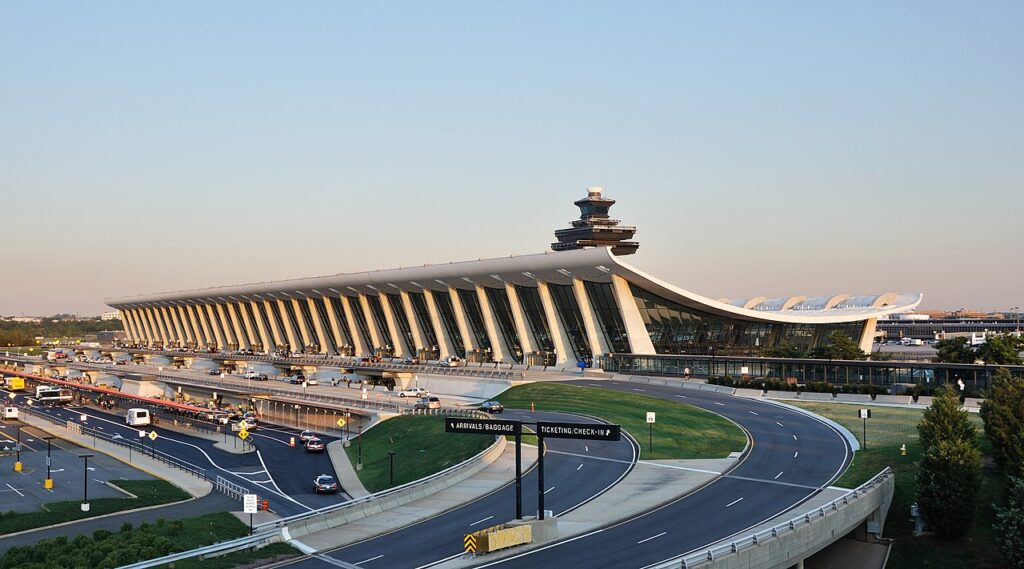
Home to more than 23 million annual passengers, Dulles (IAD) connects travelers to over 125 destinations worldwide. Its distinctive main terminal, designed by Eero Saarinen, and its role as the busiest airport in Virginia make it a central hub for both domestic and international travel.
The Airport That Shaped Washington’s Air Network
Named after John Foster Dulles, the former U.S. Secretary of State under President Dwight D. Eisenhower, Dulles International was established to meet the growing aviation demand following World War II. The Washington Airport Act of 1950 authorized its construction, and in 1958, Eisenhower selected the current site straddling Fairfax and Loudoun counties.
Spanning nearly 11,830 acres, Dulles was conceived as a modern aviation facility to handle the rise in jet travel. It officially opened in 1962, with Eastern Air Lines operating the first scheduled flight from Newark (EWR). The airport’s early years were slow, largely due to its distance from downtown Washington, but suburban growth and air travel expansion soon made it indispensable.
Today, IAD remains one of three major airports serving the region, alongside Ronald Reagan Washington National Airport (DCA) and Baltimore/Washington International Thurgood Marshall Airport (BWI). In 2024, Dulles handled a record 27.25 million passengers, reaffirming its position as the busiest airport in the Washington–Baltimore area and the 24th-busiest in the United States.
Development and Expansion
Dulles was initially seen as an ambitious project—a futuristic airport located in open countryside. Designed by architect Eero Saarinen, the terminal’s sleek, wing-like roof became an icon of modern architecture. The concept reflected a shift toward airports designed for jet-age travel, emphasizing efficiency and passenger experience.
The airport’s early struggles centered on low passenger numbers, averaging just under 90 daily airline operations in 1965 compared to 600 at Washington National. However, perimeter and slot restrictions at National forced long-haul routes to operate from Dulles, helping traffic grow through the late 1960s and beyond. By 1969, passenger volume had reached just over 2 million.
Over time, major domestic and international carriers established operations at IAD, contributing to its expansion. Infrastructure improvements—including additional runways, expanded terminals, and the introduction of the AeroTrain system—enhanced capacity and passenger flow.
Historical Roots and Site Selection
Before Dulles, Washington’s main airfield was Hoover Field, later replaced by Washington National Airport in 1941. Postwar growth in air travel prompted the Civil Aeronautics Administration to explore sites for a second airport by 1948. The Washington Airport Act of 1950 funded the project, with several potential sites proposed in Fairfax County and Maryland.
Eisenhower’s 1958 selection of the Dulles site resulted in the displacement of the Willard community, which once occupied the land. The area also overlapped the site of Blue Ridge Airport, Loudoun County’s first official airfield, established in 1938. Today, that area is home to the Dulles Air Freight complex and the Washington Dulles Airport Marriott.
Modern Role in Regional and Global Aviation
Dulles has evolved into a major international hub, handling about 90 percent of the Washington–Baltimore area’s international traffic. It connects passengers to more than 139 destinations globally and supports around 60,000 daily travelers.
While Reagan National (DCA) dominates short-haul routes, Dulles remains vital for long-haul and transatlantic operations.
Though competition from BWI has influenced domestic passenger volumes, Dulles continues to grow through increased global connectivity and steady infrastructure investments. The airport’s long-term plans include expanding cargo facilities and improving passenger amenities to sustain its regional leadership.
Stay tuned with us. Further, follow us on social media for the latest updates.
Join us on Telegram Group for the Latest Aviation Updates. Subsequently, follow us on Google News
