

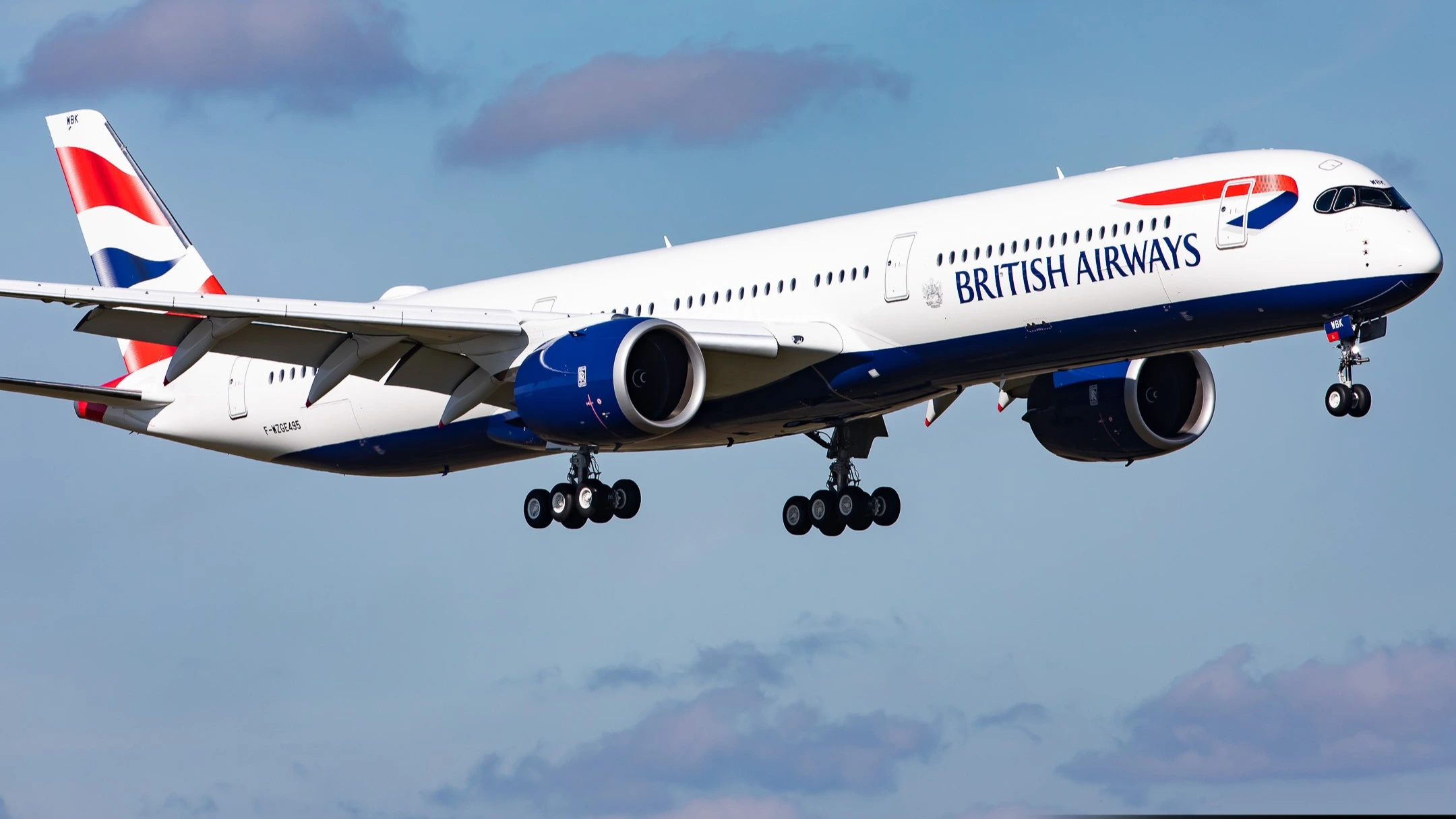
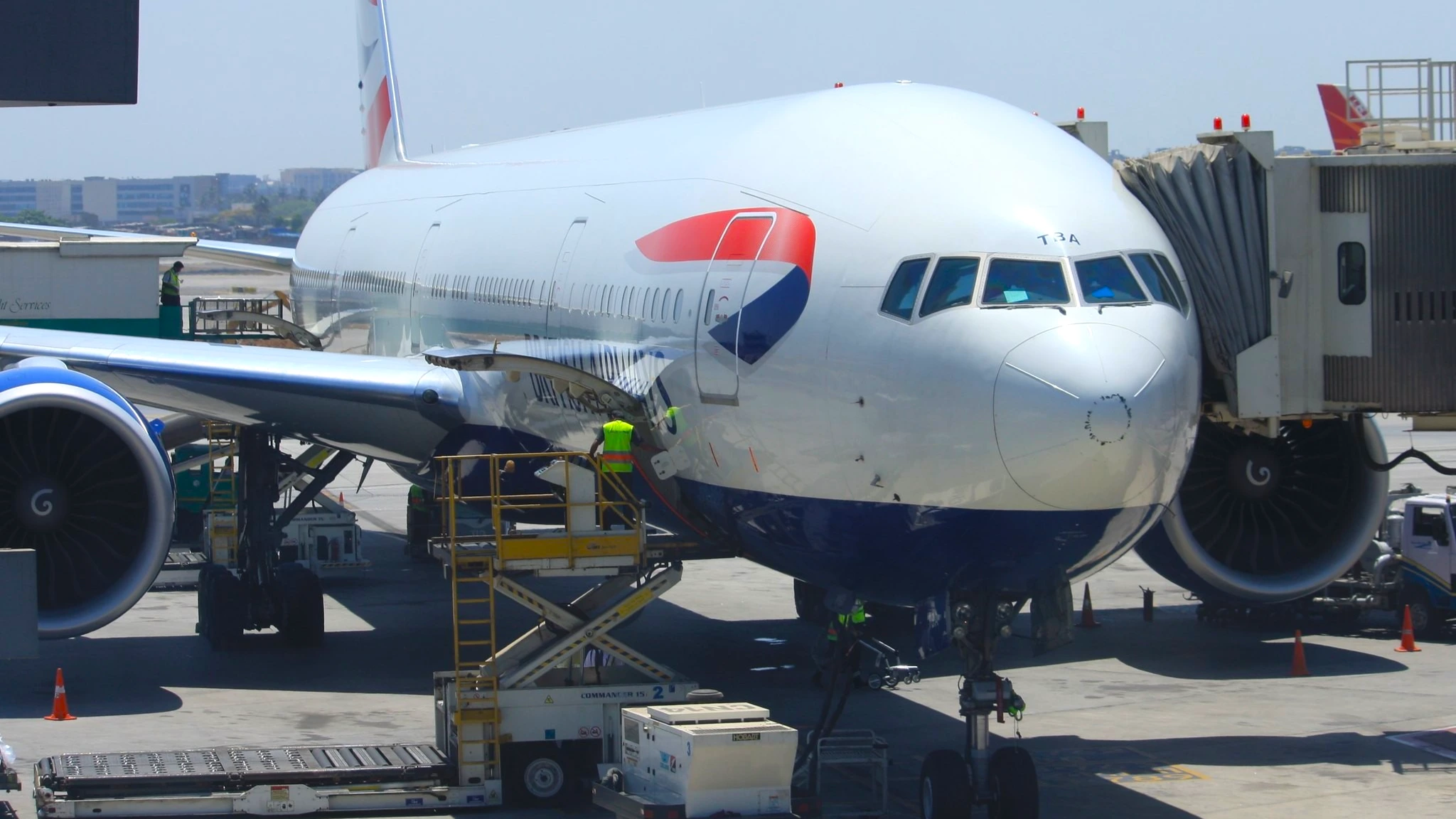
LONDON- British Airways (BA) plans to deploy its Airbus A350-1000 on the London Heathrow (LHR) to Nashville International Airport (BNA) route beginning 29 March 2026, replacing the current Boeing 777-200ER operations for the entire summer schedule.
The decision forms part of BA’s broader fleet modernization, as the carrier increases its A350-1000 fleet and phases in newer widebody types. The move reflects rising demand and an upgauging strategy to improve efficiency and capacity on long-haul U.S. routes.
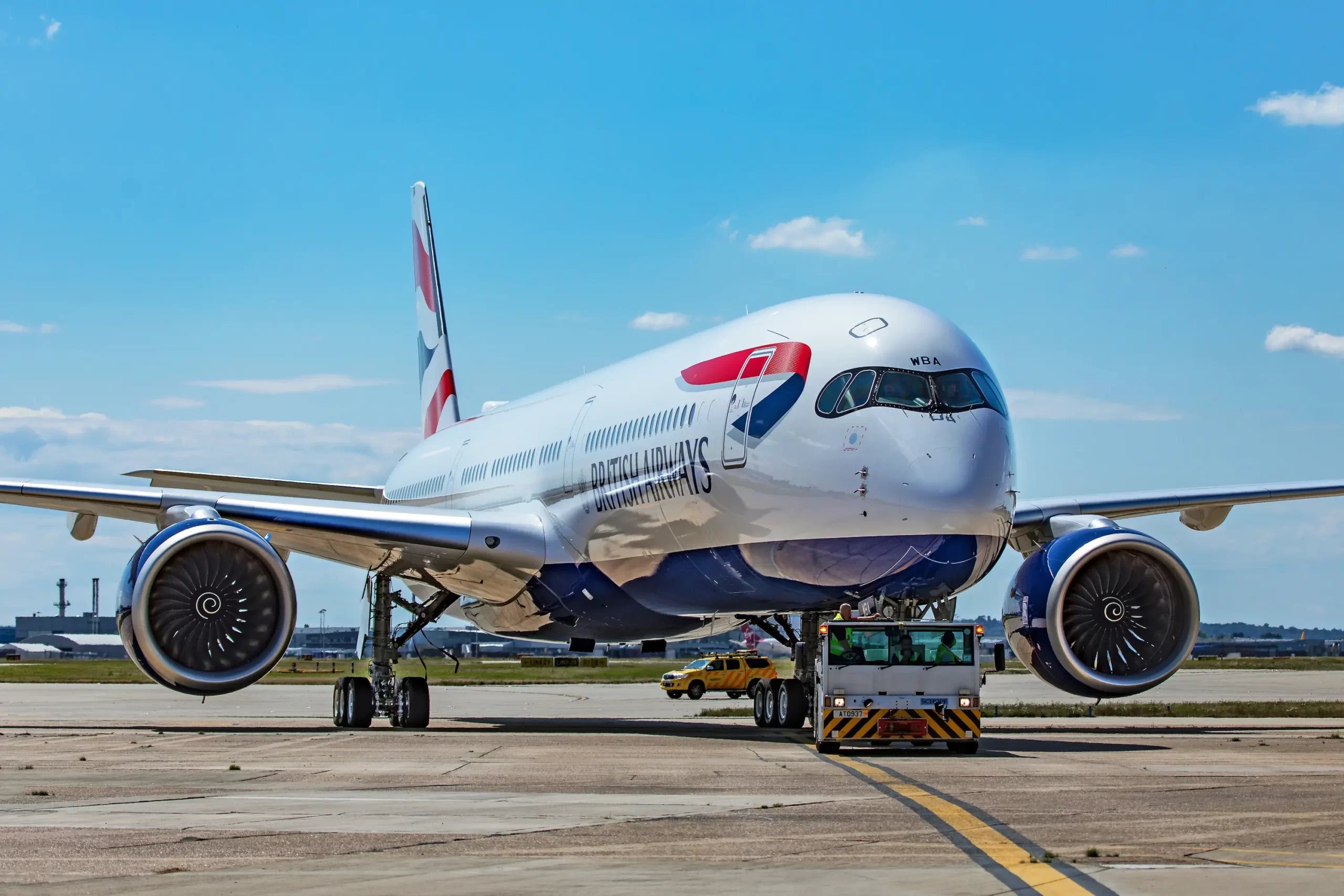
British Airways A350 to Nashville
The A350-1000 offers increased seating compared to the 777-200ER in BA’s three-class configuration. BA’s 777-200ER for this route has 48 Club Suites (business), 40 World Traveler Plus (premium economy), and 184 World Traveler (economy), totaling 272 seats.
According to Simple Flying, BA’s A350-1000 configuration features 56 Club Suites, 56 World Traveler Plus, and 219 World Traveler, for a total of 331 seats — an increase of 59 seats.
Because both aircraft use the same seat models in business and premium economy, the passenger experience in those cabins should remain largely similar.
Economy passengers benefit from a slightly wider seat profile, since the A350-1000 layout has one fewer seat per row than the 777 in economy.
Schedule & Flight-Time Implications
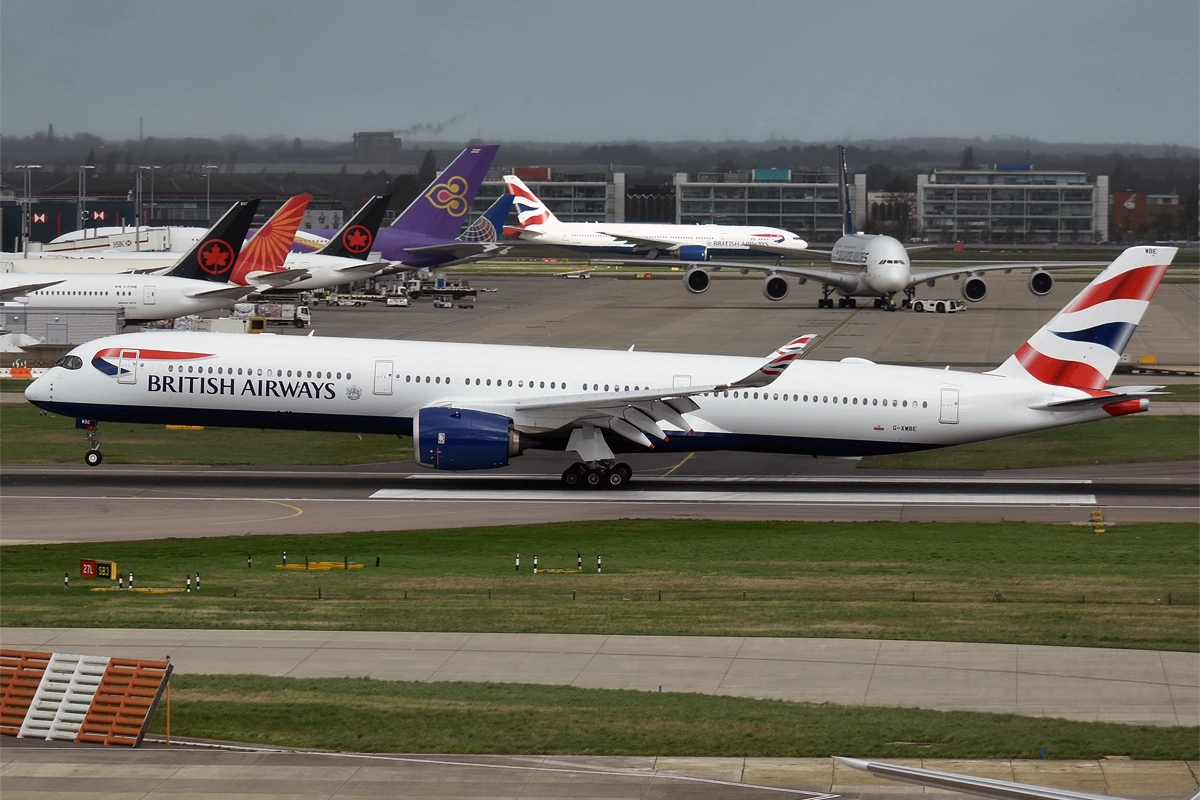
British Airways currently operates daily service between LHR and BNA year-round. In winter, the route is flown by the Boeing 787-8; the 777-200ER serves during the summer.
Beginning 29 March 2026, the 777-200ER will be replaced by the A350-1000 for summer operations. There is no public confirmation yet whether the 787-8 will return in winter under similar or different routing.
Flight numbers will remain BA223 (LHR→BNA) outbound and BA222 (BNA→LHR) inbound. Scheduled block times are 9 hours and 10 minutes for BA223 and 8 hours and 10 minutes for BA222, according to Ishrion Aviation.
The A350-1000’s higher cruise capabilities may reduce actual en-route time under favorable conditions.
Strategic & Operational Rationale
Upsizing to the A350-1000 indicates BA’s confidence in strong demand and improved yield on the London–Nashville route.
Larger capacity supports revenue growth, especially in premium classes. The newer aircraft also bring operational benefits: fuel efficiency, quieter cabin, lower maintenance cost per seat, and increased cargo payload.
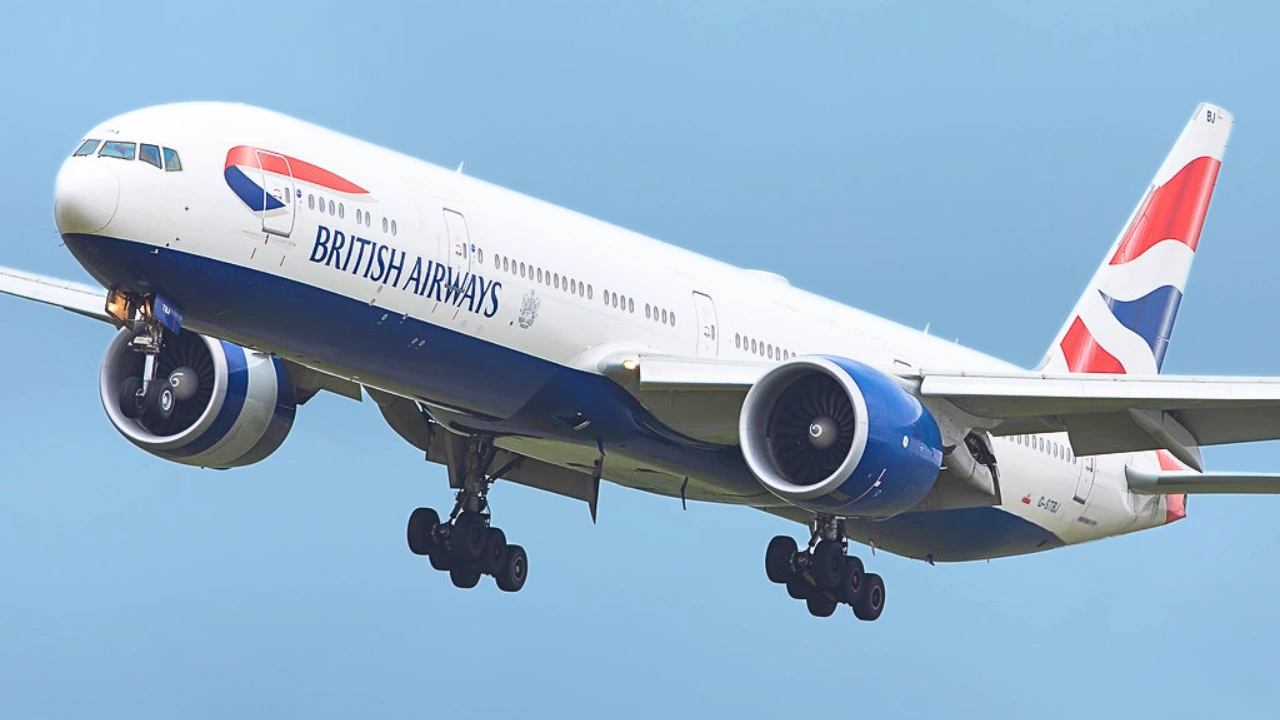
Furthermore, this adjustment aligns with BA’s fleet renewal program, which includes orders for A350-1000s, Boeing 787-10s, and eventual 777-9s.
Over time, BA is replacing aging 777-200ERs with modern widebodies, a move consistent with industry trends toward efficiency and sustainability.
Bottom Line
BA’s switch in March 2026 to the A350-1000 on its LHR–BNA route demonstrates a clear upgauging strategy.
Passengers can expect more seats, marginally better comfort in economy, and possibly reduced flight durations.
For BA, this move promises higher operational efficiency, stronger revenue potential, and alignment with its fleet modernization goals.
Stay tuned with us. Further, follow us on social media for the latest updates.
Join us on Telegram Group for the Latest Aviation Updates. Subsequently, follow us on Google News
