

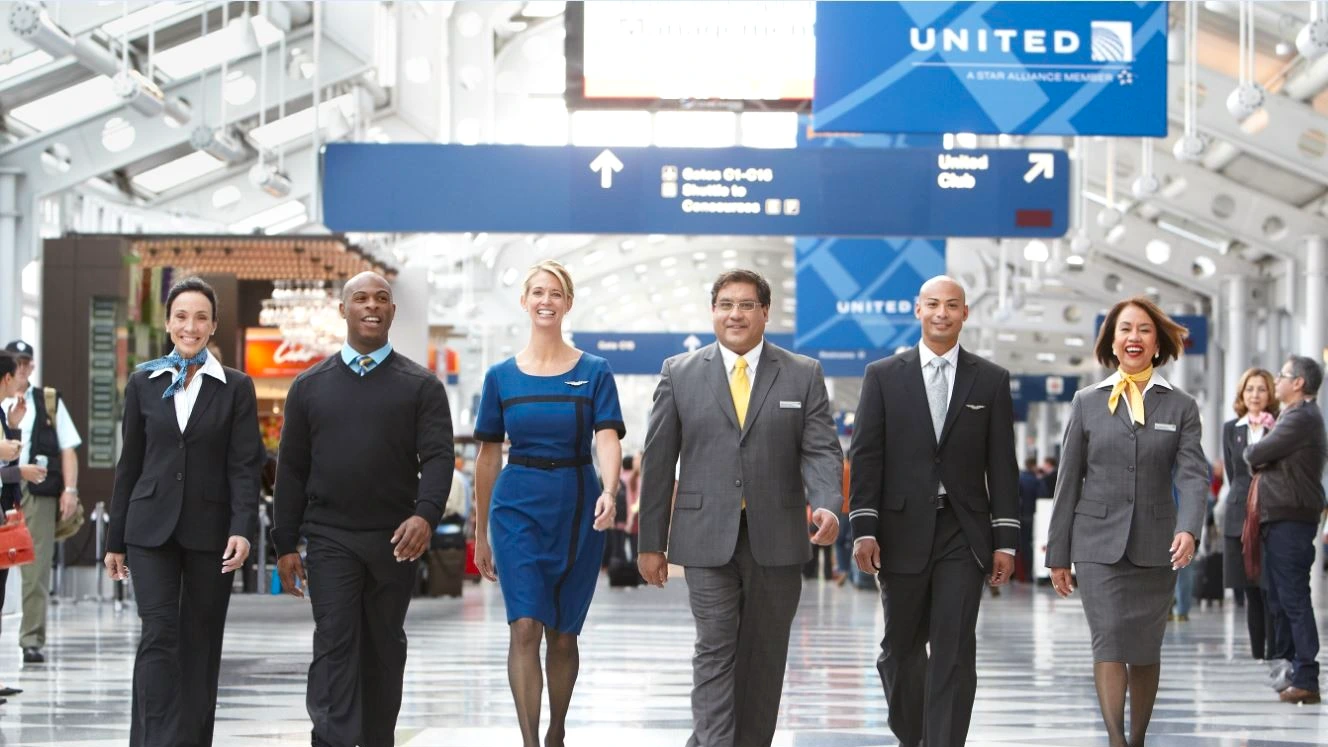
CHICAGO— United Airlines (UA) has begun a major transformation at its headquarters, replacing traditional roles with artificial intelligence to streamline management operations.
The airline’s Chief Financial Officer (CFO), Mike Leskinen, confirmed during the carrier’s third-quarter earnings call that management headcount is down by 4% compared to last year, with an additional 4% reduction planned for 2026 as AI-driven processes expand.
United CFO: AI Taking Over Jobs
United Airlines (UA) is implementing AI tools across multiple divisions, aiming to reduce manual processes and enhance efficiency. The initiative began at its Chicago headquarters (ORD) and extends into operational, financial, and customer service departments.
Leskinen explained that the company’s process changes are designed to make headquarters functions leaner and more data-driven. While other airlines have been slower to adopt automation at this scale, United’s approach reflects an early move to position itself ahead of the technology curve within the aviation industry.
The airline’s decision contrasts with past industry examples, where early AI applications often underperformed.
For instance, Marriott and Hertz faced criticism for customer service missteps tied to automation. United appears intent on avoiding those pitfalls by focusing on internal efficiency and process optimization rather than customer-facing shortcuts, View from the Wing reported.
Areas Most Affected by AI Integration
United’s ongoing adoption of AI is reshaping several core areas of its business:
1. Contact Centers and Customer Support:
AI now manages a growing share of customer interactions through chat, email, and social channels. Automated systems handle rebookings, baggage tracking, and voucher issuance during disruptions, reserving human agents for complex cases.
2. Finance and Back-Office Operations:
Routine accounting tasks, including accounts payable, receivable, and revenue accounting, are increasingly automated. Document extraction and first-level reviews are handled by machines, enabling faster processing and fewer manual errors.
3. Marketing and Loyalty Programs:
AI assists in generating marketing copy, segmenting audiences, and managing campaign analytics. Human teams remain focused on partnership development and strategic oversight.
4. Revenue Management:
Like Delta Air Lines (DL), United is moving toward continuous, AI-driven price updates. Machines forecast demand and set prices dynamically, allowing human analysts to focus on strategy and oversight.
5. Network Planning and Scheduling:
AI tools now optimize aircraft utilization and manage constraints like maintenance, airport curfews, and connectivity. This helps balance operational efficiency with service reliability.
6. Crew Management and Disruption Recovery:
Machine learning systems are being used to improve crew scheduling and rapid response during disruptions. Events such as the 2022 Southwest Airlines (WN) and CrowdStrike-related meltdowns demonstrated the need for more robust computational solutions.
7. Maintenance and Technical Operations:
Predictive maintenance and AI-based data tracking are streamlining planning and diagnostics. While maintenance technicians remain essential, AI reduces reliance on manual data analysis.
Where Automation Slows Down
Certain areas remain insulated from AI for regulatory and safety reasons. Pilot and flight attendant roles, mandated under current U.S. law and union agreements, will not be automated in the near term.
Similarly, air traffic control—managed by federal authorities—will continue to rely heavily on human oversight despite technological advancements.
The Bigger Picture
United’s 4% reduction in management headcount may seem modest, but it signals a structural shift toward automation that could redefine airline operations over the next decade.
Industry analysts predict that 30–50% of customer interactions and 20–40% of back-office functions could eventually be handled by AI.
United’s gradual rollout of these technologies underscores both the potential efficiency gains and the social implications of automation in aviation.
United Airlines Q3 2025 Results
United Airlines (NASDAQ:UAL) posted stronger-than-expected third-quarter (Q3) earnings, reporting pre-tax income of $1.3 billion with a margin of 8.2%. Total operating revenue reached $15.2 billion, up 2.6% year-over-year.
Driven by strong loyalty, premium demand, and operational reliability, United Airlines (UAL) surpassed Wall Street forecasts while flying more passengers than ever before through its major hubs, including Chicago O’Hare (ORD), Newark (EWR), and Denver (DEN).
United’s diversified revenue helped sustain momentum despite economic uncertainty. Premium cabin sales grew 6% year-over-year, Basic Economy rose 4%, cargo climbed 3%, and loyalty program revenue jumped 9%. The airline expects fourth-quarter 2025 to deliver its highest-ever quarterly operating revenue.
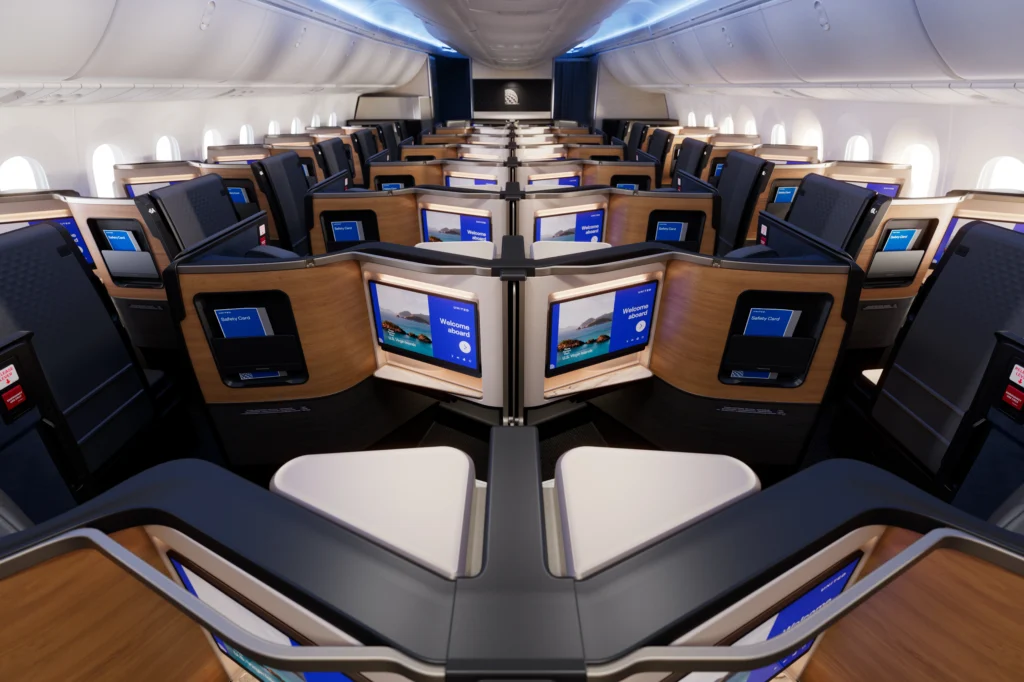
CEO Scott Kirby credited nearly a decade of consistent investment in product and service upgrades for the airline’s strong brand loyalty. Enhancements like seatback screens, United Polaris lie-flat seats, upgraded catering, and the planned rollout of Starlink Wi-Fi across the fleet by 2027 are central to United’s strategy.
The airline has already updated over half of its narrowbody fleet with new interiors and screens, increasing customer satisfaction by 15 points since 2022. Another $1 billion is earmarked for customer experience improvements in 2026.
Financial and Operational Performance
For Q3 2025, United reported:
- Capacity up 7.2% compared to Q3 2024
- Total operating revenue: $15.2 billion (+2.6%)
- Pre-tax earnings: $1.3 billion (8.2% margin)
- Adjusted pre-tax earnings: $1.2 billion (8.0% margin)
- Net income: $0.9 billion
- Diluted EPS: $2.90 (adjusted: $2.78)
- Ending liquidity: $16.3 billion
- Total debt: $25.4 billion
The airline prepaid the remaining $1.5 billion balance of its MileagePlus bonds, fully retiring debt secured by its loyalty business. Net leverage stood at 2.1x, with $612 million in share repurchases year-to-date.
United also achieved its highest-ever third-quarter completion factor, operating 2,940 daily mainline flights and carrying 48 million passengers — more than any previous quarter in its history. Six of its seven hubs ranked first or second for on-time departures.
Expanding Network and Fleet
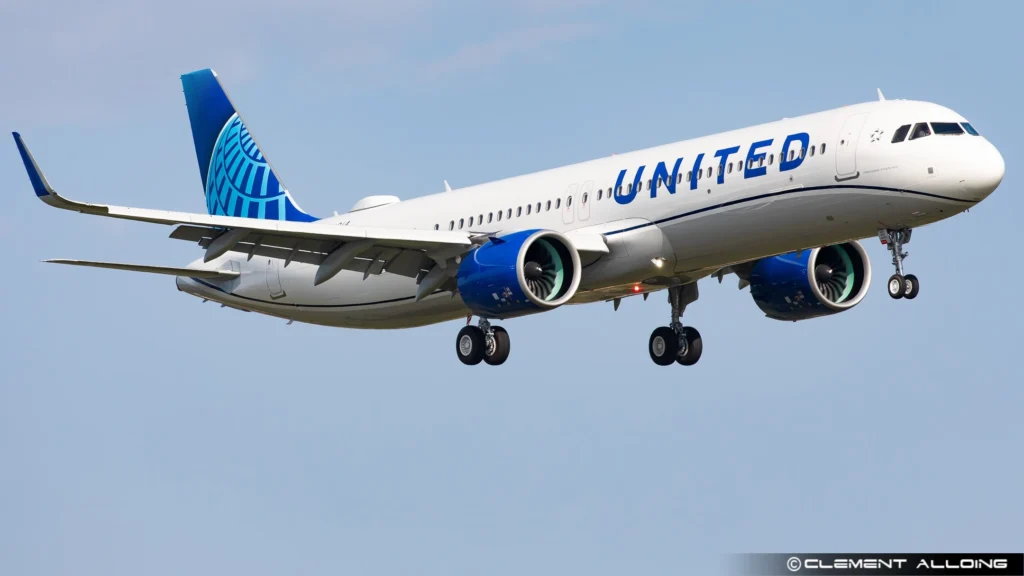
United continues to expand globally. For summer 2026, the airline announced new routes to Split (SPU), Glasgow (GLA), Santiago de Compostela (SCQ), and Bari (BRI), alongside the return of six transatlantic destinations from its 2025 schedule. United remains the largest carrier across the Atlantic, with service to 46 cities planned for 2026.
Domestically, it added 15 new U.S. routes, including Newark (EWR) to Columbia (CAE) and Chattanooga (CHA), and expanded service to warm-weather destinations such as Orlando (MCO), Fort Lauderdale (FLL), and Las Vegas (LAS).
United also launched a codeshare with ITA Airways (AZ), broadening access to Italian destinations, and received FAA certification for its first Starlink-equipped aircraft. The airline now offers free Starlink access for MileagePlus members.
Customer Experience and Community Investment
United invested $85 million in food and beverage improvements this year, with an additional $45 million planned for next year. It opened a new 33,000-square-foot United Club at Denver (DEN) and announced the upcoming United Globe Club at Washington D.C.’s Capital One Arena.
Operationally, the airline introduced TSA PreCheck Touchless ID at Denver (DEN) and Newark (EWR), improving the digital travel experience. Nearly half of the passengers used digital check-in, reducing lobby congestion.
In community outreach, United’s “September of Service” initiative saw over 3,500 employees volunteer 11,000 hours to package 497,000 meals. The airline also transported 221,000 pounds of humanitarian cargo through partnerships with nonprofits and committed $250,000 to schools affected by California wildfires.
Recognition and Future Outlook
United’s leadership was recognized by Newsweek and Forbes among the top U.S. workplaces, and CEO Scott Kirby received APEX International’s Lifetime Achievement Award. CFO Mike Leskinen was honored by Crain’s Chicago Business as a Notable Leader in Finance.
Looking ahead, United expects continued revenue strength in Q4 2025, bolstered by global demand recovery and brand-loyal customers. The airline’s strategic investments in technology, operations, and customer service aim to sustain profitability and growth into 2026.
Stay tuned with us. Further, follow us on social media for the latest updates.
Join us on Telegram Group for the Latest Aviation Updates. Subsequently, follow us on Google News
