

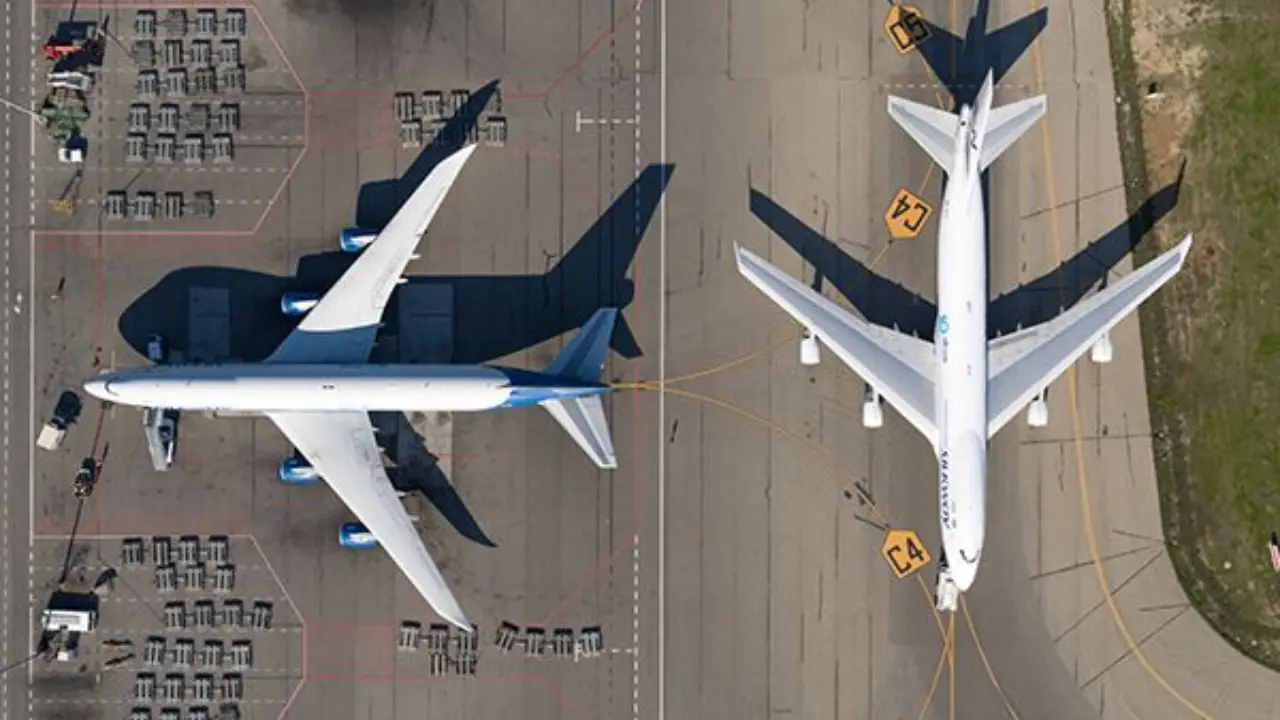
SEATTLE- Boeing ended production of its iconic 747 in early 2023, closing a historic chapter in global aviation. Once the queen of the skies, the four-engine widebody has become a rarer sight, but not an extinct one.
As of late 2025, over 300 Boeing 747s remain in active service worldwide. While most now fly cargo missions, a handful still carry passengers for airlines like Lufthansa (LH), Korean Air (KE), and Air China (CA).
Boeing 747 Active Fleet
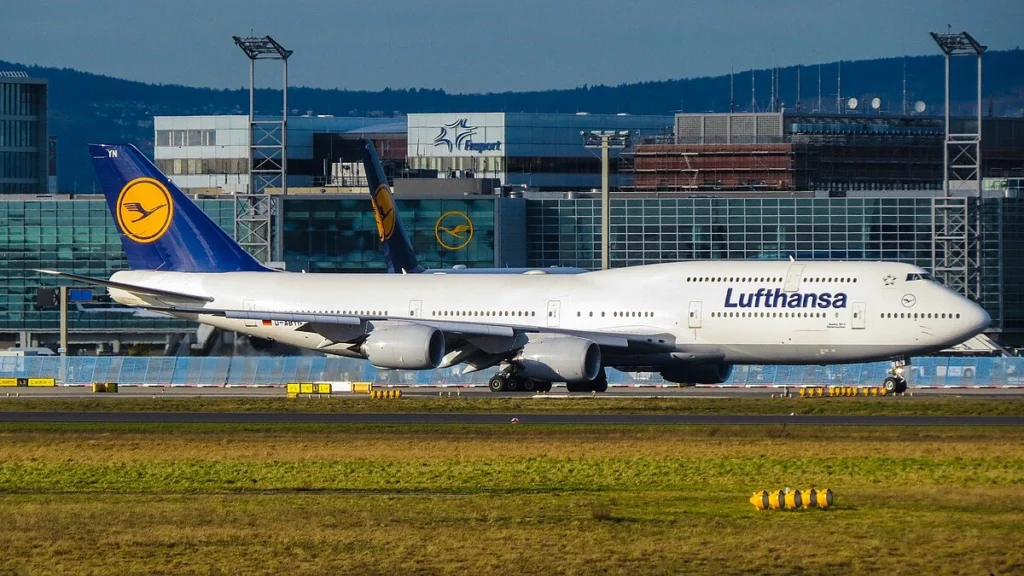
When Boeing stopped building the 747 in 2023, it marked the end of more than five decades of production. Yet, the aircraft’s global footprint endures.
According to data from Planespotters.net, around 334 Boeing 747 airframes remain listed as active, with roughly 46 more parked that could return to service. Combining both gives nearly 400 functional aircraft—a surprising number for a jet whose passenger prime ended years ago.
Among those parked are 747-8Fs belonging to Silkway West (ZP), Atlas Air (5Y), and UPS (5X). Others have unique futures: four ex–Korean Air KE) 747-8s are being modified by Sierra Nevada Corporation to serve as U.S. Air Force command posts.
Two additional 747-8s originally ordered by Transaero will soon become the next VC-25B presidential aircraft, better known as Air Force One.
Passenger Operators Still Flying the 747
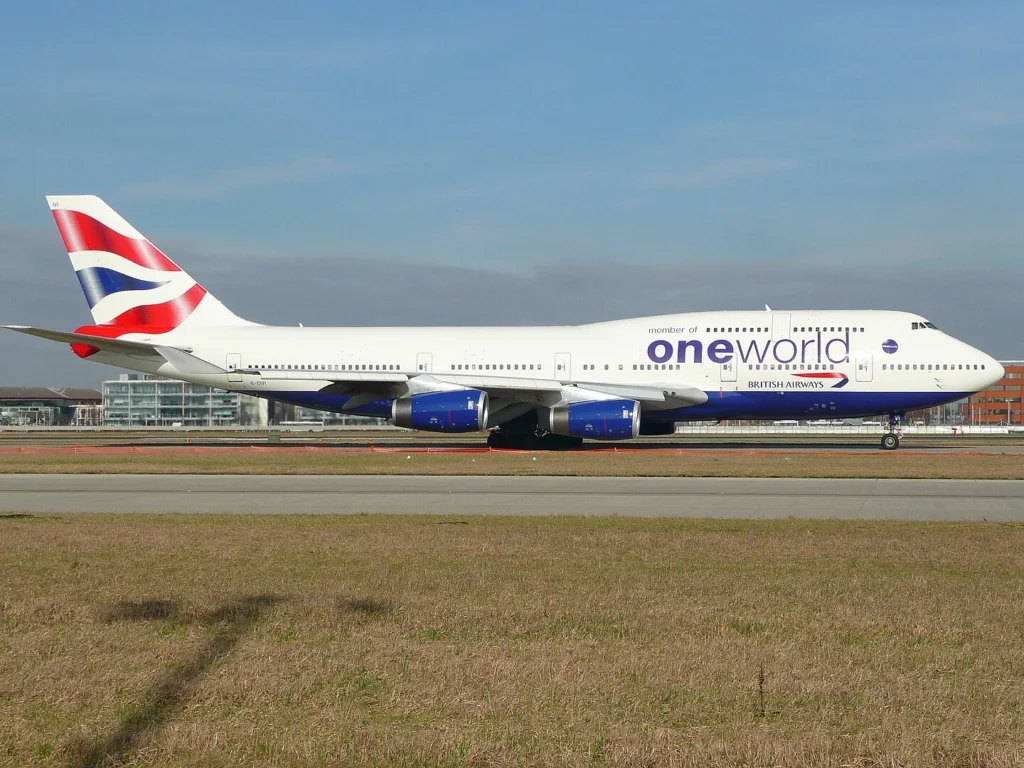
The number of airlines flying the 747 for passengers has dropped sharply over the last decade. British Airways (BA), KLM (KL), Qantas (QF), and Air France (AF) have all retired theirs. In the U.S., Delta (DL) and United (UA) bid farewell to their jumbos back in 2017.
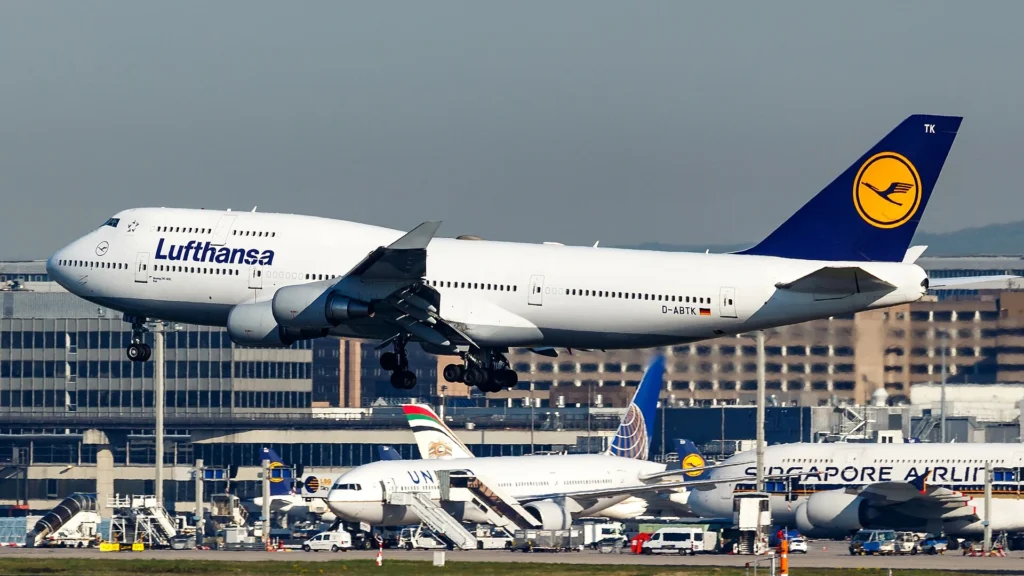
Today, Lufthansa (LH) leads the remaining pack with 27 active aircraft—19 of the 747-8 variant and eight 747-400s. The airline continues to rely on them due to delivery delays of new long-haul models like the Boeing 787 Dreamliner, 777X, and Airbus A350. The German carrier plans to keep its 747-8s well into the 2030s.
Korean Air (IATA: KE) still operates 16 Boeing 747s, including five 747-8Is used for passengers. Air China (IATA: CA) has nine in its fleet—two 747-400s and five 747-8Is configured for passenger service, while the remaining two serve VIP transport roles.
Rossiya Airlines (FV) reactivated two 747-400s in 2024 due to sanctions that limited access to Western aircraft. Both jets originally belonged to Transaero, later transferred to Aeroflot (IATA: SU) before finding their way to Rossiya.
Where the 747 Still Flies
Lufthansa continues to deploy its 747 fleet across major intercontinental routes. The airline operates more than 1,000 monthly flights on the jumbo, serving cities such as Toronto (YYZ), Singapore (SIN), Los Angeles (LAX), Johannesburg (JNB), and Tokyo Haneda (HND).
Korean Air runs around 150 flights per month, including 42 flights on its Seoul (ICN)–Los Angeles (LAX) route and regular services to London Heathrow (LHR).
Air China, meanwhile, schedules more than 300 monthly flights with the 747, primarily on dense domestic routes like Beijing (PEK)–Guangzhou (CAN) and Beijing (PEK)–Shanghai (PVG). It also operates long-haul services to New York (JFK) and Washington Dulles (IAD).
Cargo Operators Keep the Type Alive
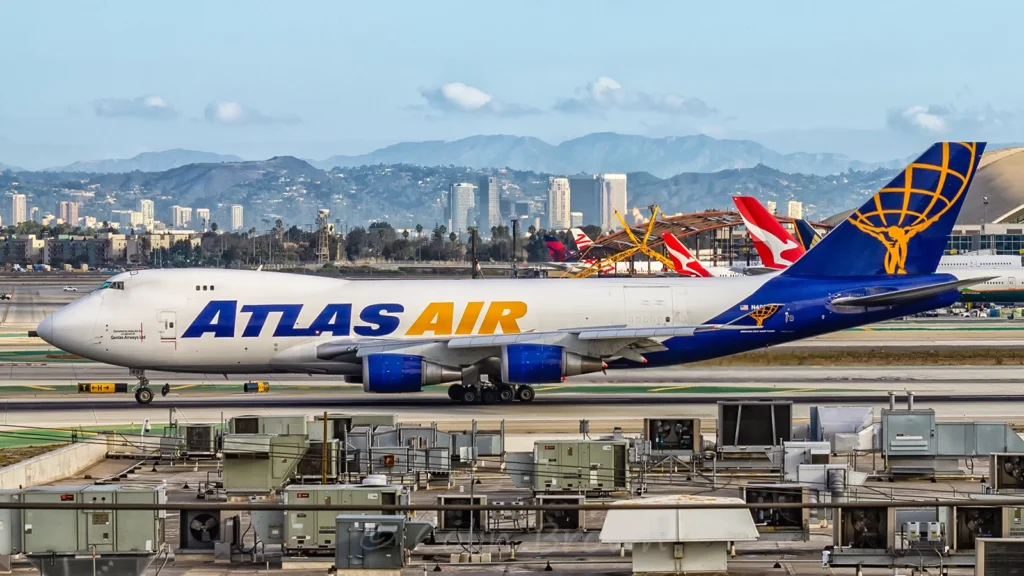
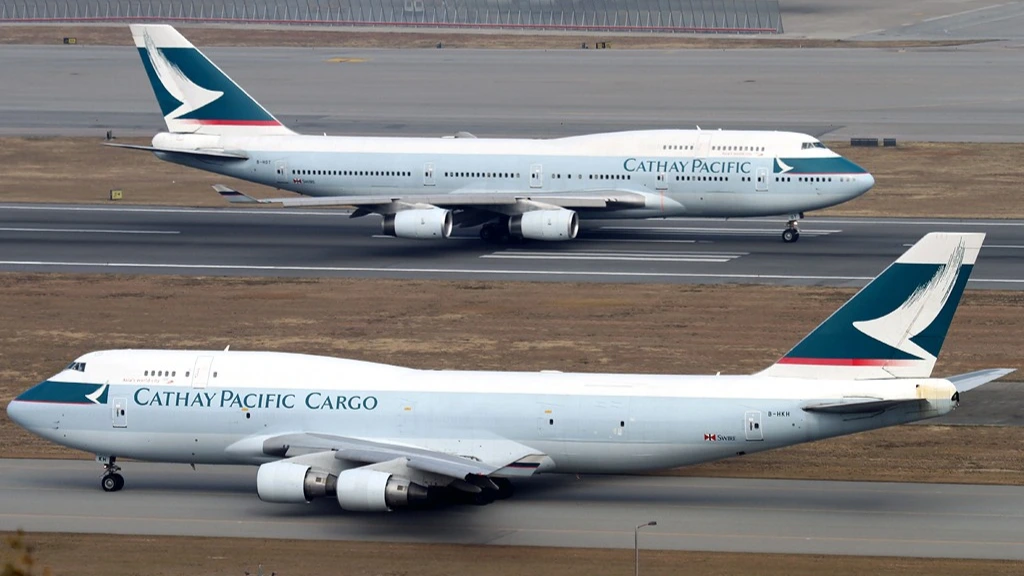
Freight remains the 747’s stronghold. Cirium data shows freighter operators conduct over 9,600 flights monthly with the type. Airlines like Cargolux (CV), Nippon Cargo Airlines (KZ), Cathay Pacific (CX), and UPS (5X) continue to depend on the jumbo for its payload capacity and range.
Atlas Air (5Y) remains one of the largest 747 operators with 65 aircraft, including 48 747-400s and 17 747-8Fs. UPS flies 43 747s, while Kalitta Air (K4) maintains a fleet of 22 747-400Fs. Cargolux operates 29 freighters, and Cathay Pacific continues with 20 active units, all freighters. Nippon Cargo Airlines has eight 747-8Fs in active use.
Governments also continue to rely on the type for VIP transport, including the United States, Japan, and Saudi Arabia, ensuring the 747’s distinctive hump remains visible in skies around the world.
A Lasting Legacy in Aviation
The Boeing 747 reshaped air travel when it entered service over five decades ago. It made long-haul flying accessible and connected major hubs across continents.
Today, it stands as a symbol of aviation’s golden age—still operating, though in fewer numbers, in a world shifting toward more fuel-efficient twinjets.
The jumbo’s endurance highlights its engineering strength and historical importance. Even as modern aircraft take over global skies, the 747’s legacy continues, proving that icons never truly disappear—they just evolve.
Stay tuned with us. Further, follow us on social media for the latest updates.
Join us on Telegram Group for the Latest Aviation Updates. Subsequently, follow us on Google News
