

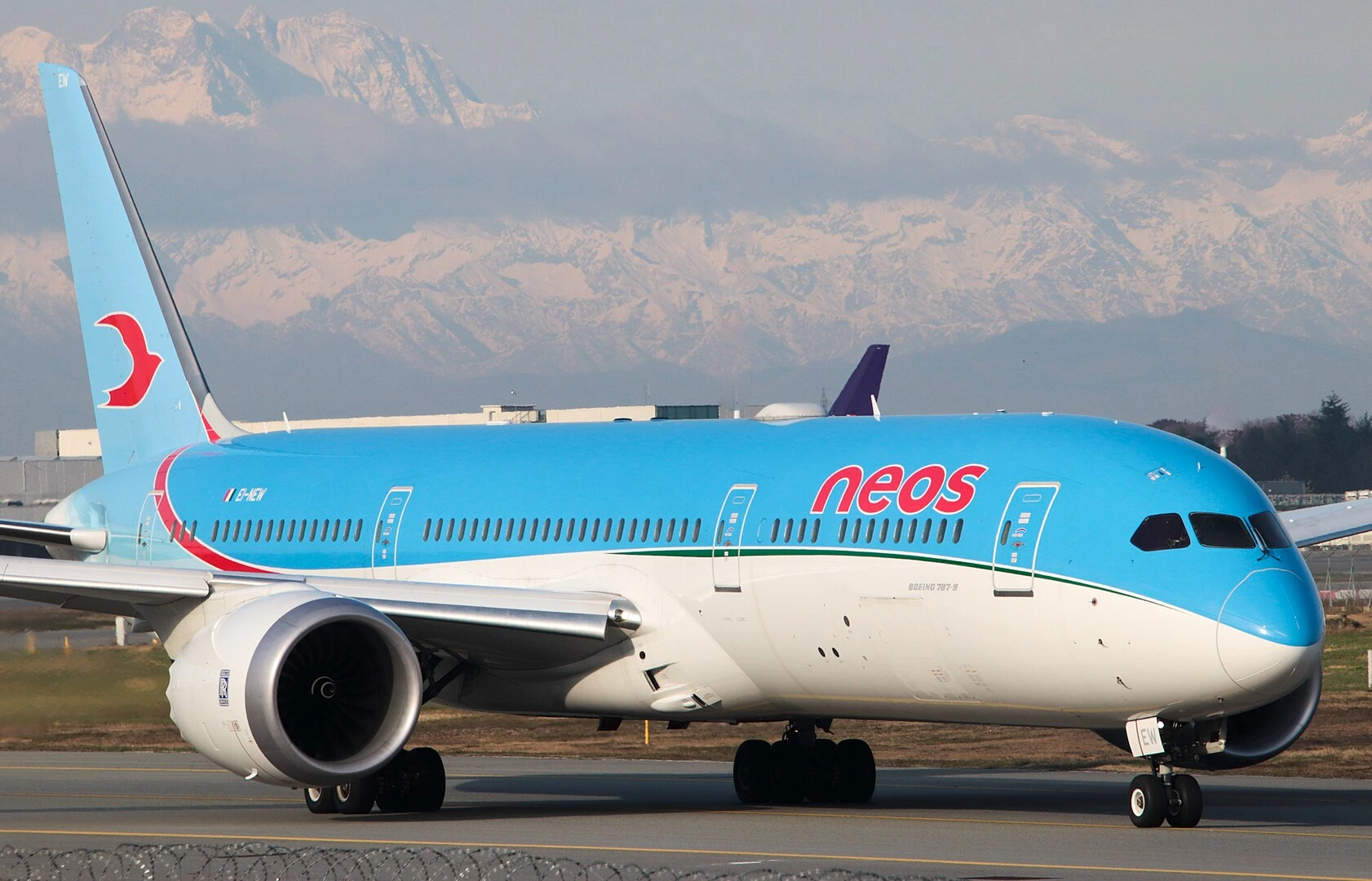
TORONTO– Neos Airlines (NO) has suspended its twice-weekly Boeing 787-9 service between Amritsar (ATQ) and Toronto (YYZ) via Milan (MXP) as of October 8, 2025, citing global geopolitical instability and weakening booking trends.
The India-Canada air travel market, once buoyed by strong student and Visiting Friends and Relatives (VFR) traffic, now faces slowing demand, capacity adjustments, and increasing competitive pressures from one-stop carriers through Middle Eastern hubs.

Neos Airline Suspend Amritsar to Toronto Via Milan
After operating the Amritsar–Toronto route for over two years, Neos Airlines (NO) ended its service due to insufficient load factors and reduced profitability.
The route relied heavily on low-yield passenger segments, particularly students and VFR travelers from Punjab.
According to Ravreet Singh, a popular aviation blogger and route analyst, the airline’s exit underscores how demand has softened under stricter Canadian visa norms and a slowdown in new travel approvals.
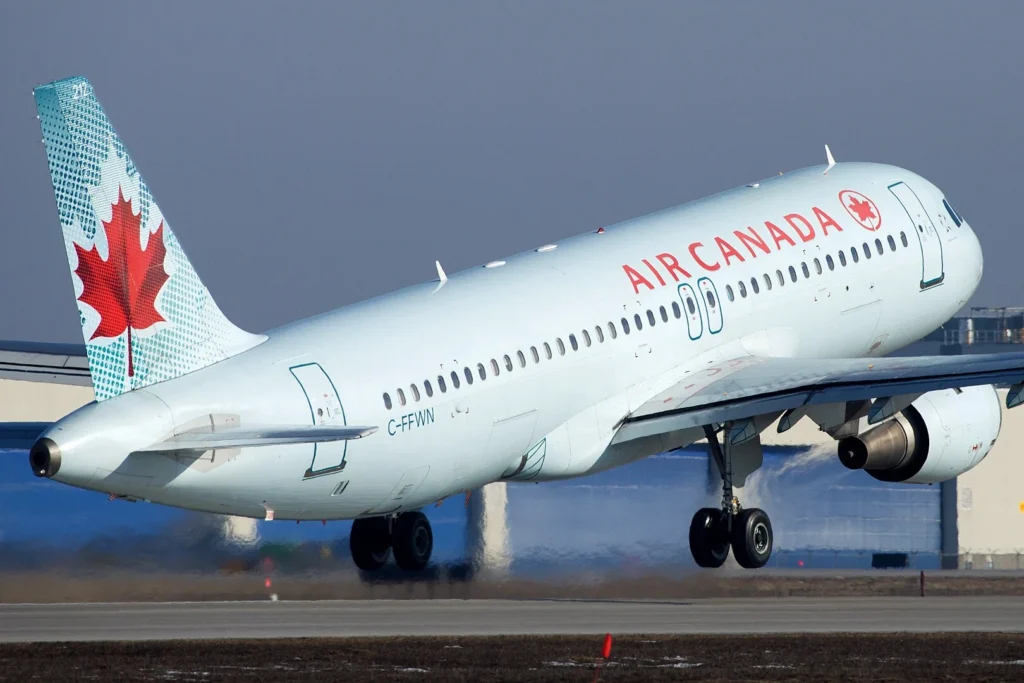
Air India (AI) and Air Canada (AC) remain the only carriers offering non-stop connections between the two countries. However, both airlines have scaled back frequencies in response to fluctuating yields and operational constraints.
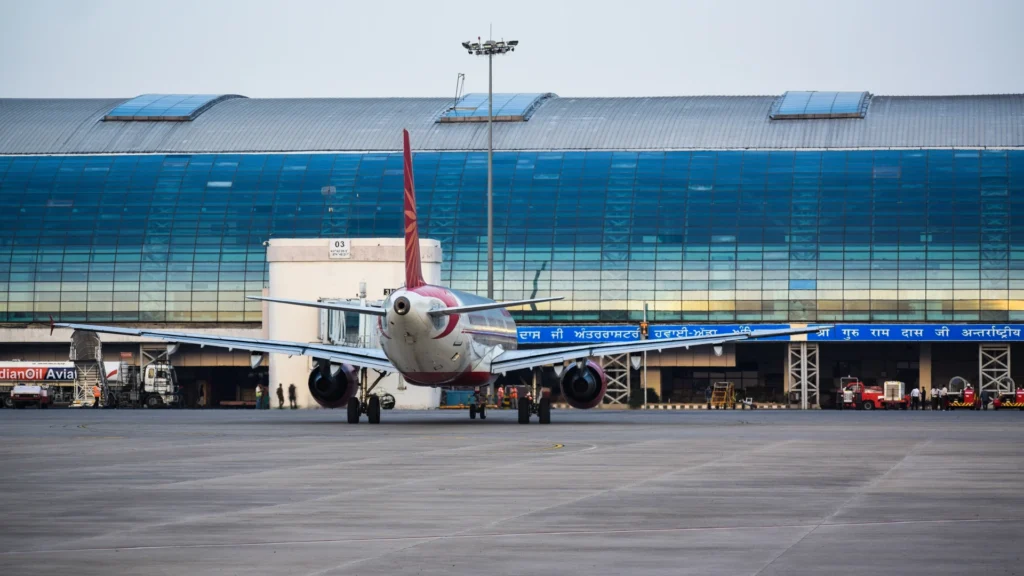
Air India, which once operated up to 14 flights weekly between Delhi (DEL) and Toronto (YYZ), plans to reduce the service to 7 flights weekly in the Winter 2025–26 schedule.
Fleet realignments, including the retirement of leased Boeing 777-200LRs, are also influencing these cuts.
Air Canada’s upcoming schedule reflects similar caution. During the Winter 2024–25 season, the airline operated 16x weekly flights to India, including routes from Toronto, Montreal, and Calgary, some via London Heathrow (LHR).
The airline has since reduced frequencies, indicating that yields have tightened across the corridor.
Demand and Yield
Ravreet highlighted that despite sustained passenger volumes driven by diaspora travel, the India–Canada market shows signs of maturity.
Nonstop services, while convenient, face yield compression due to the availability of competitive one stop options via Doha, Dubai, Istanbul, and, soon, potentially, Chinese hubs as India–China routes resume.
For Air India, the strategic focus has shifted to optimizing yields rather than expanding capacity. The carrier continues to operate a daily Delhi–Vancouver (YVR) service alongside its reduced Toronto operations, totaling 14x weekly flights to Canada for Winter 2025–26.
These routes remain profitable but are now managed with a sharper emphasis on capacity discipline and fleet utilization.
Punjab-Canada Market
The Punjab–Canada segment, particularly from Amritsar (ATQ), once appeared promising for direct long-haul connections, Mr. Singh added. However, with Neos Airlines’ exit and subdued demand, the likelihood of nonstop Amritsar–Toronto or Amritsar–Vancouver services returning remains slim.
Most travelers from Punjab continue to connect via Delhi (DEL), where Air India and Air Canada consolidate their transatlantic traffic.
Industry analysts suggest that unless there is a significant rebound in student and VFR demand, or a relaxation of visa policies, the current network structure will persist, with Delhi serving as the primary gateway for Canada-bound passengers.

Future Outlook
The India-Canada air travel market appears to have reached equilibrium. Airlines are focusing on sustaining profitability rather than pursuing aggressive expansion.
As global economic conditions stabilize and bilateral relations evolve, capacity adjustments are expected to remain conservative.
For now, the balance between demand, yield, and fleet strategy defines this transcontinental corridor, one where cautious realism has replaced earlier growth optimism.
Stay tuned with us. Further, follow us on social media for the latest updates.
Join us on Telegram Group for the Latest Aviation Updates. Subsequently, follow us on Google News
