


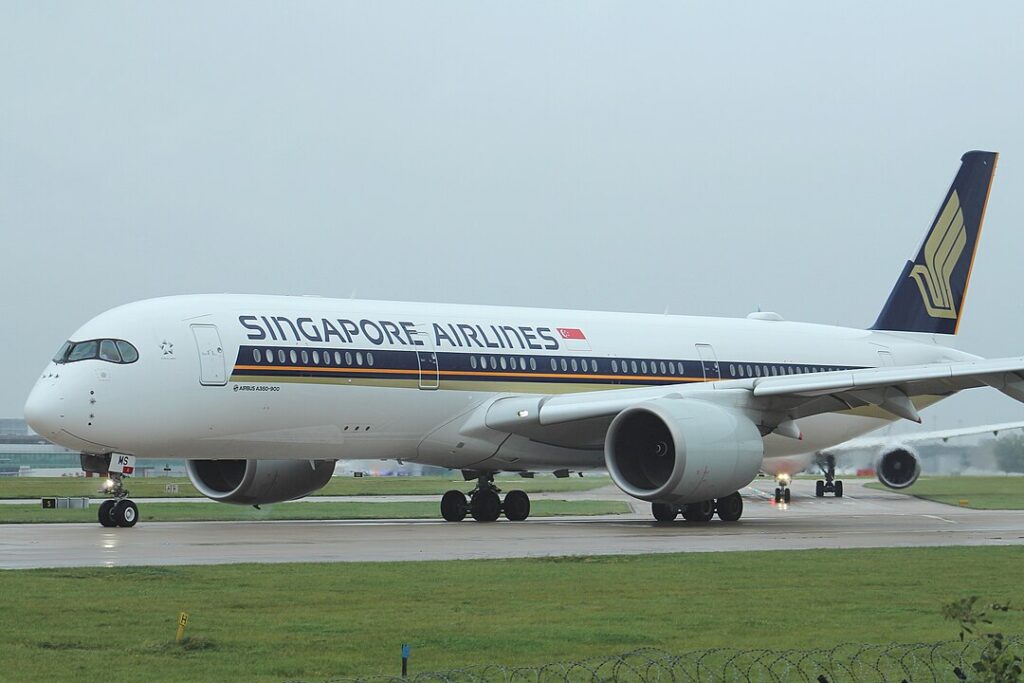
SINGAPORE- Singapore Airlines (SQ) faces a federal lawsuit from a Los Angeles singer, actress, and wellness educator who says a splinter from a wooden chicken satay skewer lodged in her throat during Business Class meal service.
Briohny Smyth, 44, claims the incident occurred aboard flight SQ36 from Singapore (SIN) to Los Angeles International Airport (LAX) on July 28, 2024, and left her vocal cords scarred. She is suing the carrier for up to $176,000.
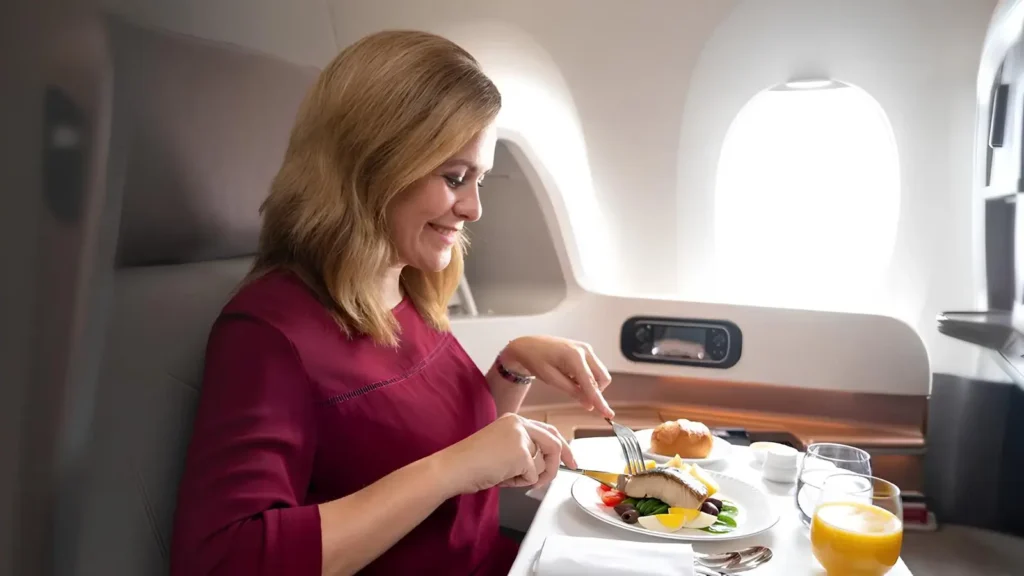
Singapore Airlines Business Class Satay Service Leads to Lawsuit
Smyth was seated in Business Class when cabin crew served the carrier’s chicken satay course, according to a complaint filed on July 24 in the US District Court for the Central District of California.
The complaint states that the wooden skewer holding the chicken carried a large splinter running through it. As Smyth ate the dish, she “unknowingly swallowed a jagged wooden splinter” that broke away from the skewer and became lodged in her throat.
The fragment caused “immediate pain,” “violent coughing,” and “choking sensations,” the filing says. Smyth endured “substantial pain and emotional distress while attempting to expel the foreign object during the flight.”
She eventually “ultimately expelled a jagged wooden shard approximately 1.5 inches in length,” according to the complaint. The document contends she was consuming the meal as intended and bears no fault for the injury.
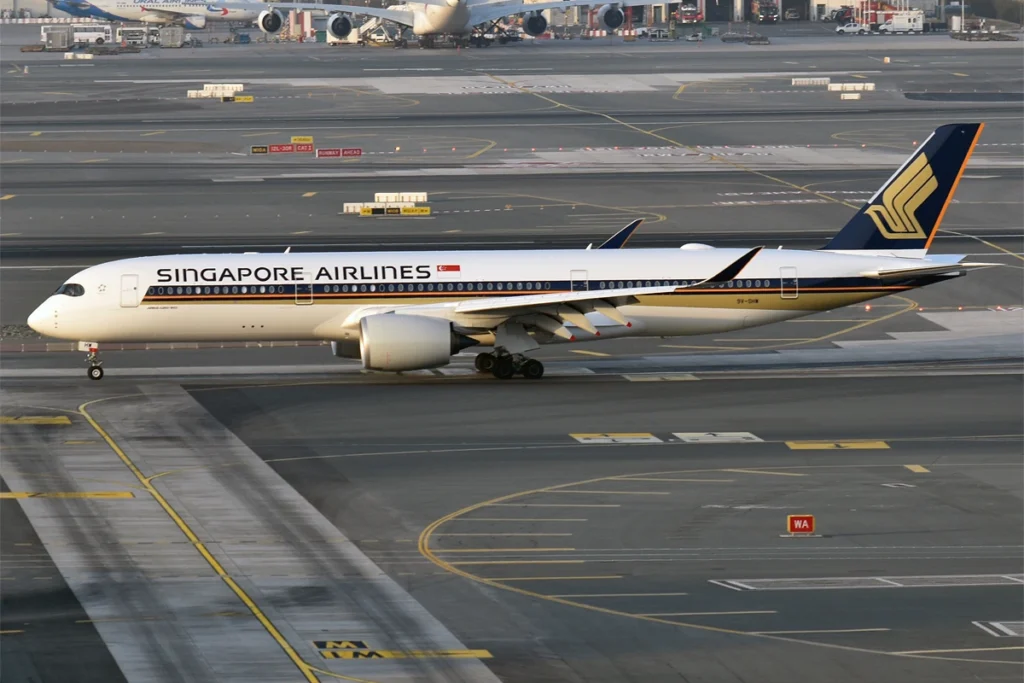
Vocal Cord Injury and Professional Consequences
After the flight, Smyth “experienced persistent throat discomfort, vocal fatigue, raspiness, tightness, and pain with prolonged speaking and singing,” the complaint states.
She consulted an otolaryngologist who, according to the filing, “identified scarring and trauma to [Smyth’s] vocal cords consistent with injury from a sharp foreign object.”
The complaint describes Smyth as a “professional singer, performer, wellness educator and public speaker” whose livelihood “substantially depends upon the integrity and performance of her voice.”
Smyth recorded a platinum album in Thailand at age 13 and now teaches yoga in Los Angeles. She still sings. A 2011 yoga video she appeared in went viral and has drawn close to 16 million views on YouTube to date.
The lawsuit lists bodily injury, loss of earning capacity, professional harm and “anxiety associated with eating and flying” among the damages claimed.
Smyth is seeking compensation for past and future medical expenses, past and future loss of earnings and earning capacity, and emotional distress associated with bodily injury. She also seeks legal costs plus pre-judgment and post-judgment interest.
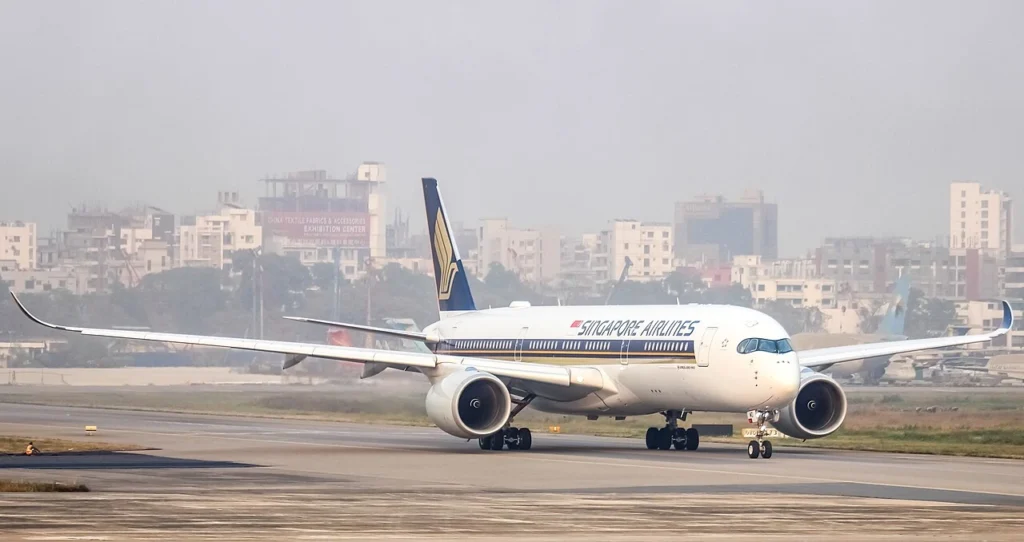
Montreal Convention Article 17
The lawsuit was filed under Article 17 of the Montreal Convention, the treaty that makes airlines liable for injuries sustained by passengers during the course of an international flight.
Under the treaty, carriers cannot limit liability for Article 17 claims up to 128,821 Special Drawing Rights. The SDR is a monetary instrument developed by the International Monetary Fund to represent a basket of currencies, and the figure currently converts to around $176,000.
Passengers may claim more than this limit. However, an airline can avoid a higher payout by proving the injury did not result from the “negligence or other wrongful act or omission of the carrier or its servants or agent,” or that the injury was “solely due to the negligence or other wrongful act or omission of a third party.”
Smyth’s complaint does not state whether she intends to claim above the 128,821 SDR limit.
Carriers frequently settle Article 17 claims out of court. A ruling in favor of a passenger can set a precedent that leads to a flood of similar claims.
Common Article 17 claims involve hot tea and coffee burns and passengers struck by beverage carts pushed into their feet and legs. Others cover luggage falling on passengers’ heads from overhead bins and back injuries attributed to hard landings.
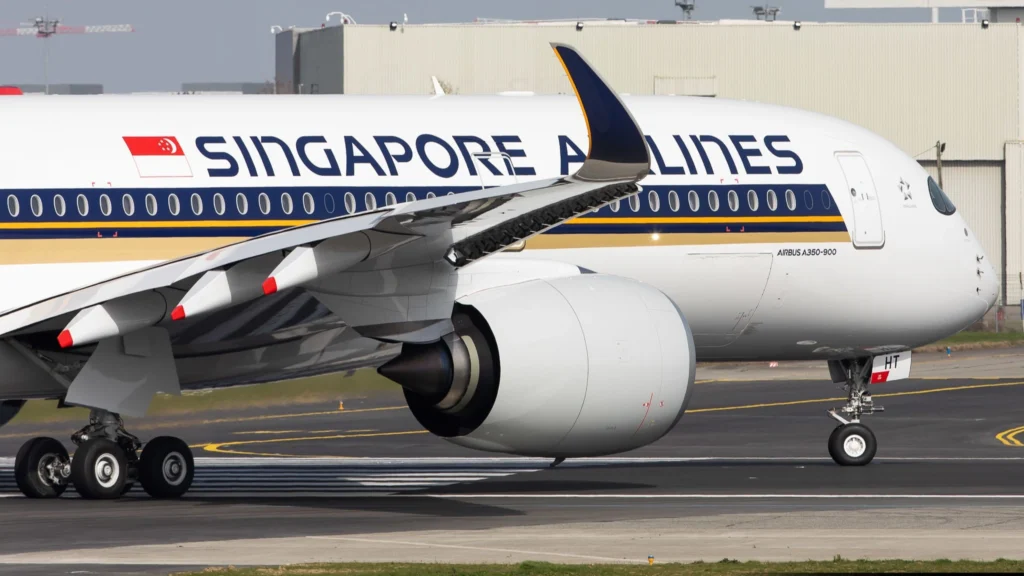
Airline Response
A Singapore Airlines spokesman told The Independent that the carrier “is unable to comment on pending litigation.” The airline has yet to respond to the lawsuit itself.
The chicken satay course has become an iconic part of the airline’s Business Class service. Cabin crew wheel display carts along the aisle to serve the skewers and satay sauce before the main meal service begins.
Pattern of In-Flight Meal Litigation
Last year, a New York City medical doctor with a severe shellfish allergy sued Singapore Airlines after being served a meal containing shrimp. The flight from Frankfurt Airport (FRA) to John F. Kennedy International Airport (JFK) diverted to Paris, where Dr. Doreen Benary was rushed to hospital. She claims she had informed flight attendants of her dietary restrictions, PYOK flagged.
In 2024, New Jersey resident Karla Quinonez sued JetBlue (B6) after breaking an incisor on an ice cream sandwich she described in court papers as “dangerously cold” and served “at a temperature below what is reasonable or safe for consumption.”
She argued cabin crew should have warned her the treat was “frozen solid.” Quinonez said in her federal complaint that she needed an emergency tooth extraction immediately upon landing, a subsequent implant and continuing care, blaming her “pain, suffering, and mental anguish” solely on JetBlue’s “negligent acts.”
Last November, a 3-year-old girl with a severe dairy allergy was hospitalized after a Qatar Airways (QR) flight attendant allegedly gave the child a chocolate bar despite warnings from her mother not to serve anything containing milk.
North Carolina resident Swetha Neerukonda returned to her seat from the bathroom and confronted the flight attendant, who “mocked and mitigated” her concerns as the toddler went into anaphylaxis and her vital signs declined, according to a $5 million lawsuit. The child’s condition worsened after landing, and she spent 2 days in the intensive care unit before being stabilized.
Stay tuned with us. Further, follow us on social media for the latest updates.
Join us on Telegram Group for the Latest Aviation Updates. Subsequently, follow us on Google News
