

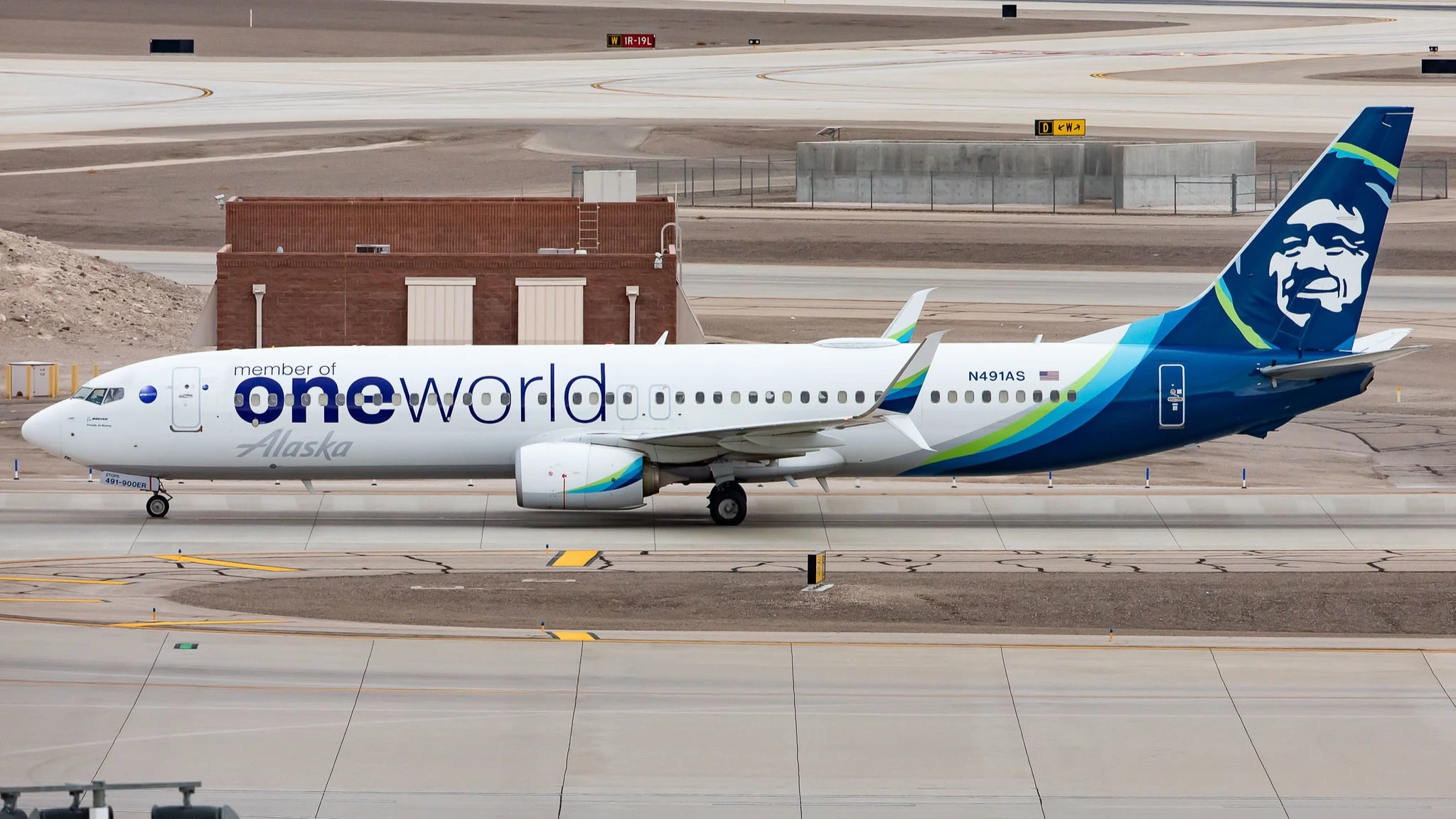
SEATTLE- Alaska Airlines (AS) is selling tickets for a proposed seasonal nonstop route between Ted Stevens Anchorage International Airport (ANC) in Anchorage, Alaska, and Tokyo Narita International Airport (NRT) in Japan. The service is scheduled to begin on May 13, 2027, using the Boeing 737 MAX 8.
The proposed daily flights are scheduled to operate through September 7, 2027, with a flight time of approximately eight hours and 15 minutes from Anchorage to Tokyo. Although tickets are available, the route remains subject to government approval, and its operating feasibility will depend on aircraft performance, fuel requirements, and approved flight planning.
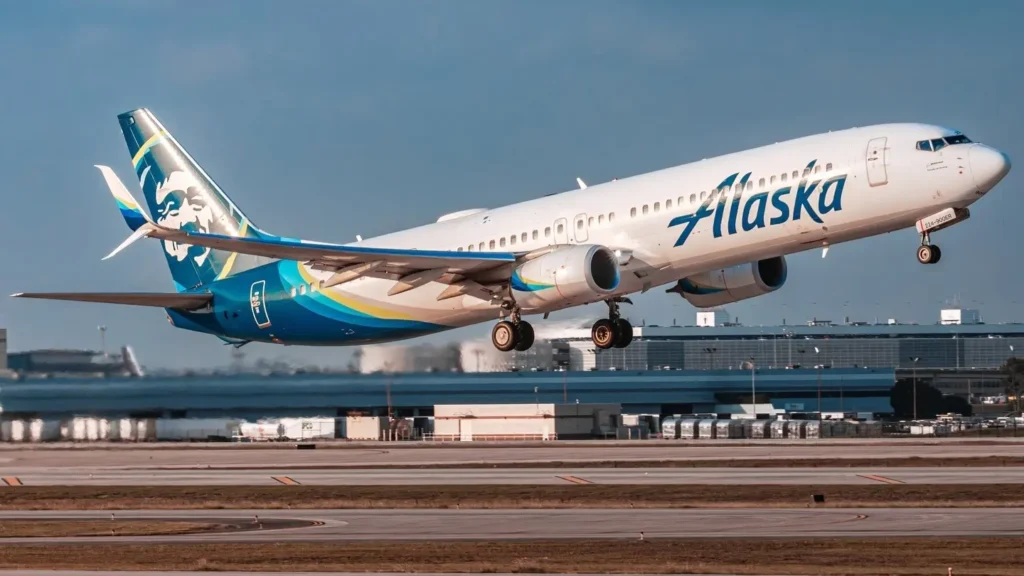
Alaska Airlines Plans Flights Between Anchorage and Tokyo
According to schedules first identified by aviation analyst Enilria, Alaska Airlines plans to operate the route with flight numbers AS21 from Anchorage to Narita and AS22 on the return journey.
The inaugural outbound flight, AS21, is scheduled to depart Anchorage at 2:10 p.m. on May 13, 2027, and arrive at Narita at 3:25 p.m. on May 14. The published journey time is eight hours and 15 minutes.
The return flight, AS22, is scheduled to depart Narita at 9:45 p.m. on May 14 and arrive in Anchorage at noon on the same local date. The return journey is listed at seven hours and 15 minutes, one hour shorter than the outbound flight.
The difference reflects the time zones and the date line, alongside the effect of prevailing winds. All times are local, and the published schedules remain subject to change.
The seasonal service is expected to operate daily until September 7, 2027. This schedule would give travelers a direct connection between Alaska and Japan during the busy summer travel period without requiring a connection through another US gateway.
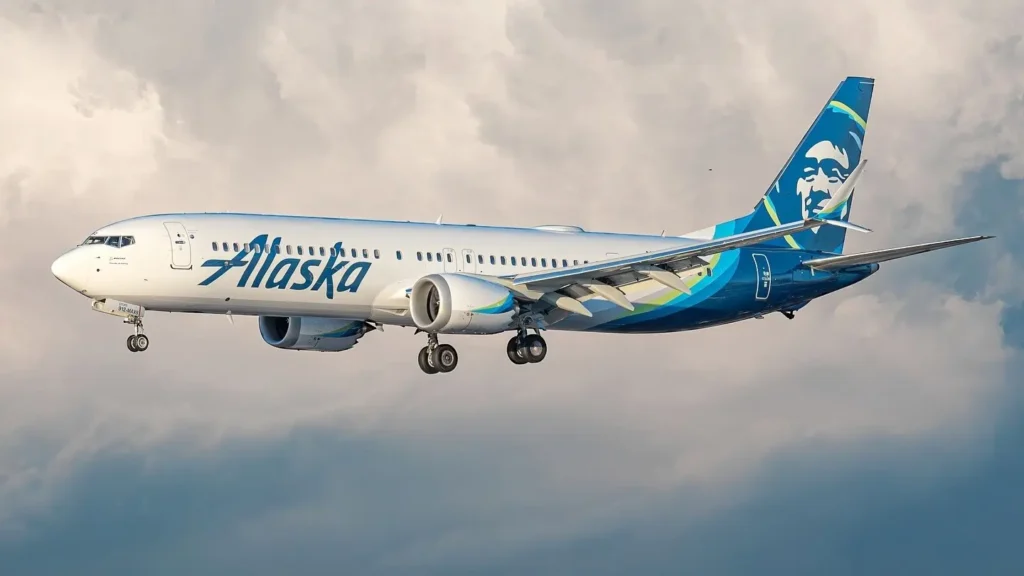
Boeing 737 MAX 8 to Operate the Route
The proposed aircraft is a Boeing 737 MAX 8, a single-aisle jet more commonly associated with short- and medium-haul services. Its planned use on a transpacific route is notable because the flight will cover several thousand miles over the North Pacific.
The aircraft scheduled for the route is reported to have 161 seats in a two-cabin configuration:
| Cabin | Seats |
|---|---|
| First Class | 16 |
| Main Cabin | 145 |
| Total | 161 |
The First Class cabin will feature reclining seats rather than lie-flat beds. The Main Cabin will include extra-legroom seats that Alaska sells as Premium seating, including seats in the exit rows. Premium is therefore a seating product within the economy cabin, rather than a separate premium economy cabin.
This configuration gives Alaska a relatively small aircraft for the Anchorage-Tokyo market. A narrowbody may allow the airline to serve a seasonal route without deploying a larger widebody aircraft, but its smaller capacity also limits the number of passengers it can carry on each departure.

Anchorage-Tokyo Flight Raises Aircraft-Range Questions
The Boeing 737 MAX 8 has a published maximum range of up to 3,500 nautical miles, or 6,480 kilometers, according to Boeing. The great-circle distance between Anchorage and Narita is approximately 2,984 nautical miles, or 5,526 kilometers.
The planned journey is therefore within the aircraft’s advertised maximum range on a direct-distance comparison. However, the published figure does not guarantee that the aircraft can complete every version of the route with a full passenger load, suitable fuel reserves, and all required diversion options.
The actual flight path may be longer than the great-circle route. Reports have noted that routing restrictions, including the need to avoid Russian airspace, could affect the distance flown. It is important to distinguish statute miles from nautical miles when assessing these figures: 3,750 statute miles is approximately 3,260 nautical miles, below Boeing’s published 3,500-nautical-mile maximum. That comparison alone, however, does not establish whether the flight is operationally viable.
Payload, Winds and Fuel Reserves Matter
An independent route-planning analysis published on October 27, 2026, illustrates the tight margins that can arise on this route under certain assumptions.
In one modeled winter scenario, the analysis used a load of 141 passengers and a 150-nautical-mile destination-alternate allowance. It estimated a range of approximately 3,009 nautical miles, leaving about 25 nautical miles beyond the direct route distance. With a 200-nautical-mile alternate allowance, the modeled winter range fell to approximately 2,969 nautical miles, about 15 nautical miles short of the direct distance.
These figures are illustrative planning results, not Alaska Airlines’ actual flight-dispatch calculations. The analysis notes that payload, seasonal winds, reserve requirements, routing, and the chosen diversion airport can change the result.
The airline will need to demonstrate that the aircraft can operate the service safely under applicable regulatory requirements. These include extended overwater operations requirements, commonly known as ETOPS, as well as suitable diversion-airport planning, fuel reserves, and compliance with aircraft performance limits.
An acceptable route-planning model does not by itself confirm that the airline has the necessary approvals or that every planned flight can operate under all weather and payload conditions.
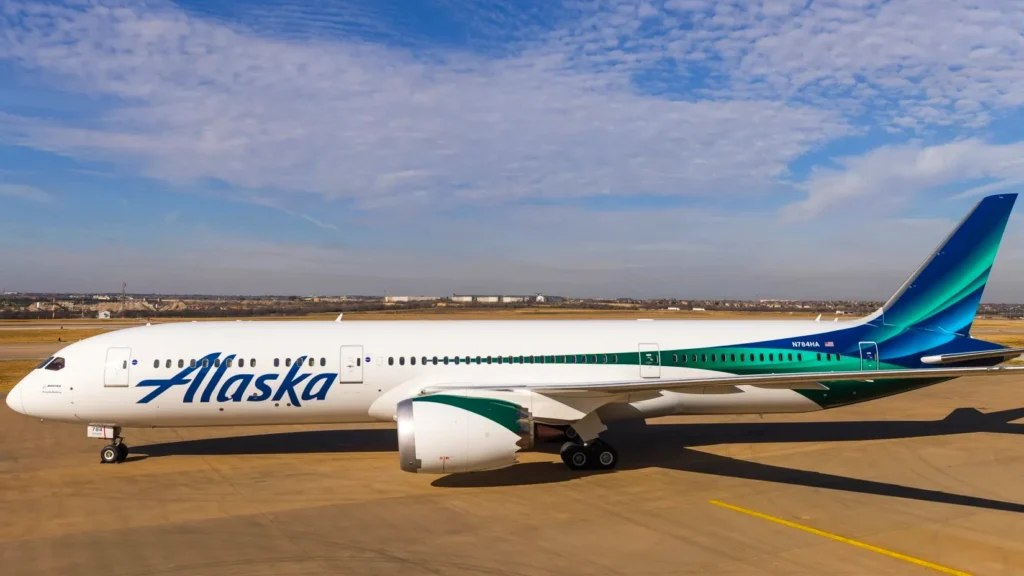
Alaska Airlines Expands Its International Network
The Anchorage-Tokyo route would provide a direct connection between Alaska and Japan and restore nonstop service between the two cities after a lengthy absence. It would also add another way for travelers to reach Tokyo without connecting through a mainland US airport.
Alaska Airlines already serves Tokyo Narita from its Seattle (SEA) gateway, making the proposed Anchorage service a potential extension of its transpacific network. The new route could attract travelers from Alaska, passengers visiting Japan for leisure, and connecting passengers using Anchorage as their gateway.
The seasonal schedule would allow Alaska to test demand during the summer travel period. Its performance would depend on passenger numbers, fares, the operating costs of the long route, and the aircraft’s practical range under the airline’s approved operating conditions.
The 161-seat configuration also gives the route a different capacity profile from a widebody service. Although the smaller aircraft could allow Alaska to match capacity to seasonal demand, the airline would need to balance ticket revenue against fuel, crew, maintenance, and diversion-planning requirements.

Anchorage-Tokyo Fares and Booking Details
At the time of reporting on October 27, 2026, award fares were listed from 30,000 Alaska miles each way in economy and 120,000 miles each way in First Class. Peak-summer award prices could reach 150,000 Atmos Rewards points each way, while cash round-trip fares were listed above $1,000.
These figures reflect fares available at the time of reporting and may change with travel dates, demand, and seat availability.
Although Alaska is accepting bookings, the airline’s published listing still indicates that government approval is pending. Travelers should therefore treat the schedule as provisional until the required approvals are secured and the airline confirms the operating details.
If launched as planned, the service would give passengers a new nonstop option between Anchorage and Tokyo Narita in summer 2027. Its long-term prospects will depend on demand and whether the Boeing 737 MAX 8 can meet the route’s operational requirements with adequate margins.
Stay tuned with us. Further, follow us on social media for the latest updates.
Join us on Telegram Group for the Latest Aviation Updates. Subsequently, follow us on Google News
