


ATLANTA- Delta Air Lines (DL) is expanding across the Pacific to challenge United Airlines (UA), but its Q3 2026 results show capacity growing faster than revenue-related performance.
Compared with American Airlines (AA), Delta’s weaker regional metrics raise questions about its expansion strategy across markets such as Hong Kong (HKG), Seoul Incheon (ICN), Los Angeles (LAX), Seattle (SEA) and San Francisco (SFO).
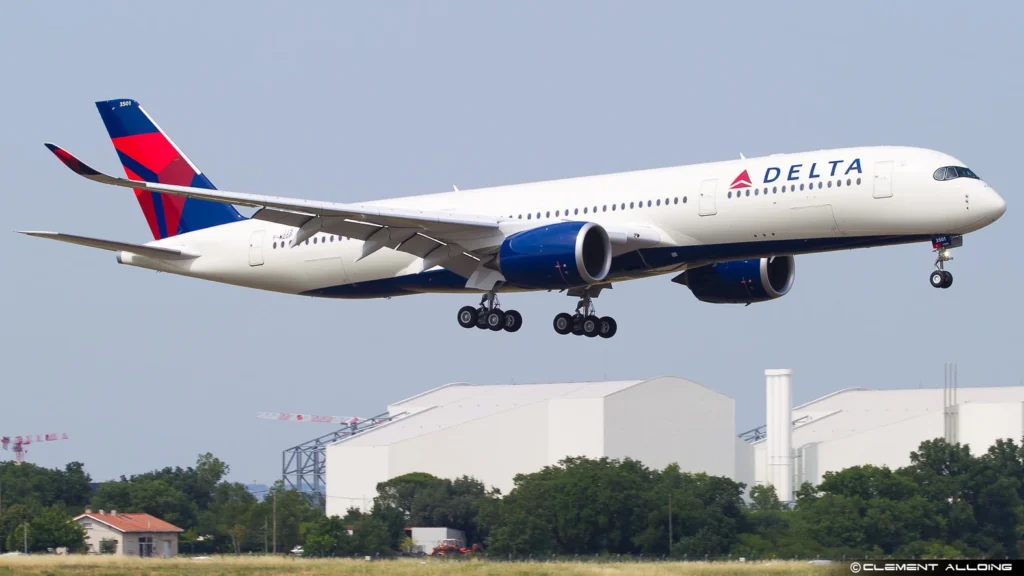
Delta’s Pacific Growth Is Outpacing Revenue Gains
According to OMAAT’s analysis, Delta’s Pacific capacity increased 8% year over year in the third quarter of 2026, while passenger yield rose 7% and passenger revenue per available seat mile (PRASM) grew just 5%. American and United delivered stronger growth in these revenue measures.
The figures highlight a challenge for Delta as it adds transpacific routes to compete more directly with United. Although all three airlines increased capacity or revenue across the region, their results show different relationships between available seats, passenger revenue, and seat occupancy.
Q3 2026: Delta Lags American and United
The following table compares year-over-year changes in the carriers’ Pacific operations during the third quarter of 2026.
| Performance Metric | American Airlines (AA) | Delta Air Lines (DL) | United Airlines (UA) |
|---|---|---|---|
| Passenger yield | +14.8% | +7.0% | +10.8% |
| PRASM | +11.3% | +5.0% | +10.9% |
| Capacity (ASMs) | +6.6% | +8.0% | +5.0% |
| Load factor | -2.6 percentage points | -2.0 percentage points | +0.1 percentage points |
Passenger yield measures passenger revenue per revenue passenger mile. PRASM measures passenger revenue per available seat mile and reflects both revenue generation and the available capacity offered for sale.
Available seat miles (ASMs) measure the number of seats offered multiplied by the miles flown. Load factor represents the percentage of available seats occupied by passengers.
These measures help compare airlines’ regional performance, although they do not independently establish the profitability of individual routes.
American recorded the strongest yield growth at 14.8%, while its PRASM increased 11.3%. Both figures exceeded its 6.6% capacity growth, suggesting that revenue performance improved faster than the airline expanded its available seats. Its load factor nevertheless declined by 2.6 percentage points.
Delta presented a different pattern. Its capacity grew 8%, exceeding its 7% yield increase and 5% PRASM growth. The two-percentage-point decline in load factor also indicates that seat occupancy weakened compared with the same quarter in 2025.
United delivered the most balanced results. Its 5% capacity growth was accompanied by yield growth of 10.8% and PRASM growth of 10.9%. It was also the only airline among the three to record a year-over-year increase in load factor, rising 0.1 percentage points.
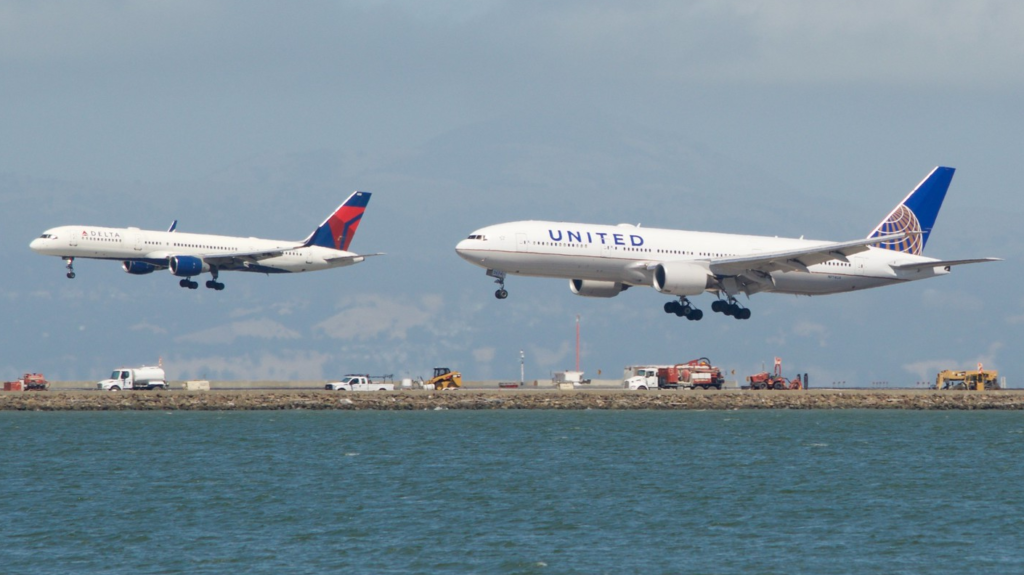
Q2 2026 Shows a Similar Pattern
The preceding quarter displayed a similar difference between Delta and its competitors. The Q2 2026 figures provide a useful comparison with the latest results.
| Performance Metric | American Airlines (AA) | Delta Air Lines (DL) | United Airlines (UA) |
|---|---|---|---|
| Passenger yield | +17.3% | +7.0% | +10.9% |
| PRASM | +15.1% | +7.0% | +14.0% |
| Capacity (ASMs) | +8.2% | +8.0% | +4.1% |
| Load factor | -1.7 percentage points | -1.0 percentage point | +2.3 percentage points |
Delta’s capacity growth exceeded its yield and PRASM growth in both quarters. However, the relationship deteriorated further on the PRASM measure during Q3.
In Q2, Delta’s PRASM increased 7% against 8% capacity growth. By Q3, PRASM growth had slowed to 5%, even as capacity continued to expand by 8%. Its load-factor decline also widened from 1 percentage point to 2 percentage points.
The figures suggest that Delta is adding capacity faster than its passenger revenue per available seat mile is improving. This does not, by itself, establish that its Pacific operations are losing money, but it highlights a weaker performance trend than those recorded by American and United.
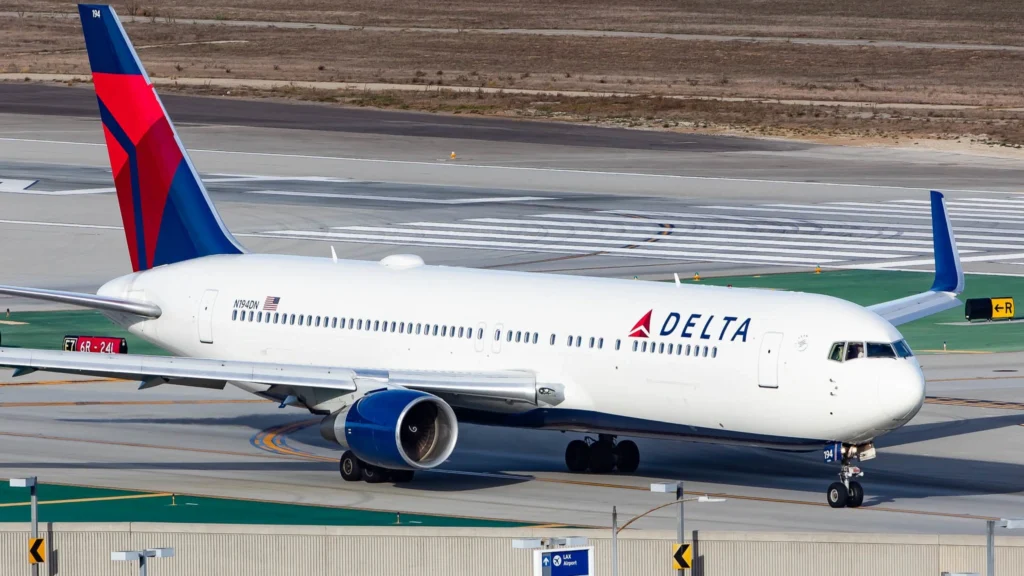
What Is Behind Delta’s Pacific Expansion Challenge?
New Routes Take Time to Mature
Delta’s expansion comes with the challenge of building demand in markets where it has a smaller established presence. New international routes can require time to attract local customers, generate connecting traffic and establish stronger revenue performance.
The timing of capacity additions also matters. An airline can add seats before demand fully develops, which may place pressure on load factors and revenue per available seat mile during the early stages of a route’s growth.
Delta’s Q3 figures reflect that challenge. Capacity expanded by 8%, but PRASM increased by only 5%. The key question is whether additional demand and stronger revenue performance can close that gap as the network develops.
Hub Strategy Could Affect Competitiveness
Delta’s transpacific network relies on Los Angeles (LAX) and Seattle (SEA), while United has a major Pacific gateway in San Francisco (SFO). The difference could affect pricing power, customer loyalty, and connecting opportunities.
A strong hub can help an airline attract passengers from a wide catchment area and feed them onto long-haul services. Network connectivity can also support more convenient onward connections, potentially improving an airline’s ability to compete for passengers.
Delta’s two-hub approach does not automatically establish a structural disadvantage. However, the latest regional performance figures raise questions about whether its network can match United’s competitive position as both airlines expand their Pacific offerings.
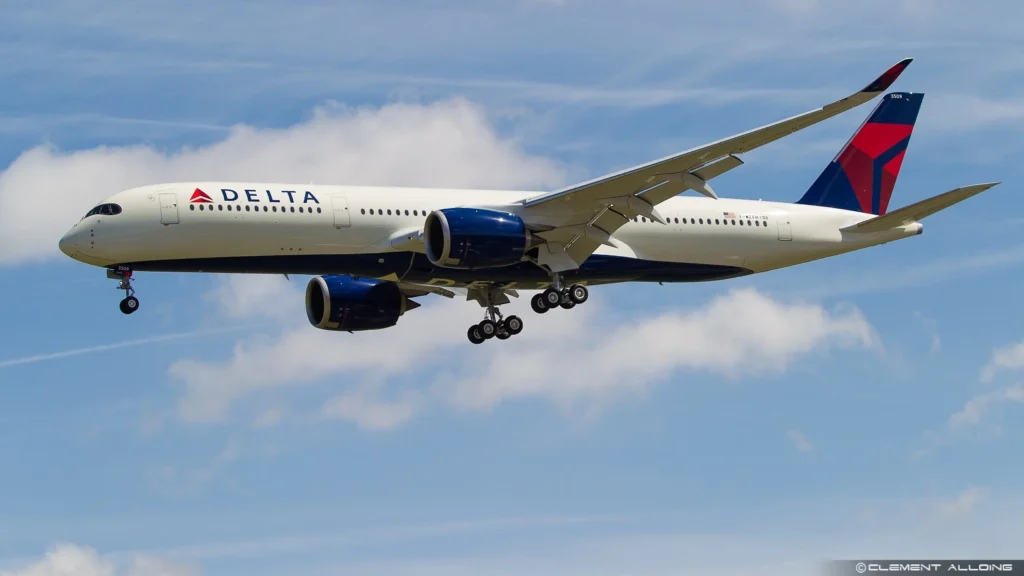
Hong Kong Adds to the Competition
Delta has recently added flights to Hong Kong (HKG), a market where United already has an established presence. The comparison notes that United operates four daily flights to Hong Kong, placing Delta against a competitor with greater frequency in the market.
United’s Q3 results remained comparatively strong despite Delta’s expansion. The airline increased Pacific yield by 10.8% and PRASM by 10.9%, while keeping capacity growth to 5%.
This suggests that Delta’s additional capacity has not yet translated into equivalent revenue growth across the region. However, one quarter of results cannot determine the long-term outcome of the competition, especially when route networks and operating conditions differ.
American’s Limited Asia Network Offers Another Comparison
American Airlines maintains a more limited presence across Asia than the expansion strategies pursued by Delta and United. Its Q3 performance nevertheless showed strong growth in both yield and PRASM.
The airline’s results indicate that a smaller network can still deliver strong regional revenue metrics. However, the comparison does not establish that American would achieve the same results if it expanded its Pacific operations to a similar scale.
Differences in route mix, passenger demand and network size mean that regional statistics should be assessed alongside each airline’s broader strategy.

Can Delta Close the Gap With United?
Delta’s Pacific expansion remains at an early stage, and its latest figures point to a clear challenge. In both Q2 and Q3 2026, capacity growth outpaced yield growth, while PRASM growth weakened between the two quarters.
American and United produced stronger revenue-related results in Q3. United also maintained its load factor, while Delta and American both recorded declines.
The data do not establish whether Delta has a lasting structural disadvantage or is experiencing the temporary pressures associated with expanding into new markets. They do, however, show that Delta’s capacity additions have not yet delivered revenue growth at the same pace as its competitors.
The next quarters will help determine whether Delta can improve revenue per available seat mile, stabilize load factors, and strengthen its competitive position across the Pacific. Its ability to turn network expansion into sustainable financial performance will be central to its ambition to challenge United in Asia.
Stay tuned with us. Further, follow us on social media for the latest updates.
Join us on Telegram Group for the Latest Aviation Updates. Subsequently, follow us on Google News
