

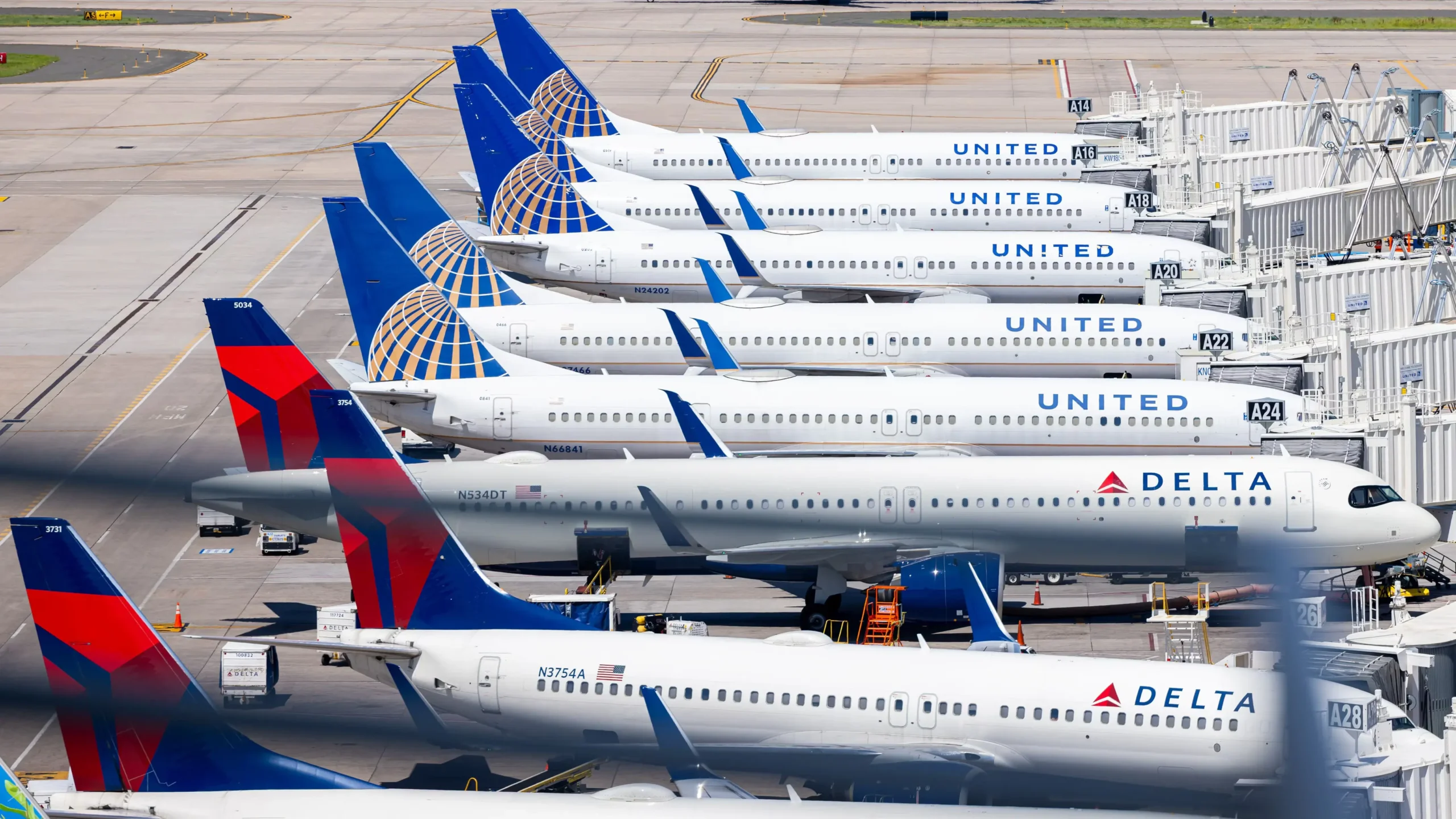
CHICAGO- United Airlines (UA) reported record third-quarter revenue of approximately $17.88 billion for 2026, but its latest earnings reveal a widening gap between sales growth and profitability. Although revenue increased 17.4% year over year, adjusted pretax profit declined to $1.109 billion, leaving the Chicago-based carrier behind Delta Air Lines (DL), which generated $1.497 billion in adjusted pretax profit on lower revenue.
The results highlight the financial pressure facing United as higher fuel expenses and rising operating costs offset much of its additional revenue. The airline’s fourth-quarter outlook also disappointed investors, with projected adjusted earnings per share falling well below Wall Street expectations despite management anticipating another period of record revenue growth.
United Airlines’ Revenue Growth, Lower Profits
United generated $17.88 billion in third-quarter revenue, compared with $15.23 billion during the same period in 2025. The $2.65 billion increase came as the airline expanded capacity by just 1.3%, while revenue per available seat mile rose 15.9%.
However, higher sales did not translate into stronger adjusted earnings. United reported adjusted earnings of $2.54 per share, narrowly missing analysts’ consensus estimate of $2.57 and falling short of the stronger profitability implied by its revenue growth.
Adjusted pretax profit declined from $1.215 billion a year earlier to $1.109 billion, while the adjusted pretax margin fell from 8.0% to 6.2%. The figures suggest that the airline retained less profit from each dollar of revenue despite generating substantially more sales.
Fuel was a major contributor to the pressure. United’s fuel expense increased by approximately $1.846 billion, or 62%, while other adjusted operating costs rose by another $895 million.
Together, those additional expenses exceeded the revenue increase, helping explain why adjusted operating profit fell by approximately $91 million. Nonfuel costs per available seat mile also increased 7.8%, showing that fuel was not the only source of financial pressure.

Delta Delivers Higher Profit
Delta Air Lines produced $17.59 billion in third-quarter revenue, slightly below United’s total, but delivered $1.497 billion in adjusted pretax profit. That was approximately 35% more than United’s $1.109 billion, demonstrating a significant difference in profitability despite comparable revenue.
Delta’s adjusted pretax margin reached 8.5%, compared with United’s 6.2%. Its adjusted operating margin was also higher at 9.4%, against United’s 6.9%.
The difference is particularly notable because both airlines benefited from strong revenue growth. Delta’s revenue increased 15.7% year over year, while capacity grew just 0.3%, indicating that the carrier generated higher sales without substantially increasing available capacity.
United’s revenue growth was faster, but its weaker margins suggest that additional sales came with considerable cost pressure. Premium revenue increased 17%, basic economy revenue rose 16%, and loyalty revenue grew 17%, broadly tracking the airline’s overall revenue expansion rather than substantially outpacing it.
Corporate revenue performed more strongly, increasing 26%. However, the published figures do not establish how much of that increase came from higher fares, additional business travel or new corporate accounts.
Fourth-Quarter Outlook for United
United expects adjusted fourth-quarter earnings per share between $0.50 and $1.50, compared with analysts’ expectations of approximately $1.76. The midpoint of that guidance is $1.00, about 43% below the market forecast.
The outlook comes despite management projecting revenue growth of more than 20% year over year. The combination suggests that higher revenue alone may not be enough to offset fuel and operating costs in the coming quarter.
Other financial measures also warrant attention. United recorded $294 million in aircraft sale-and-leaseback gains, compared with $75 million a year earlier, helping reported earnings per share rise even as adjusted earnings declined.
The airline also recorded negative free cash flow of $1.843 billion for the quarter, compared with negative $153 million a year earlier, reflecting substantial investment outflows, View from the Wing flagged.
United continues to promote customer investments, including its planned Starlink Wi-Fi rollout across its fleet. Better onboard connectivity could strengthen its product offering, but the immediate financial challenge remains converting revenue growth into sustainable profits.
The third-quarter results show that United is growing, yet Delta is currently extracting more adjusted profit from a similar revenue base. United’s ability to control costs and meet its fourth-quarter guidance will be important in determining whether its record sales translate into stronger financial performance.
Stay tuned with us. Further, follow us on social media for the latest updates.
Join us on Telegram Group for the Latest Aviation Updates. Subsequently, follow us on Google News
