

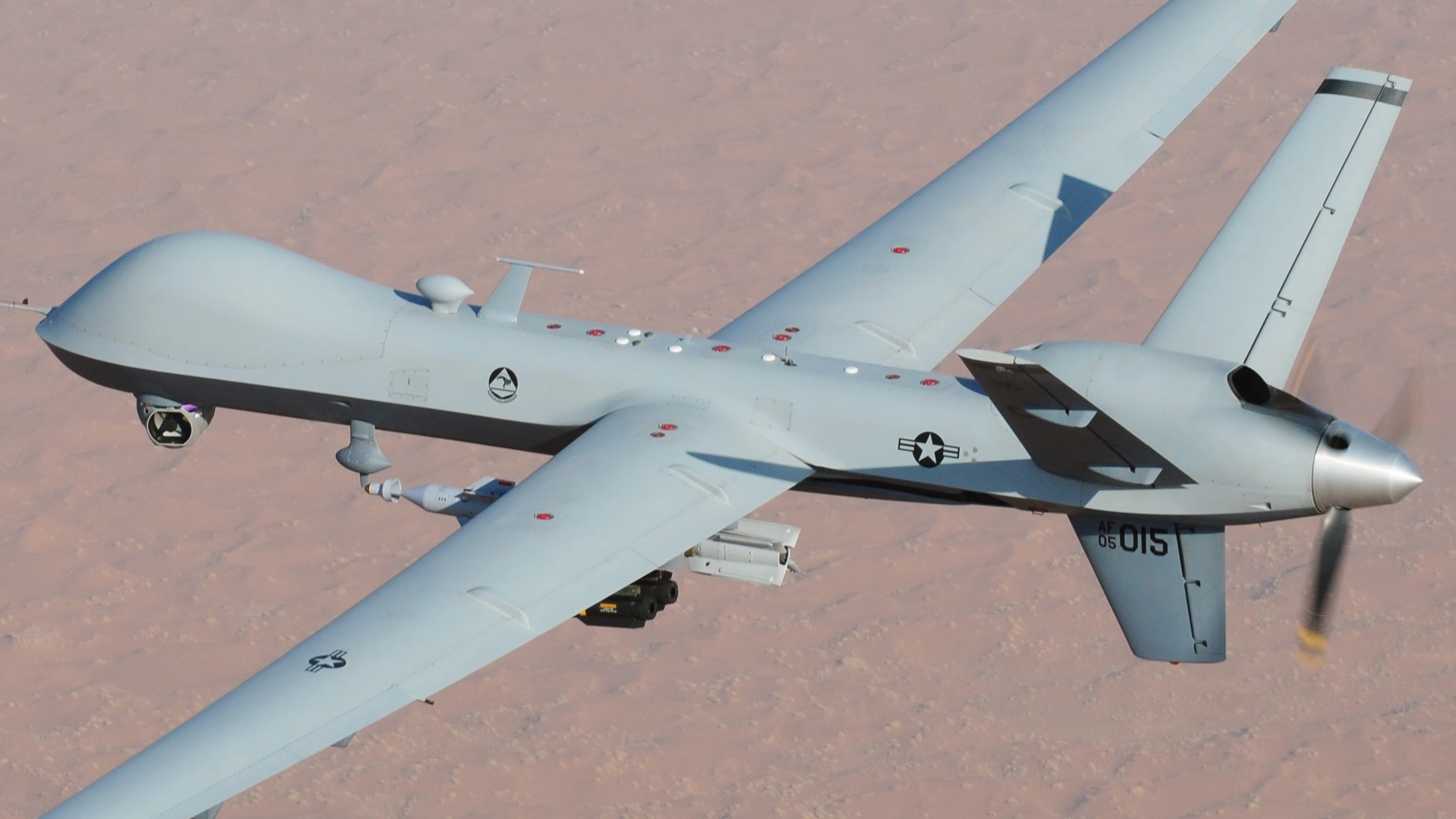
ARLINGTON- The United States leads a widely cited public ranking of combat drones with 444 airframes. Türkiye follows with 443, and Iran ranks third with 328.
Cheap drones in Ukraine and Iran have beaten far costlier crewed aircraft and started a new arms race. These rankings leave out the cheapest drones, so production capacity now matters as much as fleet size.
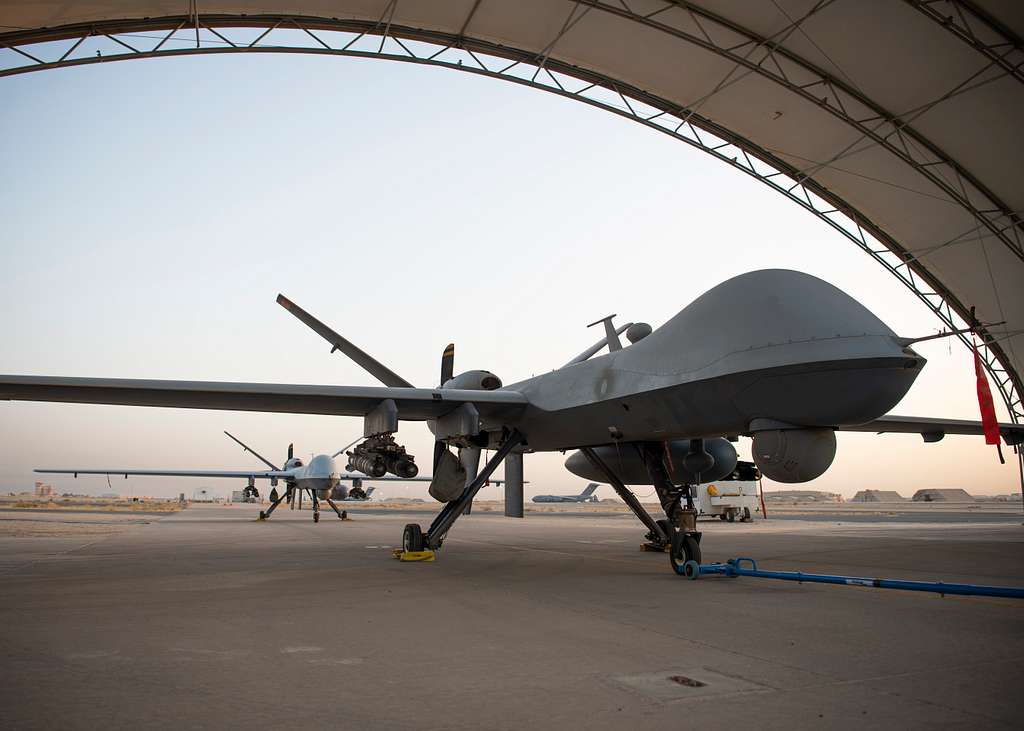
World’s Largest Air Forces By Combat Drones
Simple Flying reported that the most widely circulated rankings place the US first with 444 airframes. The table below excludes loitering munitions and UAVs without combat capability.
Some summaries leave Türkiye out and put Iran second at 328, followed by Saudi Arabia at 306 and China at 160.
| Rank | Country | Estimated Fleet | Notable Platforms |
|---|---|---|---|
| 1 | United States | 444 | MQ-9A Reaper, MQ-1C Gray Eagle |
| 2 | Türkiye | 443 | Bayraktar TB2/TB3, Akıncı, Anka, Aksungur |
| 3 | Iran | 328 | Shahed-129, Mohajer-6, Ababil series |
| 4 | Saudi Arabia | 306 | CH-4, CH-5, Wing Loong II |
| 5 | China | 160 | Wing Loong II, GJ-11 Sharp Sword, CH-4/CH-5 |
| 6 | Russia | 105 | Orion, S-70 Okhotnik-B, Geran/Shahed variants |
| 7 | Pakistan | 95 | Wing Loong II, CH-4, Shahpar-II |
| 8 | Egypt | 32 | Wing Loong I/II, CH-4 |
| 9 | Poland | 24 | Bayraktar TB2, FlyEye, Warmate |
| 10 | France | 16 | MQ-9 Reaper, Safran Patroller |
These figures are estimates, not a census. Countries rarely publish full inventories, and databases classify combat-capable UAVs differently. Fleets also change through procurement, retirement, combat losses, and new deliveries.
The RQ-4 Global Hawk mainly collects intelligence, surveillance, and reconnaissance (ISR) data, so it does not count as an armed combat UAV.
The Institute for Defence Studies and Analyses stresses that payload and tactical capability must be weighed to count combat-capable, reusable UAVs accurately.
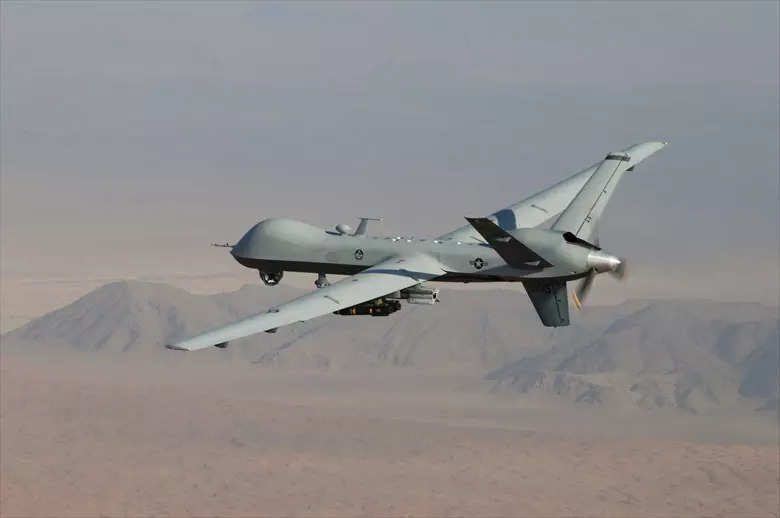
Which Drones Count as Combat Drones
Reusable Combat UAVs
Medium-Altitude Long-Endurance (MALE) platforms such as the MQ-9A Reaper, Bayraktar TB2, and Wing Loong II stay airborne for long periods.
They carry electro-optical and infrared sensors, synthetic aperture radar, and signals intelligence equipment. Some also carry laser-guided or other precision weapons, which removes the need for separate crewed strikes.
These aircraft give commanders persistent coverage of large areas without risking a pilot. They also need trained crews, communication links, maintenance, and support infrastructure.
A country’s fleet size therefore signals its theater-level ISR persistence and stand-off strike capability.
Loitering Munitions and One-Way Attack Drones
Loitering munitions stay in an area while they search for a target, then destroy themselves on impact.
The US treats small loitering munitions as crew-served weapons. Systems such as the AeroVironment Switchblade and the Anduril Bolt-M carry an integrated warhead and are expended in use.
Iran’s Shahed-136 is a one-way attack drone built to fly to a target and detonate. Russia also uses Shahed-derived drones under the designation Geran. Counting every loitering munition and expendable drone would put Ukraine and Russia at the top of the ranking.
FPV Drones
First-person-view (FPV) drones are smaller and cheaper than reusable UAVs. Operators fly them using a live video feed for reconnaissance and short-range precision attacks. Most are consumed in a single mission.
Counting them beside long-endurance aircraft would be like adding a nation’s fighter jets to its stock of shoulder-fired rockets.

Cost Gap Between Reusable and Expendable Drones
Reusable military drones cost roughly $1 million to more than $15 million each, depending on size, payload, and sensors.
A US Air Force official testified that an MQ-9A can cost up to $50 million depending on its sensor package. High-end systems such as the Global Hawk and Triton cost more than $100 million each when the price includes mission equipment, ground infrastructure, and support. An infantry FPV drone costs a few thousand dollars.
The Shahed-136 is often priced near $35,000. CSIS uses $35,000 as a conservative midpoint estimate, and published estimates range from about $20,000 to $50,000. That gap creates a cost problem for defenders.
CSIS-cited figures put a Patriot interceptor above $3 million, and NASAMS missiles cost about $1 million per round.
Not every drone attack succeeds, and not every interception loses money. Defenders still have to weigh the cost of each engagement, the number of incoming threats, and the time needed to build replacement missiles.
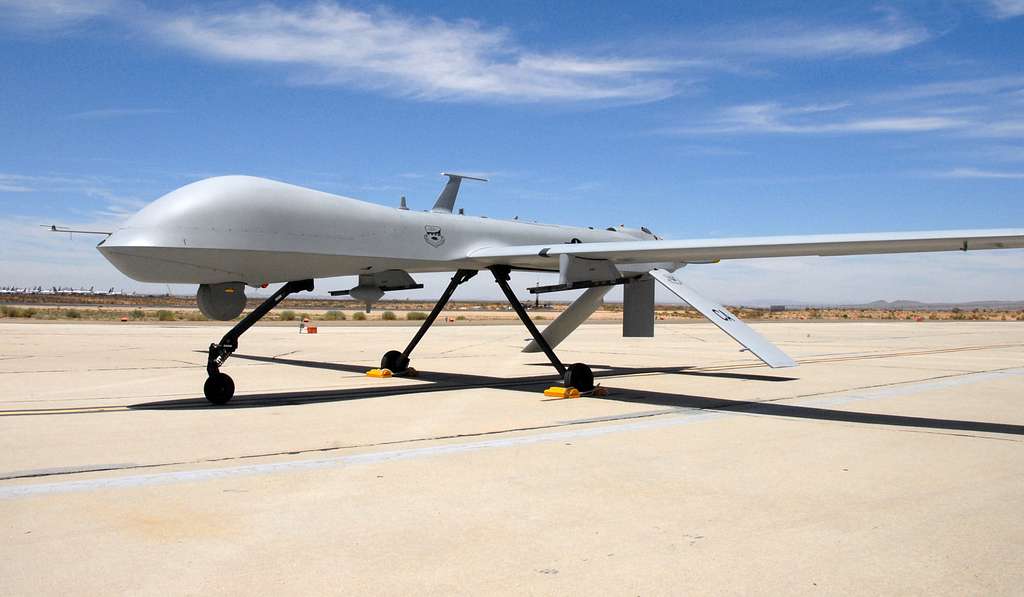
US Reaper Fleet Shrinks to 135 Aircraft
The Air Force reported 351 MQ-9As in fiscal year 2022 and 135 in May 2026. The decline came from divesting older variants, accidents, and combat losses.
Reports put losses in the 2026 campaign against Iran at about 45 aircraft, roughly a quarter of the fleet.
The 135 figure covers only the Reaper, not the entire American drone inventory. The Air Force says 135 aircraft still support its requirement for 56 combat lines worldwide, but each line can need several aircraft for continuous coverage.
The service has also proposed a lower-cost successor program, known as MMA, approved in May and released in July.

Collaborative Combat Aircraft Reshape Air Power
Recent air wars exposed the vulnerability of legacy drones and crewed aircraft. US planning now centers on the Collaborative Combat Aircraft (CCA) program and the new Drone Dominance Plan.
CCA drones act as “loyal wingmen” for crewed fighters. They can carry extra weapons, scout with sensors, conduct reconnaissance, and jam enemy radars. They aim to add combat mass at lower cost and keep pilots farther from hostile air defenses.
Announced concepts, prototypes, and target dates do not prove full-rate production or operational service. Programs vary widely in maturity.
Germany
Airbus and Kratos adapted the XQ-58A Valkyrie into the U740 for the German Air Force. Their partnership dates to July 2025.
The U740 made its first European flight on 12 October 2026 at an unnamed Northern European test site. That flight did not yet use Airbus’s MARS mission system.
The next test campaign is planned for mid-2027, and the companies target a combat-ready CCA by 2029. France and Germany ended the joint FCAS fighter program in June 2026.
Germany is also testing a different concept, the Cobra 600 from Diehl Defence and Polaris Raumflugzeuge. It carries a single IRIS-T air-to-air missile.
A Diehl official told Janes it is not a loyal wingman or CCA and has no sensors. Reports say it aims to extend the missile’s reach, including against aircraft carrying guided bombs.
France
France’s Air Force, procurement agency, and defense AI agency run Project Hypairion, launched in summer 2026.
French officials plan a first full-scale trial of combat drones flying with crewed fighters in 2028. The lessons are meant to shape drones for the Rafale F5 upgrade, expected around 2033.
United Kingdom and GCAP
BAE Systems unveiled the Hawk-sized Brontanax at Farnborough on 22 July 2026. A Typhoon pilot or mission commander is designed to operate it from a distance. BAE plans service entry before the end of the decade and calls it a “stepping stone” toward GCAP.
The UK Defence Investment Plan commits £300 million to the StormFighter autonomous aircraft program. Brontanax is still a prototype heading into ground testing.
The Global Combat Air Programme (GCAP) is a separate crewed sixth-generation fighter effort led by the UK, Italy, and Japan. Canada became its first observer nation on 21 July 2026. Observer status gives Canada no decision-making role.
Türkiye
Baykar says it has begun serial production of the jet-powered, low-observable Kızılelma. Its CEO said in May that Baykar aims to make the first serial deliveries within 2026.
Turkish Aerospace Industries has fielded the Anka-3 flying-wing stealth UCAV. Both are designed for strike or electronic warfare missions with human command at the tactical level. Both have relied on imported Ukrainian engines, and a domestic turbofan is due for pre-integration testing in early 2027.
Australia and China
Boeing Australia has debuted the MQ-28 Ghost Bat, designed to fly with crewed aircraft. China is developing the low-observable GJ-11 Sharp Sword. China’s 160-airframe estimate trails the US and Türkiye, but fleet totals do not capture technology, industrial scale, or mission capability.
Iran’s Low-Cost Attrition Strategy
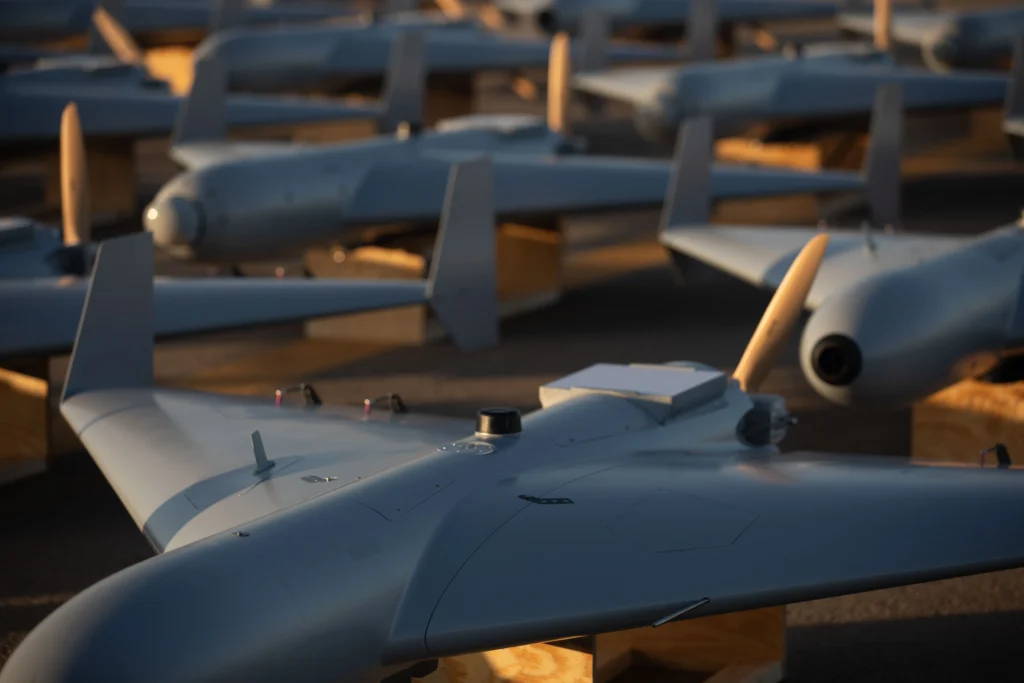
Iran sits at the opposite end from CCA programs and is often cited as a major threat to Western air power. Its approach treats aircraft as ammunition. The Shahed-136 is a delta-wing, one-way attack drone with a basic piston engine.
It follows fixed GPS coordinates to a static target with no real-time awareness, much like a long-range guided artillery shell. Iran built it from commercial supply chains.
Tehran emphasizes mass production over performance. At about $35,000 per drone, Iran can launch radar-saturating swarms against coalition bases in the Middle East. Defenders respond with interceptors that cost millions of dollars.
The attacks have drained US and allied interceptor stocks and exposed supply chain bottlenecks in restocking them. A CCA is a reusable aircraft built for multiple missions, which makes the two approaches different disciplines.
Ukraine and Russia Mass-Produce Tactical Drones
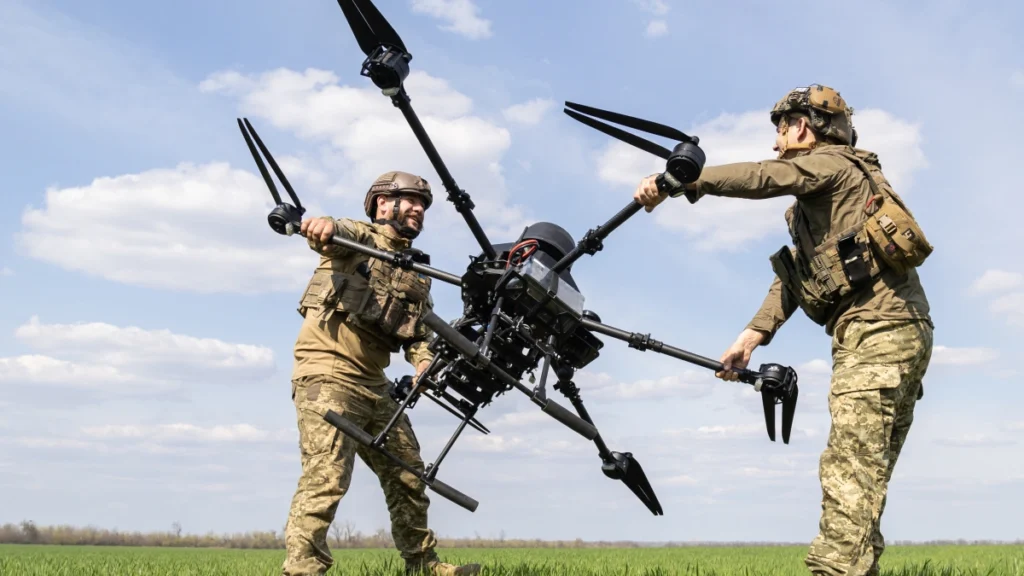
Ukraine’s National Security and Defense Council reported in January 2026 that its industry could build more than 8 million FPV drones a year across more than 160 companies. That figure measures capacity, not verified output.
Russia has also expanded production. These drones do not appear on air force registries or sit in hangars. They go straight to infantry squads as disposable precision weapons. The council says FPV drones cause about 60% of Russian army losses, a Ukrainian claim.
Their combat life is often a few minutes, and most fly one sortie. Heavy electronic warfare jamming drives the losses. Ukraine responded with fiber-optic-controlled drones that radio jamming cannot disrupt. Physical damage and other countermeasures still defeat them. Russia has fielded similar models.
The volume of incoming drones also led Ukraine to build interceptor drones that hunt and ram enemy UAVs. Ukraine’s defense minister claimed interceptors shot down more than 33,000 Russian drones in March, a monthly record. This is an official claim, not an audited figure.
Because these drones are consumed so fast, analysts increasingly judge strength by how quickly a country replaces losses. A full assessment weighs reusable fleet size, sensors, endurance, production capacity, spare parts, resistance to jamming, and replacement speed.
Stay tuned with us. Further, follow us on social media for the latest updates.
Join us on Telegram Group for the Latest Aviation Updates. Subsequently, follow us on Google News
