

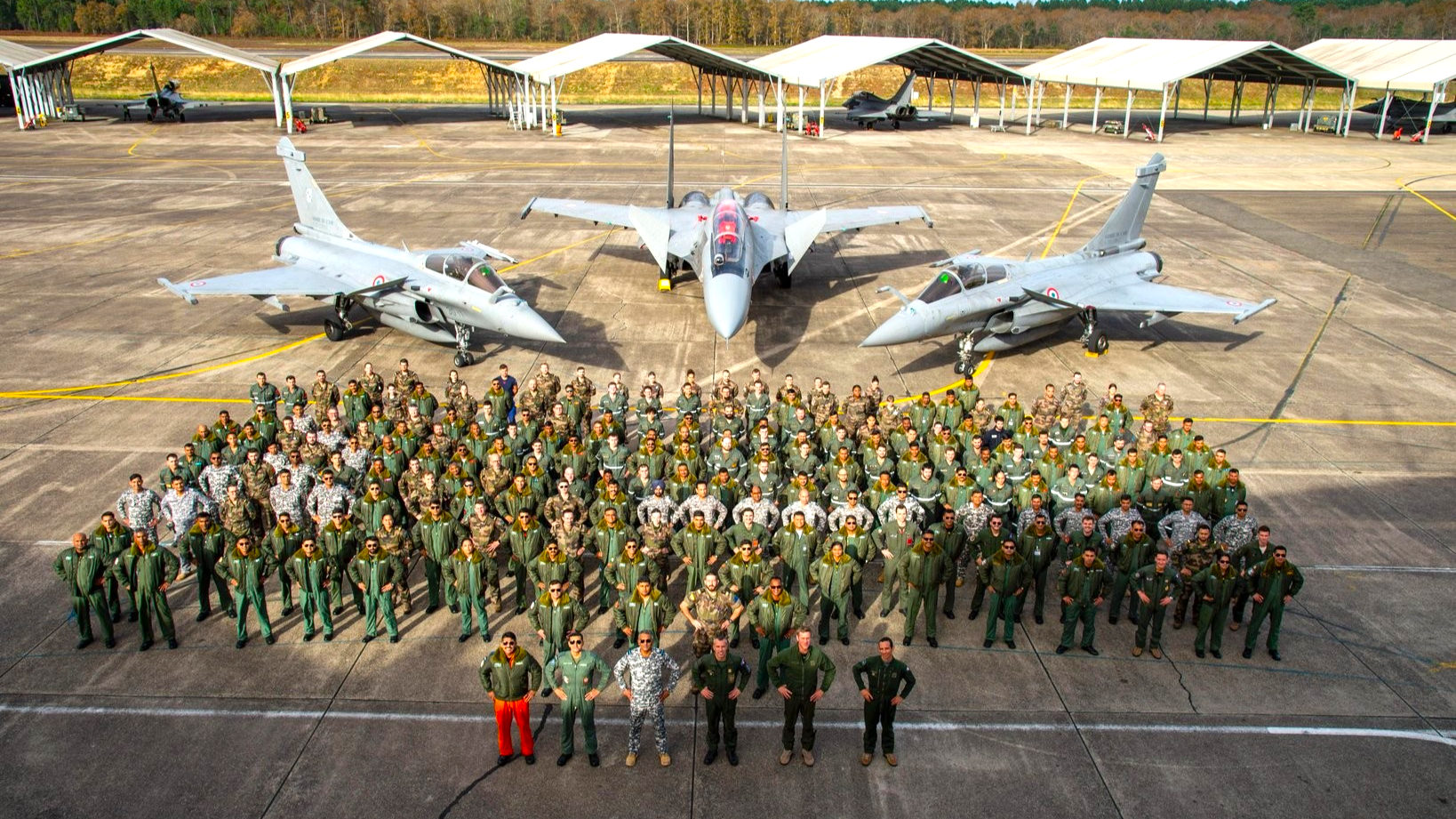
The World Directory of Modern Military Aircraft (WDMMA) has published its latest global air power ranking, placing the United States Air Force at the top with a TruVal Rating (TVR) of 242.9.
The list scores air services on quality, balance, and modernization rather than raw aircraft counts. The United States holds four of the top five positions, while the Indian Air Force ranks sixth, ahead of China.
The current WDMMA inventory tracks 103 countries. It covers 129 air services in total, including Army, Navy, and Marine branches where those exist as separate arms.
Across those services, the directory follows 48,082 aircraft. The ranking is updated annually.
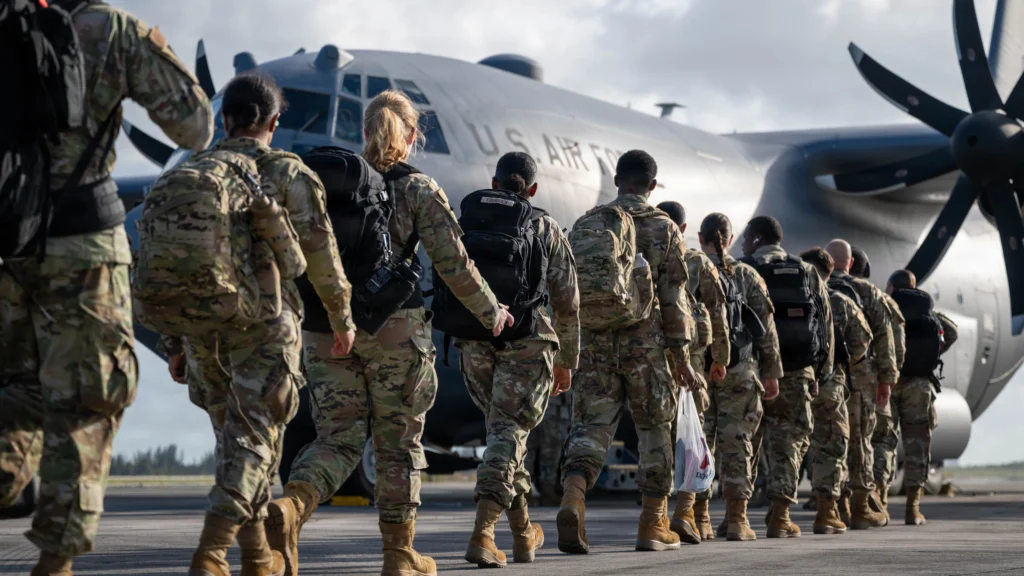
How the TruVal Rating Measures Global Air Power
WDMMA builds its annual ranking around a formula that assesses the total fighting strength of the world’s air services. The result is the TruVal Rating, a single score designed to separate each air power based on more than overall size.
The formula weighs modernization, logistical support, attack capability, and defensive capability. Under this method, an air arm is not judged on how many aircraft it operates, but on the quality and general mix of its inventory.
WDMMA gives greater weight to categories that many air forces overlook. These include special-mission aircraft, dedicated bomber forces, close air support (CAS) platforms, training aircraft, and units still on order.
The rating also accounts for local aerospace industry capability, inventory balance across unit types, and force experience. An air service that depends entirely on imported aircraft therefore scores lower than one supported by a domestic manufacturing base.
Top 10 Air Forces by TruVal Rating
The United States Air Force holds the highest attainable TVR score of 242.9 with 5,004 units. Its position reflects both scale and structure.
The service fields a broad mix of aircraft types, with balance reinforced by sheer numbers. Most of its aircraft are locally sourced, supported by the industrial base of the United States.
The USAF maintains dedicated strategic bombers, CAS aircraft, and a large helicopter and fighter fleet, with many fighters classified as multirole types. It also operates hundreds of transport aircraft capable of reaching any point on the globe.
Beyond combat and airlift, the service sustains a large training fleet, a substantial tanker force, and an extensive special-mission inventory. Hundreds of additional units remain on order, which further strengthens its score.
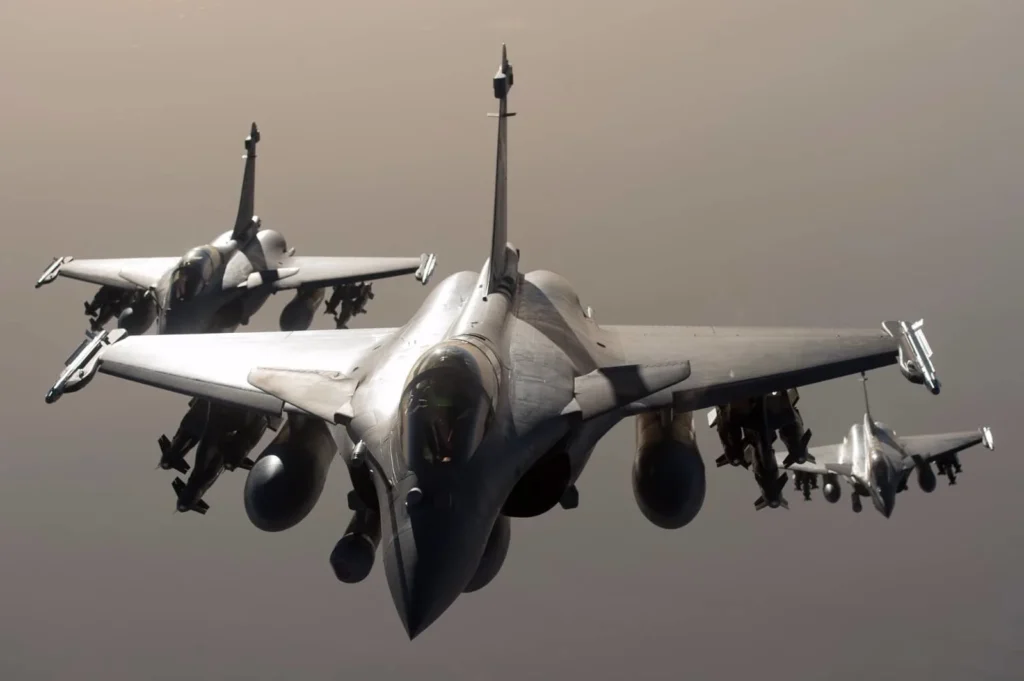
No.10 French Air Force (55.3)
French Air and Space Force enters 2026 with 511 aircraft in its active inventory, according to the World Directory of Modern Military Aircraft (WDMMA). The fleet spans combat, transport, training, tanker, and special-mission roles.
Fighters account for the largest share of the force, while a 198-aircraft procurement pipeline led by the Dassault Rafale points to a positive outlook across every tracked category.
Inside France’s 511-Aircraft Air Fleet
WDMMA groups the French inventory into three functional blocks. Combat and attack aircraft total 192 units. General support platforms, which cover helicopters, transports, tankers, and special-mission types, total 193 units. Pilot and crew training aircraft account for the remaining 126 units.
The service carries a TruVal Rating (TVR) of 55.3. WDMMA calculates this score by measuring an air arm’s current strengths and weaknesses against the top-ranked performer, the United States Air Force, which holds a rating of 242.9.
Readiness projections show how many aircraft would be mission-capable at different serviceability levels. At a 50 percent readiness rate, 256 aircraft would be available. That figure rises to 358 aircraft at 70 percent, 383 aircraft at 75 percent, and 409 aircraft at 80 percent. WDMMA bases these rates on the published USAF standard.
The directory does not track unmanned aerial vehicles, citing reporting discrepancies between countries and sources. All figures are drawn from publicly available information.
Fighter Fleet Built Around Rafale and Mirage 2000
Fighters make up roughly 38 percent of total strength at 192 units, the single largest category in the inventory.
The Dassault Rafale B/C leads with 100 multirole aircraft. The Mirage 2000D follows with 66 units in the strike role. The Mirage 2000-5F contributes 26 multirole airframes.
This category excludes dedicated bombers and close-air support types. WDMMA lists the short-term and long-term outlook for French fighter strength as positive.
Transport Aircraft Cover Tactical and Strategic Roles
Transports represent about 19 percent of the fleet with 97 units, the second-largest category.
The CASA CN-235 is the most numerous type at 27 tactical aircraft. The Airbus A400M Atlas accounts for 24 units in the strategic and tactical role, followed by 15 TBM 700 liaison aircraft and 14 C-130H Hercules tactical transports.
Smaller fleets round out the category. These include five DHC-6 Twin Otter liaison aircraft, four A330-200 VIP jets, two C-130J Super Hercules, two Falcon 7X, two Falcon 2000EX/LX, and two Falcon 900 aircraft assigned to government transport duties.
Training Fleet Ranks Second in Size
Trainers make up approximately 25 percent of the inventory at 126 units, covering basic, advanced, general flight, and rotary-wing instruction.
The Pilatus PC-21 leads the category with 26 advanced trainers. The Embraer EMB-121 Xingu contributes 22 flight trainers, while the Grob G120A-F provides 18 basic trainers. The Alpha Jet remains in service with 18 advanced jet trainers.
The fleet also includes 16 Cirrus SR20 and nine SR22 flight trainers, seven Mirage 2000B fighter trainers, five HK36 flight trainers, three EA-300 aerobatic aircraft, one King Air 350ER crew trainer, and one H225M helicopter trainer.
Helicopters, Tankers, and Special-Mission Aircraft
Rotary-wing platforms account for about 14 percent of total strength at 73 units. The AS555 Fennec is the most common type with 40 light multirole helicopters, followed by 18 SA330 Puma transports, 10 H225M Caracal multi-mission helicopters, three H215M medium-lift aircraft, and two H225 medium utility helicopters.
Aerial tankers form roughly 3 percent of the fleet at 17 units. The A330 MRTT Phénix leads with 12 strategic tankers, supported by three KC-135FR strategic tankers and two KC-130FR tactical tankers.
Special-mission platforms make up about 1 percent of the force with six aircraft. Four E-3F Sentry aircraft handle airborne early warning, while two Vador aircraft perform ISTAR and SIGINT missions.
Procurement Pipeline Reaches 198 Aircraft
France has 198 aircraft on order for delivery in the current procurement year or in later years.
The Rafale B/C dominates the pipeline with 117 multirole fighters on order. The H160M Guépard follows with 40 multi-mission helicopters, and the A400M adds 26 strategic and tactical transports.
The order book also covers nine additional H225M multi-mission helicopters, three more Phénix strategic tankers, two Archange electronic warfare aircraft, and one further Vador ISTAR/SIGINT platform.
WDMMA notes that aircraft listed under future procurement may not enter service during the current year for a range of reasons.
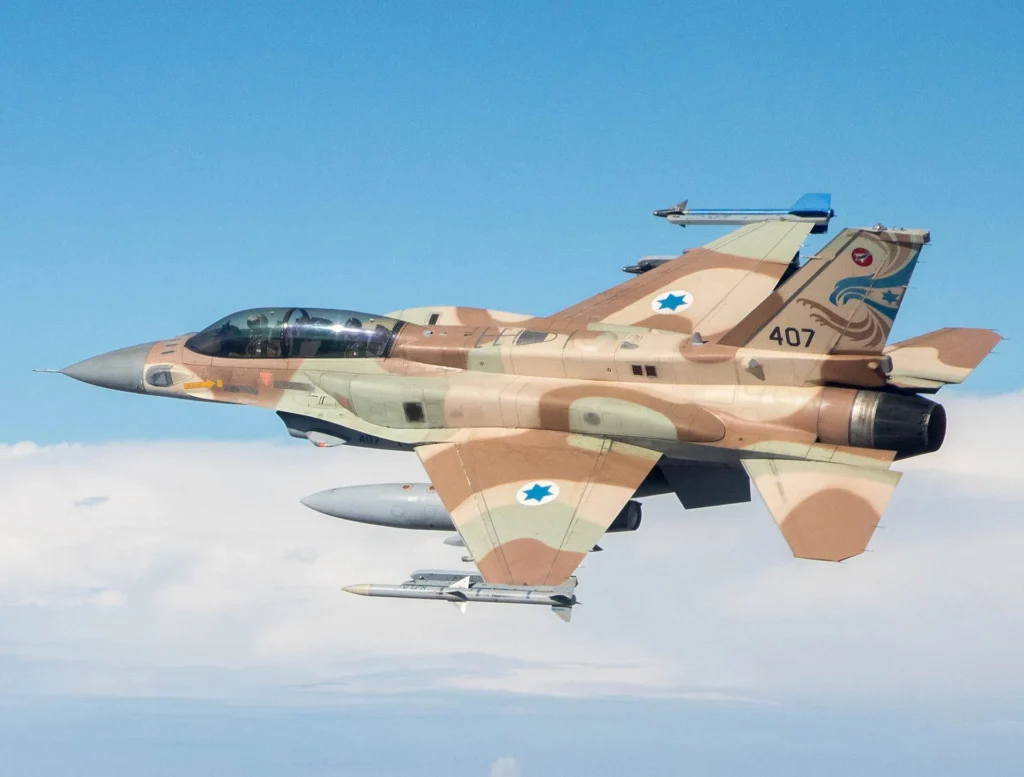
No.9 Israeli Air Force (56.3)
The Israeli Air Force enters 2026 with 605 aircraft in its active inventory, according to the latest assessment published by the World Directory of Modern Military Aircraft (WDMMA). The force ranks 9th out of 129 air services tracked globally.
Combat types account for the largest share of the fleet, while a further 132 airframes sit on order, led by 50 F-15IA multirole fighters and 36 additional F-35I strike aircraft.
Inside the 2026 Israeli Air Force Fleet Breakdown
WDMMA counts 605 total units across attack, logistics, special-mission, training, and general support categories. The directory notes that inventory figures and variant listings are derived from publicly available sources and are presented as-is.
The service holds a TruVal Rating (TVR) of 56.3. This score measures current strengths and weaknesses against the top-performing air service, the United States Air Force, which carries a rating of 242.9. WDMMA currently tracks 129 individual air services across 103 countries, placing the Israeli Air Force at 9th in the global ranking.
Force concentration across the fleet breaks down as follows:
- Combat/Attack: 272 units
- General Support: 180 units
- Pilot/Crew Training: 153 units
- Future Procurement: 132 units
Unmanned aerial vehicles are not included in the count. WDMMA states that discrepancies in UAV reporting between countries and sources prevent consistent tracking of unmanned platforms.
Fighter Fleet Anchors Combat Strength
Fighters make up roughly 45% of total strength at 272 units. The category covers fighter, interceptor, and strike types, including multirole aircraft, but excludes dedicated bombers and close-air support platforms. WDMMA lists the short-term and long-term outlook for this category as POSITIVE.
- F-16I (Multirole): 102 units
- F-16C (Multirole): 73 units
- F-35I (Strike): 39 units
- F-15I (Multirole): 25 units
- F-15C (Fighter): 17 units
- F-15A (Fighter): 16 units
The F-16I remains the single most numerous type in the entire inventory. Combined F-16 airframes in the fighter category total 175 units, while F-15 variants account for 58 units.
Rotary-Wing Fleet and Attack Helicopters
Helicopters represent approximately 21% of total strength at 127 units. The category covers manned rotary-wing platforms used in transport, special-mission, troop support, and direct-attack roles. The outlook is listed as POSITIVE.
- UH-60A/L (Medium-Lift): 49 units
- AH-64A (Attack): 26 units
- CH-53 (Heavy-Lift): 22 units
- AH-64D (Attack): 22 units
- AS565 (Multirole): 4 units
- Bell 206 (Light Utility): 4 units
Attack helicopters total 48 units across the AH-64A and AH-64D variants. Heavy-lift capability rests entirely with the 22 CH-53 airframes.
Training Fleet Ranks Second in Size
Trainers account for about 25% of total strength at 153 units, making the category the second largest after fighters. It covers basic, advanced, general flight, and rotary-wing airman training roles. The outlook is POSITIVE.
- F-16D (Fighter Trainer): 49 units
- M-346 (Advanced Jet Trainer): 30 units
- T-6A (Basic Trainer): 20 units
- F-15B/D (Fighter Trainer): 20 units
- OH-58 (Helicopter Trainer): 18 units
- G120A (Flight Trainer): 16 units
Fighter trainers alone total 69 units across the F-16D and F-15B/D fleets.
Transports, Tankers, and Special-Mission Aircraft
Transports form roughly 2% of the fleet at 14 units. The category covers fixed-wing airframes in dedicated hauling roles, serving military or high-government personnel and supply or cargo delivery at the strategic and tactical level. The outlook is STABLE.
- C-130J (Tactical): 7 units
- B200 (Utility): 4 units
- C-130E/H (Tactical): 3 units
Aerial tankers also account for approximately 2% of total strength at 14 units, with a POSITIVE outlook.
- Boeing 707 (Aerial Refueling): 7 units
- KC-130H (Aerial Refueling): 7 units
Special-mission platforms make up around 4% of the fleet at 25 units. The category includes airborne early warning (AEW), maritime patrol, and electronic warfare types. The outlook is STABLE.
- B200 (Reconnaissance): 18 units
- G550 (SIGINT): 3 units
- G550 (Airborne Early Warning): 2 units
- Boeing 707 (Airborne Early Warning): 2 units
Procurement Pipeline Totals 132 Airframes
WDMMA lists 132 aircraft set for delivery in the current procurement year or in subsequent years. The pipeline spans fighters, heavy-lift helicopters, trainers, and tankers.
- F-15IA (Multirole): 50 units
- F-35I (Strike): 36 units
- S-65C-3 (Heavy-Lift): 18 units
- AW119 (Helo Trainer): 12 units
- SH-60F (Medium-Lift): 8 units
- KC-46 (Aerial Tanker): 8 units
The directory cautions that airframes listed under future procurement may not enter service in the current year for various reasons.
Readiness Rate Projections
WDMMA applies the published USAF readiness standard to estimate available aircraft at different rates. Based on the 605-airframe total:
- 50.0% readiness: 303 available aircraft
- 70.0% readiness: 424 available aircraft
- 75.0% readiness: 454 available aircraft
- 80.0% readiness: 484 available aircraft
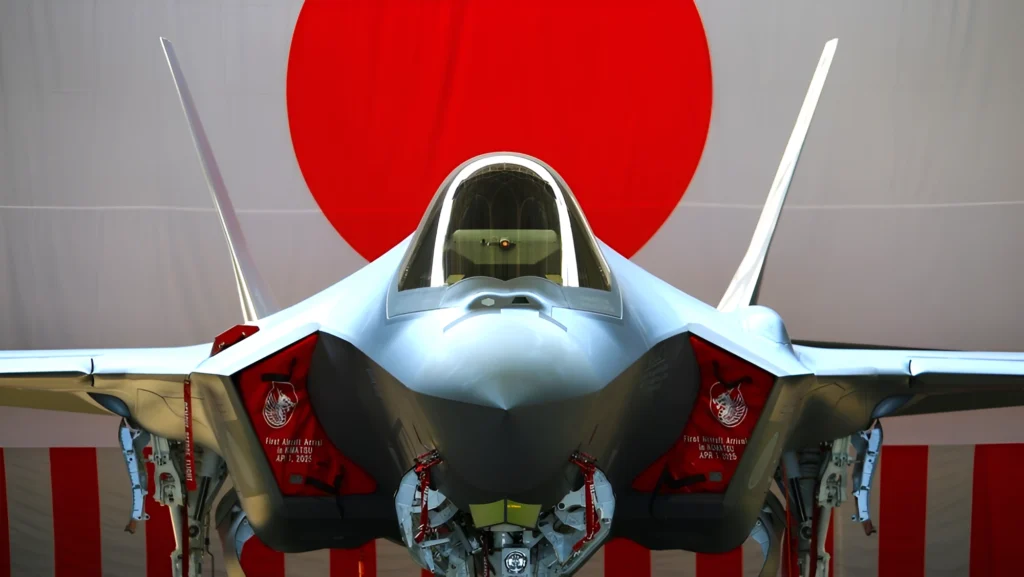
No.8 Japan Air Force (58.1)
The Japan Air Self-Defense Force (JASDF) counts 756 aircraft in its active inventory for 2026, according to the World Directory of Modern Military Aircraft (WDMMA). The force ranks eighth among the 129 air services tracked worldwide.
Fighters account for 253 airframes, trainers for 328, and support types for the remainder. A further 186 aircraft sit on order, led by 134 additional F-35A strike fighters.
Inside Japan’s 756-Aircraft Air Arm
WDMMA groups the JASDF inventory into four broad concentrations. Combat and attack platforms total 253 units. Pilot and crew training aircraft form the largest single block at 328 units. General support types contribute 175 units, while future procurement adds another 186 airframes that are contracted but not yet in active service.
The organisation assigns the JASDF a TruVal Rating (TVR) of 58.1. That score is measured against the United States Air Force, which sits at the top of the scale with 242.9. The rating places Japan eighth globally out of 129 individual air services drawn from 103 countries.
WDMMA notes that its figures are compiled from publicly available sources and that unmanned aerial vehicles are excluded from the count, owing to inconsistent UAV reporting between nations. The current dataset carries an update date of December 6, 2024.
Fighter Fleet Built Around Three Types
Fighters make up roughly 33 percent of total JASDF strength, with 253 airframes spread across three types.
The F-15J leads the category with 155 units in the air superiority role. The Mitsubishi F-2A follows with 62 units assigned to multirole duties. The F-35A/B accounts for 36 units in the strike role.
WDMMA lists the short-term and long-term outlook for the fighter category as STABLE.
Training Aircraft Form the Largest Category
Trainers represent about 43 percent of the inventory, the single largest share of any category, at 328 airframes.
The T-4 advanced jet trainer dominates the segment with 198 units. The T-7 basic trainer adds 49 units, and the T-1 flight trainer contributes 13 units.
Two combat trainer variants are also counted here. The F-15DJ accounts for 44 units and the F-2B for 24 units, both derived from frontline fighter designs. The outlook for the trainer category is listed as STABLE.
Transport and Aerial Refueling Assets
Fixed-wing transports total 44 airframes, close to 6 percent of the fleet. The C-130H leads with 14 units in the tactical role, followed by 13 C-2 tactical transports and 6 remaining C-1 aircraft.
VIP and government transport duties fall to 5 G-IV aircraft and 2 Boeing 777-300ER jets. Flight inspection work is handled by 2 BAe 125 aircraft and 2 Citation Latitude jets. The transport outlook is rated POSITIVE.
The aerial tanker fleet is the smallest category at 8 airframes, roughly 1 percent of total strength. It comprises 4 KC-767 and 2 KC-46A strategic refuelling aircraft, plus 2 KC-130H tactical tankers. WDMMA lists the tanker outlook as POSITIVE.
Special-Mission Platforms and Helicopters
Special-mission aircraft number 51 units, close to 7 percent of the fleet. The U-125A is the most numerous at 26 units in the search and rescue role.
Airborne early warning duties are split between 16 E-2C/D aircraft and 4 Boeing 767 platforms. Electronic warfare work is covered by 3 YS-11 aircraft and 1 EC-1. A single RC-2 handles reconnaissance. The category outlook is POSITIVE.
Rotary-wing strength stands at 72 airframes, about 10 percent of the inventory. The UH-60J accounts for 55 multi-mission units, and the CH-47J provides 17 medium-lift helicopters. The helicopter outlook is also listed as POSITIVE.
Future Procurement Weighted Toward the F-35A
The 186 airframes on order are heavily concentrated in the fifth-generation strike category. The F-35A alone accounts for 134 of those units, a figure that far exceeds the 36 F-35A/B airframes currently in active service.
The remaining orders cover 25 UH-60J multi-mission helicopters, 14 E-2C/D airborne early warning aircraft, 7 C-2 tactical transports, 4 KC-46A strategic tankers, and 2 Citation Latitude flight inspection jets.
WDMMA notes that aircraft listed under future procurement may not be delivered within the current year for a range of reasons.
Readiness Rates Applied to the Fleet
WDMMA applies published USAF readiness standards to model how many JASDF aircraft would be available at different rates.
At a 50 percent readiness rate, 378 aircraft would be available. At 70 percent, the figure rises to 529. A 75 percent rate yields 567 available airframes, and an 80 percent rate produces 605.
These figures are modelled projections based on the total inventory of 756 airframes rather than reported operational availability.

No.7 People’s Liberation Army Air Force, China (63.8)
The People’s Liberation Army Air Force (PLAAF) counts 3,733 aircraft in its active inventory, according to the 2026 review published by the World Directory of Modern Military Aircraft (WDMMA). The service holds seventh place among the 129 air arms tracked by the directory.
Combat types make up the largest share of the fleet, with 2,184 units assigned to attack roles. The PLAAF carries a TruVal Rating of 63.8, measured against the United States Air Force benchmark of 242.9, and the directory lists no airframes under future procurement.
How the PLAAF Fleet Is Structured
WDMMA divides the Chinese fleet into four broad blocks. Combat and attack aircraft account for 2,184 units. Pilot and crew training aircraft account for 1,060 units. General support aircraft, which cover transports, helicopters, tankers, and special-mission platforms, account for 489 units. Future procurement stands at 0 units in the current listing.
Fighters alone represent about 53 percent of total strength. Trainers follow at roughly 28 percent, a figure that reflects the scale of the Chinese pilot production pipeline. Transports account for about 7 percent, bombers 6 percent, special-mission platforms 3 percent, helicopters 2 percent, and aerial tankers 1 percent.
The directory rates the short-term and long-term outlook as STABLE for every category, meaning no category is flagged for expansion or contraction in the published procurement reports used by WDMMA.
Fighter Fleet Remains the Core of Chinese Air Power
The PLAAF operates 1,975 fighters, interceptors, and strike aircraft, excluding dedicated bombers and close-air support types.
The J-10 family is the single largest type. The service fields 588 J-10A, J-10B, J-10C, and J-10S multirole fighters. The ageing J-7 follows with 289 units, and the J-16 strike fighter accounts for 280 units.
Fifth-generation strength sits at 210 J-20 multirole fighters. The J-11 line, covering the J-11, J-11A, J-11B, and J-11BS variants, adds 205 units. The JH-7A fighter-bomber contributes 200 airframes.
Russian-origin and Russian-derived types remain in service. The PLAAF lists 97 Su-30MKK and Su-30MK2 multirole fighters, 32 Su-27 and Su-27UBK aircraft, and 24 Su-35S fighters. The J-8F and J-8H interceptor fleet stands at 50 units.
Bomber Strength Rests on a Single Type
The bomber category totals 209 aircraft, all of them H-6 variants. WDMMA lists the H-6, H-6E, H-6F, H-6H, and H-6K under the strategic bomber classification.
No other bomber type appears in the 2026 inventory, which leaves the H-6 series as the sole platform for the strategic-level delivery of air-launched and air-dropped munitions.
Transport Fleet Balances Strategic and Tactical Lift
The PLAAF operates 270 fixed-wing transports.
The Y-5 utility aircraft leads the category with 70 units. Strategic airlift rests on 50 Y-20 aircraft and 20 IL-76MD aircraft. The Y-7H utility transport accounts for 41 units.
Tactical lift includes 30 Y-8C aircraft, 30 Y-9 aircraft, and 16 MA60 aircraft. The fleet also includes 11 Y-12 utility aircraft and 2 Tu-154M aircraft used in the VIP and transport role.
Aerial Refueling Remains a Narrow Capability
Tanker strength stands at 26 aircraft, the smallest category in the inventory at about 1 percent of total force.
The fleet includes 15 H-6U and H-6DU tankers, 8 YY-20A tankers, and 3 IL-78 tankers. All three types are listed under the strategic tanker classification.
Special-Mission Platforms Cover 125 Aircraft
Special-mission aircraft total 125 units across airborne early warning, electronic warfare, reconnaissance, and maritime patrol roles.
Reconnaissance accounts for the largest slice, with 48 JZ-8 aircraft. Airborne early warning strength includes 20 KJ-500 aircraft, 4 KJ-200 aircraft, and 4 KJ-2000 aircraft.
Electronic warfare assets include 14 Y-8CB, Y-8DZ, Y-8G, and Y-8XZ aircraft, 12 J-16 electronic warfare aircraft, five further Y-series electronic warfare aircraft, and 3 An-30 aircraft.
Signals intelligence work falls to 5 Challenger 850 aircraft and 4 Tu-154M/D aircraft. Maritime patrol covers 3 Y-8 aircraft and 2 Boeing 737MPA aircraft, with 1 Y-8 listed in the surveillance role.
Rotary-Wing Fleet Stays Small
The PLAAF fields 68 helicopters, or about 2 percent of total strength.
The list includes 20 Z-9 multi-mission helicopters, 18 Z-8 medium-lift helicopters, and 15 Z-20S search and rescue helicopters. Foreign types cover 6 AS332 medium-utility helicopters, 6 Mi-8 transport and gunship helicopters, and 3 EC225 VIP helicopters.
Training Pipeline Accounts for More Than a Quarter of the Fleet
Trainers total 1,060 aircraft. The CJ-6, CJ-6A, and CJ-6B basic trainers account for 400 units. The JL-8 advanced jet trainer follows with 350 units.
The JJ-7 and JJ-7A fighter trainer fleet stands at 200 aircraft. Advanced jet training also draws on 50 JL-10 aircraft and 45 JL-9 aircraft. A further 15 HYJ-7 aircraft serve in the flight training role.
Readiness Rates Change the Picture
WDMMA applies published United States Air Force readiness standards to estimate the number of aircraft available at any given time.
At a 50 percent readiness rate, 1,867 PLAAF aircraft are available. At 70 percent, the figure rises to 2,613. At 75 percent, it reaches 2,800. At 80 percent, availability stands at 2,986 aircraft.
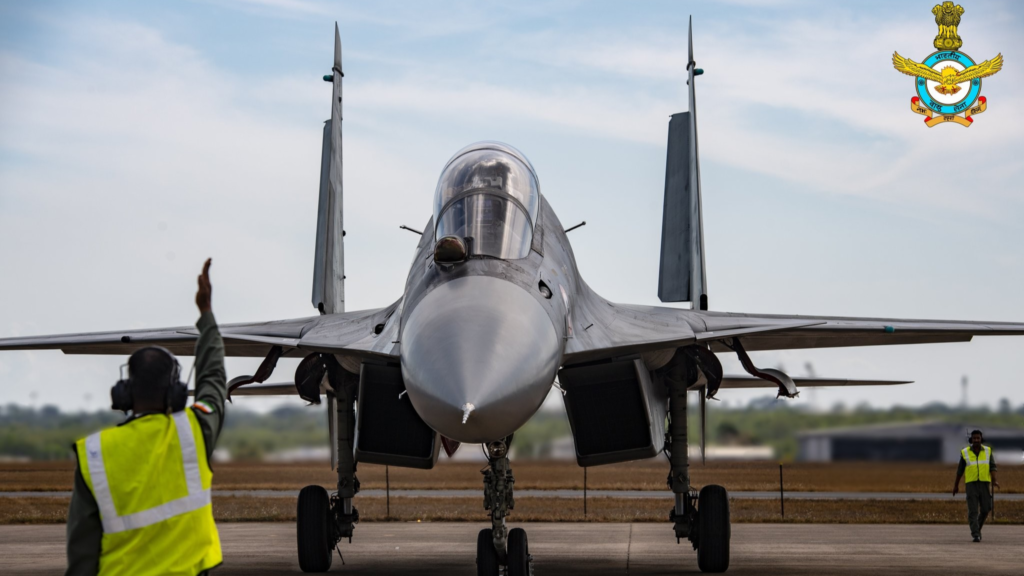
No.6 Indian Air Force (69.4)
Indian Air Force (IAF) remains the command centre for one of the largest air arms in the world. A new inventory review places the service at 1,716 active aircraft across combat, support, training, and special-mission roles.
The World Directory of Modern Military Aircraft (WDMMA) assessment gives the Indian Air Force a TruVal Rating of 69.4, measured against the United States Air Force benchmark of 242.9. Fighters, helicopters, and trainers form the bulk of the fleet, while 349 additional airframes sit on order.
Inside the Indian Air Force Fleet Structure
The WDMMA review divides the 1,716 airframes into four force concentration groups. Combat and attack aircraft account for 542 units. General support platforms make up the largest block at 800 units. Pilot and crew training aircraft total 374 units. A further 349 units fall under future procurement.
Readiness projections vary sharply depending on the rate applied. At a 50 percent readiness rate, 858 aircraft would be available. That figure rises to 1,201 aircraft at 70 percent, 1,287 aircraft at 75 percent, and 1,373 aircraft at 80 percent. WDMMA bases these readiness bands on the published United States Air Force standard.
The directory notes that unmanned aerial vehicles are not tracked in the count. Reporting discrepancies between countries and sources led WDMMA to exclude UAVs entirely, meaning the 1,716 total covers manned platforms only.
Fighter Fleet Remains Anchored by the Su-30MKI
Fighters represent roughly 32 percent of total strength at 542 units. The Sukhoi Su-30MKI dominates the category with 259 multirole aircraft, making it the single largest type in the entire inventory.
The Jaguar IS follows with 79 attack aircraft, supported by 8 Jaguar IM maritime strike variants. Legacy Soviet-era types remain in service, with 40 MiG-21bis interceptors and 40 MiG-29 multirole fighters listed, alongside 12 upgraded MiG-29UPG airframes.
France supplies two significant lines. The Mirage 2000H (M2000H) fighter-bomber numbers 37 units, while the Rafale fleet stands at 28 EH single-seat and 8 DH twin-seat aircraft. Domestic production contributes 31 Tejas Mk.1 multirole fighters. WDMMA rates the short-term and long-term outlook for the fighter category as positive.
Rotary-Wing Strength Crosses 490 Aircraft
Helicopters make up approximately 29 percent of the force with 498 units. The Mi-17V-5 transport and gunship fleet leads at 222 aircraft, followed by 95 HAL Dhruv Advanced Light Helicopters in the multi-mission role.
Light utility duties fall to 77 Chetak helicopters, 18 SA315B airframes, and 18 Cheetal helicopters. Attack capability comes from 22 Boeing AH-64E Apache helicopters and 16 HAL Rudra units, with 15 Mi-25/35 gunship and transport helicopters still listed.
Heavy lift rests with 15 CH-47F Chinook helicopters. The category outlook is rated positive.
Transport and Tanker Capability
Fixed-wing transports account for around 16 percent of the fleet at 282 units. Utility hauling relies on 58 Do 228-201 aircraft and 57 HS.748 airframes.
Tactical airlift is built around the Antonov An-32 family, with 53 An-32RE and 50 An-32 aircraft in service, supplemented by 17 C-130J-30 Super Hercules and 6 CN295W transports. Strategic lift comes from 17 IL-76MD aircraft and 11 C-17 Globemaster III airlifters.
VIP transport covers 4 Legacy 600 jets, 4 Airbus A321-200 aircraft, 3 Boeing 737-700 jets, and 2 Boeing 777-300ER aircraft.
The aerial refuelling fleet is the smallest category, listed at close to 0 percent of total strength. Six IL-78MKI strategic tankers carry the entire mission. WDMMA rates the tanker outlook as stable.
Training Fleet and Special-Mission Platforms
Trainers form approximately 22 percent of the inventory at 374 units. The Hawk 132 advanced jet trainer leads with 101 aircraft, followed by 77 Kiran jet trainers and 75 PC-7 Mk II basic trainers. A further 72 Virus flight trainers are listed.
Conversion training uses combat-derived types. These include 28 Jaguar IB strike trainers, 10 Mirage 2000TH fighter trainers, 7 MiG-29B fighter trainers, and 4 Tejas Mk.1 twin-seat trainers.
Special-mission platforms total 14 units, roughly 1 percent of the force. Airborne early warning duties are split between 3 A-50EI aircraft and 3 indigenous Netra Mk.1 platforms. Electronic and signals intelligence roles are covered by 3 G-IIISRA aircraft, 2 Global 5000 jets, and a single Boeing 707-337C. Two 1125 Astra aircraft handle reconnaissance. The outlook for this category is rated stable.
Future Procurement Points to Indigenous Platforms
WDMMA lists 349 airframes under current or future procurement, with domestic manufacturing accounting for most of the pipeline.
The largest single order is 73 additional Tejas Mk.1 multirole fighters, backed by 14 Tejas Mk.1T fighter trainers. The HTT-40 basic trainer accounts for 70 units.
Rotary-wing procurement is substantial. It includes 66 Prachand attack helicopters, 50 Rudra attack helicopters, 20 Dhruv multi-mission helicopters, and 6 Light Utility Helicopters (LUH). Transport growth comes from 50 CN295W tactical airlifters.
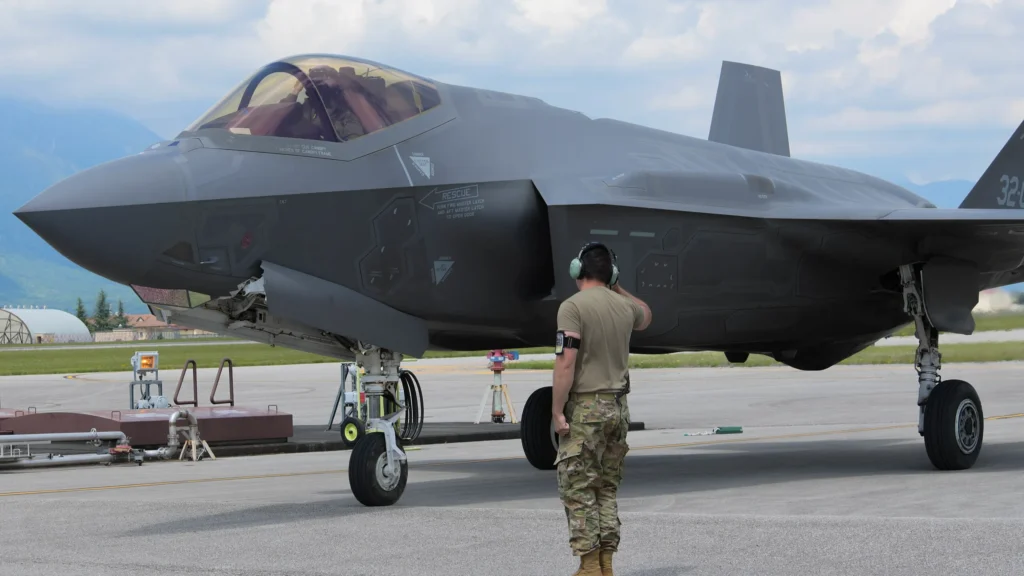
No.5 United States Marine Corps {USMC} (85.3)
United States Marine Corps (USMC) Aviation enters 2026 with 1,211 aircraft on its active roster, according to the World Directory of Modern Military Aircraft (WDMMA). The fleet spans fighters, rotary-wing platforms, tankers, transports, and trainers.
Rotary-wing aircraft dominate the force, accounting for roughly 59 percent of total strength. A further 738 airframes sit in the procurement pipeline, led by the F-35 Lightning II and the CH-53K King Stallion.
How the Marine Corps Air Arm Is Built
WDMMA groups the Marine aviation fleet into five tracked categories. Fighters account for 297 units, helicopters for 713 units, trainers for 110 units, aerial tankers for 64 units, and fixed-wing transports for 27 units. Together these five categories make up the full count of 1,211 airframes.
Viewed by role rather than by airframe type, the distribution changes shape. WDMMA lists 297 aircraft in the combat and attack role, 804 in general support, and 110 in pilot and crew training. The general support figure reflects the Marine Corps model, in which aviation exists primarily to move, supply, and cover the ground force rather than to conduct independent air campaigns.
The organization notes that its inventory figures are drawn from publicly available sources. The current dataset carries a last-updated date of November 26, 2024. Unmanned aerial vehicles are not tracked, which WDMMA attributes to inconsistent UAV reporting between countries and sources. As a result, the 1,211 figure covers manned airframes only.
Fighter Fleet Splits Across Three Types
The 297-strong fighter and strike inventory remains divided between legacy platforms and the fifth-generation force. The F/A-18A/C/D Hornet is still the single largest fighter type at 143 units, listed in the multirole category.
The AV-8B+ Harrier II follows with 102 units in the strike role. The F-35B/C accounts for 52 units, also classified under strike.
That leaves the majority of the current fighter line still tied to aircraft that entered service decades ago. WDMMA rates the short-term and long-term outlook for the fighter category as POSITIVE, a reflection of the volume of F-35 airframes still to be delivered.
Rotary-Wing Force Carries the Bulk of the Fleet
Helicopters and tiltrotors form the core of Marine aviation, with 713 units across seven types. The MV-22 Osprey leads at 277 units in the transport role, making it the most numerous single aircraft type in the entire Marine inventory.
The CH-53E Super Stallion accounts for 141 heavy-lift units. The UH-1Y Venom contributes 140 multi-mission units, while attack duties are split between 90 AH-1Z Vipers and 59 older AH-1W Super Cobras.
Two types round out the category at the low end. Five UH-1N utility helicopters remain listed, alongside a single CH-53K King Stallion, the successor to the CH-53E. WDMMA rates the outlook for the rotary-wing category as POSITIVE.
Transports and Tankers Fill the Support Gap
Fixed-wing transport is the smallest tracked category at 27 units, or roughly 2 percent of total strength. The fleet consists of 14 UC-12F utility aircraft, 12 Citation utility aircraft, and one C-20G in the VIP and utility role.
Aerial refueling capacity rests on the KC-130 line, which totals 64 units. The KC-130J accounts for 57 of these, with 7 older KC-130T airframes still listed. The tanker category represents about 5 percent of the fleet, and WDMMA marks its outlook as POSITIVE.
Training Fleet Runs on Combat Types
The 110-aircraft training inventory is unusual in that most of it consists of frontline combat airframes rather than dedicated trainers. The F/A-18B/C/D accounts for 48 fighter trainer units and the F-35B/C for 29 strike trainer units.
The TAV-8B contributes 16 strike trainer airframes. Adversary training is handled by 13 F-5F/N aircraft in the OPFOR role. Three T-34 basic trainers and one VH-92 helicopter trainer complete the category. WDMMA rates the training outlook as STABLE rather than positive.
Readiness Modeling Across the Fleet
WDMMA applies the published USAF readiness standard to model how many Marine aircraft would be available at different mission-capable rates. The results illustrate how sensitive a fleet of this size is to maintenance performance.
At a 50 percent readiness rate, 606 aircraft would be available. At 70 percent, that figure rises to 848. A 75 percent rate would yield 908 available airframes, and an 80 percent rate would produce 969. The gap between the lowest and highest scenario is 363 aircraft, a difference larger than the entire current fighter inventory.
Procurement Pipeline Reaches 738 Aircraft
The on-order and future procurement figure stands at 738 units, equal to roughly 61 percent of the current active inventory. The F-35B/C leads the pipeline with 346 aircraft on order, which would eventually push the Marine Corps stealth fighter force well beyond its present 52 units.
The CH-53K follows with 198 heavy-lift aircraft on order, a program intended to replace the aging CH-53E fleet. Attack helicopter procurement covers 138 AH-1Z units, and 47 additional MV-22 Ospreys are listed.
Smaller orders complete the pipeline. These include 5 KC-130J tankers, 2 Citation utility aircraft, 1 C-40A in the VIP and utility role, and 1 UC-12F. WDMMA cautions that airframes listed under procurement may not be delivered within the current year.
Where the Marine Corps Ranks Globally
WDMMA assigns Marine Corps Aviation a TruVal Rating of 56.3. The rating measures a service’s current strengths and weaknesses against the top performer, the United States Air Force, which scores 242.9.
That places Marine Corps Aviation ninth out of 129 individual air services tracked by the organization across 103 countries. The ranking reflects a force built for expeditionary and amphibious operations rather than for strategic air power, with no bombers and no dedicated air superiority fighters in the inventory.
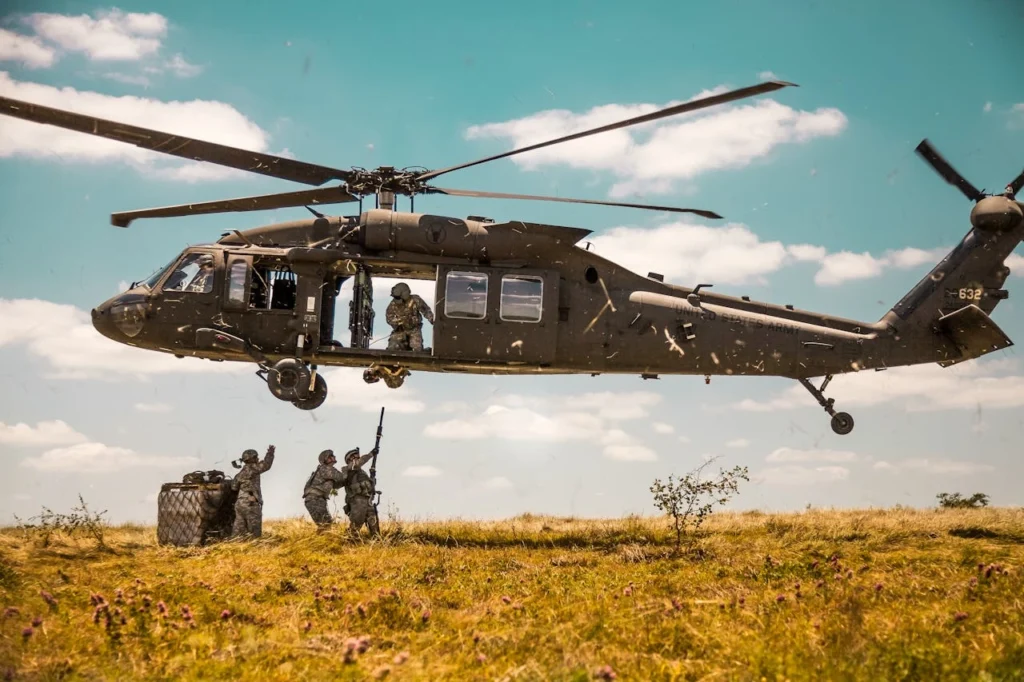
No.4 US Army (112.6)
The United States Army maintains 4,333 aircraft in its active inventory for 2026, according to the World Directory of Modern Military Aircraft (WDMMA). The service ranks fourth out of 129 individual air services tracked by the directory.
Helicopters make up roughly 94 percent of that total, led by 2,299 UH-60L/M Black Hawks. The Army also fields fixed-wing transports, special-mission platforms, and a small training fleet, with 226 additional airframes listed on order.
Inside the Largest Rotary-Wing Force
The WDMMA review counts 4,071 helicopters across the Army inventory, covering transport, special-mission, troop support, and direct-attack roles. The directory rates the short-term and long-term outlook for the rotary-wing category as POSITIVE, the only Army category to carry that assessment.
The UH-60L/M Black Hawk dominates the fleet with 2,299 units in the multi-mission role. The AH-64D/E Apache follows with 824 attack helicopters, and the CH-47D/F Chinook accounts for 449 medium-lift airframes.
Light and specialized rotary-wing types round out the category. The Army operates 391 UH-72A Lakota light utility helicopters, 61 MF-47D/E/G multi-mission helicopters, and 47 AH/MH-6M light scout and attack platforms.
Fixed-Wing Transports Form a Small but Varied Fleet
Transports account for approximately 4 percent of Army strength, with 152 fixed-wing airframes in the dedicated hauling role. These aircraft serve military and high-government personnel or handle supply and cargo delivery at the strategic and tactical level. WDMMA rates the category outlook as STABLE.
The C-12 utility aircraft leads the group with 95 units. The Army also operates 28 UC-35B utility jets, 13 RC-26D utility aircraft, seven C-27J tactical transports, five C-212 light utility aircraft, and three C-12J utility aircraft. A single VIP airframe covers the C-20H and C-37A/B designation.
Special-Mission Platforms Focus on Signals Intelligence
Purpose-built and modified special-mission aircraft represent about 2 percent of the inventory, totaling 88 units. WDMMA rates the category outlook as STABLE.
The RC-12 forms the backbone of this fleet with 73 signals intelligence aircraft. The Army supports that capability with nine Dash 8-315 reconnaissance aircraft, three RC-7 reconnaissance platforms, and three CL-650 aircraft assigned to intelligence, surveillance, target acquisition, and reconnaissance (ISTAR) duties.
Training Fleet Includes Russian-Built Helicopters
Trainers make up roughly 1 percent of the total inventory, with 22 airframes. The outlook for the category is STABLE.
Ten Mi-17 helicopters and one Mi-24 serve in the opposing force (OPFOR) training role. The Army also flies six G120TP flight trainers, four T-6D basic trainers, and one AS350 helicopter trainer.
Readiness Rates Determine Available Strength
WDMMA applies the published USAF readiness standard to calculate how many Army aircraft are available at any given time. The results vary widely depending on the rate applied.
At a 50 percent readiness rate, the Army has 2,167 available aircraft. At 70 percent, that figure rises to 3,033 aircraft. A 75 percent rate produces 3,250 available airframes, and an 80 percent rate produces 3,466.
Force Concentration Breakdown
The directory lists the Army force concentration in four groups. General support accounts for 4,311 units, and pilot and crew training accounts for 22 units. WDMMA records zero units in the combat and attack category, placing rotary-wing attack platforms within the general support count. Future procurement adds 226 units.
Future Procurement Centers on the Black Hawk
The Army has 226 airframes set for delivery in the current procurement year or in subsequent years. All of them are helicopters.
The UH-60L/M accounts for 181 of those units, followed by 30 UH-72A light utility helicopters and 15 AH-64D/E attack helicopters. The order book reinforces the rotary-wing character of the fleet rather than expanding its fixed-wing side.
No.3 Russian Air Force (114.2)
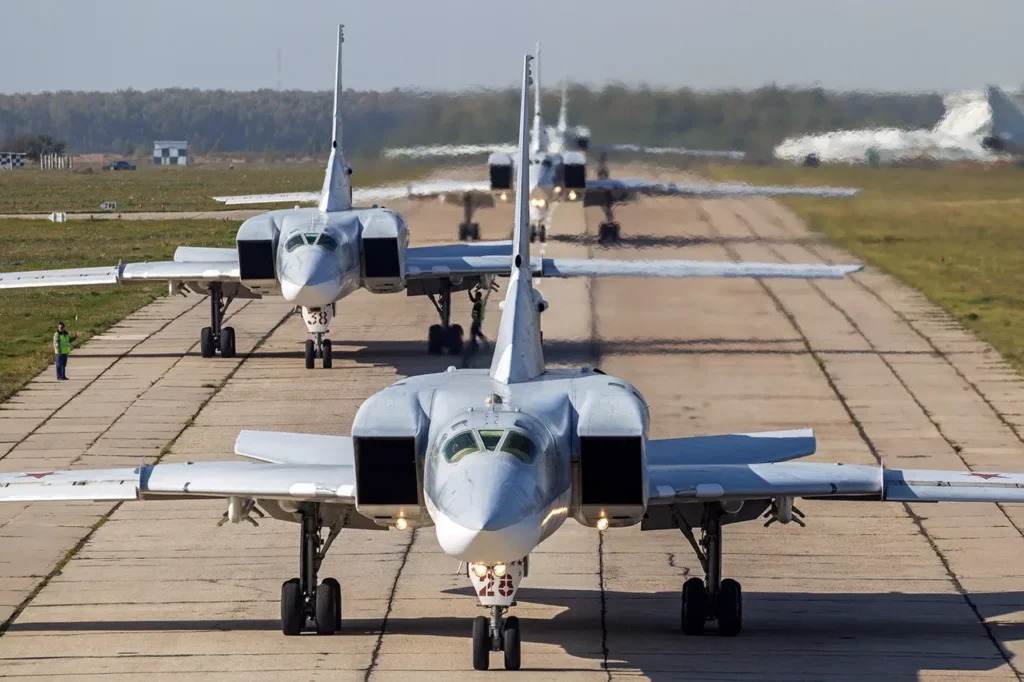
Moscow stands at the center of one of the largest air arms in the world, and a newly compiled inventory review puts hard numbers behind that scale. The World Directory of Modern Military Aircraft (WDMMA) lists the Russian Air Force with 3,677 active aircraft across attack, support, training, and special-mission roles.
The same review ranks Russia third among 129 air services tracked worldwide, but its quality-adjusted score sits well behind the United States Air Force. The figures show a force built on mass, with helicopters and legacy fighters carrying much of the weight.
What the 2026 Russian Air Force Inventory Shows
WDMMA assesses air services by counting active airframes and then scoring them against a benchmark. Its listing for the Russian Air Force, carrying an update date of December 30, 2024, records 3,677 total units in active service.
The force breaks down into four blocks. Combat and attack types account for 1,320 units. General support aircraft, which cover helicopters, transports, tankers, and special-mission platforms, make up the largest block at 2,095 units. Pilot and crew training aircraft add 262 units, and a further 395 airframes sit on order or in future procurement.
Russia holds a TruVal Rating (TVR) of 114.2 on the WDMMA scale. The same scale places the United States Air Force at 242.9 as the top performer, so Russia scores at less than half the value of the benchmark despite its large fleet size. That gap reflects the rating system’s weighting of modernity, capability mix, and support structure rather than raw headcount.
WDMMA does not track unmanned vehicles in these totals, citing reporting discrepancies between countries and sources. Drone strength therefore sits outside the 3,677 figure entirely.
Readiness Rates Cut the Fleet Down Sharply
The raw total does not represent what Russia can put in the air on any given day. WDMMA applies readiness rates based on the published USAF standard, and the results vary widely.
At a 50 percent readiness rate, 1,839 aircraft would be available. At 70 percent, that number rises to 2,574. At 75 percent, availability reaches 2,758, and at 80 percent it climbs to 2,942.
These are modeled figures rather than reported Russian availability data. The spread of more than 1,100 aircraft between the lowest and highest readiness assumptions shows how much fleet maintenance and serviceability shape real combat power.
Fighters Make Up the Largest Combat Segment
Fighters, interceptors, and strike types total 1,008 units, or roughly 27 percent of total strength. WDMMA rates the short-term and long-term outlook for this category as POSITIVE.
The single largest type is the Su-24M/MR strike aircraft at 273 units, a Cold War era design that still forms the backbone of the tactical strike fleet by number. The more modern Su-34M follows with 163 units. The MiG-31BM interceptor accounts for 129 units.
Among newer multirole fighters, the Su-35S numbers 114 units and the Su-30SM stands at 91 units. Older Flanker variants remain in service in smaller batches, including 47 Su-27SM, 24 Su-27SM3, 19 Su-30M2, 18 Su-27UB, and 12 baseline Su-27 air superiority fighters.
The MiG line contributes 70 MiG-29/UB fighters, 15 MiG-29SMT, and just 2 MiG-29UBT. The MiG-35S/UB, marketed as a modern multirole successor, appears in the inventory at only 6 units.
The Su-57, Russia’s fifth-generation multirole fighter, is listed at 25 units. That places it at roughly 2.5 percent of the fighter fleet.
Bombers and Close-Air Support
The bomber fleet totals 120 units, close to 3 percent of total strength, with a POSITIVE outlook. The Tu-22M/M3/M3M leads with 58 units in the strategic role. The Tu-95MS/MSM, listed under maritime patrol and attack, contributes 47 units. The upgraded Tu-160M strategic bomber accounts for 15 units.
Close-air support rests entirely on one type. The Su-25/UB/BM/SM series numbers 192 units, or about 5 percent of the force. WDMMA rates the outlook for this category as STABLE rather than positive, which points to sustainment rather than expansion.
Helicopters Form the Backbone of the Force
Rotary-wing aircraft make up the single largest slice of the Russian Air Force at 1,551 units, or roughly 42 percent of total strength. The outlook for the category is POSITIVE.
The Mi-8MTPR-1 transport and gunship dominates with 788 units, more than half the entire helicopter fleet. The Mi-24V/P gunship and transport follows at 328 units.
Dedicated attack helicopters account for a smaller share. The Ka-52 numbers 137 units and the Mi-28A/N/NM stands at 112 units. Utility and support types fill out the rest, including 50 Ansat light utility helicopters, 44 Mi-26 heavy-lift machines, 43 Mi-2 light utility helicopters, and 36 Ka-226 utility aircraft. Small numbers of Ka-27 anti-submarine warfare helicopters (6), SA355 light utility helicopters (5), and Mi-38 medium utility helicopters (2) round out the list.
Transport, Tanker, and Special-Mission Fleets
Fixed-wing transports total 462 units, about 13 percent of the force, with a POSITIVE outlook. The IL-76M/MD/MF strategic airlifter leads at 120 units. The An-26 tactical transport follows with 116 units, ahead of 59 An-12 and 53 L-410 utility aircraft.
VIP and government transport duties fall to 43 Tu-134, 8 IL-62, and 3 Tu-154 airframes. Heavy strategic lift remains thin, with only 4 An-124 and 3 An-22 aircraft listed.
Aerial refueling is the smallest category in the force. The IL-78 tanker accounts for all 20 units, roughly 1 percent of total strength. That figure limits the reach of Russian strike and fighter aircraft on long-range missions.
Special-mission platforms total 62 units, or about 2 percent, with a STABLE outlook. The IL-20/22 ELINT aircraft accounts for 24 units and the An-30 reconnaissance aircraft for 15. Airborne early warning rests on 14 A-50/100 aircraft. The remainder covers 3 IL-80 airborne command posts, 2 Tu-214R reconnaissance aircraft, 2 Tu-214ON, and 2 Tu-214PU command and control platforms.
Training Fleet and Future Procurement
The Training aircraft number 262 units, close to 7 percent of the force. The L-39 advanced jet trainer accounts for 118 units and the Yak-130 for 109. The DA42T flight trainer adds 35 units.
WDMMA lists 395 airframes as on order or set for delivery in the current or subsequent procurement years. The Mi-28 attack helicopter leads at 105 units, followed by 76 Su-57 multirole fighters and 50 Tu-160 strategic bombers.
Strike and multirole orders include 40 Su-34M, 35 MiG-29SMT, and 30 Su-35S. Training procurement covers 25 Yak-130. Support orders include 19 IL-76 strategic transports, 10 IL-78 strategic tankers, 2 L-410 utility aircraft, 2 Mi-38 medium utility helicopters, and 1 An-124 strategic transport.
If delivered in full, the Su-57 order would lift the type from 25 to 101 units, a fourfold increase, though delivery timelines are not specified in the listing.
No.2 US Navy (142.4)
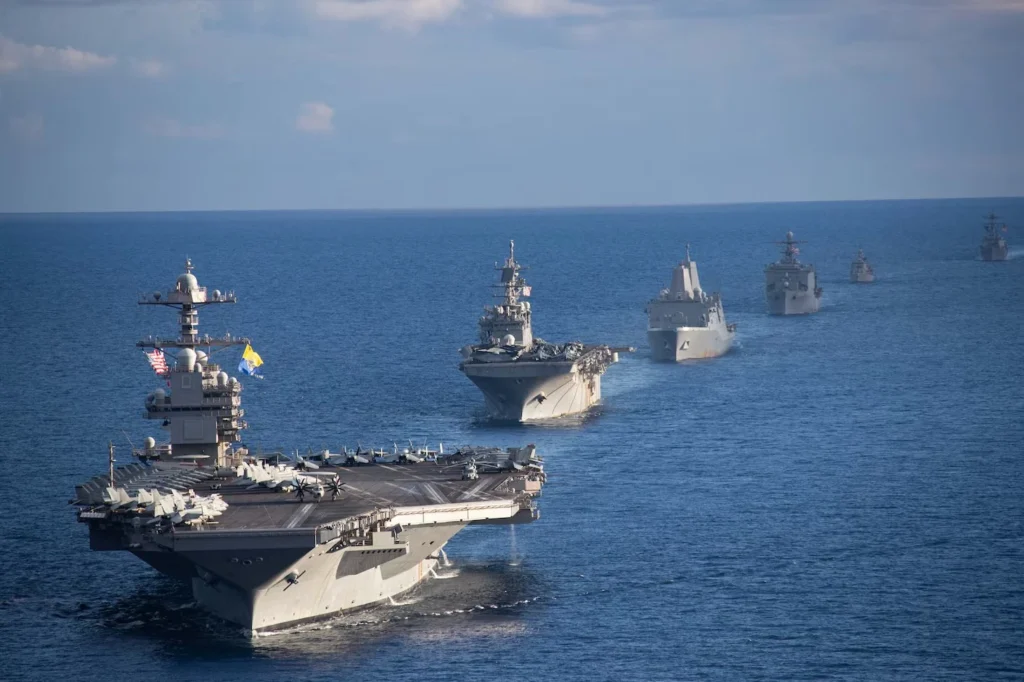
The United States Navy fields 2,504 active aircraft in 2026, according to the latest World Directory of Modern Military Aircraft (WDMMA) review. The service ranks second among 129 air arms tracked worldwide, trailing only the United States Air Force.
The fleet blends 451 fighters, 507 helicopters, 396 special-mission platforms, and 995 training aircraft, with a further 544 airframes on order. Its TruVal Rating of 142.4 sits well below the USAF benchmark of 242.9, yet remains the strongest naval aviation force on the planet.
Inside the Structure of the World’s Second-Ranked Air Arm
WDMMA divides the Navy’s 2,504 aircraft into four functional blocks. General support accounts for the largest share at 1,058 units, followed by pilot and crew training at 995 units, and combat/attack at 451 units. A separate 544 airframes sit in the future procurement column.
The distribution reveals a force built around sustained carrier operations rather than raw fighter numbers. Combat aircraft make up roughly 18 percent of total strength. Trainers make up about 40 percent, the single largest slice, reflecting the pipeline required to keep carrier-qualified aviators in the cockpit.
The review counts manned platforms only. WDMMA states that unmanned vehicles are not tracked due to reporting discrepancies between countries and sources, so the MQ-25 Stingray, MQ-4C Triton, and MQ-8 Fire Scout do not appear in the 2,504 figure. The dataset carries an update date of 27 November 2024.
Fighter Fleet Still Rests on the Super Hornet
The Navy operates 451 fighters. Of these, 421 are F/A-18E/F Super Hornets in the multirole configuration, and just 30 are F-35C Lightning II carrier variants.
That split shows how early the Navy remains in its fifth-generation transition. The Super Hornet accounts for more than 93 percent of the fighter line, while the F-35C carries the strike-fighter designation across a small number of operational squadrons. WDMMA rates the short-term and long-term outlook for the fighter category as POSITIVE.
Seahawks Dominate the Rotary-Wing Force
Helicopters total 507 units, close to 20 percent of total strength. The SH-60R/H/S Seahawk family supplies 454 of them, covering anti-submarine warfare, search and rescue, and utility roles across carriers, destroyers, and cruisers.
The remaining rotary-wing strength splits between 27 CMV-22B Osprey tiltrotors, which handle carrier onboard delivery, and 26 MH-53 minesweepers. The category outlook is listed as POSITIVE, supported by continuing Osprey deliveries.
Special-Mission Aircraft Provide the Sensing Edge
Special-mission platforms number 396 units, about 16 percent of the fleet. The EA-18G Growler leads the category with 153 aircraft dedicated to airborne electronic attack.
Maritime patrol rests on 118 P-8A Poseidons, backed by 8 remaining P-3C Orions and 4 P-3SPA reconnaissance airframes. Airborne early warning is handled by 83 E-2C/D Hawkeyes. The Navy also fields 16 E-6B Mercury communications aircraft, 9 EP-3E ELINT platforms, 3 C-26D reconnaissance aircraft, and 2 Learjet 35s. WDMMA marks the category outlook as POSITIVE.
Transport and Tanker Numbers Stay Deliberately Small
Fixed-wing transports total 144 units, roughly 6 percent of the fleet. The C-12 Huron leads with 69 aircraft, followed by 26 C-2 Greyhounds, 17 C-130T Hercules, and 17 C-40A Clippers. Smaller counts cover 9 C-26D utility aircraft, 3 C-20G VIP jets, 2 C-38A VIP jets, and a single C-130J. The outlook here is STABLE.
Aerial refueling is the thinnest category in the entire inventory. The Navy lists 11 KC-130T tankers, a figure WDMMA rounds to approximately 0 percent of total strength. The service relies on Super Hornets in the buddy-store tanking role and on US Air Force tankers for long-range missions, with the MQ-25 intended to relieve that burden but excluded from this count.
Training Aircraft Form the Largest Block in the Fleet
Trainers total 995 units, more than any other category. The T-6A/B/C Texan II leads with 294 aircraft, supported by 189 T-45C Goshawk advanced jet trainers.
Fleet replacement squadrons absorb a large share of frontline types. The Navy assigns 128 F/A-18E/F, 43 F/A-18A/B/C/D, and 15 F-35C airframes to training duties. Adversary training relies on 31 F-5F/N and 22 F-16A/B aircraft.
Rotary-wing training splits between 113 TH-57 Sea Rangers and 59 newer TH-73 Thrashers, with small numbers of UH-72A, UH-60, and OH-58 helicopters. Fixed-wing multi-engine training uses 56 T-44C Pegasus and 2 T-54A aircraft. Legacy types including 15 T-34s, 10 T-38s, 2 U-6Bs, and a single U-1B round out the category. The outlook is POSITIVE.
Procurement Pipeline Reaches 544 Aircraft
The Navy has 544 airframes on order or scheduled for delivery in current and subsequent procurement years.
The F-35C dominates that pipeline with 204 aircraft, a figure that would multiply the current carrier-based fifth-generation fleet several times over. Another 76 F/A-18E/F Super Hornets are on order.
Support and training orders follow. The list includes 71 TH-73 helicopters, 64 C-12 transports, 34 CMV-22B tiltrotors, 30 P-8A Poseidons, 29 T-6A/B/C trainers, 25 E-2D Hawkeyes, 8 T-54A flight trainers, and 3 SH-60R/H/S helicopters. The TH-73 and T-54A orders point to a phased retirement of the TH-57 and T-44C fleets.
Readiness Rates and Global Standing
WDMMA applies published USAF readiness standards to estimate how many Navy aircraft would be mission-capable at any given time.
| Readiness Rate | Available Aircraft |
|---|---|
| 50 percent | 1,252 |
| 70 percent | 1,753 |
| 75 percent | 1,878 |
| 80 percent | 2,003 |
The Navy’s TruVal Rating of 142.4 places it second globally out of 129 air services drawn from 103 countries. The USAF leads with 242.9, a gap driven largely by the Air Force’s bomber force, strategic tanker fleet, and far larger fighter inventory.
No.1 US Air Force (242.9)
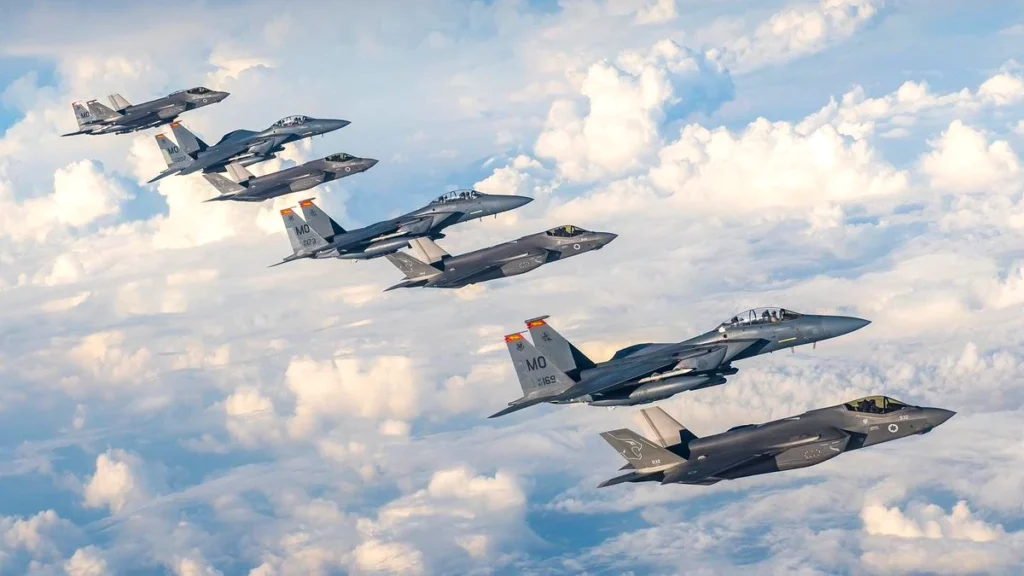
And finally, at No.1 we have USAF. The United States Air Force enters 2026 with 5,004 aircraft in its active inventory, according to the World Directory of Modern Military Aircraft (WDMMA), which ranks the service first among 129 air arms it tracks worldwide.
The fleet spans fighters, bombers, tankers, transports, trainers, helicopters, and special-mission platforms, with a further 2,227 airframes on order. Combat types account for 2,045 of the total, while training aircraft make up more than a quarter of the force.
Inside the 2026 USAF Fleet Breakdown
WDMMA counts 5,004 total airframes in USAF service for 2026. The organization assigns the service a TruVal Rating of 242.9, the benchmark score against which every other air arm in its database is measured, and places the USAF at first out of 129 air services drawn from 103 countries.
The inventory divides into three functional blocks. Combat and attack aircraft total 2,045 units. General support platforms, covering transports, tankers, helicopters, and special-mission types, account for 1,634 units. Pilot and crew training aircraft number 1,325 units.
WDMMA also publishes availability figures tied to readiness rates rather than a single mission-capable number. At a 50 percent readiness rate, 2,502 aircraft would be available. At 70 percent, the figure rises to 3,503. At 75 percent it reaches 3,753, and at 80 percent it reaches 4,003.
One important caveat applies to the entire dataset. WDMMA does not track unmanned aerial vehicles, citing reporting discrepancies between countries and sources. The 5,004 figure therefore excludes the MQ-9 Reaper and every other drone in Air Force service, and the numbers reflect a directory last updated on December 10, 2024.
Fighters Remain the Backbone of the Force
Fighters form the largest combat category at 1,610 units, roughly 32 percent of total strength. WDMMA rates the short-term and long-term outlook for the category as positive.
The F-16C dominates the count with 762 units, making it the single most numerous aircraft type in the entire Air Force inventory. The F-35A follows at 302 units, ahead of 218 F-15E strike fighters and 183 F-22A air superiority fighters. The legacy F-15C accounts for 137 units, while the new-build F-15EX stands at just 8 aircraft.
The distribution shows a fleet still built around fourth-generation types. The F-16C and F-15 family together contribute 1,117 airframes, while fifth-generation fighters account for 485.
Bombers and Close-Air Support
The bomber force totals 140 aircraft, about 3 percent of the fleet, split across three strategic types. The B-52H leads with 76 units, followed by 45 B-1B Lancers and 19 B-2A Spirits. WDMMA lists the category outlook as positive.
Close-air support platforms number 295 units, close to 6 percent of the total. The A-10C Thunderbolt II remains the largest element at 261 units, supported by 31 AC-130J gunships and 3 A-29C light attack aircraft. WDMMA rates this category as stable rather than positive, the only major category not marked for growth.
Tankers, Transports, and Rotary-Wing Assets
Aerial refueling capacity rests on 453 tankers, around 9 percent of the fleet. The KC-135R/T accounts for 376 units, with the KC-46A Pegasus at 77 units and rising.
Transports total 697 fixed-wing aircraft, or roughly 14 percent of strength. The C-17A Globemaster III leads at 222 units, followed by 151 C-130J and 126 C-130H tactical airlifters. The C-5M Super Galaxy contributes 52 units. The category also covers the VIP fleet, including 4 C-32A, 2 C-32B, 9 C-37A, 7 C-37B, 4 C-40B, 7 C-40C, and the 2 VC-25A aircraft that serve as Air Force One.
Helicopters and tiltrotors account for 218 units, roughly 4 percent of the force. The HH-60G/U leads at 64 units, ahead of 63 UH-1N utility helicopters, 52 CV-22B Ospreys, 32 HH-60W Jolly Green II combat rescue helicopters, and 7 MH-139A Grey Wolf aircraft.
Training Fleet and Special-Mission Platforms
Training aircraft total 1,325 units, about 26 percent of the entire inventory and the second-largest category after fighters. The T-38A/C/AT accounts for 495 units and the T-6A Texan II for 442. The count also includes 150 F-16D and 12 F-15D fighter trainers, 127 T-1A jet trainers, 28 TH-1H helicopter trainers, and a single X-62 in-flight simulator. Only 2 T-7A Red Hawk trainers appear in the active inventory so far.
Special-mission platforms number 266 units, roughly 5 percent of the fleet. The MC-130J Commando II leads at 57 units, followed by 39 HC-130J search and rescue aircraft and 36 MC-12W reconnaissance aircraft. The category also includes 27 U-2S high-altitude reconnaissance aircraft, 25 RC-135 signals intelligence variants, 5 E-11A battlefield communications nodes, 4 E-4B airborne command posts, 4 P-9A maritime patrol aircraft, and a single EA-37B Compass Call.
WDMMA lists a small number of airframes, including the U-28A and the C-32B, under more than one category, reflecting their dual roles in utility transport and special-mission work.
What the Air Force Has on Order
Future procurement stands at 2,227 airframes, a figure equal to 44 percent of the current active fleet. WDMMA notes that these aircraft are set for delivery in the current procurement year or in subsequent years, and that some may not enter service in 2026.
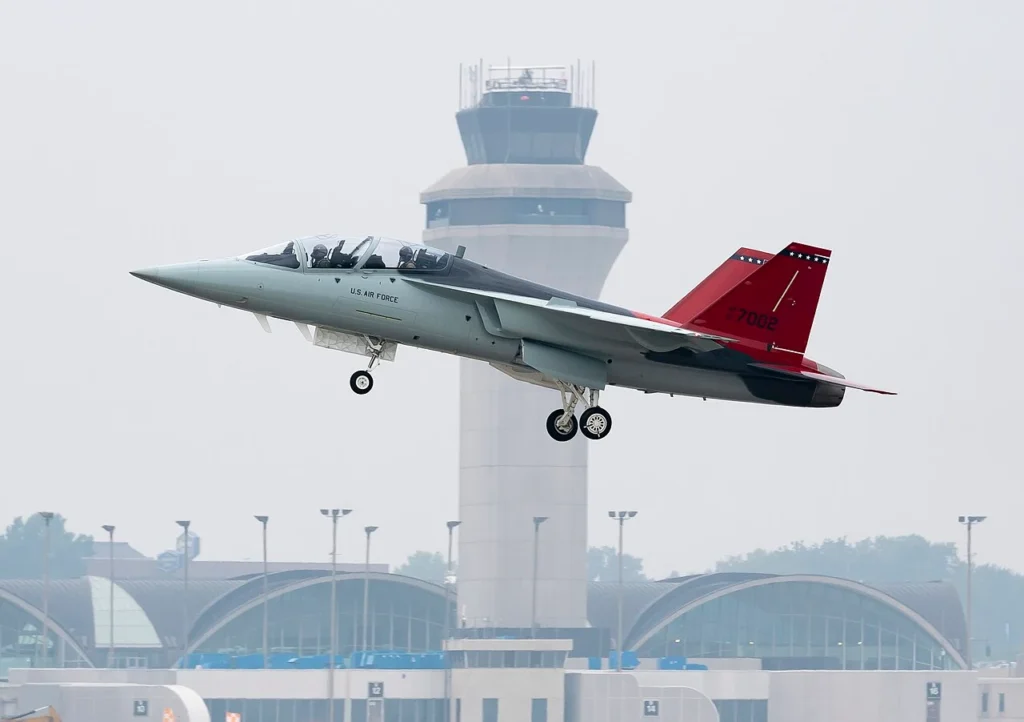
The F-35A dominates the order book at 1,454 units, a number that would nearly quintuple the current fifth-generation strike fighter fleet. The T-7A Red Hawk follows at 351 units, positioned to replace the aging T-38 fleet. The KC-46A accounts for 102 units on order, the B-21A Raider for 100, and the F-15EX for 96.
Rotary-wing and support orders round out the total, including 53 HH-60W, 41 C-130J, 20 MH-139A, 7 MC-130J, 2 CV-22B, and 1 EA-37B.
The order profile points to a clear direction. Fighter recapitalization runs through the F-35A and F-15EX, the strategic bomber force pivots to the B-21A, tanker replacement continues through the KC-46A, and pilot training shifts to the T-7A.
Bottom Line
The WDMMA ranking rewards balance, modernization, and industrial depth over fleet size alone. The United States Air Force leads with 242.9, supported by domestic production, a full spectrum of mission types, and a strong pipeline of aircraft on order.
| Rank | Air Service | TVR Score | Total Units |
|---|---|---|---|
| 1 | United States Air Force | 242.9 | 5,004 |
| 2 | United States Navy | 142.4 | 2,504 |
| 3 | Russian Air Force | 114.2 | 3,677 |
| 4 | United States Army | 112.6 | 4,333 |
| 5 | United States Marines | 85.3 | 1,211 |
| 6 | Indian Air Force | 69.4 | 1,716 |
| 7 | Chinese Air Force | 63.8 | 3,733 |
| 8 | Japanese Air Force | 58.1 | 756 |
| 9 | Israeli Air Force | 56.3 | 581 |
| 10 | French Air Force | 55.3 | 511 |
The Indian Air Force at sixth and the French Air Force at tenth show that a smaller, better structured inventory can outrank a larger one. Quantity fills a flight line, but the TruVal Rating measures what that flight line can actually do.
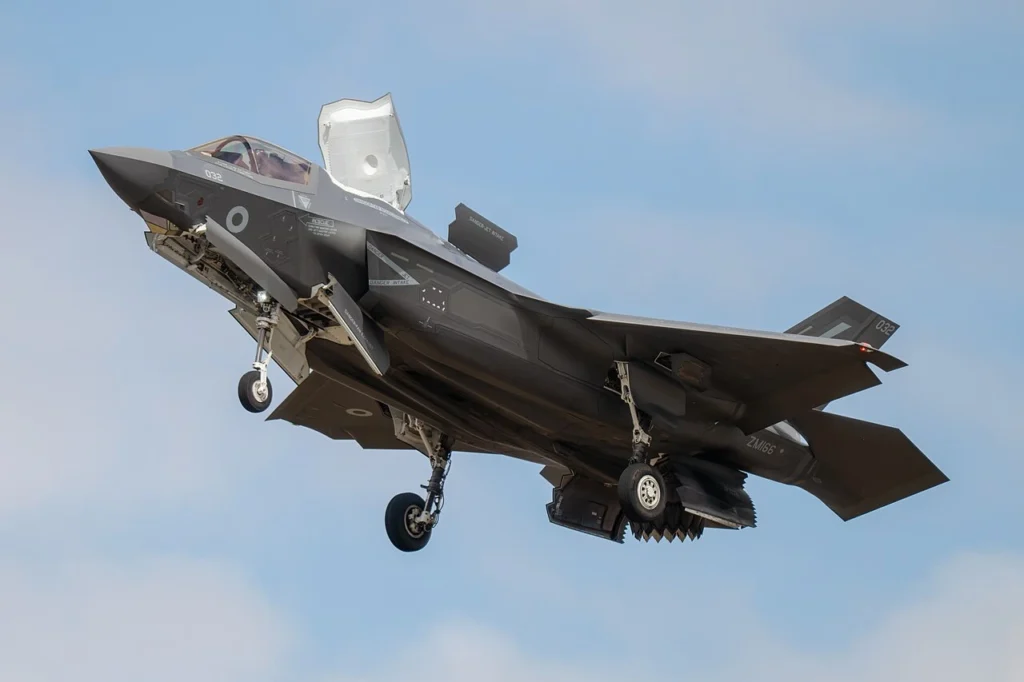
Bonus No.11 to No.20:
The UK Royal Air Force enters the second bracket at 11th with a TVR of 55.3, matching the score of the 10th-placed French Air Force. It operates 513 units, two more than France.
The gap across this bracket is narrow. Only 9.4 points separate 11th place from 20th, compared with the 187.6-point spread across the top 10.
Fleet size again fails to determine position. Pakistan fields 879 aircraft, the largest inventory in this bracket, yet places 18th at 46.3. The Royal Australian Air Force ranks 14th with just 279 units.
French Navy Aviation closes the top 20 with 196 aircraft, the smallest fleet in the entire top 20 list, scoring 45.9. It sits fewer than 0.5 points behind the German Air Force, which operates more than twice as many aircraft.
Chinese Navy Aviation appears at 15th with 436 units and a score of 49.3, giving China a second entry in the top 20 alongside the PLA Air Force at 7th.
Air Powers Ranked 11 to 20 by TruVal Rating
| Rank | Air Service | TVR Score | Total Units |
|---|---|---|---|
| 11 | UK Royal Air Force | 55.3 | 513 |
| 12 | South Korean Air Force | 53.4 | 822 |
| 13 | Italian Air Force | 51.9 | 411 |
| 14 | Australian Air Force | 51.7 | 279 |
| 15 | Chinese Navy Aviation | 49.3 | 436 |
| 16 | Brazilian Air Force | 48.3 | 418 |
| 17 | Saudi Air Force | 46.4 | 709 |
| 18 | Pakistan Air Force | 46.3 | 879 |
| 19 | German Air Force | 46.2 | 432 |
| 20 | French Navy Aviation | 45.9 | 196 |
Stay tuned with us. Further, follow us on social media for the latest updates.
Join us on Telegram Group for the Latest Aviation Updates. Subsequently, follow us on Google News
