

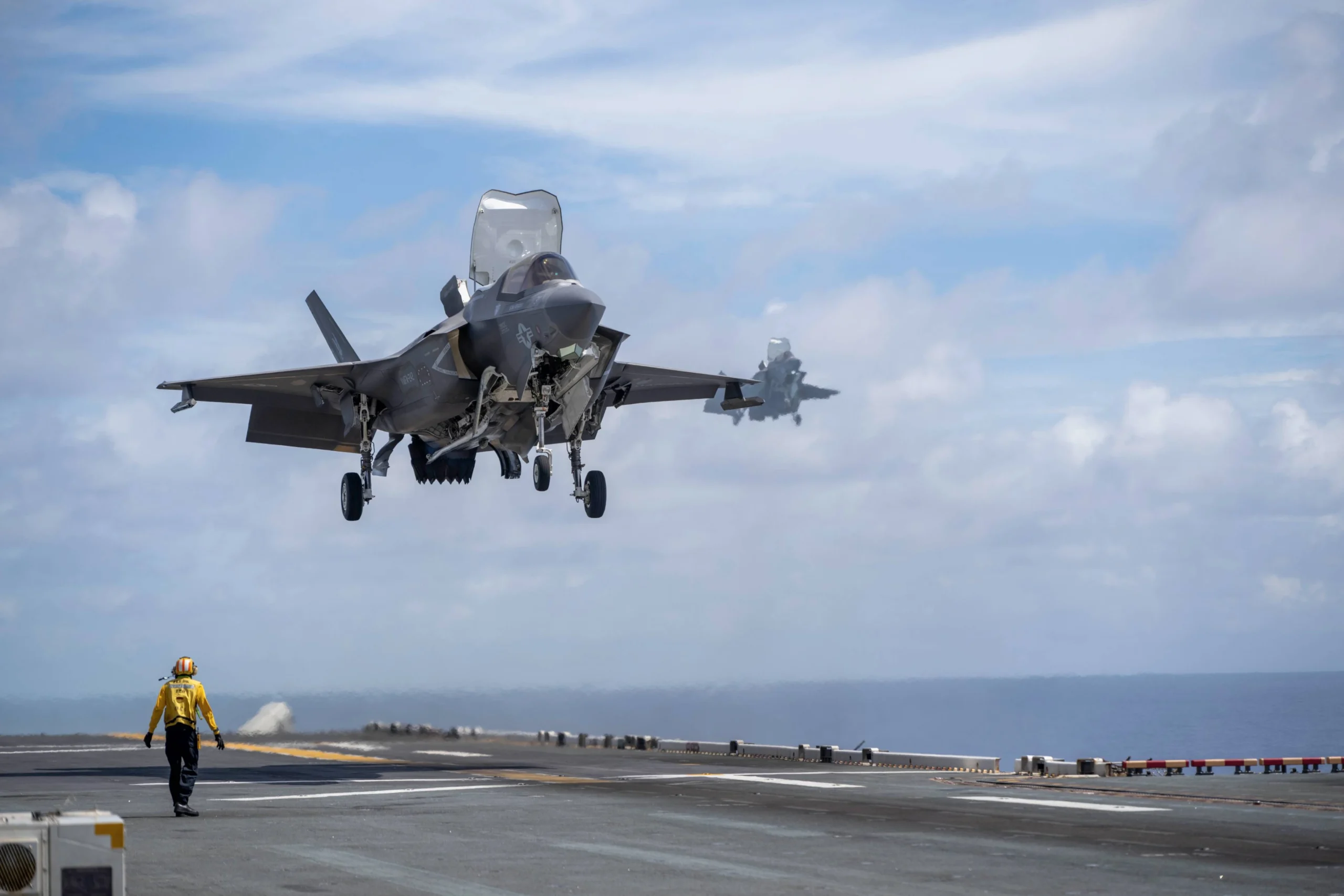
WESTERN ATLANTIC— The U.S. Navy’s F-35C Lightning II stealth fighter completed its first arrested landing aboard a Ford-class aircraft carrier on October 13, 2026.
The aircraft recovered on the flight deck of the future USS John F. Kennedy (CVN 79), marking an important milestone in the Navy’s efforts to integrate its fifth-generation carrier-based fighter with its newest generation of warships.
The landing occurred during an ongoing Aircraft Compatibility Testing (ACT) campaign, which evaluates how aircraft interact with a carrier’s launch and recovery equipment.
Test pilots from Air Test and Evaluation Squadron 23 (VX-23), supported by a team from the F-35 Integrated Test Force (ITF), are conducting the evaluation using a specially instrumented fighter to gather performance data during flight-deck operations.
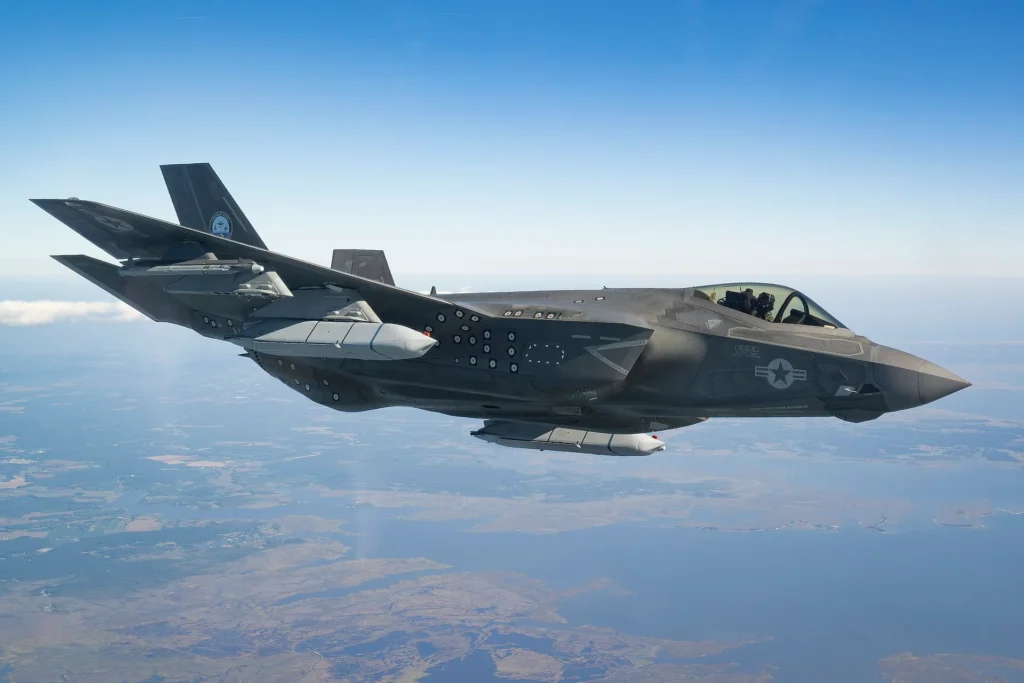
F-35C Completes First Landing on Ford-Class Carrier
The October 13 operation marked the first time an F-35C had landed on a Ford-class aircraft carrier.
The fighter recovered aboard John F. Kennedy while the ship operated in the Western Atlantic, allowing engineers to examine the aircraft’s interaction with the carrier’s recovery equipment in a real maritime environment.
The F-35C was developed specifically for carrier operations and differs from the F-35A used by the U.S. Air Force. Its larger wings provide additional lift at lower speeds, while reinforced landing gear and a stronger tail hook help the aircraft withstand the demands of carrier landings.
During an arrested landing, the aircraft’s tail hook catches a steel wire stretched across the flight deck. The arresting system rapidly slows the fighter, allowing it to stop within the limited space available aboard an aircraft carrier.
One completed the arrested landing, while the other carried inert Joint Direct Attack Munition (JDAM) bombs externally, demonstrating the aircraft activity associated with the broader evaluation.
However, the landing represents a compatibility milestone rather than proof that every operational requirement has been satisfied. Engineers must continue assessing the aircraft and ship systems before the Navy can establish the full scope of their operational readiness.
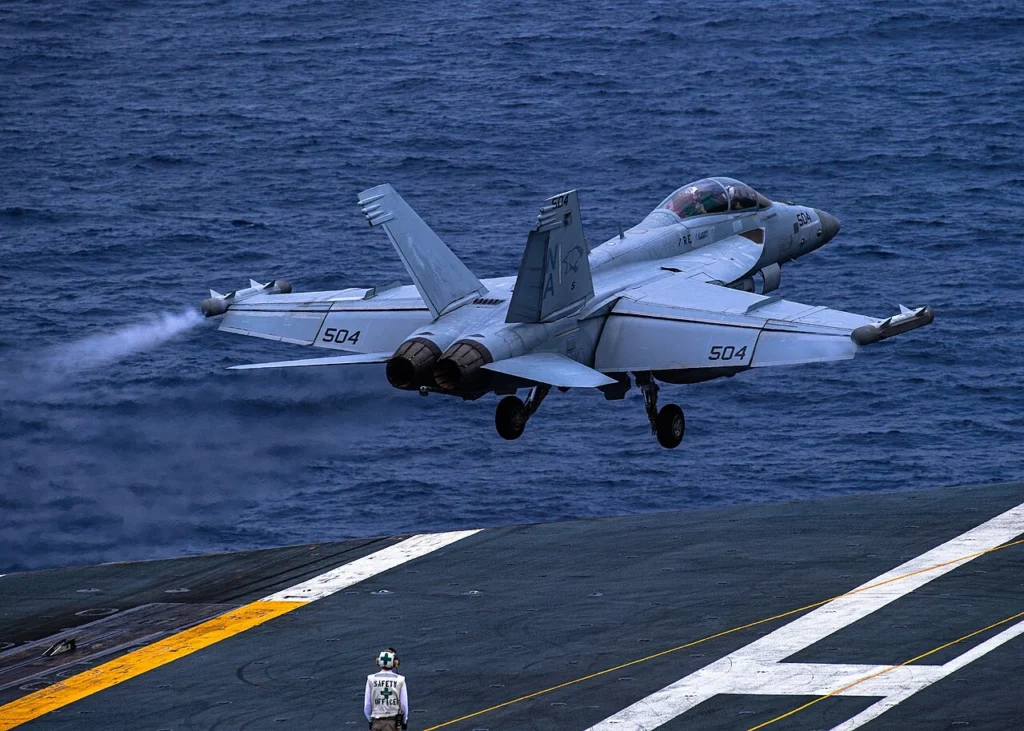
Ford-Class Carrier Undergoes Advanced Testing
The Ford-class programme introduces advanced aviation technologies designed to improve carrier launch and recovery operations.
Its principal systems include the Electromagnetic Aircraft Launch System (EMALS) and Advanced Arresting Gear (AAG), which replace the steam-powered catapults and conventional arresting machinery used aboard older Nimitz-class carriers.
EMALS uses electromagnetic technology to accelerate aircraft along the flight deck, while AAG controls aircraft recovery through an advanced energy-absorption system.
These technologies are intended to support modern carrier operations, but their development and reliability challenges have complicated the wider integration of aircraft into the Ford-class fleet.
Aircraft Compatibility Testing allows engineers to evaluate whether a carrier’s launch and recovery equipment can safely support particular aircraft types.
Test teams collect measurements during flight operations, analyse equipment performance and identify problems that could require further testing or adjustments.
Integrating the F-35C also involves requirements beyond landing equipment. John F. Kennedy needs suitable maintenance facilities, specialised information systems and infrastructure to support the fighter’s sensitive mission equipment, classified data and low-observable coatings.
The carrier also requires appropriate jet blast deflectors to protect flight-deck personnel and equipment from the fighter’s powerful engine exhaust.
These supporting systems are essential because successful carrier operations depend on the aircraft, ship infrastructure and maintenance arrangements working together.
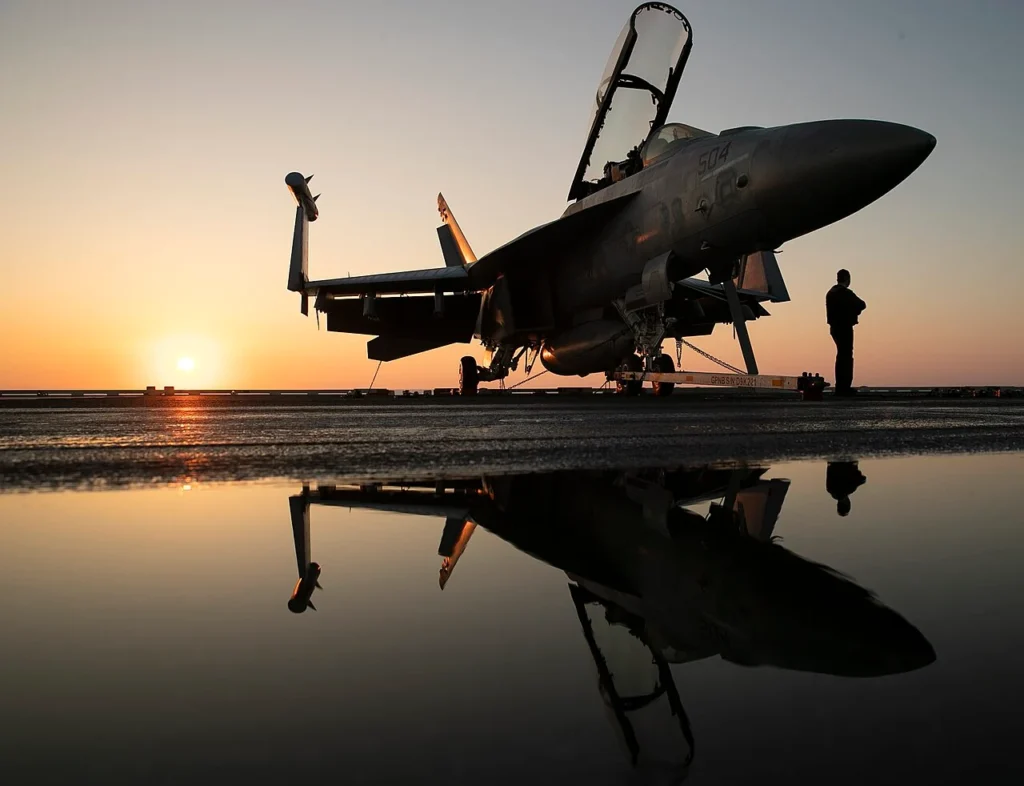
USS Kennedy Delivery Timeline
John F. Kennedy is the second ship in the Ford-class aircraft carrier programme.
The lead ship, USS Gerald R. Ford (CVN 78), entered service before completing the same level of F-35C integration, leaving the Navy to address additional compatibility requirements through subsequent modifications.
The Navy adopted a different approach for John F. Kennedy by incorporating more of the required modifications during construction.
This strategy aimed to reduce the need for extensive changes after delivery, although the ship still requires testing to demonstrate that its systems meet operational requirements.
The Navy took preliminary acceptance of John F. Kennedy from Newport News Shipbuilding on September 29, 2026, following acceptance trials in August.
Preliminary acceptance allows the crew to conduct at-sea testing and build experience while the shipbuilder continues final systems work.
Formal delivery remains scheduled for spring 2027. The latest F-35C landing therefore provides evidence of progress before the carrier reaches that planned milestone, but it does not confirm that the complete aircraft integration process has finished.
Further evaluations will help determine how reliably John F. Kennedy can support the F-35C during routine carrier operations, TWZ reported.
Testing must also address aircraft launch procedures, including operations using EMALS, alongside the broader requirements for maintenance and flight-deck safety.
For the U.S. Navy, the successful recovery is a significant step toward demonstrating the Ford-class carrier’s ability to operate its intended aircraft.
The next phase will depend on test results and the Navy’s assessment of whether the ship’s systems can consistently support the fighter under operational conditions.
Stay tuned with us. Further, follow us on social media for the latest updates.
Join us on Telegram Group for the Latest Aviation Updates. Subsequently, follow us on Google News
