

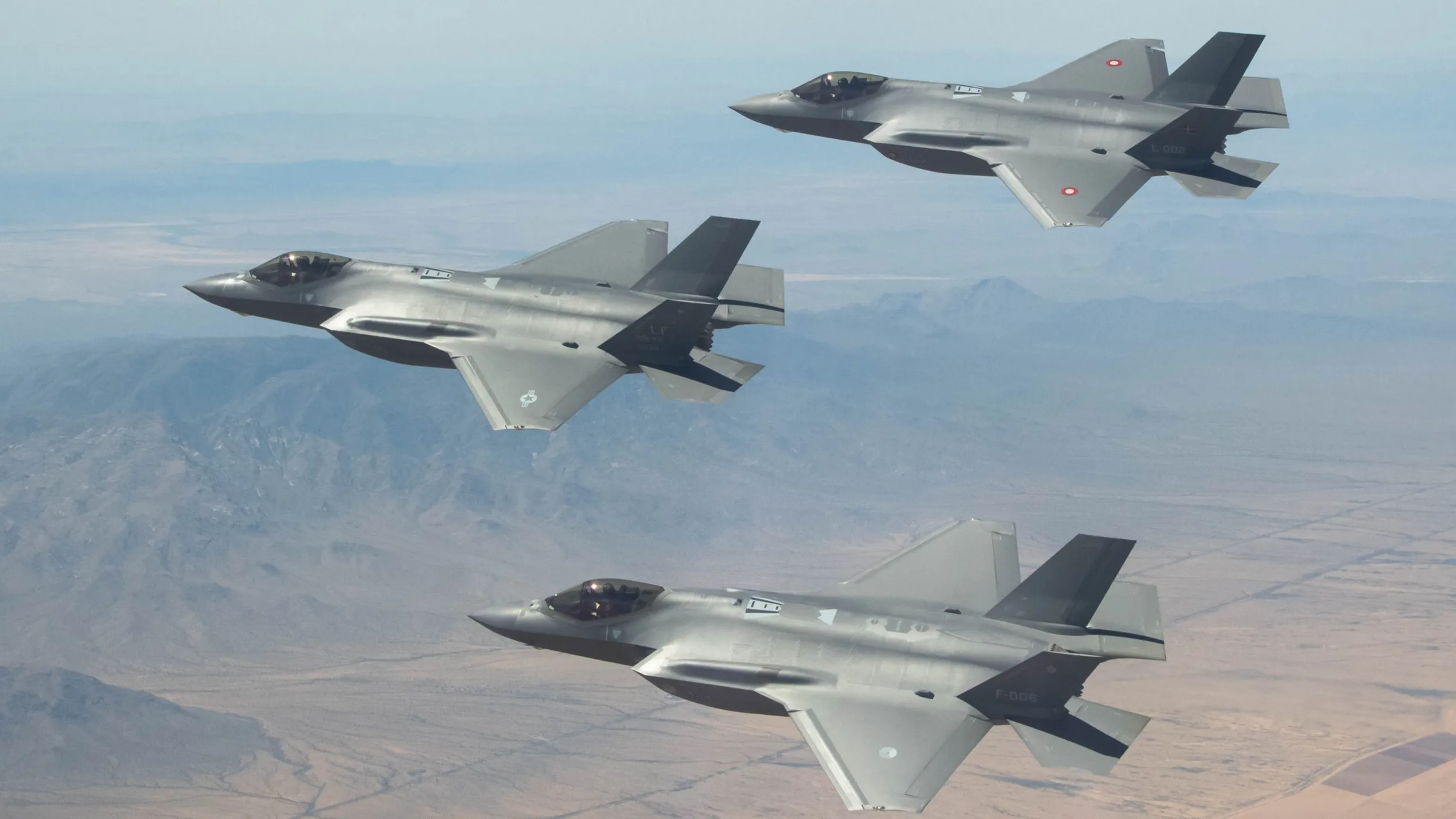
HIGH NORTH– British Royal Navy F-35B Lightning II fighters and Norwegian F-35A jets have escorted a United States Air Force (USAF) B-52 Stratofortress strategic bomber over the High North during Exercise Global Thunder 27. The October 24 mission marked the first time British F-35Bs operating from an aircraft carrier participated in an escort of an American B-52 alongside Norwegian F-35As.
The operation brought together carrier-based stealth fighters, land-based combat aircraft and a long-range strategic bomber in a coordinated allied mission over the Norwegian Sea. The British fighters launched from HMS Prince of Wales, while Norwegian aircraft joined the formation from mainland Norway, demonstrating the ability of NATO forces to coordinate operations across different platforms and operating environments.
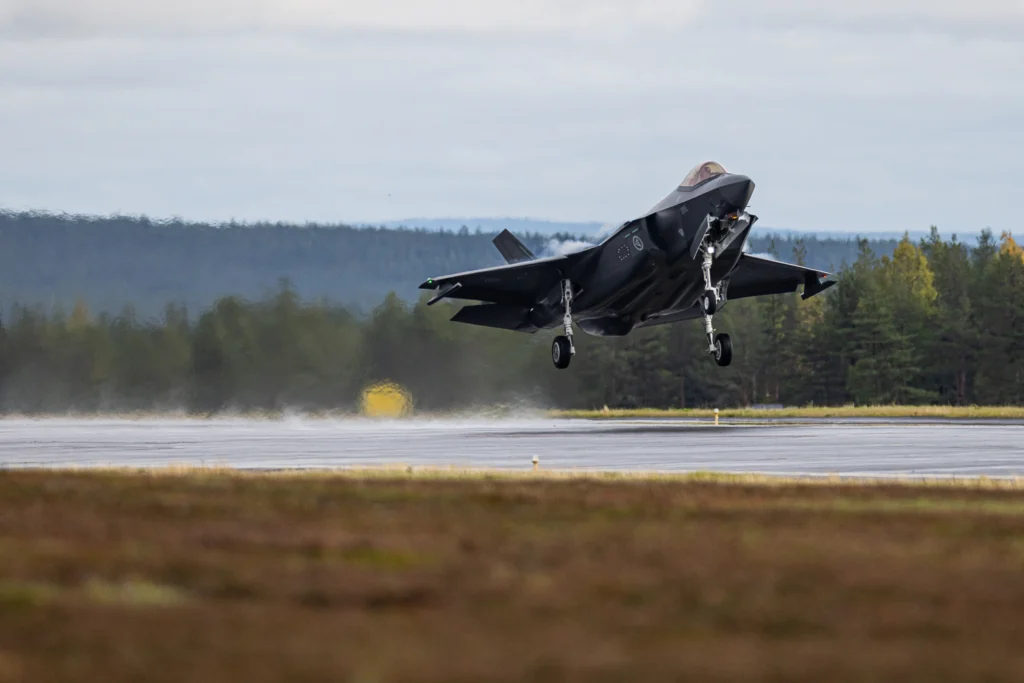
F-35s are Set to Escort B-52
The mission took place on October 24, with F-35Bs from the Royal Navy’s 617 Squadron joining Norwegian Air Force F-35As to accompany the American bomber.
An RAF Voyager aerial refuelling tanker, based on the Airbus A330 Multi Role Tanker Transport (MRTT), also supported the operation.
Photographs released by the participating forces showed six F-35 fighters flying alongside the B-52, with three aircraft positioned on each side of the bomber. The formation demonstrated how fifth-generation fighters and conventional strategic bombers can operate together during multinational military exercises.
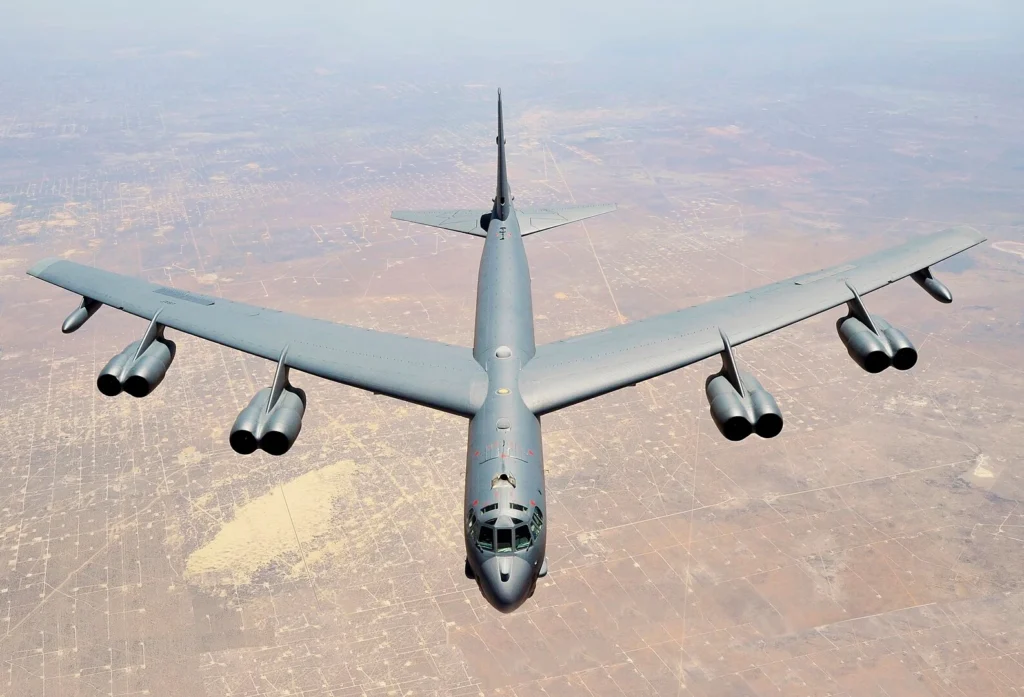
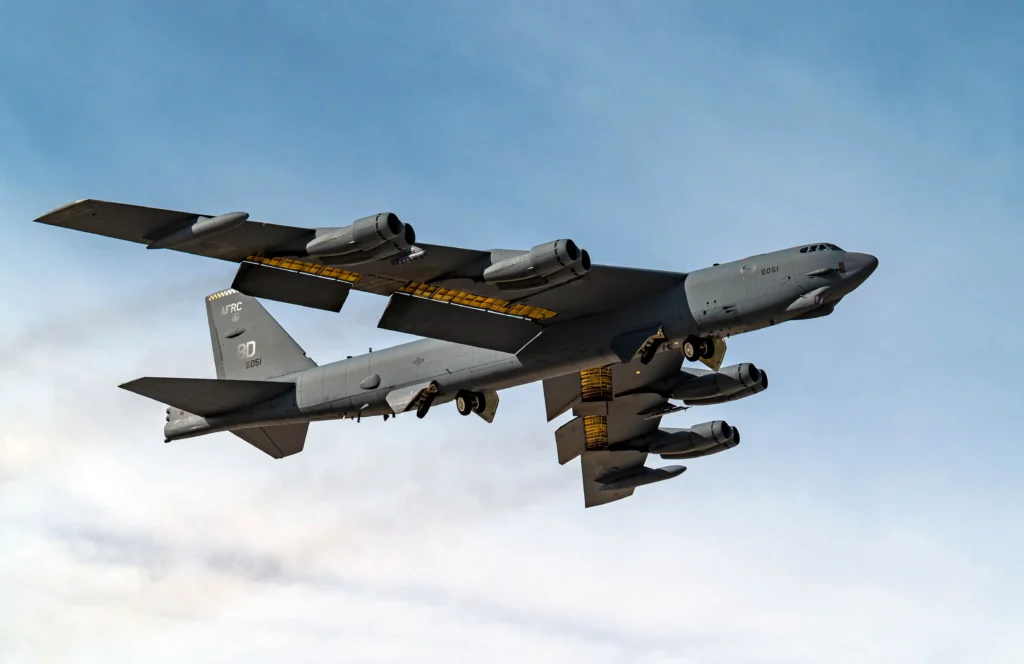
The American aircraft operated under the callsign HUSH 11 and departed from Minot Air Force Base in North Dakota. It completed a long-distance mission across the Atlantic, receiving aerial refuelling support from multiple tanker aircraft before meeting the British and Norwegian fighters in the High North.
A second B-52, operating under the expected callsign HUSH 12, was also scheduled to participate but reportedly withdrew because of a technical issue. Consequently, the mission proceeded with one American bomber rather than the two initially anticipated.
The British F-35Bs launched from HMS Prince of Wales, which is conducting the second phase of Operation Firecrest. The carrier is accompanied by the Type 45 destroyer HMS Dauntless and operates alongside Norwegian naval forces, including the frigate HNoMS Fridtjof Nansen.
Operation Firecrest Deployment
The escort mission formed part of the wider British Carrier Strike Group deployment to the North Atlantic, Arctic and High North.
Operation Firecrest is designed to strengthen NATO cooperation, maintain operational readiness and improve the ability of allied forces to operate together in strategically important waters.
HMS Prince of Wales departed Portsmouth on October 18 for the second phase of its 2026 deployment.
More than 1,200 British personnel are involved in the carrier strike group, which is working with Norwegian, Danish and German forces during the deployment.
The carrier’s air wing includes F-35B fighters, Merlin anti-submarine and commando helicopters, Wildcat helicopters and uncrewed aircraft.
These capabilities allow the carrier group to conduct a range of operations, including air defence, maritime surveillance and anti-submarine warfare.
The deployment also builds on the first phase of Operation Firecrest, during which British aircraft conducted NATO air-policing missions and training activities in the North Atlantic and around Iceland.
The second phase places additional emphasis on allied coordination in the High North, where NATO members are working to protect strategic maritime infrastructure and maintain security across northern European waters.
Global Thunder 27 Exercise
Global Thunder 27 is the annual strategic exercise conducted by US Strategic Command (USSTRATCOM).
The exercise began on October 22 and involves personnel from across the US strategic military enterprise, including combat units and supporting commands.
Its primary objective is to test nuclear command, control, and operational readiness while maintaining a safe, secure, and credible strategic deterrent.
The exercise includes coordinated activities involving strategic bombers and other military aircraft, which can increase visible air activity during the training period.
USSTRATCOM has clarified that Global Thunder 27 is a regularly scheduled annual exercise and is not a response to any particular country, international development, or current event, Aerospace Global News reported.
The participation of British and Norwegian aircraft provides an opportunity to demonstrate coordination between allied forces and American strategic aviation.
Stay tuned with us. Further, follow us on social media for the latest updates.
Join us on Telegram Group for the Latest Aviation Updates. Subsequently, follow us on Google News
