

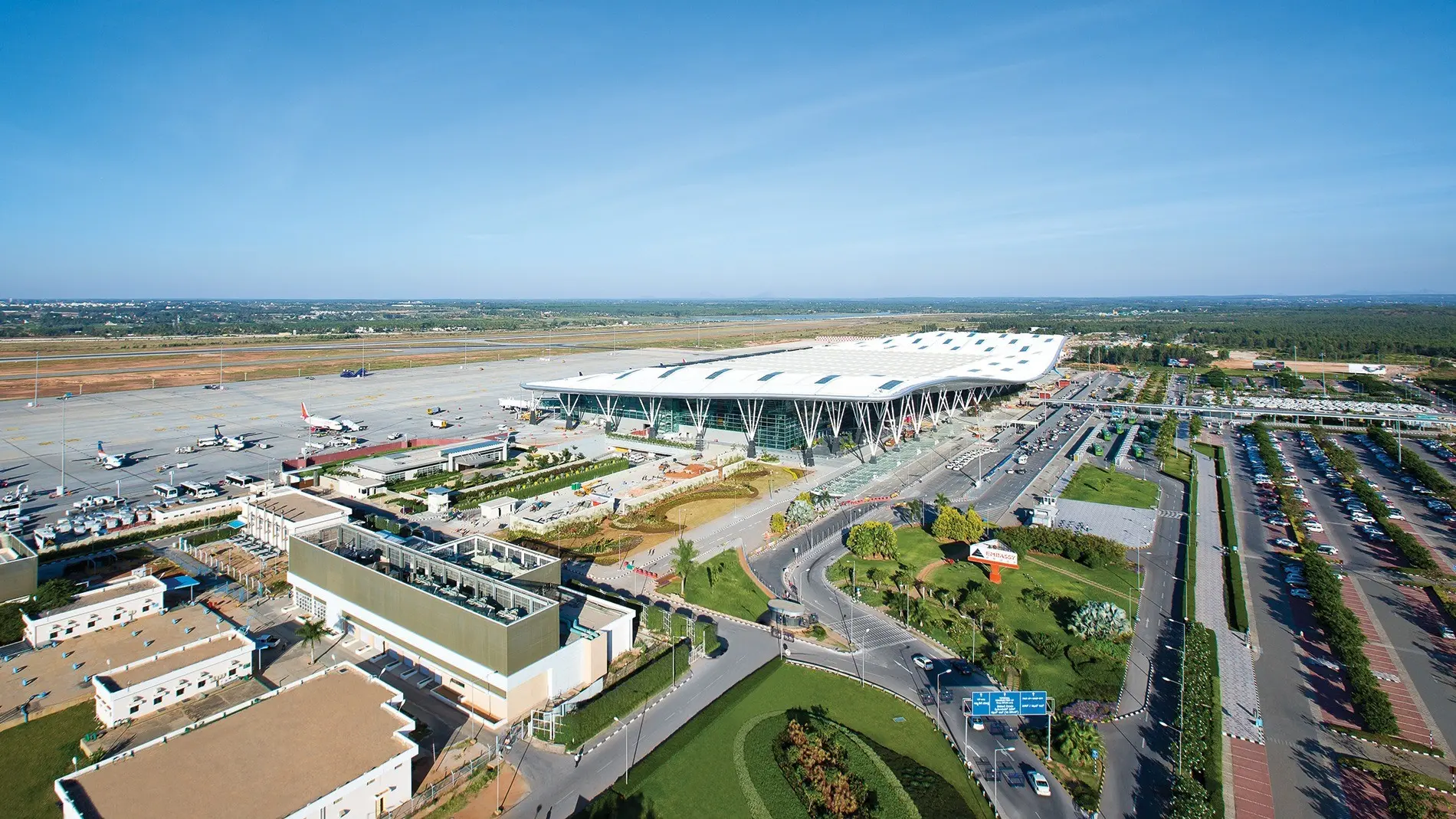
BENGALURU— Kempegowda International Airport (BLR) in Bengaluru and Vancouver International Airport (YVR) in Canada have signed a sister airport agreement to strengthen aviation, technology, cargo and trade links between southern India and western Canada.
The agreement establishes a framework for collaboration on airport innovation, operational efficiency and potential direct air services between Bengaluru and Vancouver. The memorandum of understanding (MoU) was signed on Friday in the presence of Canadian Minister of International Trade Maninder Sidhu and other dignitaries.

Bengaluru and Vancouver Airports Target Technology and Direct Flights
The agreement outlines seven areas of cooperation between Kempegowda International Airport, operated by Bangalore International Airport Limited (BIAL), and Vancouver International Airport. The partnership aims to improve airport operations, explore new technologies and support stronger air connectivity between India and Canada.
The MoU was formalised at an event at Terminal 2 of Kempegowda International Airport. Senior representatives from both airports attended the event, alongside Canada’s High Commissioner to India, Christopher Cooter, Consul General of Canada in Bengaluru, Ryan Ward, and Minister Maninder Sidhu.
A key objective is to establish a framework for both airports to share expertise, develop technology-driven solutions, and identify opportunities to improve passenger services and operational performance.

Airport Digital Twin and Emerging Technologies
Technology and innovation form a central part of the agreement. The two airports will explore Vancouver International Airport’s Digital Twin and assess emerging tools that could support airport management and planning.
The collaboration could also lead to joint pilot projects developed or tested by teams from Vancouver and Bengaluru. These initiatives are intended to improve operational efficiency, strengthen airport resilience and enhance the passenger experience.
According to BIAL, the partnership will focus on digital platforms, data-driven decision-making and process optimisation. Both airports will exchange practices in smart airport technologies, sustainable operations and terminal performance management.
The agreement also provides an opportunity for Bengaluru to benchmark its airport operations against international practices while drawing on Vancouver’s experience as an international gateway.
Girish Nair, chief operating officer of BIAL, said the partnership would establish a framework for technology integration and operational excellence.
He added that both airport teams would work together to develop next-generation capabilities and improve efficiency, resilience and passenger experience.
Nair said the agreement reinforced their shared commitment to building future-ready airports that deliver consistently high standards of service.

Bengaluru-Vancouver Direct Flights and Air Cargo Growth
The agreement identifies air cargo development and potential direct flights as important areas of cooperation. Both airports aim to facilitate cargo movement between southern India and Canada, particularly for industries such as technology that depend on international business links.
The proposed direct air service between Bengaluru and Vancouver could strengthen connections between two regions with growing commercial and economic ties. However, the agreement establishes a framework for exploring such connectivity and does not confirm a launch date, airline, flight schedule or route commencement.
Canadian Minister of International Trade Maninder Sidhu said the agreement would help strengthen Canada’s trade relationship with India and create opportunities for increased investment and passenger travel.
Sidhu noted that air cargo volumes at Vancouver International Airport grew by 7.4% in 2025. He said the partnership with Bengaluru laid the groundwork for direct air services to one of the world’s fastest-growing markets.
He added that stronger aviation links could support trade, investment and people-to-people connections between the two countries.

Canada-India Trade Supports Stronger Aviation Links
The partnership comes as Canada and India seek to expand commercial ties. According to BIAL, bilateral trade between the two countries exceeded US$10.9 billion in 2025, while both governments are working to increase trade volumes in the coming years.
British Columbia, home to Vancouver International Airport, has nearly 500,000 residents of Indian origin. The community represents close to 10% of the province’s population, according to the statement issued by BIAL.
Bengaluru has also experienced significant population growth alongside the rapid expansion of its technology sector. These developments have strengthened business connections between southern India, western Canada and the western United States.
The growing technology and business links create opportunities for improved passenger and cargo connectivity. Direct air services, if established, could offer a more convenient connection between the two regions and support business travel, tourism and commercial exchanges.

Airport Partnership Aims to Improve Passenger Experience
The sister airport agreement combines operational cooperation with broader economic objectives. By sharing expertise in digital technology, terminal management and sustainable operations, the two airports aim to identify solutions that can improve airport performance.
Albert van Veen, vice-president of innovation and chief information officer at Vancouver International Airport, said the agreement reflected the growing importance of the Canada-India corridor and the need for stronger cooperation across the aviation sector.
He said the partnership would help both airports explore ways to improve the passenger journey while strengthening operational efficiency and resilience.
The collaboration also links airport development with the wider movement of passengers, cargo and investment between the two countries.
For Bengaluru, the agreement creates an opportunity to expand international airport cooperation while supporting its role as a major aviation and technology hub. For Vancouver, the partnership offers a framework to strengthen its links with India’s southern technology and business markets.
The next steps will depend on how the airport teams develop their technology initiatives, identify operational projects, and advance discussions on cargo and direct air connectivity.
Stay tuned with us. Further, follow us on social media for the latest updates.
Join us on Telegram Group for the Latest Aviation Updates. Subsequently, follow us on Google News
